
Everything You Need to Know About Mantrailing
The Science and Mechanics of Scent: What Is Mantrailing?
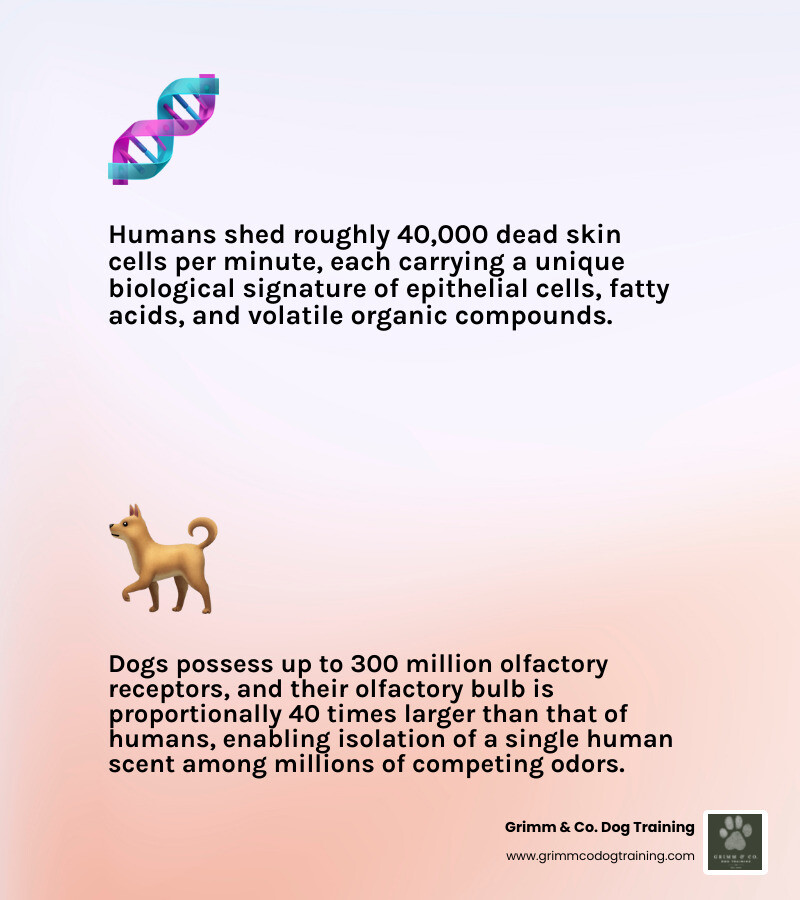
Mantrailing is a specialized canine discipline where a dog identifies and follows the unique olfactory signature of one specific person across varied terrain to locate them. Every moving human constantly sheds microscopic biological material into the environment, shedding roughly 40,000 dead skin cells per minute. These microscopic cellular flakes, known scientifically as scent rafts, carry a complex cocktail of epithelial cells, sweat, fatty acids, and volatile organic compounds. As bacteria break down this organic material, it produces an olfactory signature unique to every individual human on Earth.
Unlike general scent exploration, mantrailing tasks the canine with isolating one specific biological signature out of millions of competing environmental odors. When practicing comprehensive dog scentwork training, handlers quickly learn that odor does not stay pinned to the exact footprints of a runner.
Understanding the scientific principles of scent dispersal reveals that scent behaves much like a liquid or gas. Scent rafts drift on air currents, settle along physical barriers like fence lines, pool in low elevation depressions, and cling to moist surfaces. A dog engaged in mantrailing blends air-scenting, ground-scenting, and surface tracking to follow this dynamic scent plume directly to the target person.
Olfactory Physiology and Individual Scent Rafts
The canine nasal architecture is an evolutionary marvel of fluid dynamics and neuroanatomy. While humans possess a modest 5 million olfactory receptors, most dog breeds boast between 100 million and 300 million scent receptors. Furthermore, the canine olfactory bulb, the region of the brain dedicated to decoding odors, is proportionally 40 times larger than that of a human.
When a dog sniffs, an internal anatomical fold (the subethmoidal shelf) separates respiratory air from olfactory air. This allows odor molecules to accumulate inside the nasal cavity across consecutive inhalations without being immediately exhaled.
While historical breeds like Bloodhounds possess distinct physical traits that optimize scent collection, such as heavy skin folds and pendulous ears, modern training proves that the underlying neurological hardware exists across all domestic canines. Handlers interested in the historical pinnacle of tracking can explore our overview of bloodhound mantrailing to see how functional scent physiology operates at peak operational levels.
Distinguishing the Disciplines: Tracking, Scent Detection, and Search Operations
Canine scent work spans multiple sports and operational disciplines, each with distinct rules, mechanics, and objectives. Understanding how these disciplines differ ensures you select the right training pathway for your dog's specific needs.
| Discipline | Primary Odor Target | Detection Method | Typical Operational Goal |
|---|---|---|---|
| Tracking (e.g., AKC / IGP) | Ground disturbance, crushed vegetation, footstep track | Nose-to-ground, step-by-step path precision | Locate dropped articles or follow a precise physical route |
| Scent Detection / Nosework | Specific target odor (essential oils, birch, target chemicals) | Systematic search of containers, vehicles, or interior rooms | Pinpoint a static target hide and give a trained final alert |
| Mantrailing | Unique individual human scent plume | Dynamic blend of ground, air, and barrier scent | Follow an aged, drifting scent trail to locate a specific living human |
In traditional precision tracking, a dog must follow the exact physical footsteps of a layer, penalizing deviations from the mechanical path. The canine is hunting the scent of bruised vegetation, damaged soil microbes, and footwear friction.
By contrast, target scent detection (nosework) trains a dog to locate a non-human target chemical in a sterile or semi-sterile puzzle box layout. Mantrailing allows the dog absolute discretion in choosing whether to lift their head into the wind, cut a corner where scent has drifted, or drive hard along a tree line where human scent rafts have pooled against the vegetation.
Comparing Professional Search and Rescue to Sport Mantrailing
It is essential to distinguish between operational deployment and civilian canine sports. In mission-critical environments, a certified search and rescue dog must work across wilderness expanses, contaminated crime scenes, or disaster rubble to find missing individuals under extreme operational pressure. These working dogs require thousands of hours of field exposure, environmental desensitization, and specialized handler protocols.
Conversely, participating in the mantrailing dog sport delivers identical mental decompression, canine autonomy, and biological fulfillment without the operational liabilities of life-or-death missions. Sport mantrailing is accessible, structured, and customized to the individual threshold of pet dogs, allowing urban and suburban handlers to experience the art of man-hunting purely for enrichment and team connection.
The Behavioral and Neurological Benefits of Scent Exploration
Sniffing is a fundamental biological necessity for dogs. Olfactory search triggers deep dopamine pathways in the canine brain, activating the SEEKING system, an instinctual neurochemical circuit that promotes optimism, agency, and goal-directed fulfillment. Engaging this system regularly provides significant mental decompression that physical running alone cannot replicate.
When a dog solves an olfactory problem, neurochemical processes lower resting heart rates and regulate systemic cortisol levels. This focused mental effort burns cognitive energy rapidly, leaving high-drive working breeds and anxious companions calm, satisfied, and balanced. Giving dogs the freedom to lead unlocks clear psychological benefits, as detailed in this analysis of canine autonomy and decision-making in trailing.
Canine Autonomy and Support for Reactive or Anxious Dogs
For dogs struggling with fear, environmental reactivity, or dog-directed sensitivity, suburban walking can feel like navigating a minefield of potential triggers. Mantrailing provides an ideal environment for behavioral rehabilitation:
- One-Dog-at-a-Time Protocols: Dogs work individual trails while other participating dogs rest securely in vehicles. There is zero dog-to-dog social pressure or forced proximity.
- Cognitive Shift Under Working Drive: When an anxious or reactive dog locks onto a human scent trail, their focus shifts from environmental scanning to goal-oriented tracking. Triggers that normally elicit barking or lunging, like distant dogs or passing cyclists, fade into the background.
- Genuine Canine Agency: Modern pet dogs make very few independent decisions throughout their day. In trailing, the dog is the absolute subject-matter expert; the human cannot smell the trail and must yield leadership to the dog. This responsibility systematically builds confidence in fearful dogs.
- Controlled Positive Encounters: The person at the end of the trail (the runner) serves as the ultimate source of high-value reinforcement, helping socially nervous dogs build positive, controlled associations with unfamiliar humans.
Progressive Methodology: From First Runaway to Advanced Line Work
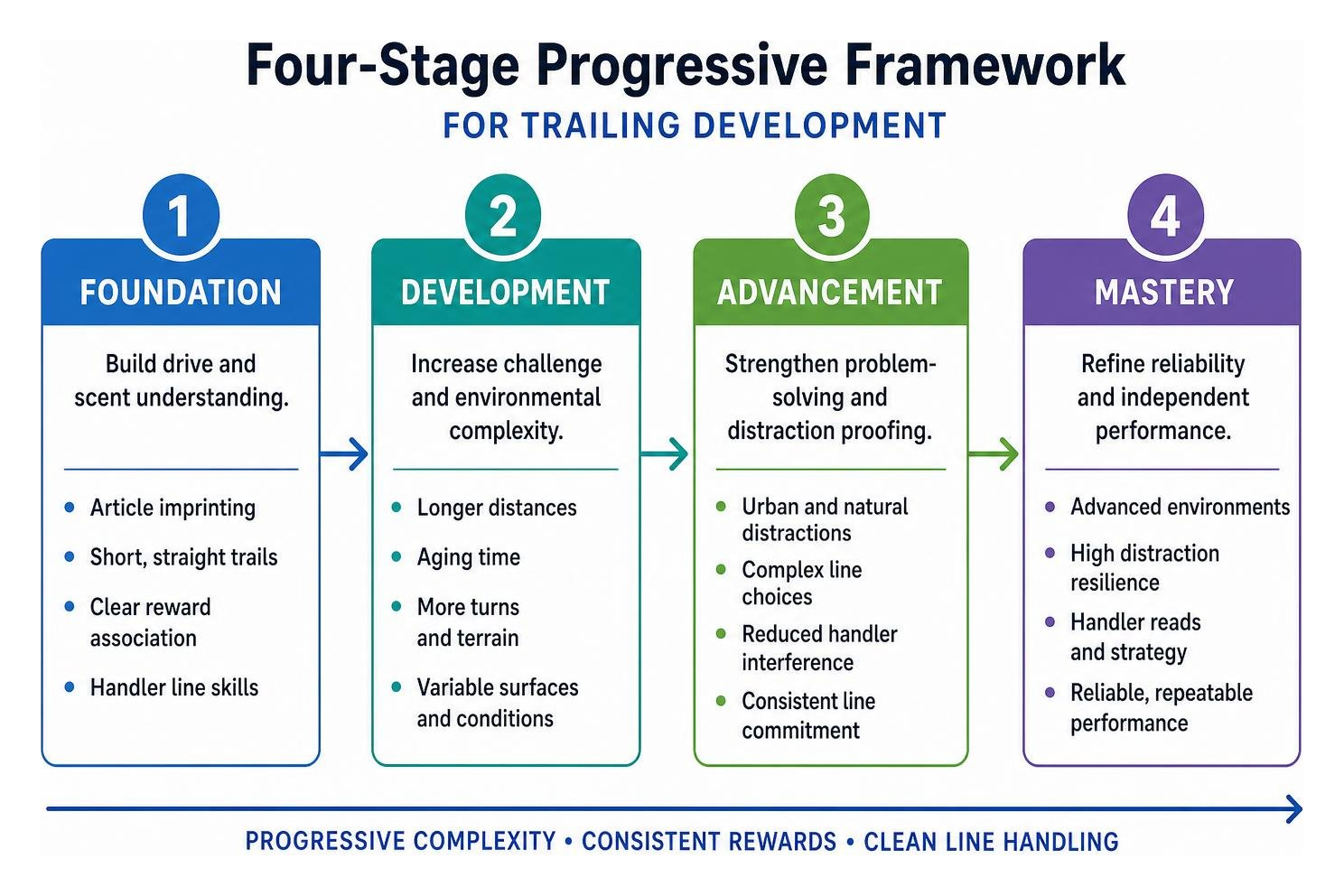
Training a reliable trailing dog does not rely on force, coercion, or rigid compliance. It relies on building clear reward associations, consistent environmental cues, and clean line handling mechanics.
Every successful session requires strict scent hygiene protocols. Handlers must use sterile handling techniques, utilizing ziplock bags, sterile gauze pads, or uncontaminated articles of clothing to ensure that the dog receives a clear, uncontaminated scent prompt at the start of the trail. For a complete tactical breakdown of field setups, consult our mantrailing dog training tips guide.
Step-by-Step Trail Progression and Article Imprinting
Training progresses systematically through structured phases:
- Level 1: Visual Runaways (The Chase Phase): The target runner interacts warmly with the dog, creates high arousal with a high-value toy or food reward, shows the scent article, and runs away into light cover within the dog's direct line of sight. The dog is given the search cue, allowed to surge forward on the line, and rewarded with an intense jackpot upon locating the runner.
- Level 2: Semi-Blind Hides: The runner drops their scent article at the start line, runs out of sight around a corner or behind a structure, and settles quietly. The handler presents the scent article to the dog, gives the search cue, and allows the dog to navigate the corner using scent alone rather than visual memory.
- Level 3: Full Blind Trails with Scent Imprinting: The handler does not know the location of the runner or the path taken. The dog is presented with a double-bagged scent article, processes the individual odor, indicates direction of travel, and solves the trail independently.
- Level 4: Distractions and Aged Trails: Scent trails are aged from several hours to over a full day. Cross-tracks, public contamination, elevation changes, and urban obstacles are added to strengthen problem-solving capabilities. Our comprehensive overview on nosework mantrailing training outlines how to transition dogs across complex surface transitions without losing drive.
Core Gear and Environmental Variables in Mantrailing
Mantrailing requires specialized equipment designed to ensure canine ergonomics and handler safety:
- Ergonomic Y-Front Harness: The trailing harness must provide full shoulder freedom without restricting airway passages under load. This harness should be used exclusively for trailing so that putting it on acts as a clear contextual working cue.
- Biothane Long Line (15 to 30 Feet): Biothane provides a consistent grip across wet coastal weather, resists tangling on shrubs, and does not retain competing scent contamination like woven nylon lines.
- Protective Handler Gloves: High-traction friction gloves protect the handler's hands from line burn during high-drive tracking surges.
- Dedicated Scent Storage: Clean zip-top bags and sterile tongs prevent cross-contaminating scent articles with the handler's own skin cells.
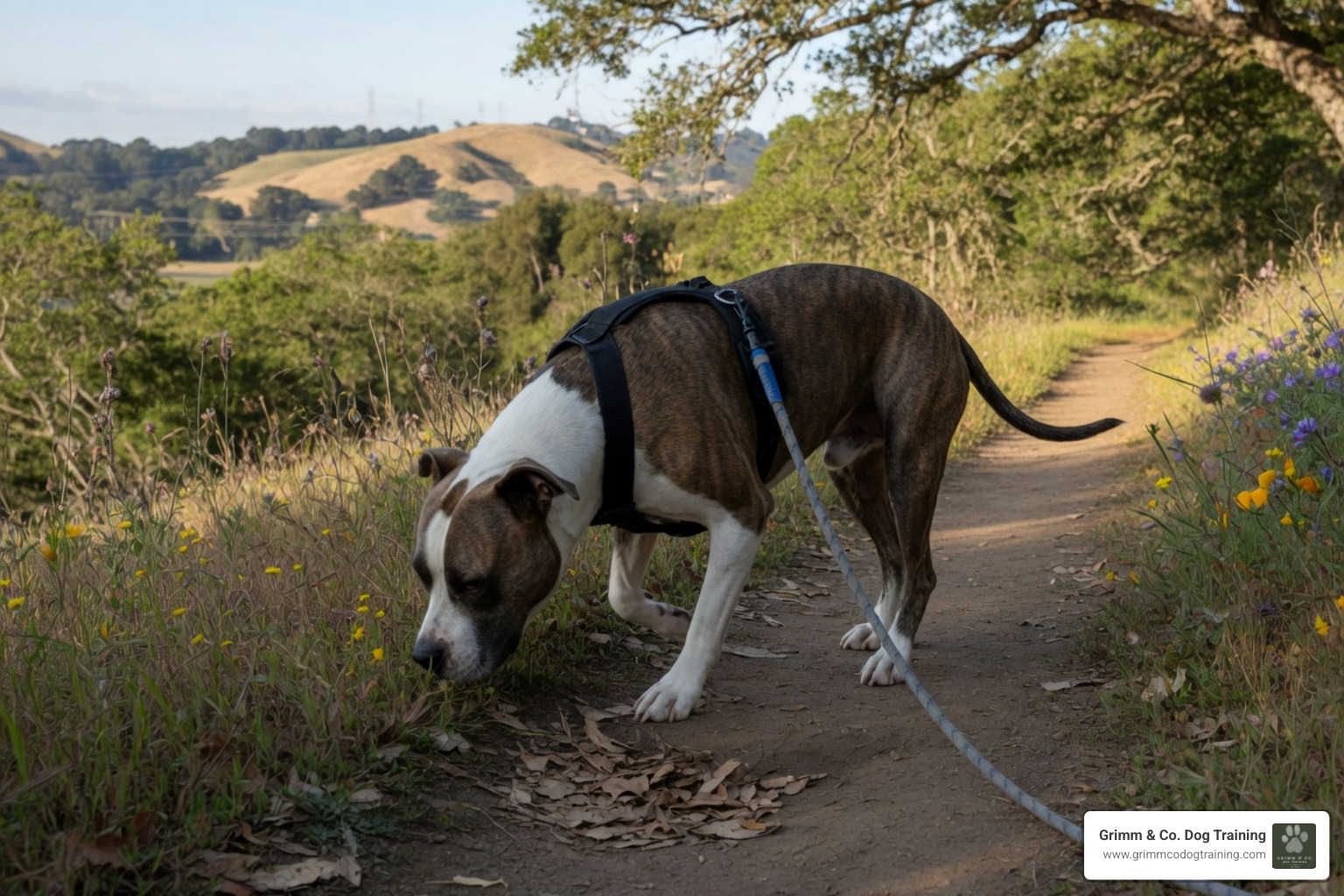
Environmental physics play a massive role in trailing success. Scent viability fluctuates based on dynamic meteorological factors:
- Wind Direction and Plume Drift: Strong headwinds force scent downwind, often causing dogs to run parallel to a physical path along a scent wall.
- Relative Humidity and Moisture: High humidity keeps bacterial decomposition active and holds scent rafts close to the ground. Extremely dry, arid conditions cause scent rafts to desiccate and disperse rapidly.
- Thermal Lift and Ground Heat: Direct midday sunlight heats concrete and bare soil, creating thermal lift that carries scent particles upward into the atmosphere, making tracking significantly harder. Handlers training in variable coastal microclimates, such as along Oyster Point Marina/Park, quickly learn how marine air layers and shoreline breezes shape scent pooling along coastal perimeters.
Frequently Asked Questions About Canine Scent Work
Which breeds, ages, and physical abilities can participate in trailing?
Mantrailing is universally accessible. Because the activity taps into inherent canine biology rather than breed-specific conformation, any dog with a working nose can participate. We regularly train terriers, sighthounds, sporting dogs, herders, bully breeds, and mixed breeds.
Puppies can begin foundational runaway games as soon as they complete initial vaccinations, building environmental confidence early. Senior dogs and dogs with physical limitations, including tripod amputees or vision-impaired dogs, excel in mantrailing because handlers can adjust the pace, distance, and terrain to match the dog's physical stamina without compromising mental fulfillment.
How long does a target scent trail remain viable in outdoor environments?
In stable environmental conditions, experienced trailing dogs can follow human scent trails that are 24 to 48 hours old. In undisturbed wilderness environments with optimal humidity and vegetative cover, elite hound teams have successfully worked trails several days after the subject passed through.
Conversely, extreme heat, heavy UV radiation, and heavy vehicle turbulence in dense urban areas degrade scent rafts faster, requiring fresher setups for developing dogs.
What competition titles and levels are recognized for trailing teams?
For handlers seeking formal evaluation benchmarks, organizations like the American Bloodhound Club (ABC) offer recognized trailing titles that challenge a team's proficiency across increasing trail age and environmental contamination:
- Mantrailer (MT): The entry-level standard requires a dog to complete a 0.5 to 0.75-mile trail aged between 4 and 6 hours through natural terrain with minor road crossings.
- Mantrailer Intermediate (MTI): The trail length remains 0.5 to 0.75 miles, but the scent age increases to 8 to 18 hours, incorporating moderate contamination and elevation changes.
- Mantrailer Excellent (MTX): The highest sport standard requires working an aged trail (24 to 36 hours old) through heavy public contamination, urban distractions, surface transitions, and complex physical obstacles within a strict time limit.
Advancing Your Partnership Through Mantrailing

Mantrailing transforms how you see and understand your dog. When you hold a trailing line, you step out of the role of director and into the role of a supportive partner, learning to read micro-shifts in your dog's head carriage, ear positioning, and tail tempo as they solve complex olfactory puzzles.
Whether you want to build quiet confidence in a sensitive rescue, provide high-drive mental stimulation for an energetic working breed, or explore an engaging outdoor sport, scent work meets your dog's fundamental needs. At Grimm & Co. Dog Training, we provide dedicated coaching, structured workshops, and supportive trail sessions designed for Bay Area dog owners. Explore our specialized mantrailing programs to start working with your dog's natural abilities today.