
Finding the Right Dog Scentwork Class for Beginner Sniffers
Finding Dog Scentwork Classes That Fit Your Dog

Dog scentwork classes teach dogs to use their strongest natural skill, their nose, to find hidden food, toys, or target odors. The right beginner class builds independent hunting, confidence, and problem-solving while giving you a clearer way to read your dog's behavior.
For a quick starting point, look for a class that offers:
- A true foundation level: No prior scentwork or competition experience required.
- Small groups or individual turns: Dogs should search without crowding or pressure from other dogs.
- Reward-based searching: Most beginners start by finding food or toys before learning target odors.
- A plan for your dog's needs: Shy, reactive, young, senior, and high-energy dogs can all benefit when the environment is managed well.
- A qualified instructor: Ask about scentwork-specific education, trial experience, class safety, and the organization's rules the program follows.
Scentwork is not just for future competitors. It can be a focused enrichment activity for a busy puppy, a confidence-building outlet for a worried dog, or a productive way to strengthen engagement with a dog who finds everyday obedience difficult.
I am Bailey Milne-Davies, a dog trainer and scientist who has trained and competed with my own dog, Grimm, in several dog sports, including trailing and locating work. Through dog scentwork classes and relationship-based training, I help owners build calmer, more capable teams through clear communication and purposeful work.
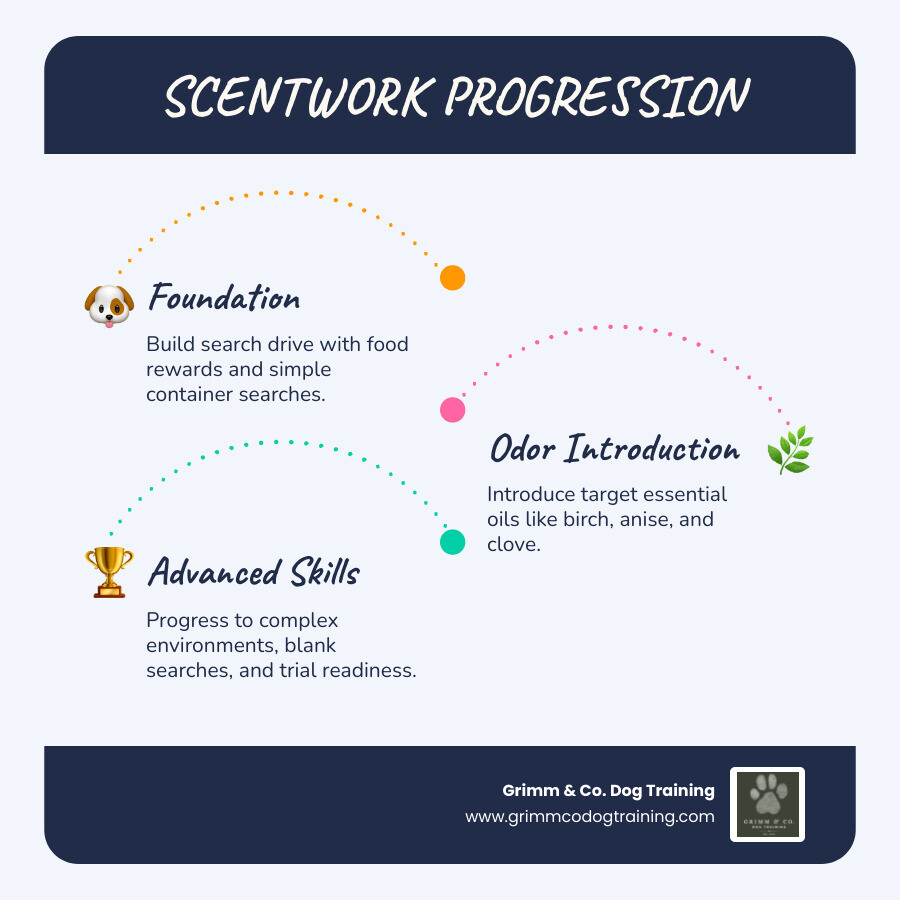
What to Expect from Dog Scentwork Classes: Progression and Odor Training
The origin of modern sport scentwork traces back to professional detection dog training methods. In 2006, professional detection dog trainers Amy Herrot, Jill Marie O'Brien, and Ron Gaunt developed K9 Nose Work to adapt detection concepts for pet dogs. Their goal was simple: give companion dogs a safe, structured environment to tap into their hardwired search drive while allowing handlers to observe how dogs navigate scent pathways in real time.
Today, formal scentwork sports are overseen by governing bodies such as the National Association of Canine Scent Work (NACSW) and AKC Scent Work. While trial formats differ, the underlying foundation across reputable dog scentwork classes remains consistent. We start by building intense desire to search, then introduce specific target essential oils, and eventually advance to complex environmental problem solving.
Participating in sport-based activities gives dogs a clear job that channels mental drive into controlled focus. Exploring options like Dog Training Through Sports Boosting Engagement Bonding and Enrichment helps owners understand how scentwork fits into a broader training framework.
Foundational Stages in Beginner Dog Scentwork Classes
Beginner classes focus on building hunt drive and problem-solving independence. Rather than starting with scent recognition of essential oils, dogs learn the rules of the game using primary rewards like high-value food treats or a favorite toy.
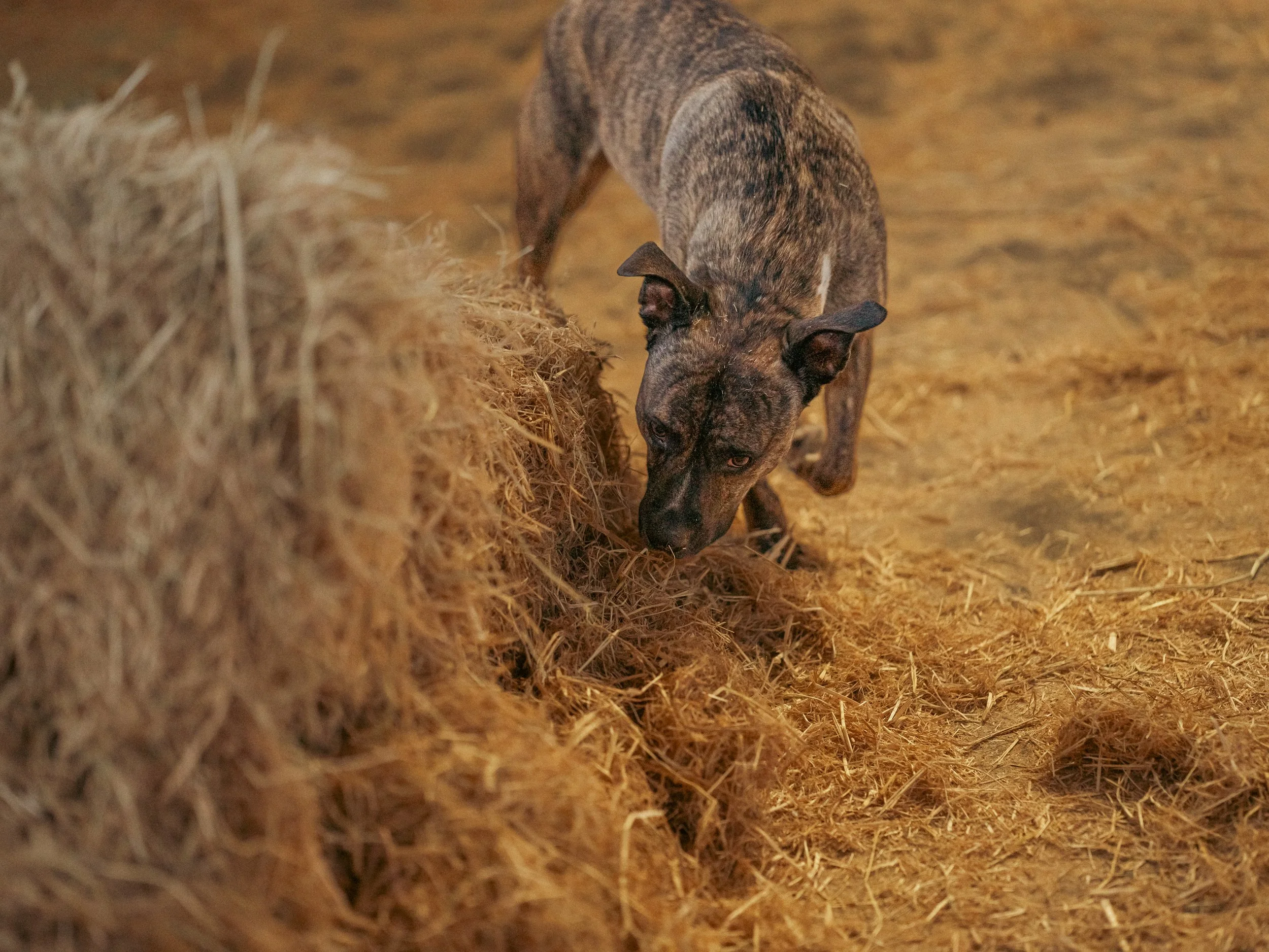
In the initial weeks, instructors place treats inside cardboard boxes or simple search containers. As your dog searches the room, they discover that following their nose directly leads to a high-value reinforcer. This stage teaches several core search principles:
- Environmental Confidence: Searching through cardboard boxes, around furniture, or along walls helps nervous dogs overcome hesitation around unfamiliar objects.
- Handler Independence: Handlers learn to step back and let the dog work out the puzzle rather than steering them or issuing frequent verbal commands.
- Container Search Mechanics: Dogs learn to systematically check containers, moving down a line of boxes to isolate the hidden reward.
Whether training in a studio near Muscle Rock Park or an urban indoor facility in Daly City, primary reward searches build clear expectations. The dog learns that searching is fun, rewarding, and completely under their control.
Odor Introduction and Essential Oil Progression
Once a dog demonstrates strong search drive and independent problem-solving, instructors transition the dog from primary rewards to specific target odors. In sport scentwork, target odors consist of natural essential oils applied to cotton swabs and placed inside vented scent tins or micro-containers.
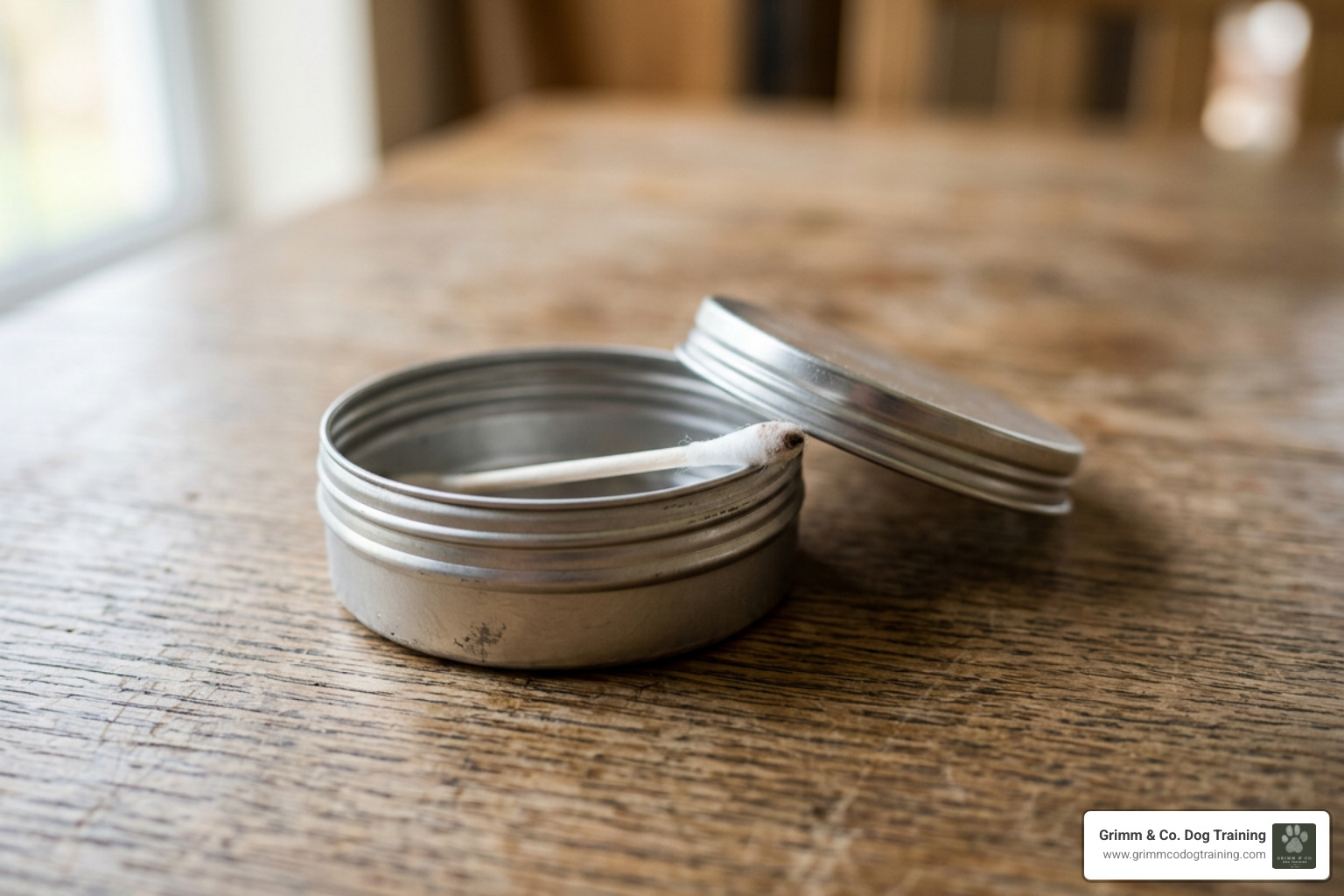
The standard odor introduction across major organizations like NACSW follows a clear, progressive order:
- Birch (Betula lenta): The foundational target odor introduced in novice classes and introductory trials.
- Anise (Pimpinella anisum): Introduced at intermediate trial levels alongside birch.
- Clove (Eugenia caryophyllata): Added at advanced levels to create multi-odor search puzzles.
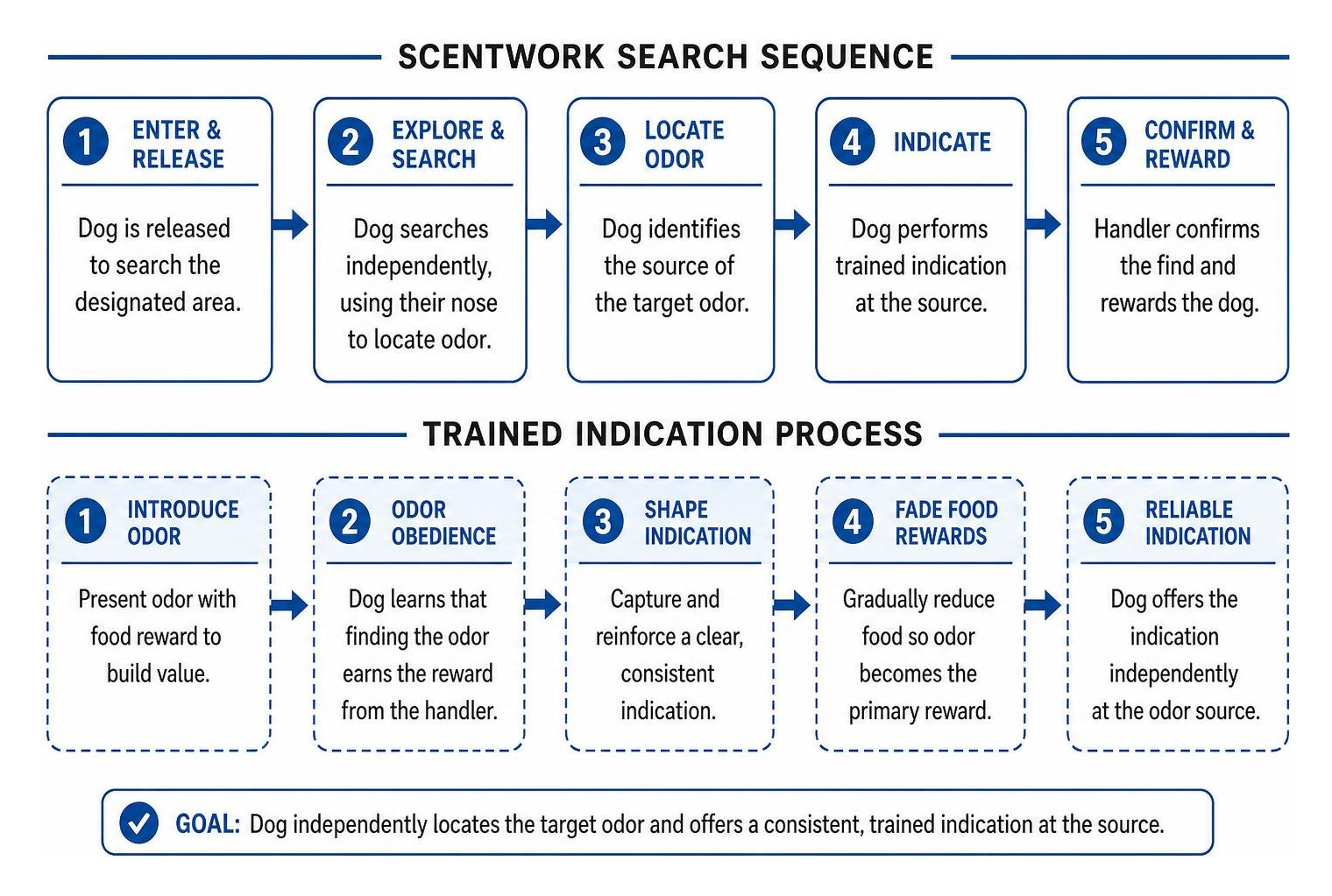
During odor introduction, trainers use odor obedience techniques. We pair the scent swab with primary food rewards, gradually fading the food so the dog learns that locating the target oil brings the reward from the handler. Over time, the dog develops a distinct trained indication, which is a recognizable change in behavior (such as a freeze, sit, or persistent nose-touch at the hide source) informing the handler that odor has been located. For local owners interested in foundation classes in the Bay Area, exploring structured course options provides a practical look at how foundational searches are structured.
Key Factors When Evaluating Local Scentwork Programs
Selecting the right program requires looking beyond generic class descriptions. High-quality dog scentwork classes prioritize small class sizes, strict safety protocols, and structured resting periods for waiting dogs.
When researching regional programs across San Francisco, South San Francisco, or San Mateo, evaluate how facilities handle logistics. Scentwork requires high mental focus, and waiting dogs can become frustrated if left standing on leash in close quarters. Reputable facilities design their schedules around single-dog search runs, keeping non-working dogs safely crated in vehicles or designated crating zones between turns.
Our overall Training Approach emphasizes clear structural management to keep dogs calm, focused, and ready to learn during active search runs.
Selecting the Right Instructor for Dog Scentwork Classes
Instructor qualifications directly impact the quality of your training experience. Look for instructors who hold official credentials through recognized scentwork organizations.
The NACSW offers tiered professional certifications that demonstrate instructor competency:
- PNWI (Preliminary/Provisional Nose Work Instructor): An instructor who has completed Segment 1 of the formal NACSW instructor certification program.
- ANWI (Associate Nose Work Instructor): An instructor actively enrolled in the certification process who has committed to standard K9 Nose Work methodologies.
- CNWI (Certified Nose Work Instructor): A graduate who has completed all certification coursework, lectures, experiential hours, and continuing education requirements.
Certified instructors understand fluid mechanics and airflow behavior. Scent does not stay in a static bubble. It moves with draft currents, temperature gradients, and environmental changes. A qualified instructor knows how to set hides to match your dog's current skill level, preventing unnecessary frustration.
Adaptability for Shy, Reactive, or Senior Dogs
One of the greatest strengths of scentwork is its universal accessibility. Unlike standard agility or high-impact dog sports, scentwork places minimal physical stress on the dog's joints, making it an ideal activity for senior dogs, dogs recovering from injuries, or low-energy breeds.
Scentwork is also uniquely suited for environmentally sensitive or reactive dogs. Because dogs execute searches one at a time while other dogs remain crated in vehicles or behind visual barriers, reactive dogs can participate safely without feeling threatened by visual triggers.
For owners looking for safe group environments, reviewing localized options such as Group Classes can help identify structured training setups designed around individual working space.
Competition Pathways, Titles, and Complementary Online Learning
While many handlers enroll in dog scentwork classes purely for canine enrichment and mental stimulation, others choose to enter official competitive trials. Understanding how trials operate helps handlers set clear training goals.
Before entering an official NACSW competition trial, a dog/handler team must pass an Odor Recognition Test (ORT). The ORT verifies that the dog can accurately identify a target odor (such as Birch) hidden inside one of twelve identical closed cardboard containers within a specified time limit, without alerting on blank boxes.
Trial searches take place across four standardized search environments:
- Containers: Rows of boxes, luggage, or plastic bins containing hidden odor.
- Interiors: Indoor rooms, offices, or warehouse spaces with furniture, wall outlets, and floor hides.
- Exteriors: Outdoor yards, grassy parks, or paved areas exposed to weather, wind, and ambient odors.
- Vehicles: Hides placed on the exterior bumpers, wheel wells, or door seams of parked cars, trucks, or trailers.
Handlers living around coastal Bay Area regions can practice search skills in real-world environments. For example, learning how wind shifts across ocean bluffs at Muscle Rock Park or marine breezes along Jack London Square in Oakland impact scent distribution prepares teams for complex outdoor searches. Handlers interested in urban training contexts can also prepare for diverse course structures across varied search environments.
Title Progression from NW1 to Advanced Levels
Competing teams move through progressive titling levels as their skill and communication improve:
- NW1 (Nose Work 1): Focuses on a single target odor (Birch) across all four search environments. Search areas contain single hides without intentional distractors or blank search rooms.
- NW2 (Nose Work 2): Introduces a second target odor (Anise). Searches may contain multiple hides, mild distractors, and off-leash search elements.
- NW3 (Nose Work 3): Adds the third target odor (Clove). Searches feature multi-odor hides, intentional distractors (such as food or toys), blank rooms containing no hides, and unstated hide numbers where handlers must determine when a room is clear.
Beyond NACSW, organizations such as AKC Scent Work offer complementary titling pathways across Novice, Advanced, Excellent, and Master levels. To explore how scentwork skills relate to outdoor tracking disciplines, check out Nosework Mantrailing Training for an in-depth breakdown.
How Online Resources Enhance In-Person Training
In-person instruction is vital for learning proper hide setting, leash handling mechanics, and immediate instructor feedback. However, digital educational platforms provide valuable supplemental learning.
Platforms like Scent Work University offer over 350 digital courses, specialized webinars, and technical seminars taught by experienced sport judges and national instructors. Digital resources are particularly helpful for:
- Video Slow-Motion Analysis: Reviewing recorded search runs to catch subtle head flicks, change of behavior markers, or tail ticks that signals odor detection.
- Startline Routine Planning: Developing consistent pre-search protocols that prepare your dog to transition into work mode.
- Handling Mechanics Practice: Mastering leash tension management and body positioning away from active search search areas.
Combining in-person classes in locations like Daly City, San Francisco, or San Mateo with online video review helps handlers refine their observational mechanics faster between class sessions.
Frequently Asked Questions About Scentwork
What is the difference between K9 Nose Work and general scentwork?
K9 Nose Work refers specifically to the training methodology and titling framework established in 2006 by the founders of the National Association of Canine Scent Work (NACSW). It follows a strict progression starting with primary rewards (food or toys) before introducing essential oils.
General scentwork is a broader umbrella term encompassing various scent-based dog sports governed by different organizations (such as AKC Scent Work, UKC, or C-WAGS). While general scentwork programs use similar target odors (birch, anise, clove, cypress), their rules, hide placements, and entry requirements vary.
Can my reactive or anxious dog participate in scentwork classes?
Yes. Scentwork is widely considered one of the safest dog sports for reactive, anxious, or fearful dogs. Class structures dictate that dogs work individually on the search floor while all other participating dogs remain safely crated inside handler vehicles or behind visual screens.
Because there is zero direct dog-to-dog interaction, reactive dogs can focus entirely on solving scent puzzles without sensory overload. The process of searching and earning rewards independently builds confidence in nervous dogs over time.
How soon can a beginner dog transition to target odors like birch?
The transition timeline depends on your dog's hunt drive, focus, and environmental confidence. Most structured beginner courses spend 4 to 6 weeks establishing search desire using primary food or toy rewards across varied environments.
Once a dog enthusiastically searches containers and rooms without handler prompting, instructors introduce birch odor by pairing it directly with primary rewards. Rapidly rushing to target odors before building solid search motivation can create confusion or hesitation at the hide source.
Strengthening Your Dog's Focus and Bond Through Scentwork
Dog scentwork classes offer far more than just a competitive outlet. By learning to work as a cohesive unit, you gain deep insight into your dog's unique body language, subtle behavioral cues, and natural decision-making processes. Scentwork transforms routine daily physical exercise into deep, rewarding mental stimulation that satisfies your dog's instinctual drives.
At Grimm & Co. Dog Training, we emphasize relationship-based training that strengthens clarity, trust, and mutual engagement between dogs and their owners. Whether you are navigating busy neighborhood streets in Daly City, San Francisco, San Mateo, or Berkeley, building a working partnership with your dog provides real-world stability and focus.
If you are ready to explore scent-based sports and take your dog's natural hunting drive to the next level, learn more about our specialized Mantrailing program to discover how working outdoor scent setups can elevate your training journey.