
How to Start Mantrailing Dog Training Today
Your Dog's Nose Knows More Than You Think
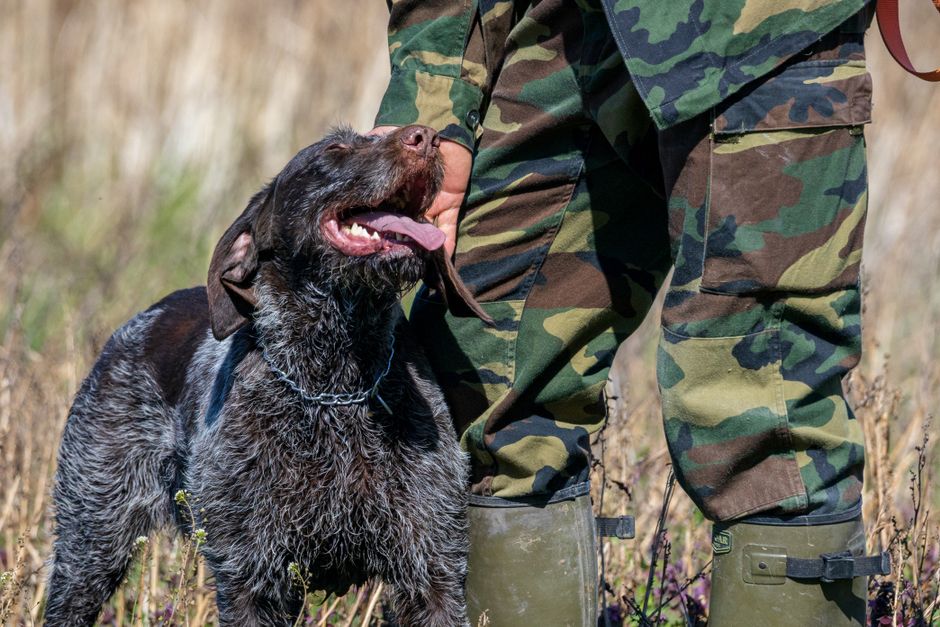
Mantrailing dog training is the practice of teaching your dog to locate a specific person by following their unique scent trail through any environment, urban street, wooded park, or crowded public space, using nothing but their nose.
Here is what you need to know to get started:
- What it is: Your dog follows a scent trail left by dead skin cells shed naturally by a target person, starting from a scent article like a worn piece of clothing.
- What you need: A trailing harness, a 15 to 20 foot long line, scent articles stored in sealable bags, and high value rewards.
- How to begin: Start with short "runaways" where the target person runs a short distance and hides, then gradually increase trail length, age, and complexity.
- Who it is for: Any dog, any breed, any age. It is especially well suited to reactive, anxious, or physically limited dogs.
- Why it works: A dog's nose contains up to 300 million olfactory receptors. Twenty minutes of scent work can tire a dog out more than a full hour of walking.
Most dog owners in the South Bay are already dealing with the real costs of an understimulated dog: leash reactivity on the Daly City sidewalk, poor focus at the Los Gatos farmers market, a dog that is physically exercised but mentally nowhere near satisfied. Mantrailing addresses that directly. It gives your dog a job that is cognitively demanding, self-directed, and deeply satisfying in a way that another lap around the block simply cannot replicate.
I'm Bailey Milne-Davies, and my own experience with mantrailing dog training grew out of training my dog Grimm through rat sports, including Trailing and Locating and Urban Locating, after realizing that obedience alone was not enough to give him the mental outlet he needed. That background shapes everything I bring to teaching this sport to dogs and handlers at Grimm and Co. Dog Training.
The Neurobiology Behind Your Dog's Superpower
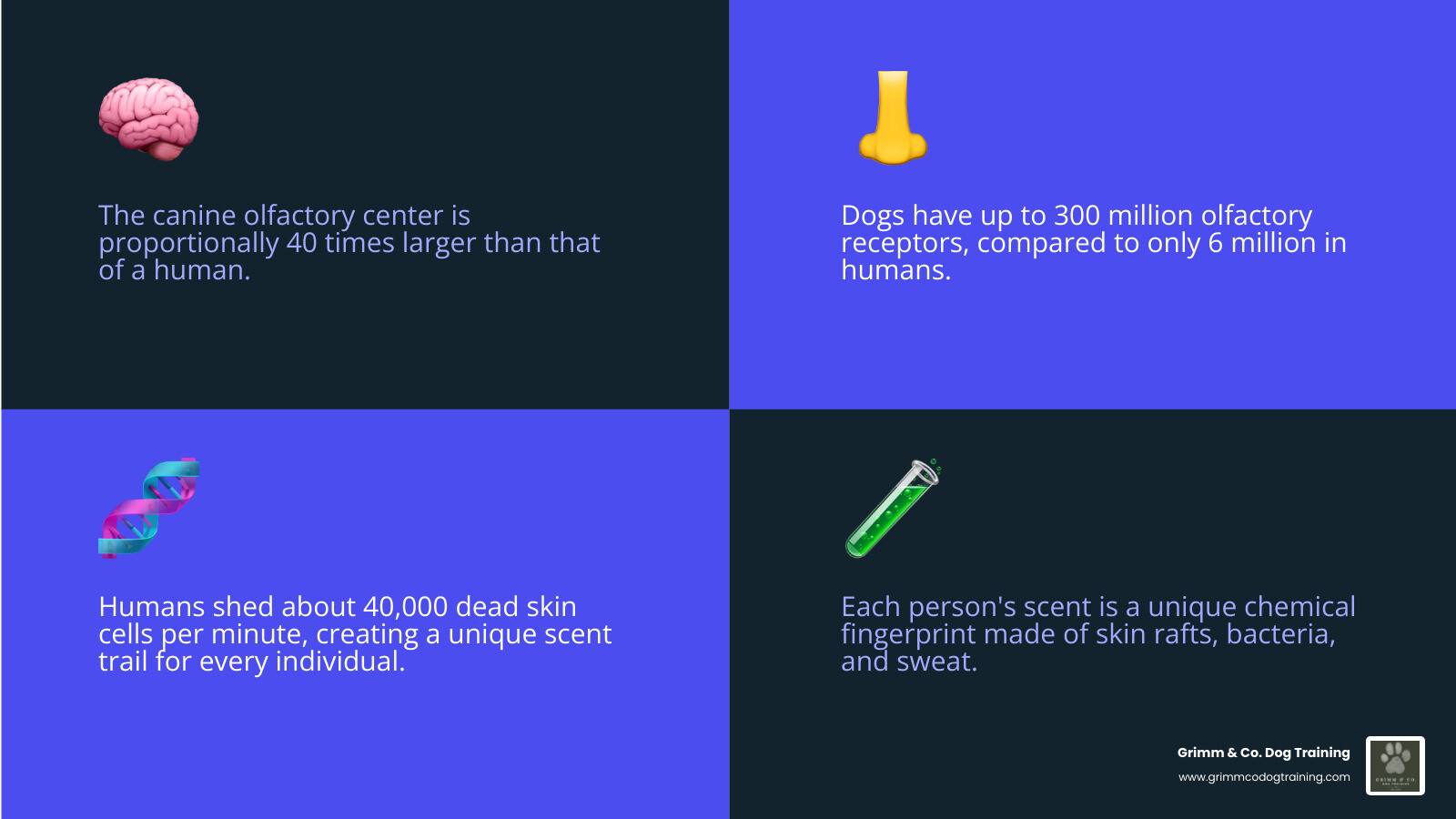
To truly understand mantrailing dog training you must first understand the sheer scale of the canine olfactory system. While humans navigate the world primarily through sight, dogs experience their environment through a rich, detailed, and highly sophisticated chemical landscape. The canine brain is built for this. The olfactory center in the canine brain is proportionally 40 times larger than that of a human, allowing them to process complex scent layers that we cannot even begin to perceive.
This biological machinery is powered by up to 300 million olfactory receptors in the nose, compared to a meager 6 million in humans. Every step a human takes leaves behind a microscopic trail of skin rafts. These skin rafts are dead skin cells, bacteria, and sweat that naturally shed from our bodies at a rate of roughly 40,000 cells per minute. As these rafts drift and settle on bushes, pavement, or soil, they create a unique chemical fingerprint.
In the scientific community, studies have shown that a trained dog can easily distinguish between identical twins based on their individual scent, even in the presence of heavy environmental distractions. This level of precision is why trailing findings are legally accepted as evidence in court proceedings. When we engage in trailing, we are not teaching the dog how to use their nose. They already know how to do that. Instead, we are teaching them to focus on one specific person's scent profile and follow it to the exclusion of all other biological noise.
For a deeper look into the biological and behavioral aspects of this activity, you can read more about Mantrailing with Dogs What It Is and How It Works Vitomalia. By participating in this sport, you are tapping into a natural drive that is deeply satisfying for your dog. This is why we view trailing not just as a fun game, but as a core component of Dog Training Through Sports Boosting Engagement Bonding and Enrichment.
As a handler, your primary job is to trust your dog and learn to read their subtle body language. When a dog is on a fresh trail, their tail carriage, head drops, and overall physical posture shift in predictable ways. A sudden drop of the head or a rapid vibration of the tail indicates they have locked onto the scent plume. If they overshoot a corner and lose the scent, you will see them lift their head, cast around in a circle, and self correct. Learning to observe these physical cues without interfering is the most challenging and rewarding part of the sport.
Distinguishing the Scent Disciplines
Many dog owners confuse trailing with other scent sports like tracking or nosework. While they all utilize the dog's olfactory system, the mechanics, training philosophies, and real world applications are entirely different.
| Scent Discipline | Primary Target | Scent Source | Dog's Posture | Environment |
|---|---|---|---|---|
| Tracking | Ground disturbance | Footsteps, crushed vegetation, soil bacteria | Nose glued to the ground, precise footsteps | Mostly rural, dirt, or grass |
| Trailing | Specific human scent | Skin rafts, sweat, airborne scent plumes | Head mid level, dynamic air and ground sniffing | Highly varied, urban, suburban, forests |
| Nosework | Synthetic essential oils | Hidden scent swabs (birch, anise, clove) | Systematically searching objects or areas | Controlled indoor or outdoor spaces |
In tracking, the dog is required to follow the exact footstep path of a track layer. The dog's nose must remain close to the earth, detecting crushed vegetation and soil disturbances. Tracking dogs are penalized if they cut corners or drift with the wind. There is typically no person at the end of a tracking trail, only dropped articles of clothing or small wooden blocks.
Trailing is a much more dynamic and realistic pursuit. A trailing dog is searching for a specific person. They are allowed to use whatever scenting style works best in the moment. If the wind blows the scent plume ten feet off the pavement into the grass, the trailing dog will follow that airborne plume, cutting corners and moving quickly. They do not care about individual footsteps. They care about finding the human waiting at the end of the line. This is the exact skill set used by a professional Search and Rescue Dog to locate missing hikers or disoriented individuals.
Nosework, or scent detection, is a sport where dogs search for hidden target odors like anise, birch, or clove. While it is excellent mental stimulation, it is highly controlled and does not involve the physical movement or the human tracking element of trailing. Trailing offers a perfect hybrid of physical exertion and cognitive problem solving, making it uniquely suited for the active lifestyles of South Bay dog owners.
Scent Work as a Therapeutic Outlet for Reactive Dogs
One of the most common misconceptions about mantrailing dog training is that it is only for specific working breeds. While Bloodhounds are the undisputed champions of the trailing world, possessing at least double the scent receptors of average breeds, almost any dog can excel at this sport.

A Bloodhound's long, droopy ears and wrinkled face physically help sweep and trap scent particles close to their nose as they move. However, your mixed breed rescue or your high drive herding dog has more than enough olfactory power to follow a trail that is hours old.
In fact, trailing is one of the most effective therapeutic activities for reactive, anxious, or fearful dogs. In the South Bay, managing a reactive dog can be incredibly stressful. A simple walk through Muscle Rock Park or down a busy street in Redwood City can quickly turn into a nightmare of triggers and over arousal. Trailing provides a safe, highly controlled alternative.
Because trailing is performed individually, there is no pressure for your dog to interact with other dogs or strangers. Only one dog works at a time while the other dogs rest quietly in their vehicles. The work itself is entirely self directed. When a dog is trailing, their brain is fully occupied by the cognitive challenge of solving the scent puzzle. This intense focus acts as a natural buffer against environmental stressors.
An anxious dog that is normally hypervigilant about noises or distant dogs will often completely ignore those same triggers once they are locked onto a scent trail. The success of finding the trail layer at the end of the run provides a massive boost in confidence. Over time, this confidence spills over into their daily life, helping them feel more secure and less reactive in high stimulation environments.
Setting Up the Foundation
Starting your trailing journey requires minimal investment, but using the correct gear is non negotiable. Using the wrong equipment can confuse your dog or even cause physical discomfort, which will quickly damp their enthusiasm for the work.
For a complete overview of the culture and community surrounding this sport, you can read Discovering the Joy of Mantrailing A Guide for Dog Owners. It highlights how accessible and engaging this activity is for everyday pet owners looking to build a stronger bond with their companions.
Essential Gear for Mantrailing Dog Training
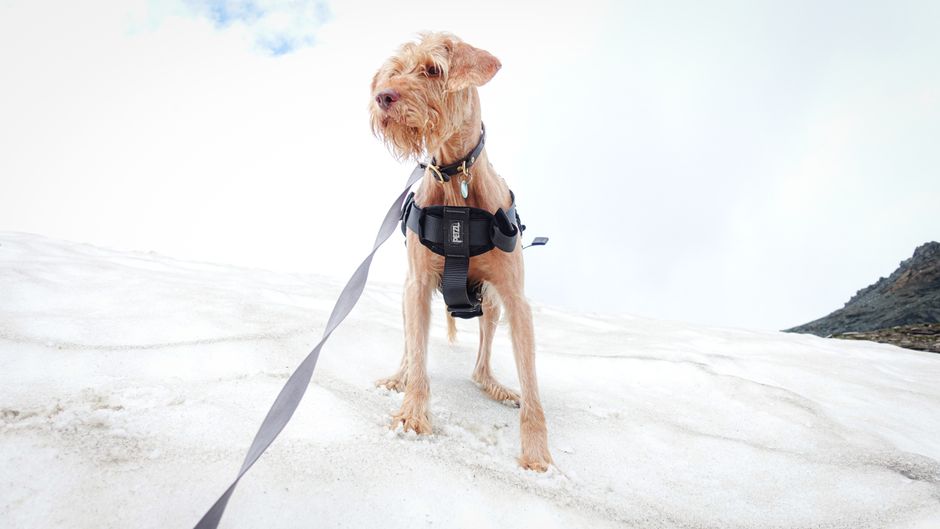
The most important piece of gear is a dedicated trailing harness. This harness must be physically distinct from your dog's everyday walking harness or collar. It must have a non restrictive design that allows for free shoulder movement and does not put pressure on the trachea when the dog pulls forward. The harness should only be put on the dog immediately before a trail starts, serving as a clear physical cue that it is time to work.
You will also need a long line, typically fifteen to twenty feet in length. Biothane or lightweight leather lines are highly recommended because they do not tangle easily and do not absorb moisture or dirt from the wet grass of Jack London Square or the coastal fog of Daly City.
Do not use retractable leashes, as they do not allow for proper line handling and can be dangerous when a dog is pulling hard. Always wear sturdy, high grip gloves to prevent rope burns when your dog accelerates on the trail. Finally, you will need several clean, sealable scent bags to store your scent articles without contamination.
Step by Step Guide to Your First Mantrailing Dog Training Session
The first step in training is the runaway. This exercise is designed to build immediate motivation by linking the scent of a person to an immediate, high value reward. You will need a helper to act as the runner, or decoy, and a high value reward, such as wet food, squeeze cheese, or a favorite toy, that the runner will hold.
To execute the runaway, follow these steps:
- Prepare the dog: Put your dog in their everyday collar or walking harness and walk them around the training area to stretch their muscles and allow them to relieve themselves. This acclimates them to the environment.
- Gear up: Move to your starting point, switch your dog to their dedicated trailing harness, and attach the long line.
- The runaway setup: Have your helper stand close to your dog, show them the high value reward, and excite them. The helper should then run away, remaining in the dog's clear line of sight, and hide behind a tree or a wall about twenty five feet away.
- Present the scent article: Before letting your dog run, present a scent article, such as a clean cloth the helper has held, to your dog's nose.
- Give the cue: Give your designated start command, such as "get to work" or "find," and let your dog pursue the runner. Keep the line loose and let them lead.
- The reward: When your dog reaches the helper, the helper should immediately deliver the high value reward with plenty of quiet praise.
A common mistake for beginners is steering the dog with the long line. If your dog makes a wrong turn, do not pull them back. Simply stand still, keep the line taut but not restrictive, and let them figure out the mistake on their own.
Another frequent error is a lack of consistency. Always use the exact same sequence of events, harness, and verbal cues to start a trail. This consistency builds a strong ritual that helps your dog transition into the correct headspace for scent work.
Progressing to Complex Environments and Formal Titles
Once your dog is consistently solving short runaways, you can begin to increase the difficulty. This progression must be done systematically. Never increase more than one variable at a time. If you are increasing the age of the trail, keep the length short and the environment simple. If you are moving to a more challenging, contaminated urban environment, keep the trail fresh and the distance manageable.
Environmental contamination is a major factor in advanced trailing. In busy areas like San Jose or the streets of San Francisco, the ground is covered in a chaotic mix of scent trails from other pedestrians, dogs, vehicle exhaust, and discarded food.
Wind and temperature also play critical roles. High winds can blow a scent plume far from the physical path of the runner, while hot asphalt can quickly dry out and destroy skin rafts. Training in varying weather conditions across different South Bay venues will help your dog learn to adapt to these variables.
For those interested in competitive sports, the American Bloodhound Club offers a structured series of trailing titles, starting with the Event Entry Certification Test and progressing through Mantrailer, Mantrailer Intermediate, and Mantrailer Excellent. These tests involve trails that are aged up to 36 hours, cover long distances, and include complex challenges like crossrunners and physical obstacles.
If you are looking to take your training to the next level, you can explore What Daly City Mantrailing Courses Are Available Right Now to find structured coaching in your local area. Engaging in these courses is a fantastic way to enjoy some structured Doggie Fun while building real world skills.
Frequently Asked Questions
How long does it take for a dog to learn mantrailing?
Most dogs show immediate progress within their very first session. They naturally understand the concept of following a scent, so connecting the scent article to the target person happens quickly. However, mastering complex environments, aged trails, and heavy distractions requires consistent, ongoing practice over several months.
Can any breed participate in mantrailing?
Yes, all breeds and mixed breeds are welcome in the sport. While working breeds and hounds have a natural advantage due to their genetics, even small companion dogs or senior dogs with physical limitations can participate. The training is easily adapted to match the physical capabilities of any dog.
Is mantrailing physically exhausting for dogs?
Yes, trailing is highly demanding cognitive enrichment. The mental focus required to isolate and follow a single scent profile is incredibly tiring. A twenty minute trailing session can leave a high energy dog more physically and mentally satisfied than a fast, one hour walk.
Join the Trail in the South Bay
At Grimm and Co. Dog Training, we believe that the strongest relationships are built through shared, purposeful activity. We provide personalized, relationship based training across the South Bay, including Daly City, San Jose, Redwood City, and Los Gatos, helping you unlock your dog's natural potential.
Whether you want to build confidence in a reactive dog, provide an outlet for a high drive working breed, or simply learn a fascinating new skill with your companion, we are here to support you. To learn more about our programs and schedule your first session, visit our dedicated Mantrailing page today.