
Finding the Best Gentle Dog Training in Daly City
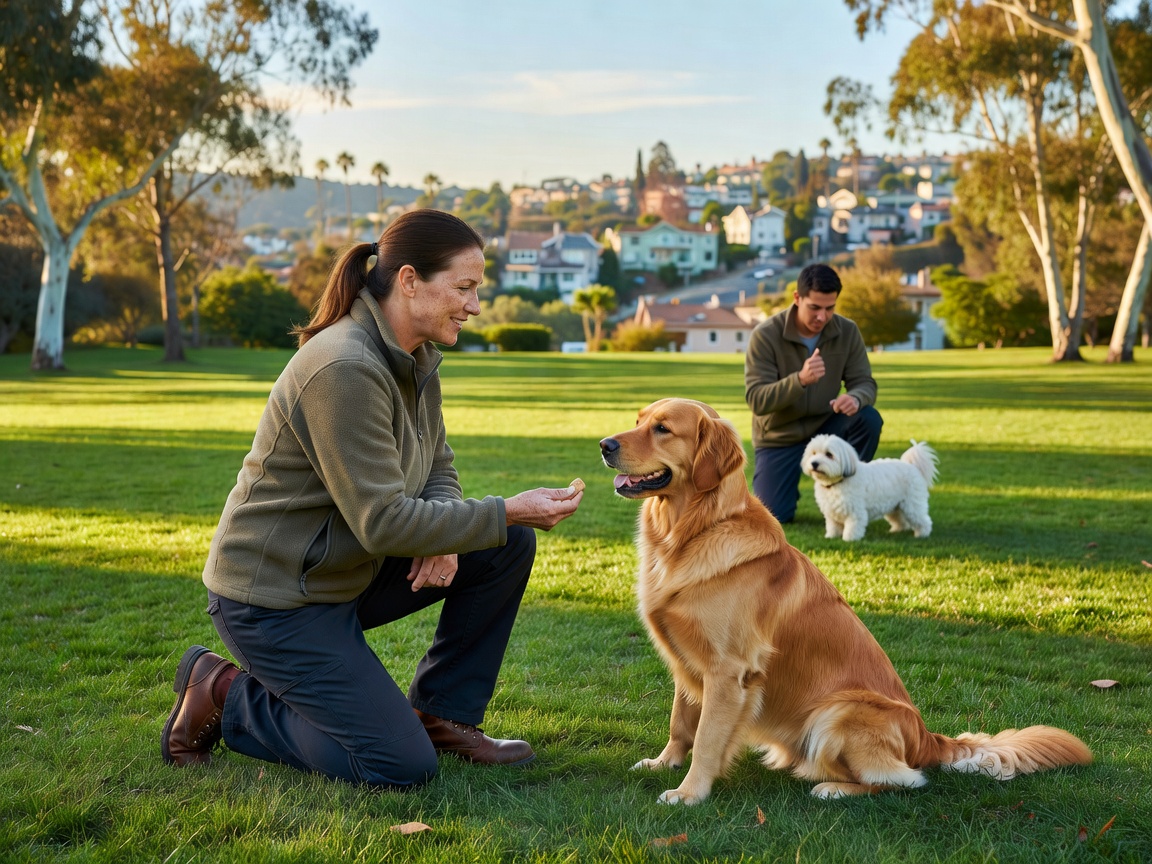
Navigating the unique terrain of Daly City, from foggy coastal bluffs at Mussel Rock Park to busy corridors near Highway 1, requires a dog that is emotionally balanced, resilient, and responsive. When searching for gentle dog training Daly City, owners often seek a clear, modern framework that respects the dog's cognitive abilities while producing reliable results in dense urban surroundings.
At its foundation, our training approach focuses on clear communication, emotional regulation, and deep relationship building. Rather than relying on physical compulsion, heavy leash corrections, or fear-inducing tools to enforce compliance, relationship-based training utilizes principles of behavioral science, such as operant conditioning and classical counter-conditioning.
When dogs are motivated through clear feedback and high-value rewards, they become active participants in the learning process. Compulsion-based methods may suppress outward behaviors, but they often fail to address the underlying emotional state driving those actions. A dog that stops pulling because it fears a harsh correction is still internally stressed, anxious, or frustrated. Over time, this unresolved tension can manifest as escalation, environmental anxiety, or sudden behavioral fallout.
By contrast, relationship-based methods modify the underlying emotional response. When a dog views its handler as a predictable source of safety, guidance, and reinforcement, desirable behaviors naturally become self-reinforcing.
Core Principles of Low-Stress Behavioral Modification
To implement effective low-stress behavioral modification, we structure learning using established scientific principles:
- Reinforcement Schedules: We transition strategically from continuous reinforcement (rewarding every successful repetition during initial acquisition) to variable or intermittent reinforcement. This shift builds behavioral persistence and keeps motivation high even in distracting environments.
- Threshold Management: Every dog has an emotional threshold, the precise distance or intensity level at which a trigger causes stress, over-arousal, or reactivity. Keeping a dog below threshold during training ensures the brain remains in a learning state rather than a reactive fight-or-flight state.
- Cooperative Care: Handling procedures, such as nail trims, ear cleaning, and veterinary exams, are taught through voluntary participation strategies. This minimizes stress during routine health checks and grooming.
- Errorless Learning: We design training environments to minimize mistakes. By setting the difficulty level so the dog can succeed easily, we build momentum, prevent frustration, and make correct choices clear from the start.
- Motivation Assessment: Every dog values rewards differently. We identify your dog's unique hierarchy of reinforcers, including primary reinforcers like fresh food, secondary reinforcers like toys or play, and environmental access rewards, to maximize engagement.
Why Daly City Dogs Thrive Under Low-Stress Behavioral Modification
Daly City offers a distinct environment that can present specific challenges for dogs. The microclimate frequently brings heavy fog, shifting coastal winds, and rapid temperature changes that alter scent lines and sensory input. Furthermore, dense residential neighborhoods feature narrow sidewalks, frequent street parking, and unexpected encounters with urban wildlife like raccoons, skunks, and coyotes near coastal bluffs.
Coastal traffic noise along Highway 1 and busy transit lines requires deliberate sound conditioning to prevent noise sensitivity. Low-stress, relationship-based training systematically habituates dogs to these ambient stressors. Instead of becoming overwhelmed by intense sensory inputs, dogs learn to check in with their handlers when uncertain.
Additionally, San Mateo County strictly enforces leash laws everywhere outside fenced yards or designated off-leash areas, with no exceptions for voice control. Reliable, low-stress leash mechanics ensure your dog walks comfortably by your side, respecting local regulations while remaining calm near high-distraction zones like Gellert Park or shopping corridors.
Resolving Complex Behaviors with Low-Stress Training Protocols
Addressing challenging behaviors such as reactivity, hyper-arousal, or separation distress requires a structured, scientific approach. Simply blocking or punishing a behavior does not teach a dog what to do instead, nor does it resolve internal distress. Through systematic desensitization and classical counter-conditioning, we help dogs build confidence and emotional resilience. Owners seeking specialized guidance for these challenges can explore our insights on blog: reactive dog training san francisco.
Gentle Dog Training Daly City Techniques for Leash Reactivity
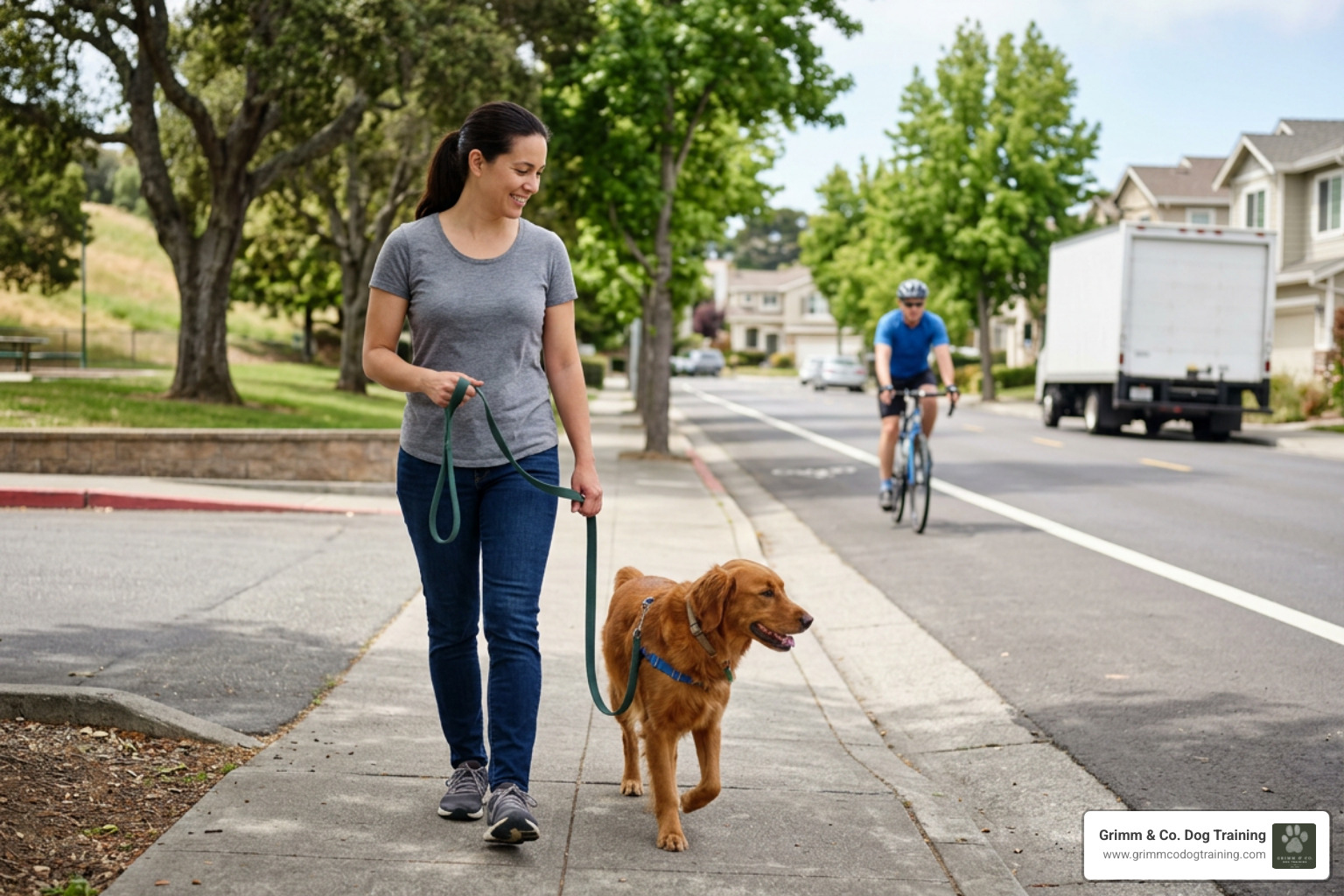
Leash reactivity often stems from fear, frustration, or territorial instincts. On a tight leash, a dog cannot execute natural canine body language or maintain comfortable distance from a trigger. To address leash reactivity effectively, we employ practical, low-stress mechanics:
- Trigger Stacking Awareness: Stress accumulates over time. A morning encounter with a stray cat, followed by loud delivery trucks, reduces your dog's coping capacity later in the day. Recognizing trigger stacking allows us to adjust training intensity before reactivity occurs.
- Distance Management: We establish an operational safety zone where your dog notices a trigger (such as another dog or bicyclist) but remains calm enough to take food rewards and respond to known cues.
- Loose Leash Mechanics: Training smooth, pressure-free leash handling prevents tension from transferring down the line to the dog, which frequently escalates arousal.
- Focus Exercises: Cues like "look" or natural check-ins teach the dog to orient toward the handler whenever an environmental distraction appears.
- Emergency Turn Mechanics: We teach an emergency U-turn cue as a fun, highly rewarded game in low-distraction areas. When a trigger appears suddenly around a blind corner in Daly City, you can clear the area smoothly without creating conflict.
Addressing Separation Anxiety and Isolation Distress
Separation-related behaviors require a precise protocol focused on building independence at the dog's individual pace. If your dog experiences anxiety when left alone, punishing destructive behavior or excessive vocalization will only compound their panic.
Our specialized approach to separation anxiety isolates the exact variables driving distress. We begin by identifying departure cues, such as picking up keys, putting on shoes, or touching the door handle, that trigger early anxiety spikes. By pairing these cues with neutral or positive experiences while remaining at home, we desensitize the dog to the routine of departure.
Next, we establish systematic, gradual absence durations. We begin with micro-absences lasting only a few seconds, carefully staying below the threshold where anxiety begins. Over time, we build duration incrementally, ensuring the dog remains completely calm throughout the process. Establishing a dedicated, comfortable safe space equipped with appropriate enrichment items further supports a settled, relaxed baseline while you are away.
Early Socialization and Puppy Development Protocols
Early development sets the trajectory for a dog's long-term behavior. The critical puppy socialization window occurs between 3 and 12 weeks of age. During this delicate phase, a puppy's brain is uniquely receptive to novel experiences, novel surfaces, sounds, people, and other animals. Thoughtful exposure during this period forms the foundation for environmental confidence throughout their adult life.
Proper timing is essential when balancing socialization with veterinary health protocols. San Mateo County guidelines and standard veterinary care recommend that puppies receive their core DA2PP booster shots on a structured timeline (typically at 6-8 weeks, 10-12 weeks, and 14-16 weeks). Puppies can safely begin controlled puppy classes once they have completed their first two DA2PP boosters around 10 to 12 weeks of age, provided the training facility maintains strict sanitation protocols. To dive deeper into structuring these crucial early weeks, visit our guide on blog: daly city puppy socialization.
House training also relies on consistency during these early months. Most puppies develop reliable bladder control within 4 to 6 months when guided by a predictable schedule, frequent outdoor potty opportunities, immediate reinforcement for correct elimination, and diligent supervision indoors.
What to Expect in Your First Gentle Dog Training Daly City Puppy Session
Starting off on the right foot ensures rapid progress and prevents common developmental errors. When you enroll in our puppy training landing page services, your initial consultation is designed to evaluate both the puppy and their environment.
During your baseline session, we cover several core practical components:
- Initial Behavioral Evaluation: We assess your puppy's temperament, boldness, recovery time after novel stimuli, and existing stress handling mechanics.
- Treat Value Hierarchy: We determine what rewards truly motivate your puppy, testing high-value options like freeze-dried meats against standard kibble.
- Body Language Baseline: We teach you how to read subtle emotional shifts, including stress yawns, lip licks, displacement sniffing, and ear postures.
- Bite Inhibition and Teething: We establish management systems and trade games to direct normal puppy mouthiness toward appropriate chew toys.
- Marker Word Timing: We teach you precise timing using verbal markers (such as "yes") or clickers to clearly communicate the exact moment your puppy makes a correct choice.
Navigating Local Socialization Environments and Public Spaces Safely
Socialization is not simply exposing a puppy to as many dogs or people as possible; it is about creating high-quality, calm, and positive associations. Forcing a nervous puppy into a chaotic situation can cause sensitization, turning a mild worry into lasting fear.
Daly City offers multiple fenced off-leash parks, including Centennial Way Dog Park, Mission Hills Dog Park, Palisades Park Dog Park, and Gellert Park. However, off-leash dog parks are generally unsuitable for young puppies or dogs actively working through behavioral rehabilitation. Uncontrolled dogs, unpredictable social dynamics, and sanitation risks make these high-stress environments counterproductive for early learning.
Instead, we utilize structured, low-risk environments. Walking along the perimeters of quiet parks or hiking trails like San Bruno Mountain allows us to control exposure distances effectively. Always remember that San Mateo County requires all dogs over 3 months of age to be licensed, which requires proof of a current rabies vaccination. Keeping your licensing and vaccinations updated ensures access to local public amenities while maintaining community health standards.
Evaluating Trainers and Selecting the Right Program
Selecting a qualified professional for gentle dog training Daly City requires careful screening. Because dog training remains an unregulated field, anyone can claim to be an expert. Dog owners should look for professionals who demonstrate formal education in behavioral science, adhere to professional humane standards, and participate in ongoing continuing education.
When evaluating potential training programs, consider the credentials, methodologies, and operational setup of the facility:
| Evaluation Criteria | Professional Standard | Red Flags to Avoid |
|---|---|---|
| Primary Philosophy | Science-based positive reinforcement, errorless learning, and low-stress handling. | Guarantees of 100% fast fixes, reliance on dominant alpha concepts, or severe physical corrections. |
| Methodological Framework | Follows LIMA principles (Least Intrusive, Minimally Aversive) to ensure humane treatment. | Uses fear, pain, or psychological intimidation as primary teaching tools. |
| Environmental Control | Manages spacing and triggers deliberately to keep dogs below emotional thresholds. | Floods fearful or reactive dogs by forcing them directly into overwhelming environments. |
| Customization | Tailors progression plans to individual dog temperaments and lifestyle needs. | One-size-fits-all rigid templates that ignore individual canine stress signals. |
When exploring structured options, review our dedicated dog training classes to ensure the curriculum aligns with your specific goals.
Integrating Daily Home Routines with Structured Group Work
Classroom learning establishes initial mechanics, but behavior must be proofed in practical, real-world settings. To transform obedience cues into reliable habits, structured group experiences provide invaluable intermediate practice between private home practice and chaotic public environments.
We offer an interconnected suite of programs designed to systematically build your dog's skills:
- Structured group classes: Learn foundational skills, impulse control, and leash mechanics in a controlled space alongside other focused dog-and-handler teams.
- Guided pack walks: Practice neutral parallel walking, loose leash control, and focus near other dogs in public Bay Area settings without direct physical dog-to-dog interaction.
- Specialized mantrailing: Engage your dog's deep scenting instincts through targeted tracking games that build internal confidence, focus, and mental stamina.
Integrating these structured activities with everyday enrichment at home ensures your dog receives appropriate mental stimulation. Puzzle toys, sniff walks, and short, frequent practice sessions build long-term retention far better than occasional long training blocks.
Frequently Asked Questions About Gentle Dog Training
How does gentle dog training address severe behavioral issues without punishment?
Addressing complex behavior problems without heavy punishment relies on identifying and modifying the underlying cause of the behavior rather than suppressing its outward expression. When a dog displays aggression, lunging, or severe guarding, these actions are almost always driven by fear, insecurity, pain, or intense frustration.
Punishing a vocal warning sign, such as a growl, does not fix the fear driving it. Instead, it teaches the dog that showing communication signs leads to discomfort. This can create a dangerous situation where a dog stops growling and escalates directly to biting when overwhelmed.
Low-stress behavioral plans utilize functional assessments to figure out what reinforces the unwanted action. By controlling environmental antecedents, managing triggers, and actively teaching an alternative, incompatible behavior (such as turning toward the handler instead of lunging), we guide the dog toward safer choices.
Understanding dog communication is central to this process. A balanced training plan can still be gentle when it is thoughtful, proportionate, and focused on clear communication rather than intimidation. Collars and training tools, including e-collars and prong collars, are not inherently punishment by themselves. Problems arise when any tool is selected poorly, introduced without skill, or used with excessive pressure. Our goal is to help dog owners understand the difference between fair, well-timed guidance and overuse, so training remains practical, humane, and effective without drifting into a purely positive framework. For a deeper look into reading your dog's signals, read our resource on blog: what your puppy is trying to tell you and how to respond.
Can older rescue dogs benefit from gentle training methods?
Yes, adult and senior rescue dogs excel under gentle, relationship-based methodologies. A dog's brain maintains neuroplasticity throughout its entire life, meaning older dogs retain a remarkable capacity to form new neural pathways and learn novel behaviors.
Rescue dogs often enter new homes with unknown histories, previous trauma, or deep-seated environmental fears. Applying forceful corrections to an adult rescue with high stress levels can trigger defensive responses or lead to learned helplessness, where the dog shuts down completely.
Trauma-informed, low-stress handling honors the dog's personal space, builds predictable routines, and gives them agency over their environment. Allowing an adult rescue dog to choose to engage at their own pace builds authentic confidence, heals old environmental worries, and strengthens the human-canine bond faster than high-pressure alternatives.
How quickly can dog owners expect to see progress with relationship-based training?
Behavioral modification timeline expectations depend heavily on several variables, including the age of the dog, the duration and history of the learned behavior, consistency across household members, and genetics.
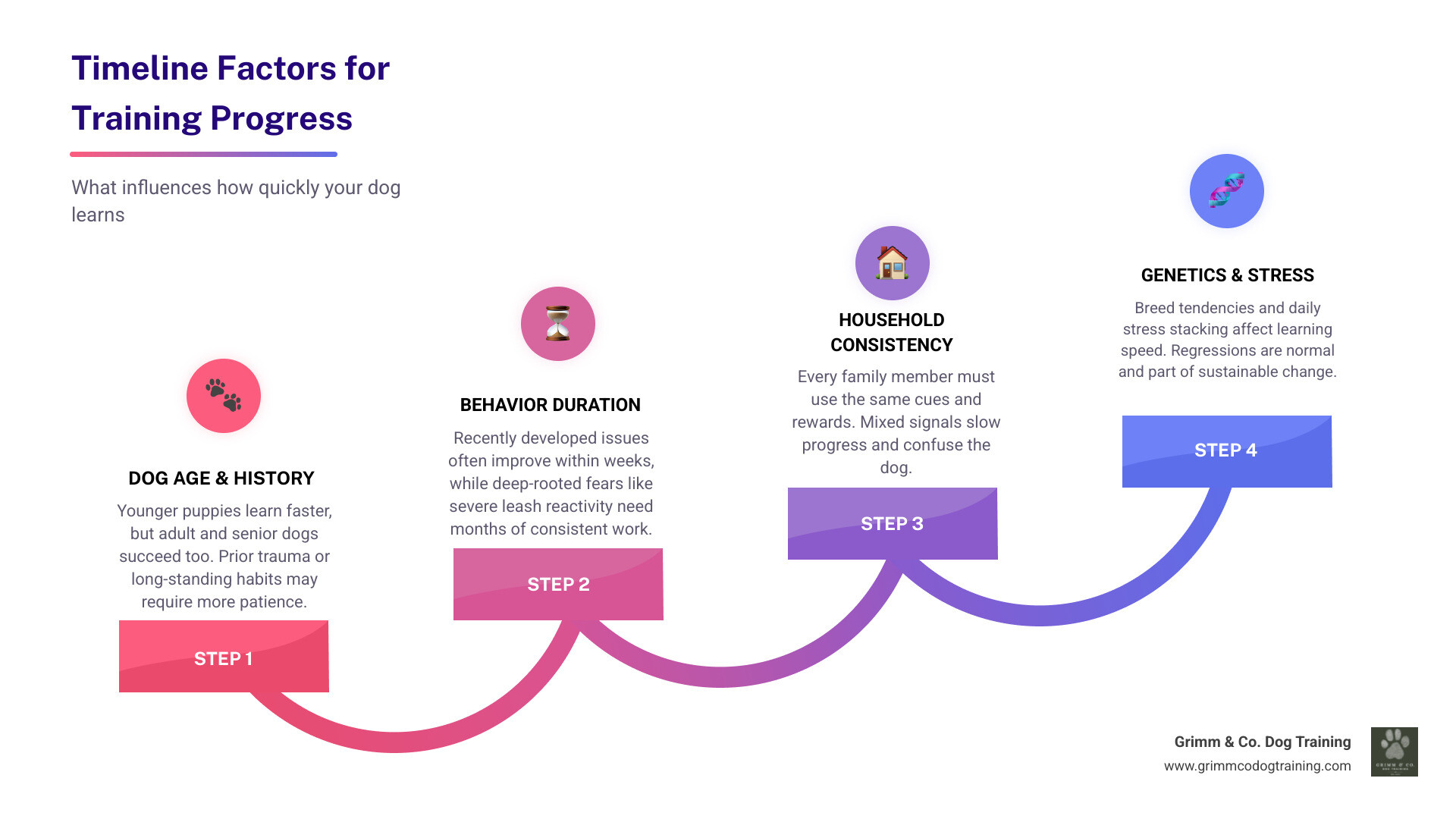
Initial improvements in communication, focus, and simple obedience cues often occur within the first few sessions once handlers master clear timing and appropriate reinforcement. However, changing deep-rooted emotional responses, such as severe leash reactivity or long-standing separation distress, requires systematic work over weeks or months.
Progress is rarely a straight line. Temporary regressions, often triggered by stress stacking, ambient environment changes, or health shifts, are a normal part of learning. Sustainable, long-term behavior change is achieved through persistent, low-stress practice that reinforces trust and confidence.
Partnering for Long-Term Behavioral Success
Achieving lasting success with your dog goes beyond basic commands; it requires building mutual understanding, clear boundaries, and continuous support. Navigating Daly City's urban density, changing weather patterns, and busy outdoor spaces is far easier when you have a skilled partner guiding your team.
At Grimm & Co. Dog Training, we view training as a collaborative, lifelong journey. By working directly with handlers through personalized 1:1 sessions, supportive group work, structured pack walks, and enriching scent work, we create clear paths toward balanced, reliable real-world behavior. If you are ready to transform your day-to-day life with your dog through a low-stress, proven framework, explore our comprehensive dog training services today.