
The Ultimate Guide to Reactive Dog Training in San Francisco
Why Reactive Dog Training in San Francisco Is Harder Than It Looks
If you are looking for reactive dog training in San Francisco, here is a quick overview of what works:
- Find a trainer or veterinary behaviorist certified through IAABC or a comparable credentialing body.
- Use counterconditioning and desensitization to change how your dog feels about triggers, not just how they behave.
- Build a realistic walking plan that accounts for your dog's triggers, your neighborhood, and the level of support they need on leash.
- Manage the environment proactively by crossing streets, ducking behind parked cars, or using a 180-degree turn before your dog reacts.
- Use high-value food rewards on every walk to build positive associations and redirect attention.
- Enroll in a specialized reactive dog class or book a private behavior consultation for a structured plan.
San Francisco is one of the most demanding cities in the country for dogs with leash reactivity. Narrow sidewalks in neighborhoods like the Castro or the Mission leave almost no room to create distance from a trigger. Cyclists share paths with pedestrians in the Panhandle and Golden Gate Park. Skateboarders appear without warning. Off-leash dogs approach from every direction at Dolores Park. For a dog who is already struggling on leash, the urban density of San Francisco does not forgive a lack of preparation.
Leash reactivity, the barking, lunging, and pulling that many owners describe as their dog "losing it" on walks, is one of the most common behavioral challenges we see. It is also one of the most misunderstood. The behavior looks alarming, but it rarely means what people fear it means. With the right approach, most dogs make real, lasting progress.
I'm Bailey Milne-Davies, trainer at Grimm & Co. Dog Training, and my path into this work started with my own dog, Grimm, whose frustration and social overarousal on leash is exactly what brought me to study behavior science seriously. That experience, combined with formal training and ongoing study, shapes how we approach reactive dog training in San Francisco every day.
Understanding Leash Reactivity: Fear versus Frustration
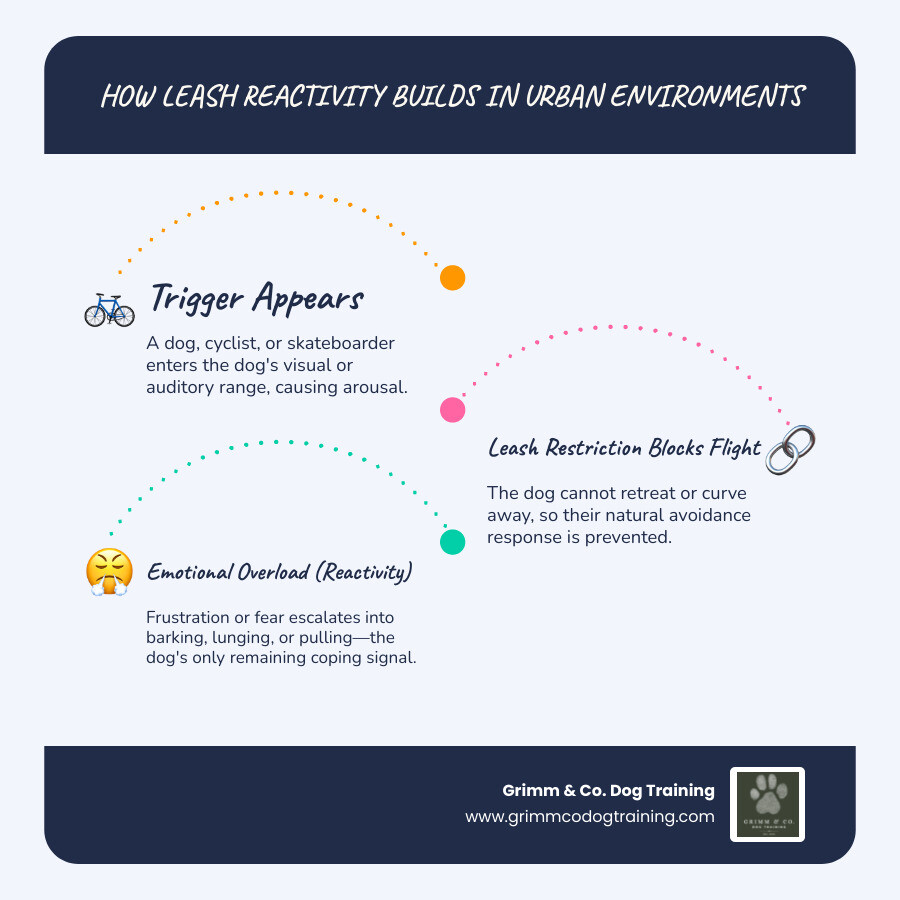
To address leash reactivity, we must first understand why it occurs. At its core, reactivity is an emotional overreaction to normal environmental stimuli. When a dog is off leash, they have a natural vocabulary of movement. They can curve their path, sniff the ground to signal non-threat, or simply walk away if they feel uncomfortable.
The leash changes everything. By restricting a dog's freedom, we eliminate their primary coping mechanism: flight. When a dog feels they cannot escape an approaching trigger, they must rely on other strategies. This physical restriction often leads to two distinct psychological pathways.
The first pathway is fear-based avoidance. When a dog perceives a threat, such as an unfamiliar dog, a stranger wearing a large hat, or a noisy Muni bus, their instinct is to create distance. Because the leash prevents them from moving away, they resort to distance-increasing behaviors. They bark, growl, and lunge to scream, "Stay back!" If the trigger stops or turns away, the dog learns that their dramatic display worked. This reinforces the behavior, making it more likely to happen next time.
The second pathway is barrier frustration. This occurs when a dog is actually social and highly motivated to greet other dogs or people, but the leash physically blocks them from doing so. This barrier frustration builds up, eventually exploding into barking and pulling. To the untrained eye, a frustrated greeter looks identical to a fearful dog. However, their underlying motivation is entirely different. One is trying to escape, while the other is desperate to access the trigger.
Prey drive also plays a significant role in urban reactivity. Dogs are natural predators with an innate desire to chase fast-moving objects. In San Francisco, this is constantly triggered by joggers, bicyclists, skateboarders, and cars.
Understanding these nuances is the first step toward helping your dog. For a deeper look at the realities of managing this behavior daily, you can read our personal reflections in Lessons from Grimm: Living with a Reactive Dog.
Reactivity versus Aggression: Why the Distinction Matters
Many dog owners feel a deep sense of shame when their dog barks or lunges on leash, assuming their dog is aggressive. It is vital to separate reactivity from true aggression, as confusing the two can lead to inappropriate and damaging training choices.
Reactivity refers to an exaggerated behavioral response to a stimulus. It is a symptom of an underlying emotional state, usually fear, anxiety, or hyper-arousal. Aggression, conversely, is behavior with the intent to cause harm or establish space through force. While a reactive dog may look terrifying, their goal is typically to create space or express frustration, not to bite.
Understanding this distinction matters because our training must address the underlying emotional state, not just suppress the physical behavior. If we focus solely on stopping the barking, we ignore the fear or frustration driving it. This is particularly true in cases of defensive aggression, where a dog bites because they believe they have no other choice to protect themselves.
If we punish the warning signs, like growling or barking, we do not cure the fear. We simply take the batteries out of the smoke detector. The dog may stop growling, but their internal stress remains high, which can lead to a bite without warning. To explore how we measure real improvement without expecting perfection, read Living with a Reactive Dog: What Does Progress Really Look Like.
Positive Reinforcement Techniques for Urban Walks
Living in dense areas like Daly City, San Francisco, or the East Bay means you cannot avoid triggers entirely. Instead, we must teach our dogs new coping skills using systematic desensitization and classical counterconditioning.
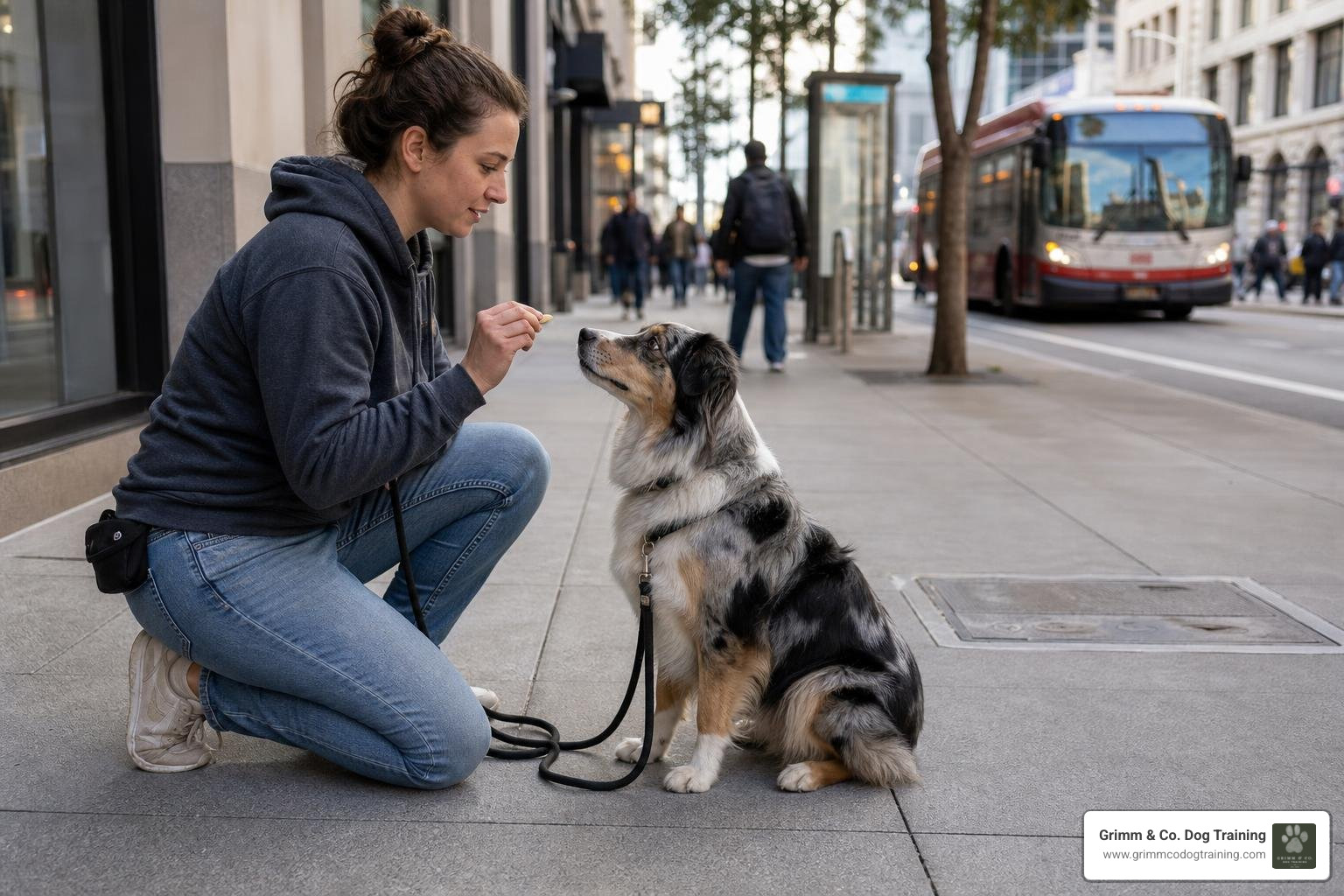
Desensitization involves exposing your dog to their triggers at a distance where they notice the trigger but remain calm and relaxed. This sweet spot is known as being "under threshold." Counterconditioning is the process of changing your dog's emotional response to that trigger. By pairing the sight of a trigger with an incredibly high-value reward, we change the dog's association from "Oh no, a dog is coming!" to "Awesome, another dog means I get roast chicken!"
Threshold management is the foundation of this work. If your dog is already barking and lunging, they are "over threshold." At this point, the thinking brain has shut down, and the emotional brain is in control. No learning can happen here. Your only goal when your dog goes over threshold is to calmly and quickly increase distance.
As seasons change, the challenges of managing these thresholds change too. For example, the sudden influx of people and pets outdoors in warmer months can catch owners off guard. We discuss this environmental shift in detail in Your Dog's Reactivity Isn't Getting Worse, Spring Just Exposed It.
Proactive Management and the 180-Degree Turn
In a dense city, you will inevitably find yourself trapped on a narrow sidewalk with an oncoming trigger. This is where proactive management and the emergency u-turn, or 180-degree turn, become essential.
The 180-degree turn is a trained cue that tells your dog to pivot quickly and walk in the opposite direction with enthusiasm. To teach this, start in a distraction-free environment like your living room:
- Say your turn cue, such as "Let's go!" in a bright, cheerful voice.
- Pivot 180 degrees on your heel.
- Lure your dog around with a high-value treat, rewarding them as they complete the turn and walk with you.
- Gradually phase out the food lure, but continue to reward them generously when they complete the turn on cue.
Once this behavior is fluent at home, practice it on quiet streets before trying it near a trigger.
Environmental management also means using physical structures to block your dog's line of sight. If you see a trigger approaching, do not hesitate to duck behind a parked car, step behind a tree, or use a Muni bus shelter as a visual barrier. This proactive approach keeps your dog safe and prevents them from practicing the reactive behavior. You can learn more about how we integrate these management strategies into our overall philosophy by reading about our Training Approach.
Leveraging Food Motivation and Meal Feeding
To successfully compete with the intense stimuli of San Francisco, you must use high-value food rewards. Regular dry kibble is rarely enough to keep a reactive dog's focus when a skateboarder zooms past. Instead, use soft, smelly treats like freeze-dried liver, hot dogs, cheese, or squeeze tubes filled with peanut butter or wet food.
One of the most effective ways to build food motivation is to have your dog work for their daily meals. Instead of feeding your dog from a bowl at home, measure out their daily food allotment and use a portion of it on your walks. If your dog is slightly hungry, they will be much more motivated to focus on you and work through challenging situations.
Using food in training is not about bribery. It is about brain chemistry. When a dog works for food, it activates their seeking circuit, releasing dopamine. This chemical response naturally counters the cortisol and adrenaline produced by fear and stress, helping your dog feel genuinely safer in the presence of their triggers.
Practical Gear and Safety Planning for San Francisco Walks
The equipment you choose should support safety, communication, and control without turning the walk into a debate about training philosophy. For reactive dogs in San Francisco, the best setup is the one that helps the handler manage crowded sidewalks, steep hills, sudden triggers, and tight spaces while keeping the dog secure.
Rather than focusing on one “right” tool for every dog, look at the full picture: your dog's size and strength, their triggers, your neighborhood, your comfort handling them, and whether the equipment has been introduced carefully. A trainer can help you choose gear that fits your dog, your goals, and the realities of your daily walks.
| Equipment Type | Why It May Help | Best Use Case |
|---|---|---|
| Well-Fitted Harness | Distributes pressure across the body and gives many handlers a secure point of connection. | Everyday walks, smaller dogs, and dogs who respond well to body guidance. |
| Head Halter | Gives additional steering support by guiding the dog's head and line of sight. | Large or powerful dogs when introduced gradually and fitted correctly. |
| Double-Ended Leash | Creates two points of contact for better stability and communication. | Busy sidewalks, hills, and situations where extra handling control is useful. |
| Backup Safety Tether | Adds a secondary connection if one piece of gear slips, loosens, or fails. | Any dog with a history of lunging, backing out of gear, or reacting suddenly. |
Recommended Gear for San Francisco Hills
Navigating the steep inclines of neighborhoods like Nob Hill, Russian Hill, or Pacific Heights with a lunging dog can be physically challenging. A thoughtful gear setup can make those walks safer and more manageable.
- Well-Fitted Harness: A secure harness can give many handlers better body control and reduce the risk of pressure being concentrated in one area. Fit matters, especially for dogs who pull, twist, or try to back out of equipment.
- Head Halter: For some large or powerful dogs, a head halter can provide helpful steering support and make it easier to redirect attention in tight spaces. It should be introduced gradually so the dog is comfortable wearing it.
- Double-Ended Leash: A leash with clips on both ends allows you to connect to two points of equipment, such as a harness and a second secure attachment point. This can improve stability on hills and crowded sidewalks.
- Safety Tethers: A backup strap or secondary connection helps keep your dog attached if a clip fails or a piece of equipment shifts. This is especially important for reactive dogs who may move suddenly when startled.
Choosing the Right Reactive Dog Training San Francisco Programs
If you are struggling to make progress on your own, seeking professional help is the best path forward. However, not all training programs are created equal, especially when dealing with the complexities of behavior modification.
When searching for reactive dog training in San Francisco, look for programs that understand leash reactivity, behavior modification, and the realities of working with dogs in busy urban environments. A professional program should focus on building a strong relationship between you and your dog, giving you practical skills to navigate the city together, and creating a plan that fits your dog's needs, your neighborhood, and your goals. To explore how we structure our services to help dogs and their owners thrive, view our Dog Training Services.
Why Reactive Dog Training San Francisco Classes Require a Specialized Approach
Standard group classes, such as basic puppy socialization or beginner obedience, are rarely appropriate for reactive dogs. These environments are often too chaotic, with too many visual triggers in close proximity, causing reactive dogs to remain constantly over threshold.
Specialized reactive dog classes are designed from the ground up to keep dogs safe and calm. These classes utilize visual barriers, such as tall screens or parked cars, to control exposure. The class sizes are kept very small, and the curriculum focuses specifically on threshold management, focus cues, and calming exercises rather than standard tricks. If you are interested in a structured, supportive group environment designed specifically for these challenges, explore our Dog Obedience Training Classes.
Finding Certified Professionals for Reactive Dog Training San Francisco
The dog training industry is currently unregulated, meaning anyone can call themselves a behaviorist or trainer without any formal education. When your dog's mental health is on the line, it is critical to look for specific, verifiable credentials.
Look for professionals certified by reputable organizations:
- IAABC (International Association of Animal Behavior Consultants): Members must pass rigorous peer-reviewed assessments demonstrating a deep understanding of behavior science. You can read more about their high standards directly on the IAABC credentialing standards website.
- KPA (Karen Pryor Academy): Graduates are highly skilled in positive reinforcement techniques.
- CTC (Academy for Dog Trainers): Known as the Harvard of dog training, this program produces exceptional behavior specialists.
- IACP (International Association of Canine Professionals): This organization includes trainers from a range of professional backgrounds and training approaches, offering another credentialing path to consider when evaluating experience, ethics, and fit.
To learn more about how we work with veterinary behaviorists and advanced behavior cases, visit our page on Dog Behaviorists.
Frequently Asked Questions about Leash Reactivity
How long does it take to resolve leash reactivity?
There is no universal timeline for resolving leash reactivity. Behavior modification is not a linear process, and progress depends on several variables: the dog's genetics, their history of practicing the behavior, the consistency of training, and the density of your daily environment.
While some dogs show significant improvement within a few weeks of consistent management and counterconditioning, others may require months or even years of ongoing support. The goal is steady, sustainable progress, not a sudden cure.
Can a reactive dog ever have dog friends?
Yes, many reactive dogs can have successful, fulfilling relationships with other dogs. Leash reactivity is often highly situational, many dogs who lunge on leash are perfectly social when off leash in a controlled setting.
For dogs who are genuinely fearful, we can build social circles through selective sociability. Parallel walking, where two dogs walk at a safe distance without direct interaction, is an excellent tool for building comfort. Over time, this distance can be gradually closed, potentially leading to successful, structured playdates.
Should I avoid taking my reactive dog on walks entirely?
If your dog is highly stressed and constantly reacting on every walk, taking a temporary break from traditional neighborhood walks can be incredibly beneficial. This is often called a cortisol detox.
During this break, you can meet your dog's physical and mental needs through decompression walks in quiet, open spaces, or through indoor enrichment, puzzle toys, and scent work. Giving your dog's nervous system time to recover from chronic stress makes future training walks much more effective.
Conclusion
Living with a reactive dog in San Francisco can feel isolating and exhausting, but you do not have to navigate it alone. At Grimm & Co. Dog Training, we believe that successful training is built on a foundation of trust, empathy, and relationship-focused methods. By understanding your dog's emotional needs, using correct equipment, and practicing proactive management, you can transform your daily walks from a source of stress into an opportunity for connection.
Whether you need private coaching to navigate your specific neighborhood or are looking to join a supportive community of like-minded owners, we are here to help. Reach out to us today through our Contact page, or explore our tailored Dog Training Services to start your journey toward peaceful walks.