
Socialization and Beyond: Why Your New Pup Needs Puppy Classes
Why Early Puppy Classes Build Better Behavior
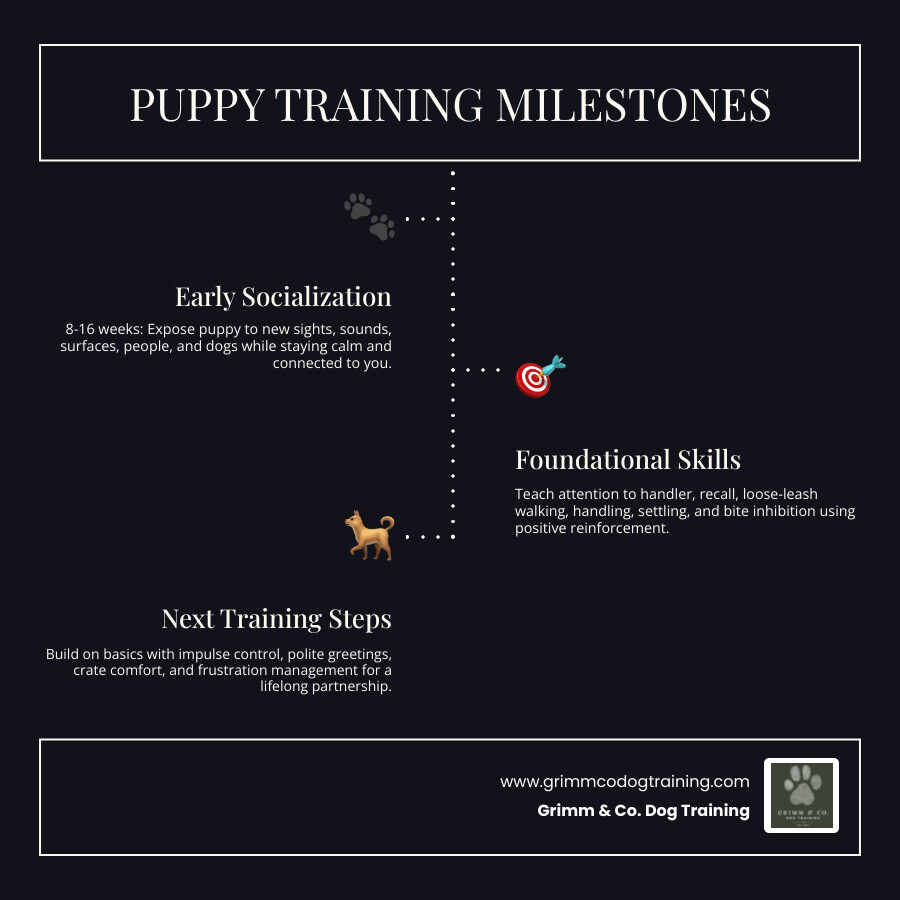
Obedience training classes for puppies are most useful when they begin early, use reward-based methods, and match your puppy's current comfort level. Look for a small, well-managed class that teaches calm social exposure alongside practical skills such as attention to the handler, recall, loose-leash walking, handling, settling, and bite inhibition.
Puppies can often start a structured preschool or socialization class during the early socialization period, commonly between 8 and 16 weeks, once they meet the program's vaccine requirements. Longer puppy foundations classes may accept pups through about 5 to 6 months old. Ask the trainer exactly which vaccines, health records, and safety steps are required before enrolling.
The goal is not to make your puppy greet every dog or person. It is to help them notice new sights, sounds, surfaces, people, and dogs while staying safe, relaxed, and connected to you. Positive reinforcement helps build those habits without relying on fear or punishment.
A strong class also gives you a plan for the real challenges of puppyhood: chewing, nipping, house training, crate comfort, polite greetings, frustration, and early impulse control. If your puppy shows severe fear, aggression, or intense reactivity around people or dogs, start with a private behavior consultation rather than placing them in a busy group environment.
I am Bailey Milne-Davies, a dog trainer and scientist who has trained, studied under professionals, and co-taught obedience training classes for puppies and dogs. My work with my own dog, Grimm, reinforced a simple lesson: consistent, relationship-based training helps dogs become calmer, more capable partners.
Comparing Formats: Choosing the Right Obedience Training Classes for Puppies
Navigating the early months of canine development requires selecting an educational environment tailored to your dog's specific developmental stage and temperament. In dense urban and suburban settings like San Francisco, Daly City, and the Peninsula, puppies encounter high-distraction environments daily. Choosing the right class structure directly influences how well your dog transitions into an adaptable companion.
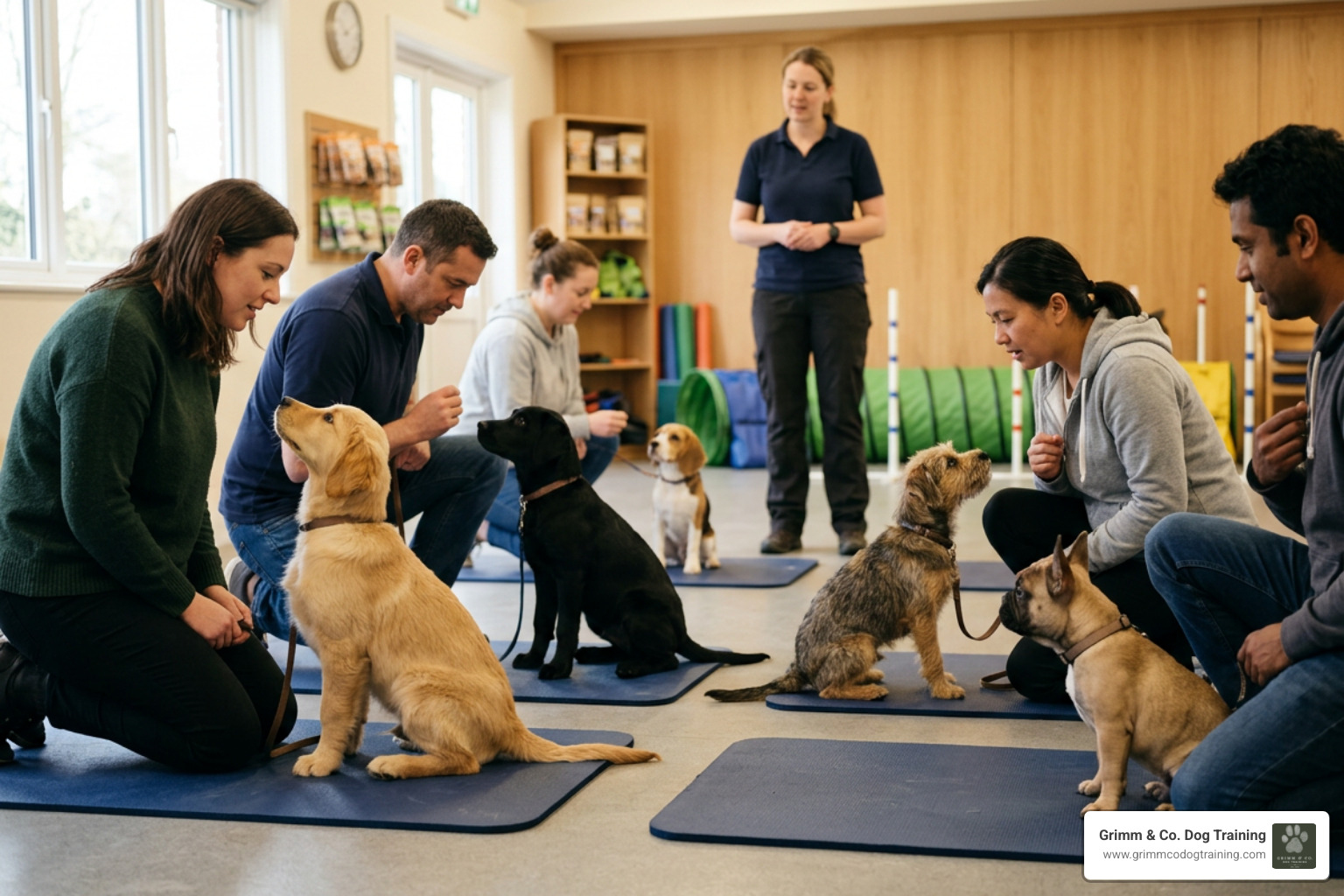
Different learning environments offer distinct advantages depending on your schedule, your puppy's age, and their existing baseline of confidence:
- Single-Session Puppy Preschool: Typically designed for puppies between 8 and 16 weeks of age. These 50-minute introductory sessions focus on early environmental exposure, basic handling, and controlled socialization under strict sanitation protocols.
- Foundational Multi-Week Series: Running across four to six weeks, these courses systematically introduce core obedience, leash mechanics, impulse control, and arousal regulation with progressive exposure to distractions.
- Hybrid Instruction: Combining virtual theory sessions with in-person practical mechanics. This structure allows handlers to master marker timing and theory at home before introducing real-world classroom distractions.
- Targeted Play and Train Sessions: These programs blend structured playgroup management with foundational obedience, helping puppies develop social communication without over-arousal.
- Private Behavioral Coaching: Dedicated one-on-one sessions, offered in-person or virtually, designed for puppies exhibiting early avoidance, hyper-reactivity, or specific household integration hurdles.
Understanding why dog training classes might be the right fit for you involves evaluating class size, handler-to-puppy ratios, and curriculum depth. For residents navigating coastal parks or bustling transit corridors, local community exposure through structured Daly City puppy socialization provides the real-world proofing essential for long-term behavioral stability.
| Class Format | Typical Duration | Student Ratios | Target Age Range | Focus Areas & Cost Structure |
|---|---|---|---|---|
| Puppy Pre-School | Single 50-minute session | Max 8 puppies | 9 to 16 weeks | Early socialization, sanitation habits, introductory handling ($20 per puppy) |
| Puppy Essentials Series | 6-week series (weekly 50-min sessions) | 4 to 6 puppies | Under 6 months | Core cues, impulse control, leash manners, orientation session ($180 per series) |
| Puppy Path Socials | 4-week series (weekly 50-min sessions) | 4 to 6 puppies | 12 to 18 weeks | Off-leash obedience foundations, biting, resource guarding prevention ($200 per series) |
| Hybrid Essentials | 6 weeks (Virtual + In-Person) | Max 4 puppies | Under 20 weeks | Marker training, quiet theory learning, controlled practical exposure |
| Drop-in Play & Train | Single or multi-class packages | 6 to 8 puppies | 10 to 24 weeks (<40 lbs) | Bite inhibition, supervised play, recall games ($35/class or $160 for 6) |
| Private Training | Single 50-minute sessions | 1-on-1 handler ratio | All ages | Personalized behavior modification, tailored pacing ($80 in-person / $60 virtual) |
Developmental Foundations: Critical Windows and Behavioral Health
The primary neurodevelopmental window for domestic canines closes around 16 weeks of age. During this period, the brain undergoes rapid synaptic formation, categorizing environmental stimuli into safe, neutral, or threatening associations. Missing this window or exposing a puppy to chaotic, unstructured interactions can result in persistent fear behaviors, environmental neophobia, or leash reactivity.
Structured education during this period prevents behavior deficits by pairing novel surfaces, sounds, and unfamiliar dogs with high-value reinforcement. In our training methodology, we integrate clear communication systems that build authentic canine engagement. We emphasize gentle dog training Daly City families rely on, using balanced, relationship-focused frameworks that create clear boundaries without overwhelming a developing nervous system.
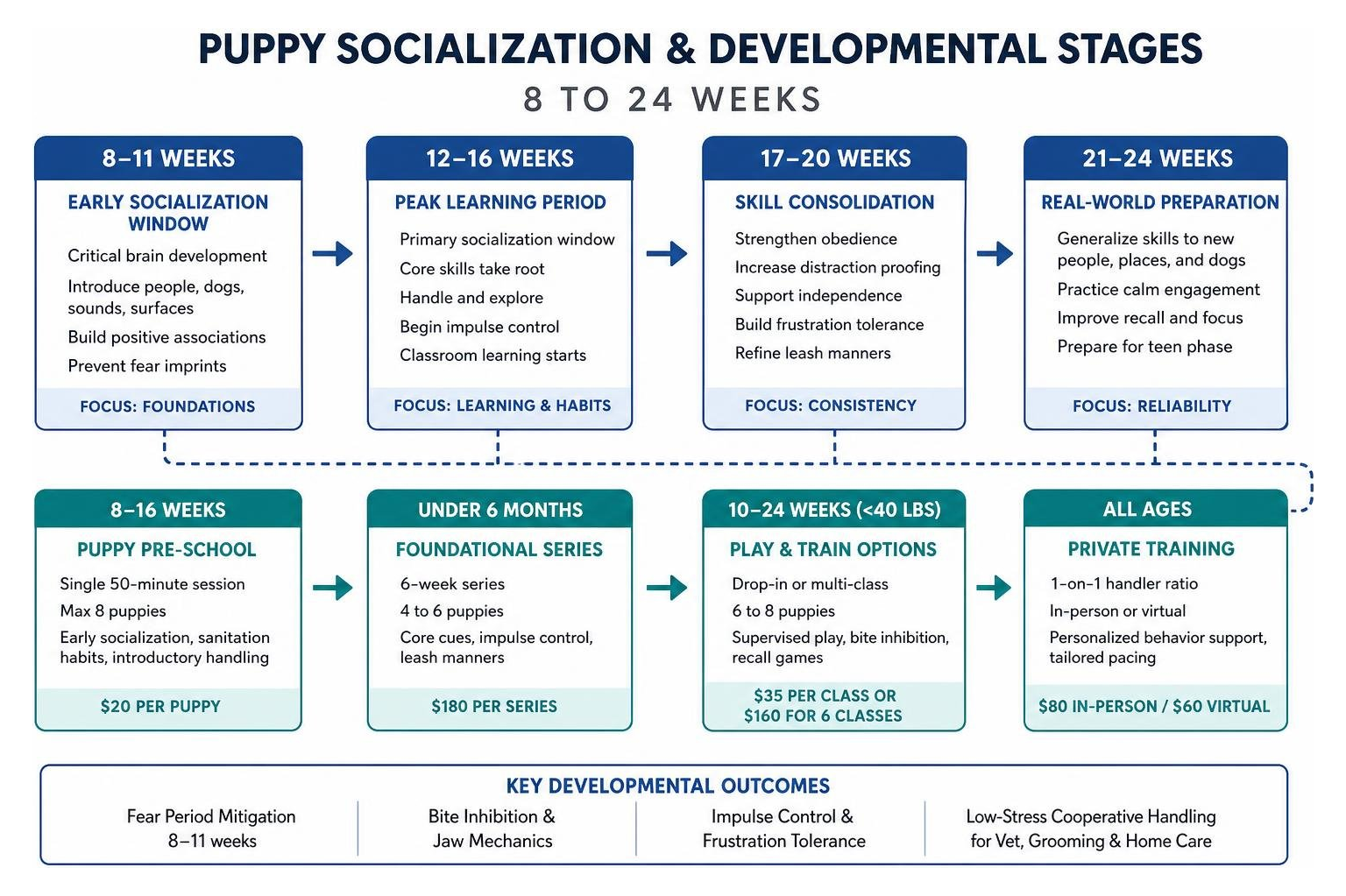
Proactive socialization during this critical period specifically targets:
- Fear Period Mitigation: Safeguarding puppies between 8 and 11 weeks from traumatic experiences that could produce lasting fear imprints.
- Bite Inhibition and Jaw Mechanics: Teaching puppies how to moderate bite pressure through structured social feedback and redirection.
- Impulse Control and Frustration Tolerance: Conditioning young dogs to disengage from high-value distractions and offer calm default behaviors.
- Low-Stress Cooperative Handling: Preparing puppies for veterinary examinations, nail trims, and grooming procedures by conditioning positive associations with physical restraint and touch.
Essential Skills and Safety Protocols for Group Learning
Classroom environments serve as controlled testing grounds for foundational manners before taking skills into complex environments like Jack London Square, Crissy Field, or local Peninsula trails.
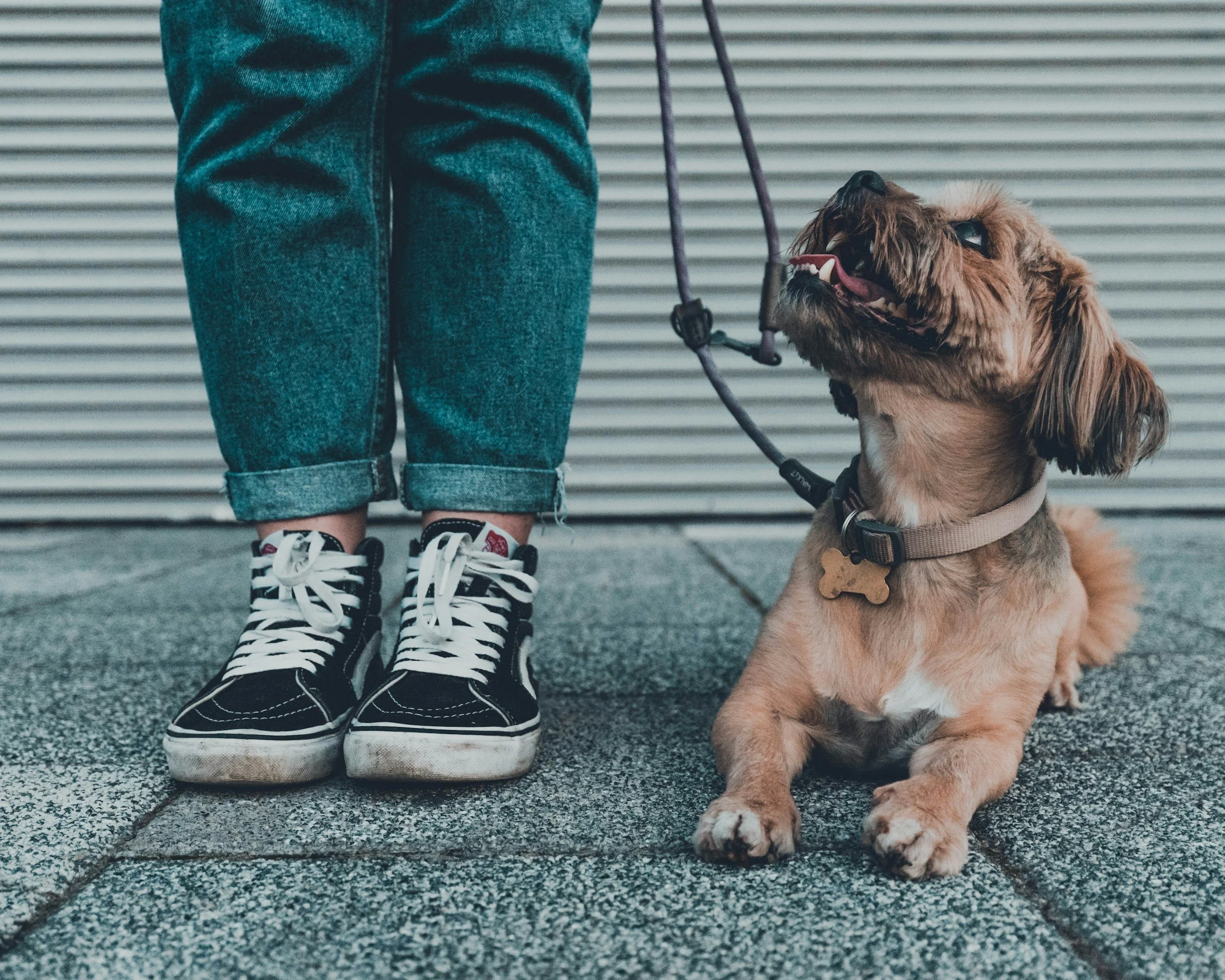
A comprehensive class sets up both dog and handler for real-life success. Handlers learn mechanical leash skills, precise reward placement, and how to read subtle shifts in body language. At the same time, puppies learn to regulate their nervous systems around active distractions. Practical protocols like home boundary work, cooperative care, and understanding why you should be crate curious provide essential structure for house training and separation anxiety prevention.
Core Curriculum in Obedience Training Classes for Puppies
Modern group curriculums focus on functional, real-world behaviors rather than static, competition-style obedience. Enrolling in structured dog obedience training classes provides the technical framework needed to establish these behaviors reliably:
- Reward Marker Systems: Conditioning verbal or clicker markers to capture precise moments of compliance and focus.
- Foundational Position Cues: Luring, shaping, and fading prompts for rapid sit, down, and stand positions.
- Loose Leash Mechanics: Teaching leash pressure communication, handler alignment, and proactive engagement to prevent pulling habits early.
- Reliable Recall Games: Establishing enthusiastic response to recall cues using high-rate reinforcement games.
- Polite Greeting Protocols: Replacing jumping and lunging with four-on-the-floor default settles when approaching unfamiliar people or neutral dogs.
- Arousal Regulation: Helping puppies cycle rapidly from high-excitement play back into calm focus.
Implementing clear handling foundations is essential to progress. Applying the principles outlined in setting your dog up for success foundations for effective dog training ensures your puppy maintains focus even in stimulating group settings.
Veterinary Protocols for Obedience Training Classes for Puppies
Maintaining strict veterinary and safety protocols protects puppies while they build foundational immunity. Group classes held in veterinary centers or professional indoor facilities adhere to rigid biosecurity standards. Floors are sanitized with hospital-grade disinfectants before every session to eliminate pathogens like parvovirus, distemper, and giardia.
Health protocols and behavioral assessments required for class participation include:
- Vaccination Records: Proof of at least one to two rounds of core DHPP (Distemper, Hepatitis, Parvovirus, Parainfluenza) vaccines administered after 8 weeks of age, with the latest dose given at least 5 to 7 days prior to the first session. Rabies and Bordetella vaccines must be up to date according to regional veterinary schedules.
- Biosecurity Management: Handlers are often advised to carry partially vaccinated young puppies into the training facility, avoiding shared public lawns or uncontrolled perimeter areas.
- Behavioral Suitability Screening: Instructors monitor interactions to distinguish appropriate developmental play from excessive fear displays, defensive snapping, or intense bullying. Understanding what your puppy is trying to tell you and how to respond ensures that handlers recognize subtle stress signals such as lip licking, yawning, or avoidance before frustration develops.
- Exclusion for Severe Reactivity: Dogs showing extreme fear, unprovoked aggression, or high reactivity are referred to private instruction or targeted behavior classes, such as specialized Reactive Rover series ($250 for six weeks), ensuring safety for all participants.
For comprehensive resources on canine development, handlers can consult Dog Training - Behavior Tips alongside professional classroom instruction.
Frequently Asked Questions About Puppy Group Training
What is the ideal age to enroll a puppy in group training?
Puppies can safely begin puppy preschool or foundational group classes between 8 and 16 weeks of age, provided they have received their initial round of DHPP vaccinations and met the training facility's waiting period. Early enrollment during this critical development window accelerates socialization and bite inhibition. Puppies older than 16 to 20 weeks who have finished their primary vaccine series typically transition into adolescent or beginner manners classes.
What essential items should owners bring to class?
- High-Value Training Rewards: Small, soft, easily swallowed treats such as cooked chicken, freeze-dried liver, or string cheese, kept in a quick-access treat pouch.
- Standard Leash and Equipment: A sturdy 4- to 6-foot non-retractable leather or biothane leash paired with a properly fitted flat collar or standard walking harness. Choke chains and retractable flexi-leads are not permitted in beginner group settings.
- Documentation: Up-to-date veterinary records showing verified vaccination status.
- Practical Footwear: Closed-toe shoes with non-slip traction for handler safety during movement drills.
- Comfort Item: A non-slip mat or small towel to establish a dedicated settling station for your puppy.
When is a puppy class not suitable for a young dog?
Group classes are not suitable for puppies displaying severe fear, panic responses, persistent resource guarding of spaces or items, or genuine dog-directed aggression. Placing a highly fearful puppy in a noisy, enclosed group environment can trigger flooding and worsen defensive behaviors. In these instances, private behavior coaching provides a safer, individualized path to build baseline confidence before introducing group exposure.
Building a Lifetime Partnership
Raising a resilient, adaptable dog in dynamic Bay Area environments requires consistent training that goes beyond basic sit-and-stay exercises. High-density living, active sidewalks, and bustling outdoor spaces require dogs to develop authentic emotional stability, handler focus, and sound impulse control.
At Grimm & Co. Dog Training, we believe that effective training is about building clear communication and mutual trust between you and your dog. Whether you are navigating puppyhood in San Francisco, Daly City, San Mateo, or Berkeley, starting with structured, relationship-centered guidance establishes habits that last a lifetime. Explore our relationship-focused group classes to join our supportive training community and give your puppy the strong foundation they deserve.