
Understanding the Roots of Puppy Mouthing and Teething
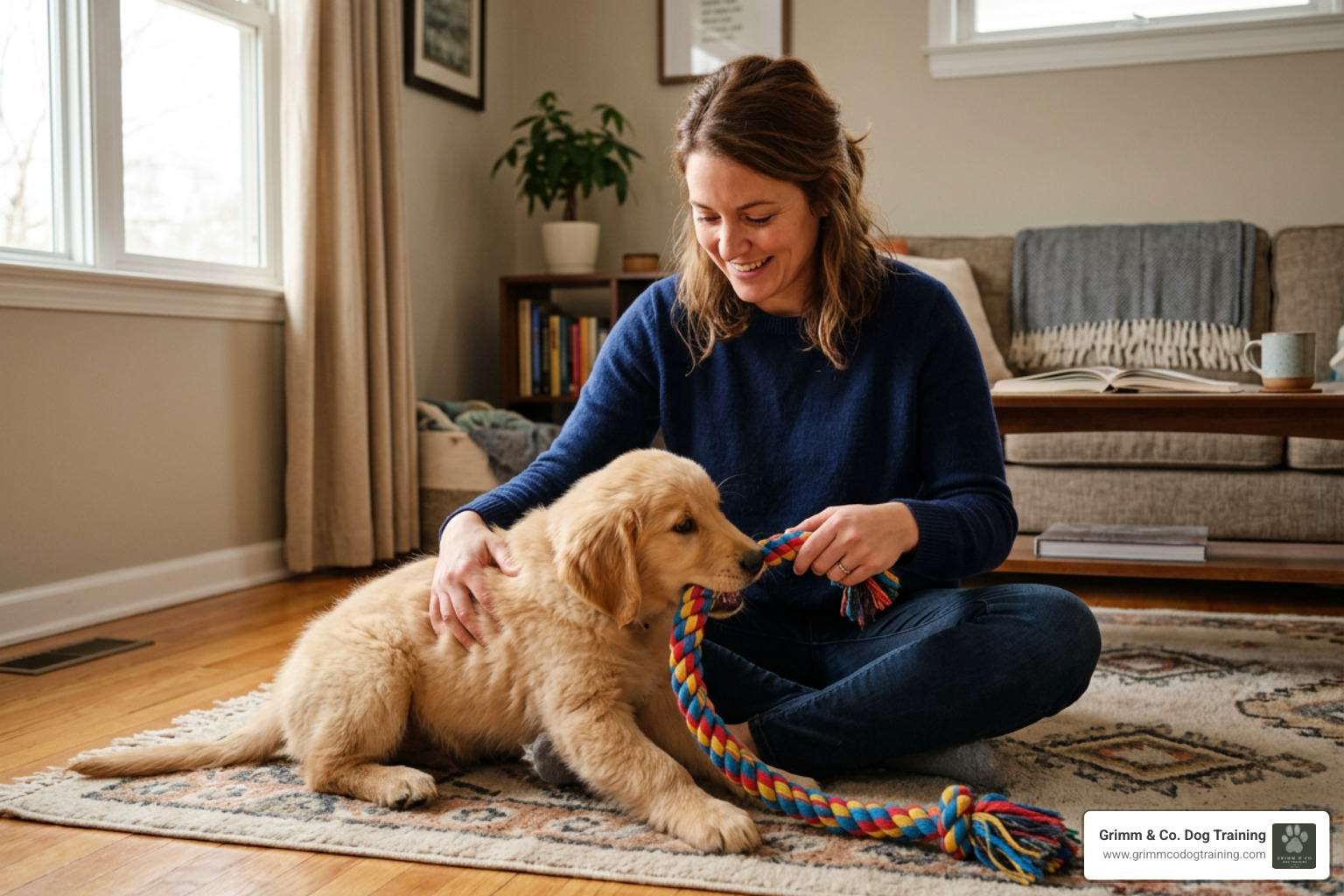
To calm a biting puppy effectively, adopt a non-reactive posture by letting your hands go limp, briefly remove your attention for 10 to 20 seconds to establish a clear social boundary, and immediately redirect their jaw pressure onto an engaging chew toy or frozen Kong. Pairing this immediate three-step response with consistent bite inhibition feedback and scheduled nap routines stops painful nipping at the root.
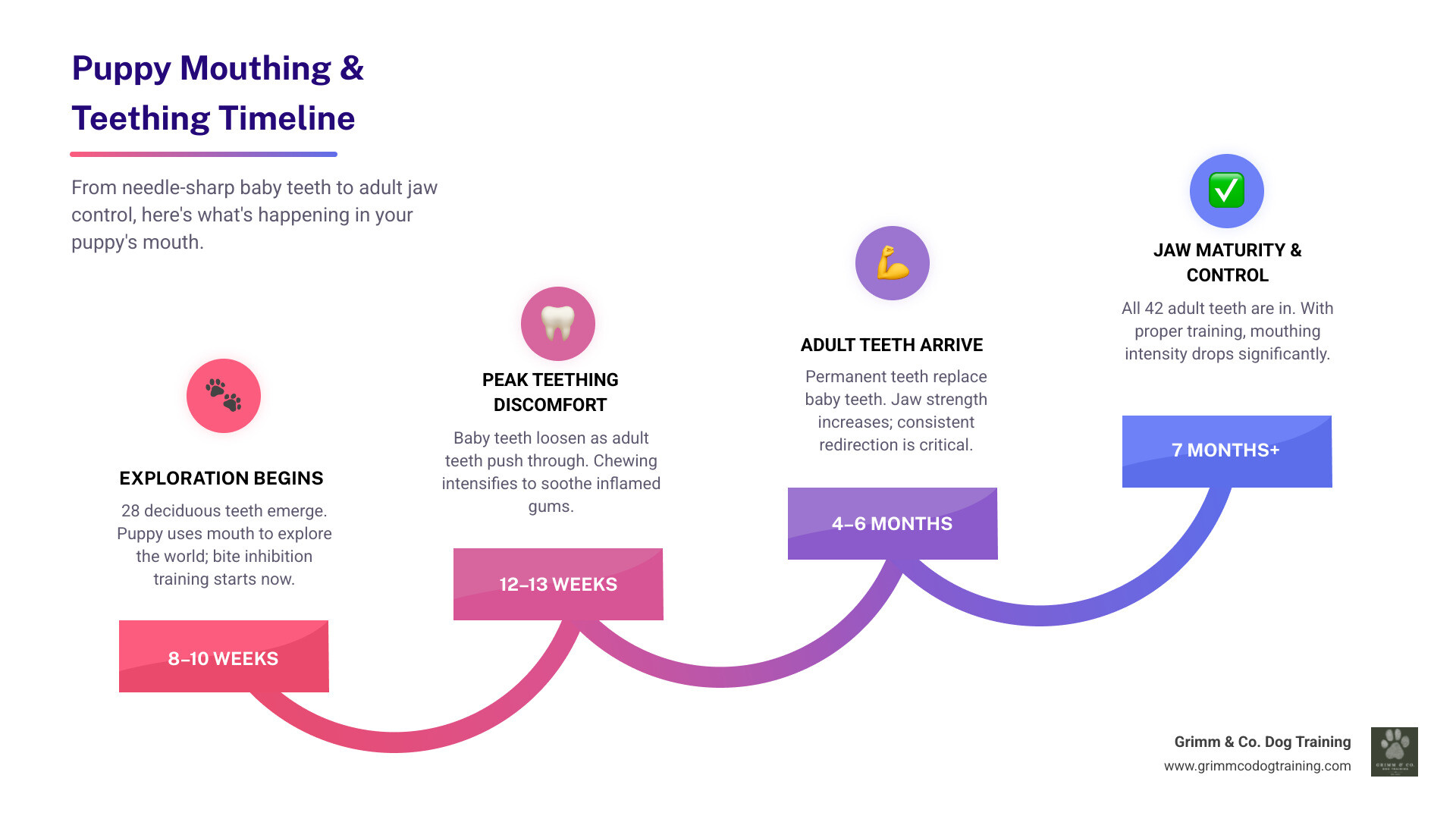
Puppies enter the world without hands, which means their oral cavity serves as their primary tool for tactile exploration, social communication, and play. A young canine possesses 28 deciduous teeth. These needle-sharp temporary teeth lack flat grinding surfaces, making even light pressure painful on human skin.
Understanding why your puppy resorts to relentless nipping starts with physiological development. Between 12 and 13 weeks of age, puppy teething reaches its peak discomfort. During this window, deciduous teeth loosen as larger adult teeth begin pushing through the gums. The physical pressure creates gum inflammation, prompting an instinctual drive to chew, bite, and compress objects to soothe aching oral tissues.
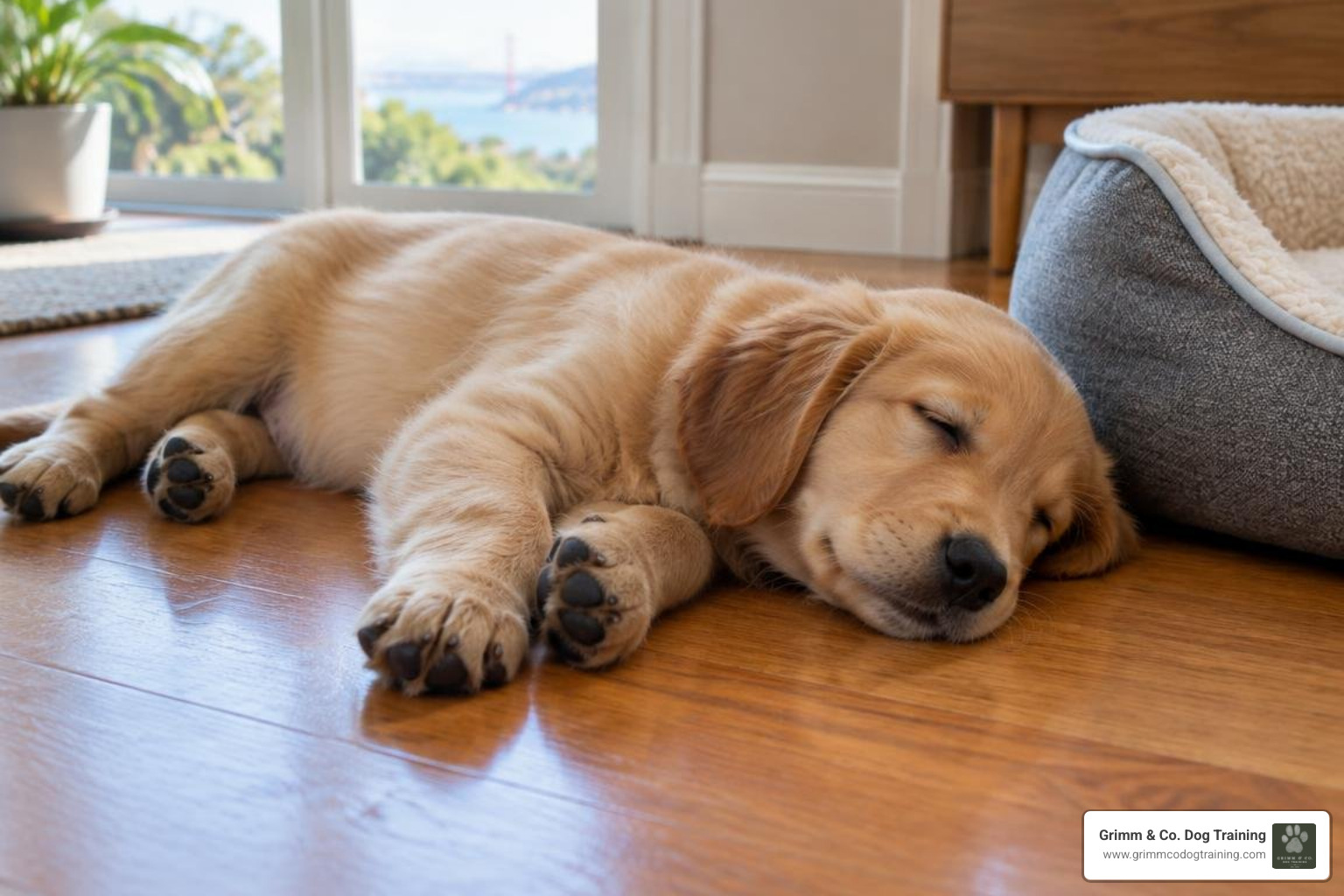
Beyond physical discomfort, sudden bursts of frenzied biting often signal nervous system overload. An eight-week-old puppy needs approximately 18 to 20 hours of restorative sleep each day. When puppies miss these essential rest periods in busy living environments around San Francisco or Daly City, their impulse control collapses completely. Learning what your puppy is trying to tell you allows you to recognize when manic mouthing is actually an overtired breakdown rather than deliberate misbehavior.
Understanding Bite Inhibition: How to Calm a Biting Puppy Through Pressure Control
Bite inhibition refers to an animal's learned capacity to modulate the force of their jaw pressure. In natural litter dynamics, puppy play involves reciprocal mouthing. When one puppy clamps down too hard, their littermate delivers a sharp yelp and abruptly terminates the wrestling session. This sudden removal of play teaches the biter a direct cause-and-effect relationship: painful pressure ends social interaction.
According to ASPCA research on puppy mouthing, developing bite inhibition during early puppyhood is a critical behavioral safety net. If an adult dog is startled, injured, or frightened later in life, an ingrained bite-inhibition reflex prevents them from clamping down with dangerous force.
Teaching this skill follows a two-tiered progression:
- Reduce bite pressure first: Allow gentle oral contact during calm interactions, but immediately interrupt hard, painful bites so the puppy learns the physical threshold of human skin.
- Reduce bite frequency second: Once the puppy consistently demonstrates a soft, gentle mouth, systematically fade out all tooth-on-skin contact by redirecting toward appropriate chews.
Most puppies naturally show significant behavioral improvement by 4 to 6 months of age, with full jaw maturity locking in around 7 months when adult dentition is complete.
Step-by-Step Guide on How to Calm a Biting Puppy During High-Arousal Play
High-arousal play sessions frequently trigger predatory motor patterns, resulting in sudden lunges at hands, sleeves, and pants. Managing this arousal requires clear mechanics rather than frantic verbal reprimands.
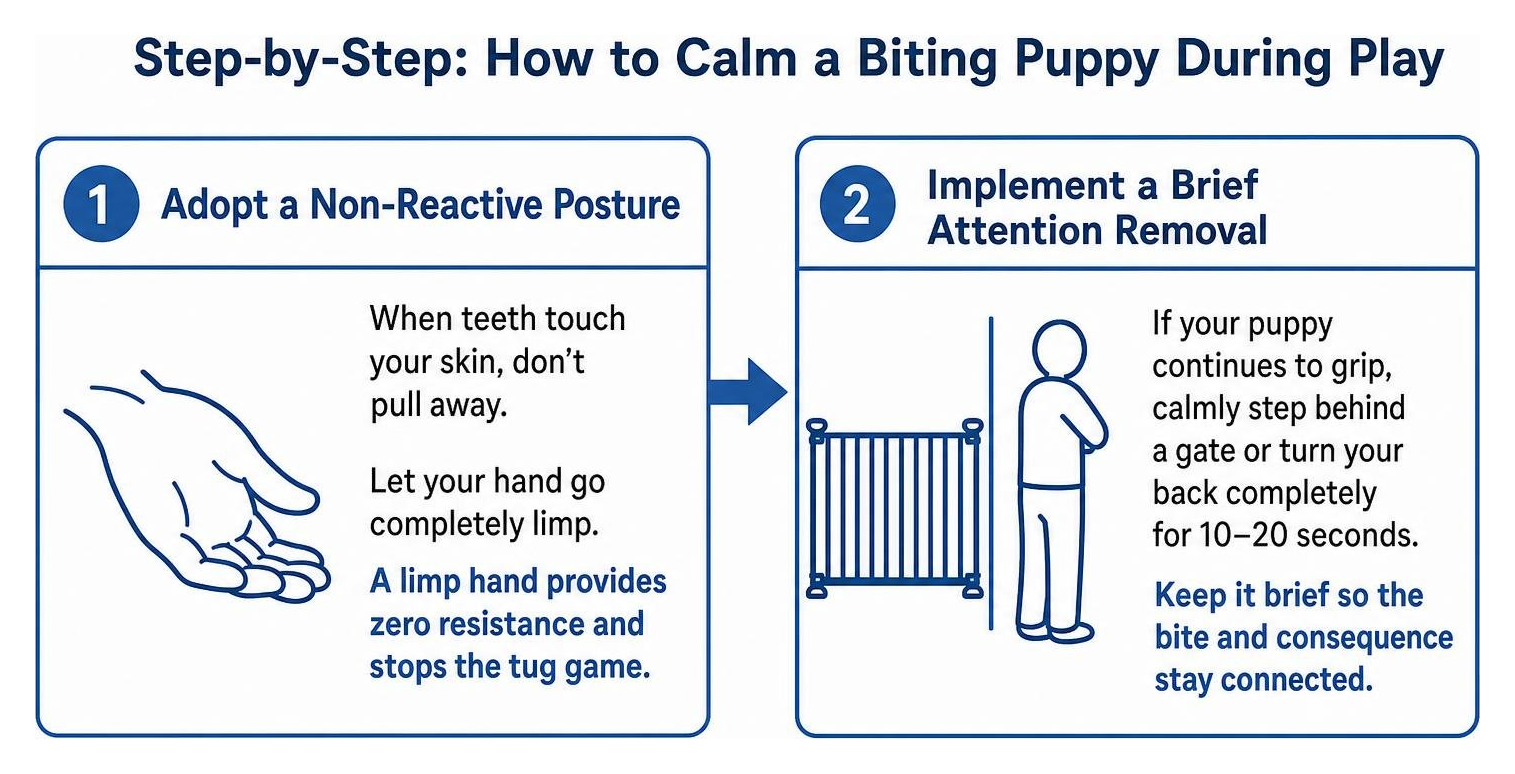
Step 1: Adopt a Non-Reactive Posture
When teeth touch your skin, avoid pulling your hands away rapidly. Sudden, jerky withdrawals mimic small prey movements, triggering a reflex to lunge and clamp tighter. Instead, let your hand go completely limp. A limp hand provides zero tactile resistance and ceases to be an engaging tug toy.
Step 2: Implement a Brief Attention Removal
If your puppy continues to grip, calmly step behind an exercise pen or baby gate, or turn your back completely for 10 to 20 seconds. This tactical pause must be brief. Long isolations fail because young puppies lose the associative link between the bite and the consequence.
Step 3: Offer a Proactive Replacement
Return to the puppy with low energy and immediately present an engaging alternative, such as a long braided rope, a rubber toy stuffed with chilled treats, or a textured teething ring. Applying foundational puppy obedience training tips for 2026 helps channel their natural play drive into structured games of fetch and tug without human skin becoming the target.
| Behavioral Signal | Playful Mouthing | Over-Aroused Frustration Tantrum |
|---|---|---|
| Body Posture | Loose, bouncy, curving spine | Stiff, rigid, head-on lunging |
| Facial Expression | Soft eyes, open mouth, panting | Hard stare, tight lips, wrinkled muzzle |
| Response to Pause | Pauses briefly, looks for toys | Bites harder, grabs clothing relentlessly |
| Primary Driver | Social play and oral exploration | Exhaustion, overstimulation, lack of sleep |
How to Calm a Biting Puppy When They Target Hands and Ankles
Ankle nipping is a common challenge for urban dog owners navigating compact indoor hallways or busy streets. Moving feet stimulate herding and chasing instincts.
- Freeze in Place: The moment your puppy ambushes your ankles, stop walking immediately. Moving feet are fun; stationary feet are boring.
- Keep a Pocket Tug Accessible: Carry an elongated fleece or rope tug in your pocket. Before your puppy latches onto your shoes, drag the toy across the floor ahead of you to redirect their visual focus onto an acceptable target.
- Use the Two-Handed Petting Method: Avoid using one hand to stroke a mouthy puppy while your other hand dangles nearby. Instead, feed high-value rewards with one hand while delivering calm strokes with the other. This pairs physical touch with relaxed chewing rather than nipping.
- Leverage Taste Deterrents: If your puppy repeatedly grabs pant cuffs or shoe laces, apply a pet-safe bitter apple spray consistently for at least two weeks to reduce the rewarding taste of fabric.
Reviewing the top 3 mistakes to avoid when raising a puppy or newly adopted dog will help keep your daily routines clear, structured, and frustration-free.
Establishing Rest Routines and De-escalation Zones
When puppies exceed their arousal threshold, cognitive processing stops. At this point, training cues become ineffective. Establishing dedicated de-escalation zones allows their nervous system to down-regulate.
- Structured Enforced Naps: Align your schedule around a predictable 1-hour-awake, 2-hours-asleep rhythm. Utilize an exercise pen or secure crate located in a quiet room away from household foot traffic.
- Frozen Soothing Tools: Provide a frozen rubber toy filled with unsweetened pumpkin, plain Greek yogurt, or wet food. The mechanical action of licking and gnawing releases calming endorphins while numbing inflamed gum tissue.
- Calm Reinforcement: Mark quiet moments where your puppy rests their chin on the floor. Applying thoughtful, gentle dog training in Daly City helps your dog learn that calm stillness earns real-world freedom and positive connection.
Distinguishing Play Mouthing from Fear, Frustration, and Early Aggression
Puppy owners often worry whether frantic biting indicates future aggression. In the overwhelming majority of cases, biting represents normal, albeit painful, developmental play. However, distinguishing between normal arousal and genuine behavioral distress is important for proper intervention.
According to the American Kennel Club's guide on puppy biting, play mouthing features soft eye contact, a relaxed wagging tail, loose spinal movement, and an open, panting jaw.
In contrast, fear-based or conflict-driven mouthing is characterized by:
- Sudden body stiffness or freezing when approached.
- Hard, fixed staring accompanied by lip lifting or structural muzzle wrinkling.
- Snapping and biting triggered by attempts to remove items, food bowls, or toys (early resource guarding).
- High-pitched, stressed distress vocalizations combined with defensive retreats.
If your puppy demonstrates persistent tension, guarding behavior, or panic-driven lunging, seek professional evaluation. Enrolling in structured puppy obedience classes provides supervised socialization, structured impulse-control drills, and expert eyes on your puppy's behavioral development.
Frequently Asked Questions About Puppy Biting
At what age do puppies naturally stop biting?
Most puppies show marked improvement between 4 and 6 months of age as their adult teeth settle into place. Spontaneous nipping generally resolves by 7 months, provided consistent boundaries and bite inhibition training have been maintained throughout development.
Should I yelp when my puppy bites my skin?
While a high-pitched yelp mimics littermate communication, it can sometimes backfire. In high-drive or over-aroused puppies, sudden squealing sounds resemble prey distress, which can increase excitement and cause harder biting. If yelping escalates your puppy's energy, switch entirely to silent attention withdrawal and brief physical barriers.
Can physical corrections or scruffing stop mouthing behavior?
Physical punishment, nose tapping, muzzle holding, or scruff shaking should never be used to address puppy mouthing. These techniques create hand-shyness, erode trust, and often trigger defensive fear-biting. Calm environmental management and clear behavioral alternatives produce stable, reliable results without creating conflict.
Building Lifelong Manners Through Balanced Connection
Teaching your puppy to interact gently with human skin requires consistency, patience, and clear environmental boundaries. By recognizing the physiological needs of teething, enforcing necessary rest periods, and systematically rewarding calm behavior, you establish a strong foundation of communication that lasts well into adulthood.
At Grimm & Co. Dog Training, we help Bay Area dog owners navigate puppy development through relationship-focused private lessons, structured group classes, pack walks, and specialty training. Whether you live in San Francisco, Daly City, or down the Peninsula, our team provides practical guidance tailored to real-world urban living. Reach out to us today to start building a calm, confident partnership with your puppy.