
Top Rated Puppy Obedience Classes Near Me
Why Puppy Obedience Classes Near Me Are Worth Finding Early
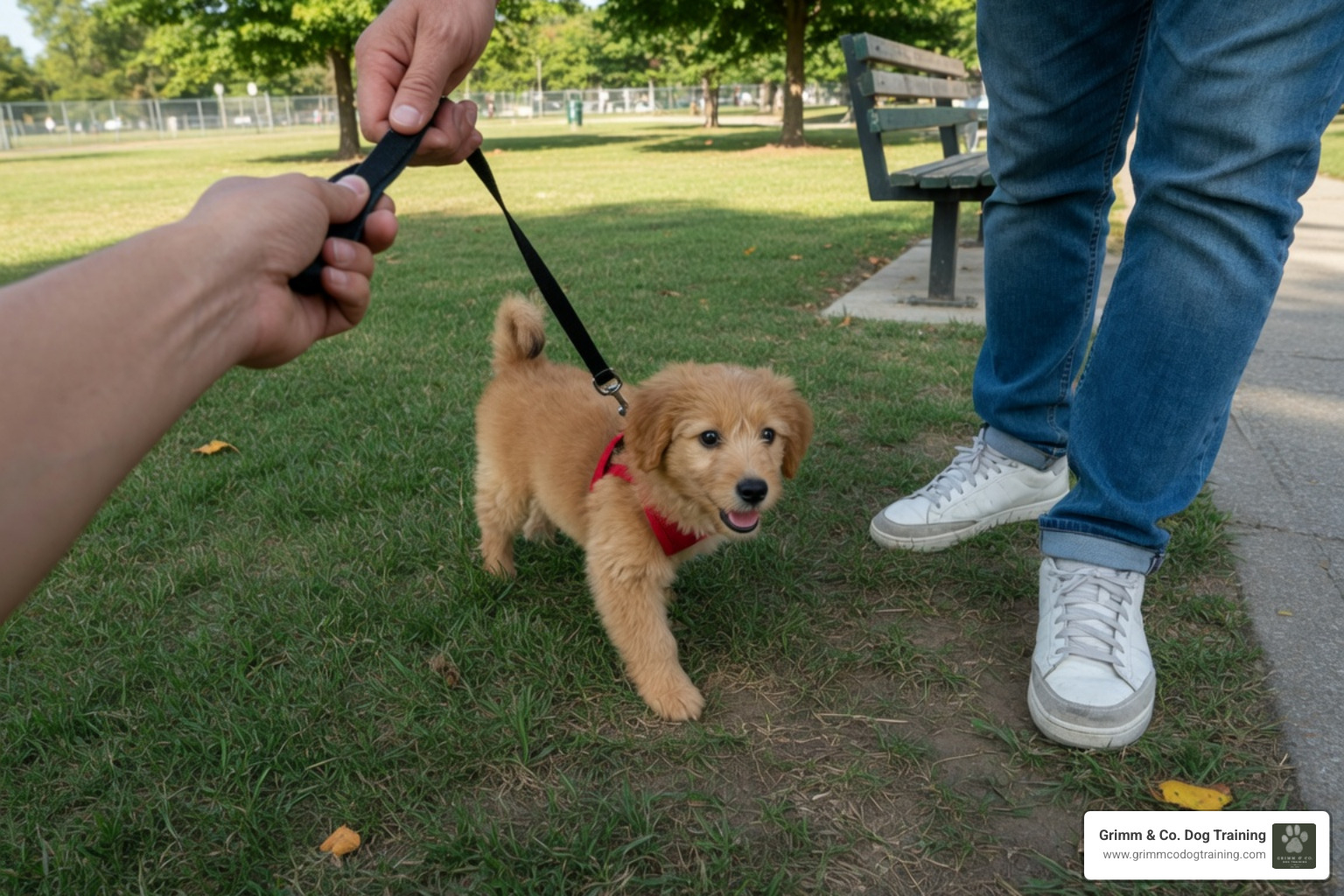
Finding the right puppy obedience classes near me matters most when your puppy is still forming opinions about the world. In Daly City, San Francisco, and the wider Bay Area, daily life asks a lot of a young dog: elevators, crowded sidewalks, traffic noise, off-leash dogs in parks, children on scooters, outdoor dining, and tight leash passing.
Here is what most owners want to know before they choose a class:
- Best age to start: 8 to 20 weeks is the critical socialization window. Many programs accept puppies from 8 weeks through 5 months.
- What classes teach: Engagement, sit, down, come, stay, loose-leash walking, bite inhibition, settling, and impulse control.
- Typical cost: Group classes often range from $150 to $245 for a multi-week course. Private sessions commonly run $90 to $150 per hour.
- Vaccination requirements: Many local programs require at least two rounds of DHPP and Bordetella before the first class.
- Formats available: Structured group courses, drop-in puppy socials, and private in-home coaching.
A puppy that misses this early window does not become untrainable. The issue is efficiency. Early habits, fears, and social patterns tend to carry forward, especially in stimulating urban environments. Structured guidance during the first few months helps you build useful default behaviors before jumping, barking, leash pulling, or avoidance become rehearsed responses.
I'm Bailey Milne-Davies. My own experience starting structured training with my dog Grimm taught me how quickly a puppy can develop patterns when they have too much freedom and too little clarity. That path led me to formal training education, co-teaching, and eventually building a practice around helping Bay Area owners choose the right puppy obedience classes near me before small issues become harder to unwind.
What Good Puppy Classes Should Teach During the Early Window
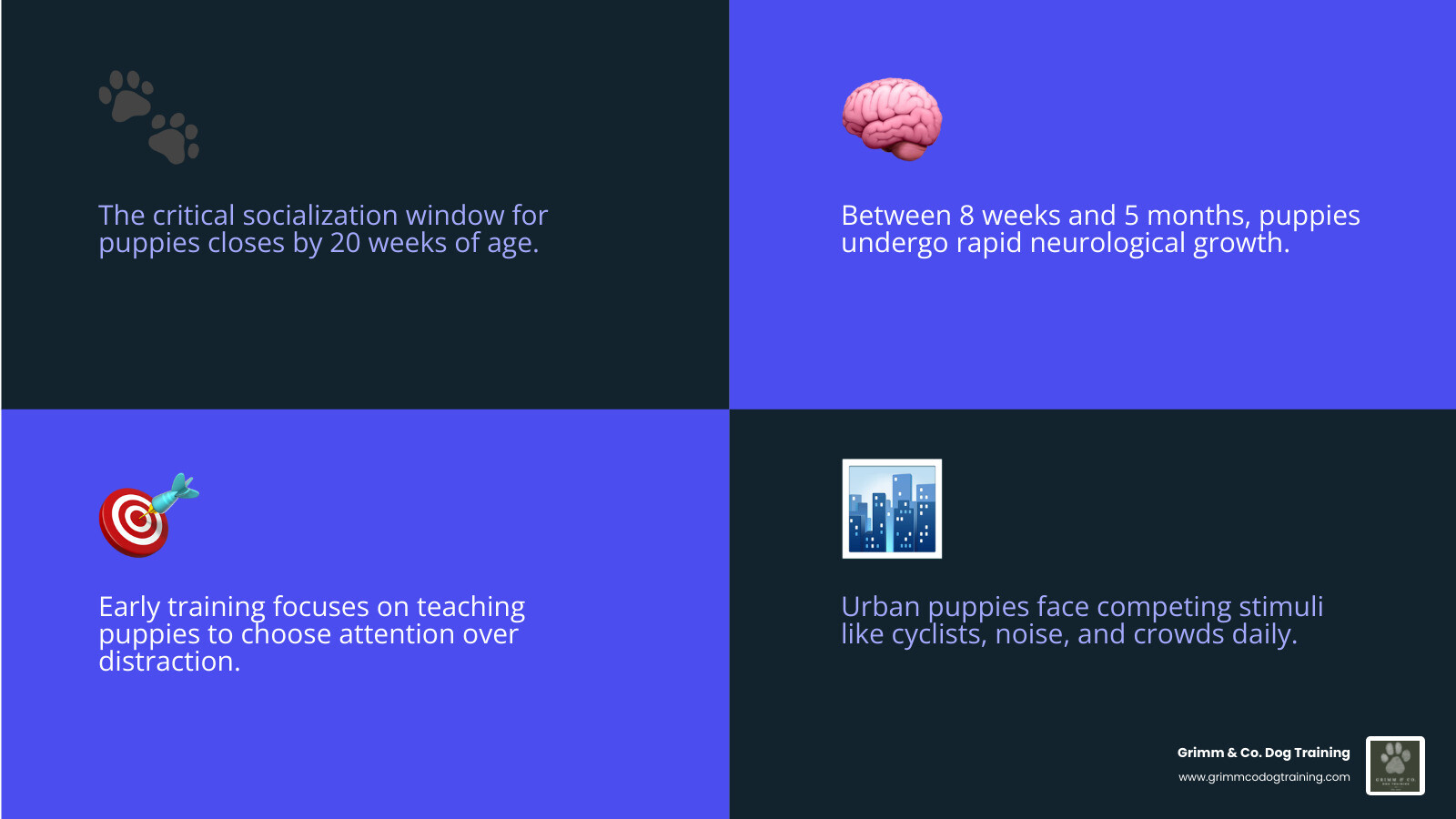
A puppy's developmental timeline moves quickly. Between 8 weeks and 5 months of age, puppies are building lasting associations with people, dogs, handling, surfaces, sounds, restraint, frustration, and movement in the environment. Structured Dog Training Classes use that window to teach clear communication before unwanted habits become automatic.
The first priority is engagement. Before a puppy can perform reliable obedience behaviors, they need to understand that checking in with the handler is valuable, even when the environment is busy. In San Francisco, Daly City, and the Peninsula, distractions are not occasional. They are part of the walk: buses braking, strollers passing, dogs appearing around corners, construction noise, delivery workers, and people reaching toward the puppy without asking. Early classwork should build a strong reward history for eye contact, name response, handler orientation, and recovery after distraction.
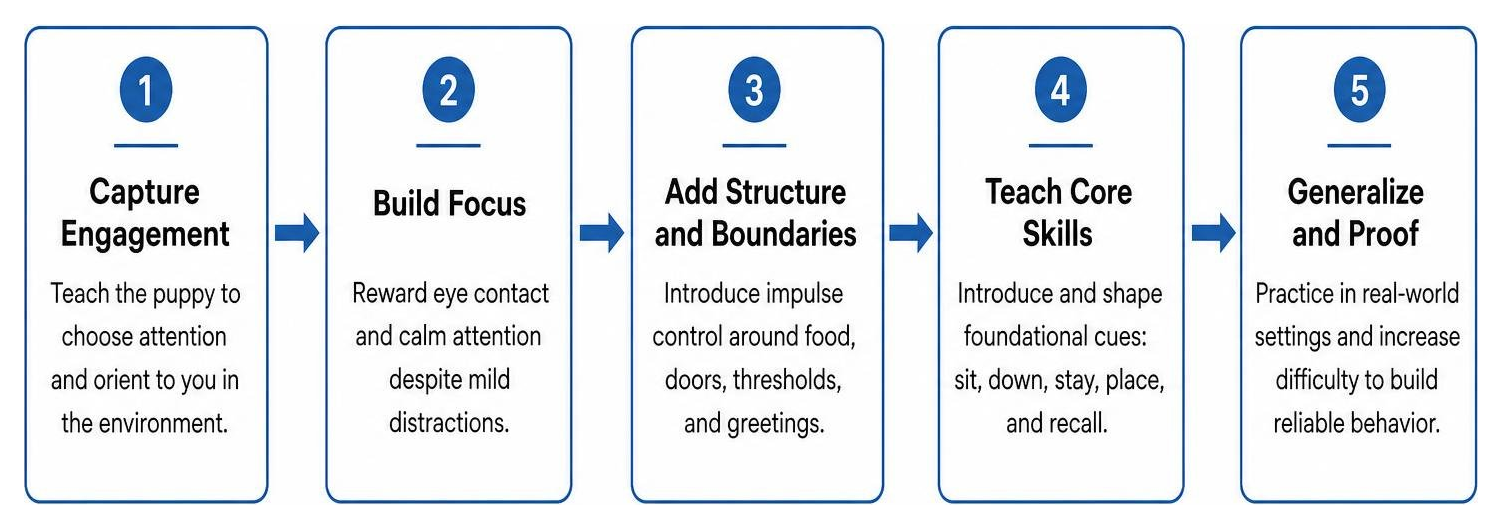
Once engagement is improving, training should move into practical foundation skills:
- Bite inhibition and mouth control: Teaching puppies to regulate jaw pressure during play, while giving owners clear ways to interrupt and redirect nipping.
- Impulse control: Building patience around food, crate doors, thresholds, greetings, and leash clipping so the puppy learns that calm behavior creates access.
- Foundational cues: Establishing clean mechanics for sit, down, stay, place, and a prompt recall response when called.
- Loose-leash foundations: Introducing leash awareness, handler position, pressure and release, and early heel concepts before pulling becomes rehearsed.
- Body language and communication: Recognizing early signs of stress, fatigue, conflict, or overstimulation. For more on this, read our guide on What Your Puppy Is Trying to Tell You and How to Respond.
The goal is not to make a baby puppy look polished. The goal is to teach the puppy how to process information, recover from stimulation, and look to the handler for direction.
Why Local Puppy Obedience Classes Are Worth the Time
Books and videos can help with theory, but they cannot replace supervised practice around real distractions. The main value of enrolling in puppy obedience classes near me is that your puppy learns environmental neutrality. A well-run puppy class is not simply a playgroup. It teaches the puppy that other dogs, people, movement, and noise are information, not automatic invitations to lunge, bark, hide, or explode into play.
This matters in dense Bay Area neighborhoods. A young dog who learns to disengage from other dogs in class is better prepared for leash passing on Mission Street, waiting calmly at a Daly City vet office, settling near an outdoor table in Burlingame, or walking through a crowded park in Oakland. Early neutrality work is one of the most practical ways to reduce the likelihood of adolescent leash frustration and reactivity.
Many early problems are handler-created, not because owners are careless, but because puppies are easy to accidentally reinforce. You can review common patterns in our overview of The Top 3 Mistakes to Avoid When Raising a Puppy or Newly Adopted Dog. For regional socialization guidance, see our notes on Daly City Puppy Socialization.
A good local class also gives the owner direct feedback. Small details matter: when you mark behavior, where you deliver the reward, how much leash you allow, when you interrupt, and whether your body position is helping or confusing the puppy. Those adjustments are difficult to see from inside the handling moment.
Vaccination Requirements and Registration Documents
Professional training programs need to balance early socialization with sensible disease prevention. Young puppies have developing immune systems, but delaying all exposure until the vaccine series is complete can create a different risk: a puppy with limited social experience during the period when they are most receptive to learning.
The American Veterinary Society of Animal Behavior (AVSAB) notes that puppies can begin group socialization classes as early as 7 to 8 weeks of age when they have received an initial set of core vaccines and the class is held in a clean, controlled environment.
Most programs will ask for some combination of the following:
- DHPP / DAP Vaccine: Proof of distemper, adenovirus, parvovirus, and parainfluenza vaccination administered by a licensed veterinarian.
- Bordetella Vaccine: Proof of vaccination against kennel cough, especially for indoor group environments.
- Rabies Vaccine: Required once the puppy reaches the legally required age, commonly around 16 weeks.
- Health Verification Forms: Confirmation that the puppy is not showing signs of contagious illness, parasites, ringworm, coughing, or sneezing.
Some facilities may accept veterinary antibody titer testing for older puppies or adult dogs entering later-stage programs. Have your records ready before registration so the trainer can place your puppy appropriately and keep the class environment safe.
How to Choose Puppy Obedience Classes Near Me With Confidence
Selecting a puppy class involves more than choosing the closest facility. You are choosing the person who will coach your timing, shape your puppy's first training experiences, and help you interpret behavior under stress. Look closely at the instructor's education, practical experience, class structure, and ability to work with different temperaments.

A qualified instructor should be able to explain their approach clearly without relying on slogans. Look for programs that emphasize communication, fair boundaries, appropriate reinforcement, calm exposure, and environmental neutrality. Avoid classes that are mostly uncontrolled play with occasional obedience cues inserted between wrestling sessions. Play can be useful, but only when it is supervised, matched by temperament, and balanced with recovery and handler focus.
Class size matters. For young puppies, a small student-to-instructor ratio is important, ideally four to eight puppies per class. Smaller groups allow for better spacing, faster intervention, and more individualized feedback on leash handling, reward delivery, puppy body language, and household management.
When researching local options, you can review our dedicated Puppy Trainers team to evaluate credentials and instructor backgrounds. It is also useful to review a facility's Training Approach so you understand how the program thinks about structure, relationship, motivation, boundaries, and real-world reliability.
A strong puppy program should give you more than a list of cues. It should help you understand how to raise a dog who can live well in the Bay Area: ride elevators, pass dogs on narrow sidewalks, settle around guests, tolerate handling, recover after startling sounds, and stay connected to you in public.
Which Puppy Class Format Fits Your Dog
Different puppies and households need different formats. The right choice depends on age, temperament, vaccination status, schedule, and the specific problems you are trying to prevent or solve.
- Structured Group Classes: Weekly series that meet for five to eight weeks. These classes teach puppies to work near other dogs without assuming every dog is available for play. To decide whether this format fits your goals, read Why Dog Training Classes Might Be the Right Fit for You.
- Private In-Home Coaching: One-on-one sessions in your home, building, neighborhood, or local park. This format is useful for crate training, housebreaking, puppy biting, door-darting, household boundaries, or family consistency.
- Drop-In Puppy Socials: Short, monitored sessions that provide controlled exposure to novel people, dogs, sounds, surfaces, and handling.
- Specialized Classes for Timid or High-Energy Dogs: Smaller formats for puppies who need modified spacing, visual barriers, calmer pacing, or more controlled exposure to succeed.
For more detail on structured course formats, visit our page on Dog Obedience Training Classes.
What Puppy Training Typically Costs in the Bay Area
Training costs vary by format, class length, location, and instructor experience. Group classes are usually the most efficient way to get structured exposure around other puppies. Private coaching costs more per hour, but it allows the trainer to work directly with your home layout, neighborhood challenges, family routines, and specific behavior concerns.
Across the dog training industry, multi-week group puppy classes typically range from $150 to $245 total for five to eight weekly sessions. Drop-in puppy socials may range from free community offerings to about $25 per session. Private instruction often runs between $90 and $150 per hour for shelter or facility-based sessions, and $145 to $160 per hour for private in-home lessons where the trainer travels to your residence.
Some facilities and shelters offer discounts for shelter-adopted dogs, including reduced course fees or complimentary introductory socials. If budget is a concern, ask about package pricing, puppy passes, or whether a group class plus one targeted private session would meet your needs.
| Format | Typical Cost Range | Duration | Key Benefits | Best Suited For |
|---|---|---|---|---|
| Group Obedience Classes | $150 – $245 total | 5 to 8 weeks (45–60 min/week) | Peer distraction, environmental neutrality, structured curriculum | Social puppies, general obedience, building focus |
| Drop-In Socials | Free – $25 per session | 30 to 45 minutes per session | Flexible scheduling, controlled play, novel environmental exposure | Young pups (8–20 weeks) needing early socialization |
| In-Facility Private Lessons | $58 – $125 per session | 30 to 60 minutes per session | Controlled environment, direct trainer focus, targeted skill work | Specific behavioral fixes, handler mechanic refinement |
| In-Home Private Lessons | $125 – $160 per session | 60 minutes per session | Direct real-world application, house rule setting, family integration | Crate training, housebreaking, severe fear, or busy schedules |
To make early training easier to plan, we offer flexible Puppy Passes that allow owners to combine puppy socials with structured group classes as their dog matures.
Frequently Asked Questions About Puppy Obedience Training
What age should my puppy start formal obedience training?
The ideal age to begin formal puppy obedience training is usually between 8 and 16 weeks old. During this period, puppies are highly receptive to new information and are still forming core associations with people, dogs, handling, sounds, surfaces, restraint, and frustration. If your veterinarian has cleared your puppy and the puppy has started core vaccinations, early engagement and manners work can begin right away.
Are group classes safe for puppies before all vaccinations are complete?
Yes, when the facility is clean, controlled, and serious about health documentation. Leading veterinary behavior organizations, including the AVSAB, support early puppy socialization in appropriate environments before the full vaccine series is complete. The key is choosing a class that checks vaccine records, sanitizes the training space, limits exposure to unknown dogs, and keeps sick puppies home.
What equipment and items should I bring to my puppy's first training class?
Bring simple, functional equipment that allows you to handle your puppy clearly:
- A standard 4-foot to 6-foot flat leather or nylon leash. Avoid retractable leashes in class.
- A well-fitted flat collar or comfortable walking harness.
- High-value, soft training treats cut into small pieces.
- A treat pouch that allows quick reward delivery.
- Copies of your puppy's current vaccination records.
- A quiet toy, chew, or mat to help your puppy settle during downtime.
Building the Right Foundation Early

Early training gives you leverage at the stage when your puppy is most open to learning. A puppy who learns to focus around urban distractions, settle when nothing is happening, recover from startling sounds, and walk calmly on leash is easier to include in real Bay Area life, from Daly City sidewalks and San Francisco parks to crowded vet offices, outdoor dining areas, and coastal trails.
At Grimm & Co. Dog Training, we help owners build practical, durable relationships with their dogs throughout Daly City, San Francisco, the South Bay, and the East Bay. If you want structured group instruction or individual coaching tailored to your home and neighborhood, explore our upcoming Group Classes or contact our team to begin your puppy's training. For our full range of puppy offerings, visit our Puppy Training Landing Page.