
Don't Bully the Bully: Positive Training Tips for Bully Breeds
Why Bully Breeds Deserve Better Training (And a Better Reputation)
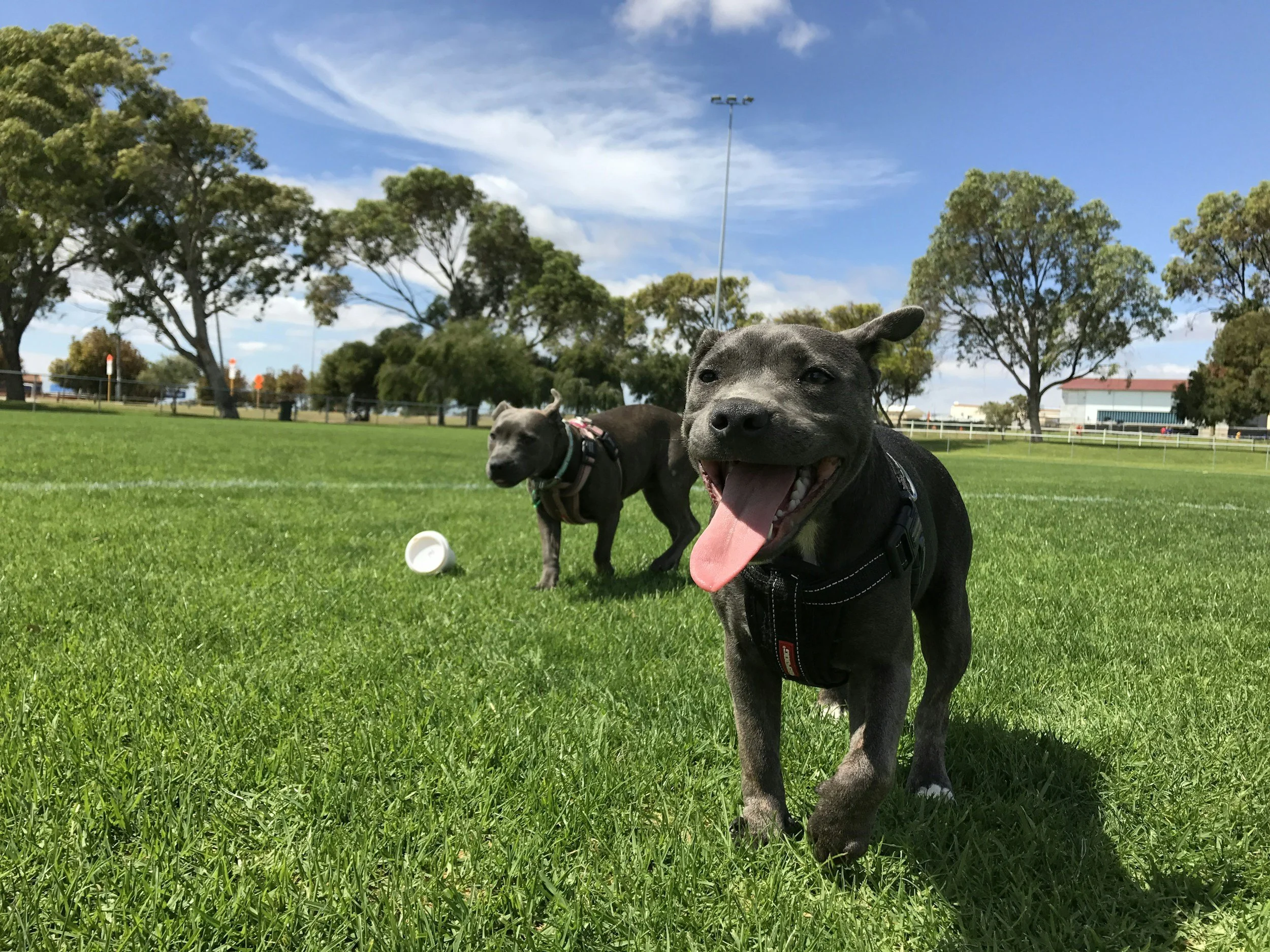
Dog training for bully breeds is one of the most important, and most misunderstood, topics in the dog owner community.
Here's a quick overview of what works:
- Use positive reinforcement, treats, praise, and play build trust and lasting results
- Start with foundations first, confidence, calmness, and impulse control before commands
- Socialize early and often, controlled exposure to people, sounds, and environments
- Be consistent, clear rules applied the same way by everyone in the household
- Avoid aversive tools, prong collars and e-collars can create stress and worsen reactivity
- Seek a qualified professional if you're dealing with reactivity, pulling, or anxiety
Bully breeds, including American Pit Bull Terriers, American Bullies, Staffordshire Bull Terriers, and related types, are among the most loyal, affectionate, and people-focused dogs you'll ever meet. Yet they're also among the most misrepresented.
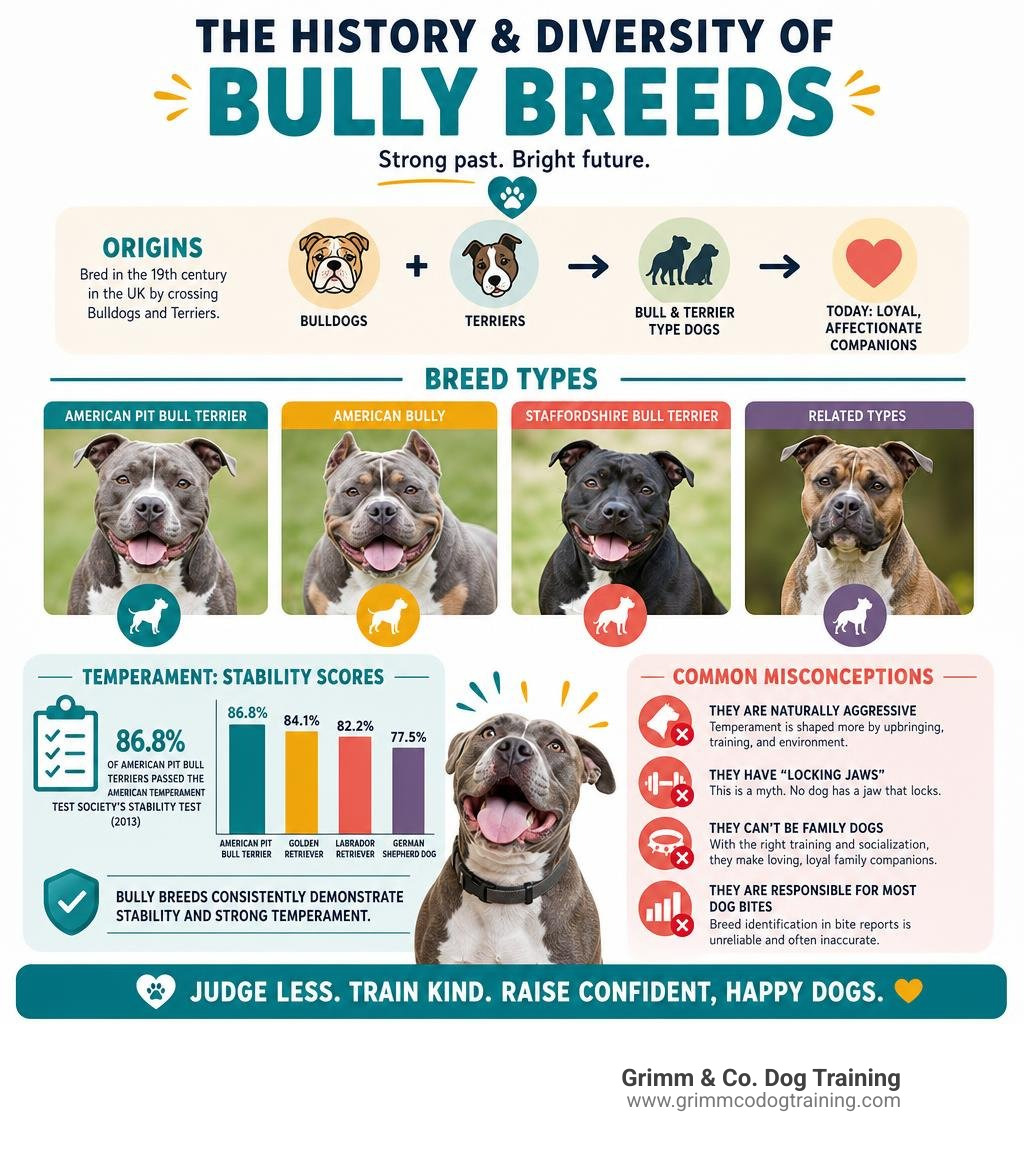
The numbers tell a different story than the stereotypes. In 2013, 86.8% of American Pit Bull Terriers passed the American Temperament Test Society's stability test, outperforming many breeds we'd never think twice about. And despite that, the majority of dogs sitting in shelters today are pit bull mixes, often passed over because of how they look.
That's the reality bully breed owners are navigating. Not just training a dog, but doing it under a microscope.
The good news? These dogs respond exceptionally well to relationship-based, positive training. They're smart, eager to please, and deeply bonded to their people. With the right approach, a bully breed can be a calm, confident, and well-mannered companion in any setting.
This guide covers everything you need to know, from busting myths to building real-world skills.
Understanding Bully Breeds: Dispelling Myths and Recognizing Differences
To train a bully breed successfully, we must first understand who they actually are. The term "bully breed" is a broad umbrella. It covers a variety of terrier-type dogs originally descended from crosses between ancient bulldogs and British terriers. While history bred them for intense physical tasks, modern breeding has shifted focus toward producing gentle, stable, and incredibly affectionate companion dogs.
Yet, myths persist. Let’s bust the two most common ones right now:
- The "Locking Jaw" Myth: Scientifically, there is no such thing as a locking jaw. A bully breed's jaw structure is anatomically identical to a Chihuahua's, a Golden Retriever's, or any other domestic dog. They are physically strong, yes, but their jaws do not lock.
- The "Extreme Bite Pressure" Myth: Comparative testing shows that the domestic dog averages about 320 PSI (pounds per square inch) of bite pressure. In these tests, Pit Bulls registered around 235 PSI, which was actually the lowest when compared to German Shepherds and Rottweilers.
When we look past the sensationalized headlines, we find dogs that are highly trainable and eager to please. However, because "bully breed" is a generic label, owners often confuse distinct breeds like the American Pit Bull Terrier (APBT) and the American Bully. Understanding these differences is crucial for tailoring your training approach.
| Feature | American Pit Bull Terrier (APBT) | American Bully |
|---|---|---|
| Physical Build | Athletic, lean, medium-sized, longer muzzle | Wide, stocky, muscular, shorter muzzle, compact build |
| Temperament | High energy, driven, tenacious, highly athletic | Companion-focused, stable, lower drive, generally calmer |
| Training Focus | High physical/mental stimulation, redirection of drive | Structural boundaries, confidence-building, calm exposure |
| UKC Recognition | Recognized as a distinct breed | Recognized since 2013 as a distinct breed |
Whether you are raising an athletic APBT or working through an American Bully Training Guide: From Puppy to Adult, recognizing your dog's specific energy levels and physical limits helps you set realistic expectations.
The Core Foundations of Dog Training for Bully Breeds
Many owners make the mistake of jumping straight into commands like "sit" or "down" without building a mental foundation first. Before a dog can learn a cue, they must understand how to exist calmly in their environment. We call this building the "cognitive toolkit."
When we design our dog training program at Grimm & Co. Dog Training, we prioritize these core concepts:
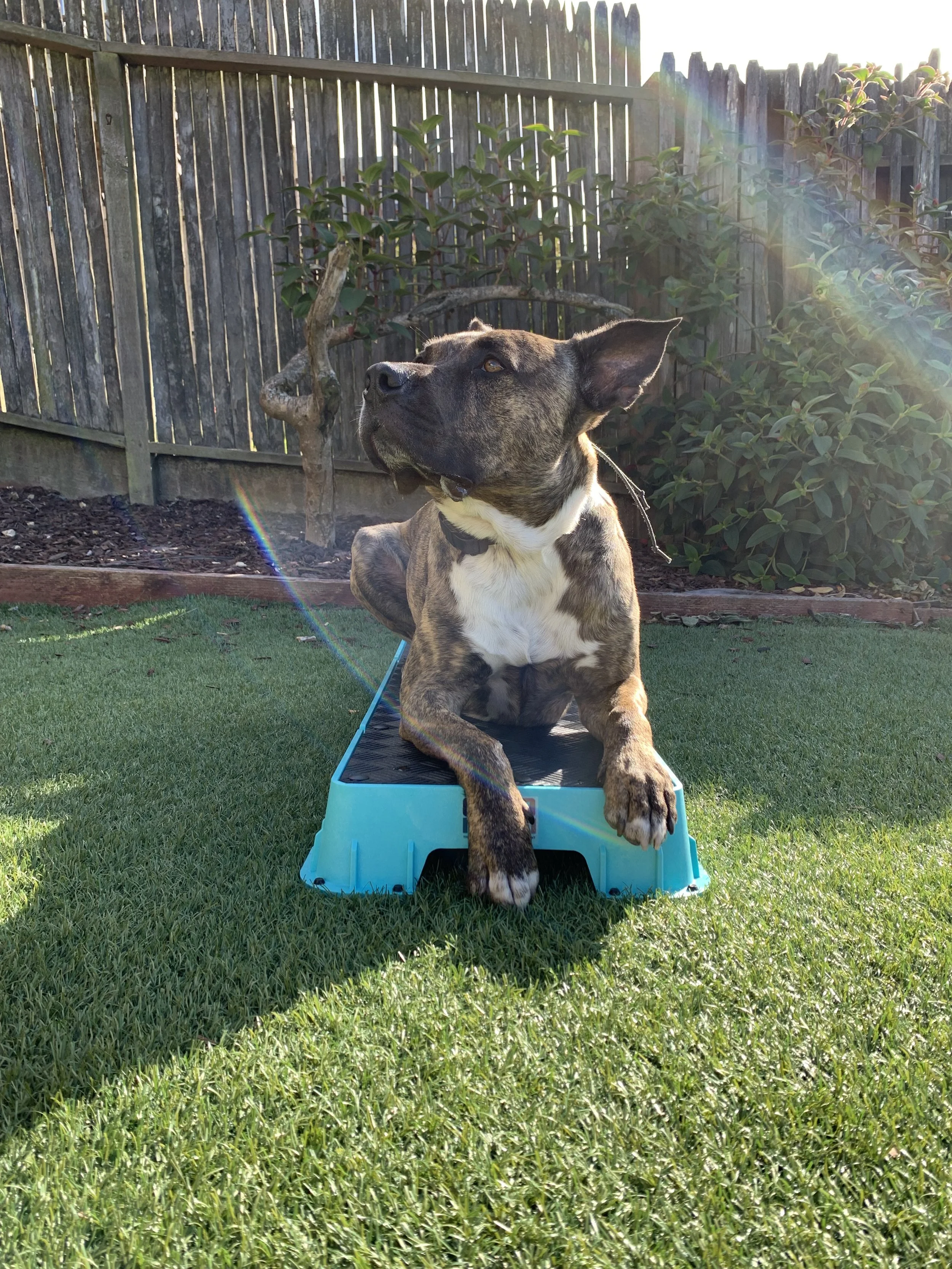
- Confidence and Optimism: Bully breeds are surprisingly sensitive to environmental pressure. A pessimistic dog perceives new things as threats, which can lead to fear-based reactivity. We build optimism through "novelty games" like Cardboard Chaos (scattering treats inside empty boxes) or Two Paws On (encouraging your dog to confidently place their front paws on various stable surfaces).
- Calmness as a Default: High-energy dogs need an "off switch." Calmness is a skill that must be actively taught. By heavily rewarding your dog for choosing to lie down and relax on their own, you teach them that peace is highly valuable.
- Engagement and Disengagement: Engagement means your dog is actively checked in with you, choosing your guidance over environmental distractions. Disengagement is the flip side—it's the ability to look at a distraction (like a squirrel or another dog) and willingly look away.
- Boundary Games: Teaching your dog to love staying on a designated cot, mat, or bed builds incredible impulse control. Boundary training teaches them to control their physical impulses, waiting patiently even when the front door opens or dinner is being prepared.
For a deeper dive into establishing these mental pillars, check out our guide on setting your dog up for success: foundations for effective dog training.
Positive Reinforcement and Games-Based Methods vs. Aversives
Historically, bully breeds were subjected to harsh, dominance-based training. People believed that because these dogs are physically strong and muscular, they required a "firm hand" or "balanced training" methods involving choke chains, prong collars, or e-collars.
Science and modern behavior studies have thoroughly debunked this approach. In fact, bully breeds are incredibly sensitive to human emotion and handler pressure. Using pain, fear, or intimidation to train a sensitive dog often has disastrous side effects:
- Behavior Suppression: Aversives suppress the outward behavior without addressing the underlying emotion. A dog who is punished for growling may stop growling, but they still feel anxious—leading to a dog that bites "without warning."
- Increased Reactivity: If a dog is shocked or pinched every time they see another dog, they quickly associate other dogs with pain. This directly triggers or worsens leash reactivity.
- Damaged Trust: Relationship-based training relies on a secure bond. Intimidation destroys that bond, replacing cooperation with fear.
Instead, we advocate for reward-based, games-based concept training. By using high-value rewards like boiled chicken, hot dogs, string cheese, or a favorite tug toy, we make cooperation the most exciting choice for the dog.

In positive reinforcement, timing is everything. You must mark the exact second your dog does the right thing (using a clicker or a clear marker word like "Yes!") and follow up with a reward within 1 to 2 seconds. This clarity builds a confident dog who actively tries to figure out how to win the next game.
Step-by-Step Guide to Essential Obedience and Life Skills
Transitioning from foundational concepts to real-world reliability takes structure. Whether you are raising a standard bully or looking for a specialized Pocket Bully Training Guide | Stop Barking, Chewing Fast, breaking your training down into manageable steps ensures long-term success.
Basic Commands and Crate Training in Dog Training for Bully Breeds
To build a reliable companion, start with these essential life skills:
- Name Recognition: During mealtimes, say your dog's name. The moment they look at you, mark ("Yes!") and hand them a piece of kibble. Repeat this until they automatically pivot their head toward you whenever they hear their name.
- The "Leave It" Command: Hold a low-value treat in a closed fist. Let your dog sniff and lick your hand. The second they back away or look away, mark and reward them with a high-value treat from your other hand. This teaches them that ignoring temptation leads to a much better deal.
- Crate Training: A crate should be your dog's personal sanctuary, never a place of punishment. Feed all meals inside the crate and leave puzzle toys stuffed with frozen peanut butter inside to build positive associations. Never let a whining dog out of the crate; wait for at least three seconds of silence before opening the door to avoid rewarding vocal protests.
- House Training Routines: Consistency wins the potty game. Take your puppy or newly adopted adult dog outside every 60 to 90 minutes, especially after sleeping, playing, or eating. Reward them immediately on the spot when they finish their business outside.
Addressing Common Behavior Challenges with Dog Training for Bully Breeds
Even with great foundations, you may encounter common behavioral hurdles. Here is how to address them using positive, effective strategies:
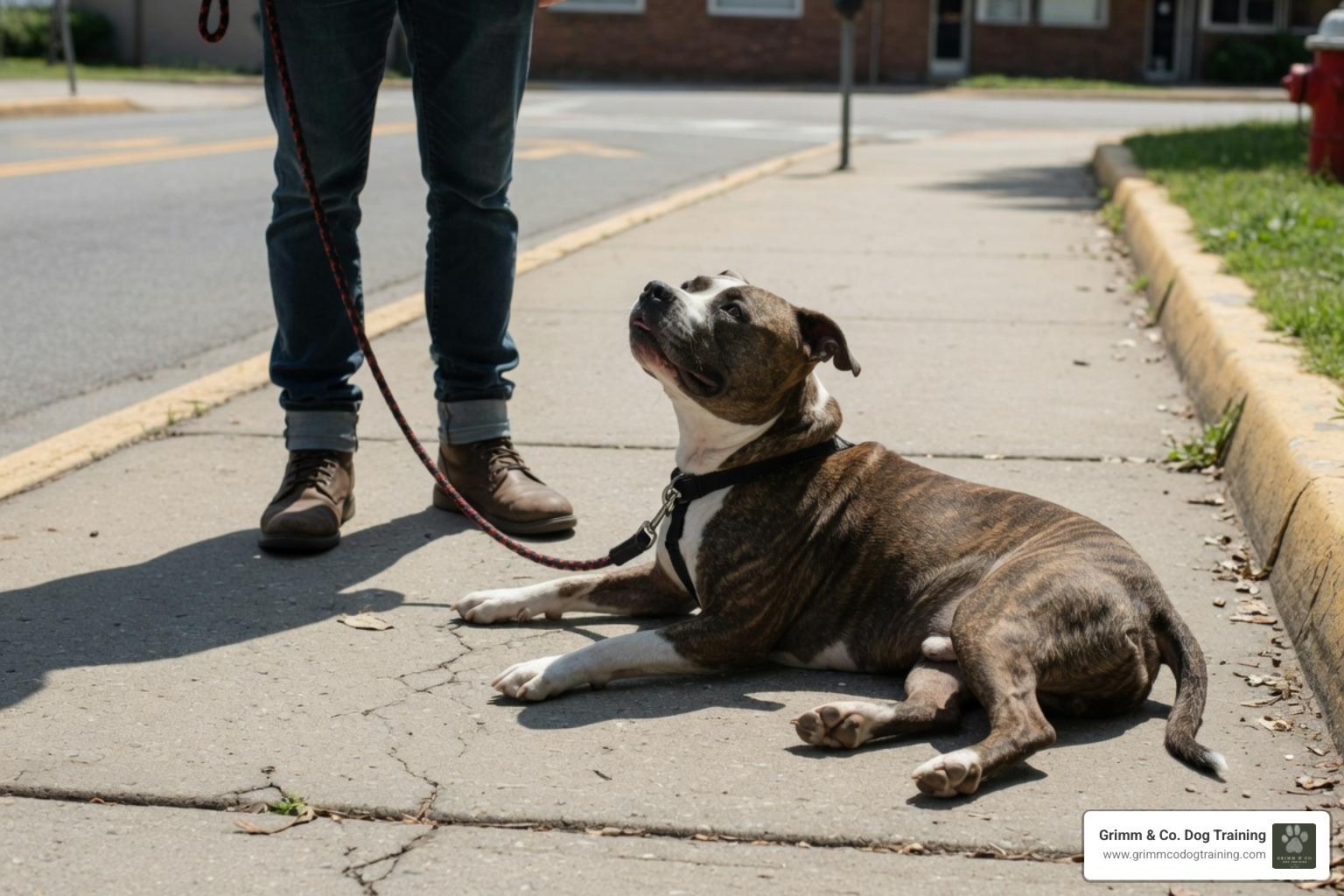
- Leash Pulling: Dogs do not naturally know how to walk on a loose leash. If your dog pulls, stop walking immediately. Become a tree. Wait for them to turn around and put slack in the leash, then reward them next to your leg. You can also play the A to B game, rewarding them frequently for maintaining eye contact while walking short distances in low-distraction environments like your hallway.
- Reactivity: Many bully breeds struggle with leash reactivity due to frustration or underlying anxiety. Instead of the traditional "sit and look" (which can freeze a highly aroused dog in place), we use dynamic movement protocols. The Move and Reward protocol keeps the dog moving at a safe distance from the trigger, rewarding them for choosing to stay engaged with you rather than focusing on the other dog.
- Separation Anxiety: Train the emotion, not just the behavior. Practice "micro-departures" where you step out of the room or front door for just two seconds, returning before your dog panics. Gradually build this time up to minutes and then hours, ensuring they remain calm throughout the progression.
- Prey Drive: Bully breeds often have a high prey drive. Manage this by practicing an automatic "Leave It" around moving objects. Use a long line for safety during outdoor training, and redirect their chasing instinct into structured games with a flirt pole or a tug toy.
- Resource Guarding: Never forcibly take items away from your dog, as this teaches them that humans are thieves and worsens guarding. Instead, practice trading up. If they have a toy, offer a high-value piece of chicken in exchange. Let them eat in peace, and if you have a multi-dog household, always feed them in separate rooms or crates to prevent tension.
Socialization, Enrichment, and Structured Routines
Socialization is often misunderstood as "letting your dog meet every person and dog they see." In reality, over-socializing can create an over-aroused, frustrated dog. True socialization is about teaching your dog to be neutral to the world around them.
We want our dogs to observe skateboarders, joggers, and other dogs calmly without feeling the need to run over and greet them. Introduce your puppy or adult dog to different surfaces (gravel, metal grates, wet grass), noises (sirens, vacuum cleaners), and people from a comfortable distance where they can remain relaxed and successful.
Furthermore, physical exercise alone is not enough for these intelligent dogs. Without mental stimulation, a bored bully breed will quickly invent their own fun—which usually involves destructive chewing.
- Enrichment: Ditch the food bowl. Feed meals using puzzle toys, snuffle mats, or frozen KONGs.
- Dog Sports: Bully breeds are incredibly versatile. Many excel in organized activities. If you want to build an unbreakable bond, look into dog training through sports: boosting engagement, bonding, and enrichment. Sports like Barn Hunt, Agility, Trick Dog, and Mantrailing give these athletic dogs a structured outlet for their natural drives.
Choosing Safe Training Equipment and Knowing When to Seek Professional Help
Using the right tools makes training safer and more enjoyable for both you and your dog.
- Collars vs. Harnesses: For daily walks, a flat collar or a well-fitting, front-clip harness is ideal. Front-clip harnesses help redirect your dog's forward momentum without putting pressure on their neck. Avoid choke chains, prong collars, or e-collars, which run counter to a relationship-first philosophy.
- Muzzles: Muzzle training is a fantastic skill for every dog, not just reactive ones. A comfortable basket muzzle allows your dog to pant, drink, and take treats while keeping everyone safe during vet visits or stressful situations. You can make muzzle training fun by playing The Cone Game, where you put treats at the bottom of the muzzle and let your dog willingly place their snout inside to get the food.
- Long Lines: A 15-to-30-foot biothane long line is an essential tool for practicing safe recall in open spaces without the risk of your dog running off.
While training at home is highly rewarding, there are times when professional guidance is invaluable. If you are struggling with severe leash reactivity, separation anxiety, or resource guarding, working with a qualified professional can prevent behavior issues from escalating.
When searching for support, always look for force-free, positive reinforcement-based trainers. Because the dog training industry is unregulated, look for certifications from reputable organizations like the CCPDT (Certification Council for Professional Dog Trainers) or IAABC (International Association of Animal Behavior Consultants).
If you are located in San Francisco, Daly City, or the surrounding Bay Area, we invite you to explore our dog training classes to find a supportive community that matches your needs.
Frequently Asked Questions about Bully Breed Training
Are bully breeds harder to train than other dogs?
Not at all! Bully breeds are highly intelligent, deeply people-focused, and eager to please. Because they are so sensitive to human emotions, they actually learn very quickly when using reward-based methods. Any perceived "stubbornness" is usually just a lack of motivation or unclear communication from the handler. Consistent routines and high-value rewards will unlock their full potential.
Can bully breeds safely live with cats and other dogs?
Yes, they absolutely can. Many bully breeds live in harmonious multi-pet households. However, because some individuals have a higher natural prey drive or dog-directed sensitivity, safety and management must come first. Always use slow, structured introductions over several weeks. Utilize crates, baby gates, and place boundaries to keep interactions supervised, and train an automatic "Leave It" using high-value rewards.
How much daily exercise and mental stimulation do bully breeds need?
Most bully breeds thrive with 30 to 60 minutes of structured physical activity daily, such as brisk walks, hikes, or play sessions. However, physical exercise should always be paired with mental stimulation. Incorporating 15 minutes of training games, puzzle toys, and nosework will tire your dog out far more effectively than a long run, while preventing boredom-induced destructive chewing.
Where Good Bully Breed Training Leads
Training a bully breed is a deeply rewarding journey that transforms their natural loyalty, strength, and sensitivity into the qualities of an exemplary companion. By focusing on relationship-based training, positive reinforcement, and clear structural boundaries, you help your dog become a proud ambassador for their breed.
At Grimm & Co. Dog Training, we specialize in relationship-focused training in Daly City, San Francisco, and the wider Bay Area. We believe that training should build trust, not fear, and we are dedicated to helping you and your dog thrive together.
Ready to take the next step in your training journey? Explore our personalized Grimm & Co. Dog Training Services and let's build a stronger bond with your dog today.