
Stop Aggressive Dog Barking with Easy Counterconditioning Techniques
How to Get Your Dog to Stop Aggressive Barking Safely

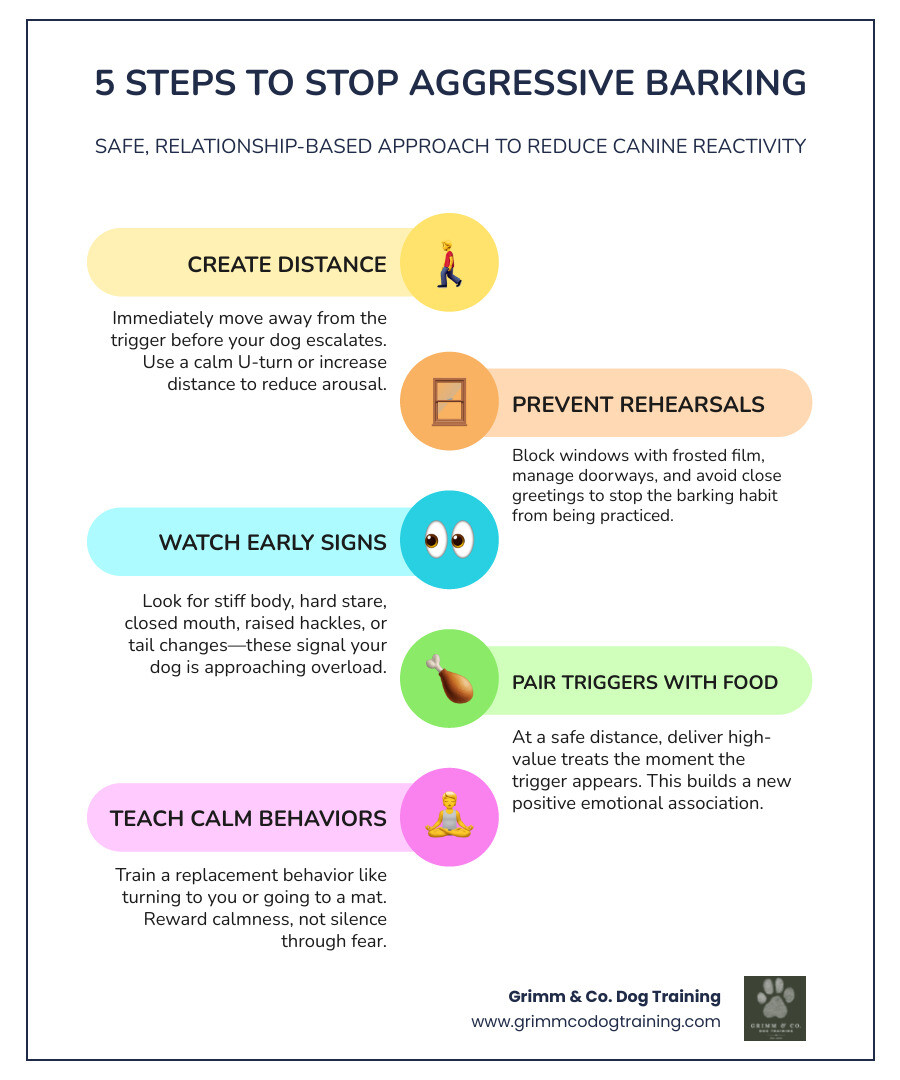
How to get your dog to stop aggressive barking starts with safety, distance, and finding the reason behind the bark. Do not yell, punish, or force your dog closer to the person, dog, or situation that set them off. Instead:
- Create space from the trigger before your dog escalates.
- Prevent repeat rehearsals by blocking windows, managing doorways, and avoiding close greetings.
- Watch for early signs of stress, such as a stiff body, hard stare, closed mouth, or raised hackles.
- Pair triggers at a safe distance with high-value food to build a better emotional response.
- Teach calm replacement behaviors, such as turning toward you or going to a mat.
- Get qualified professional help promptly if there is lunging, snapping, a bite history, or concern about safety.
Aggressive barking is not the same as ordinary excitement or demand barking. It may be driven by fear, territorial behavior, frustration, pain, or the need to create distance. The goal is not to silence an important warning. It is to help your dog feel safer and learn a calmer response.
I am Bailey Milne-Davies, a dog trainer and scientist who has spent years building calmer behavior, neutrality, and reliable obedience with my own reactive dog, Grimm, through ongoing training and dog sports. I use that hands-on experience and a careful, relationship-based approach to help owners understand how to get your dog to stop aggressive barking without ignoring the emotion behind it.
Understanding Canine Reactivity and Vocal Communication
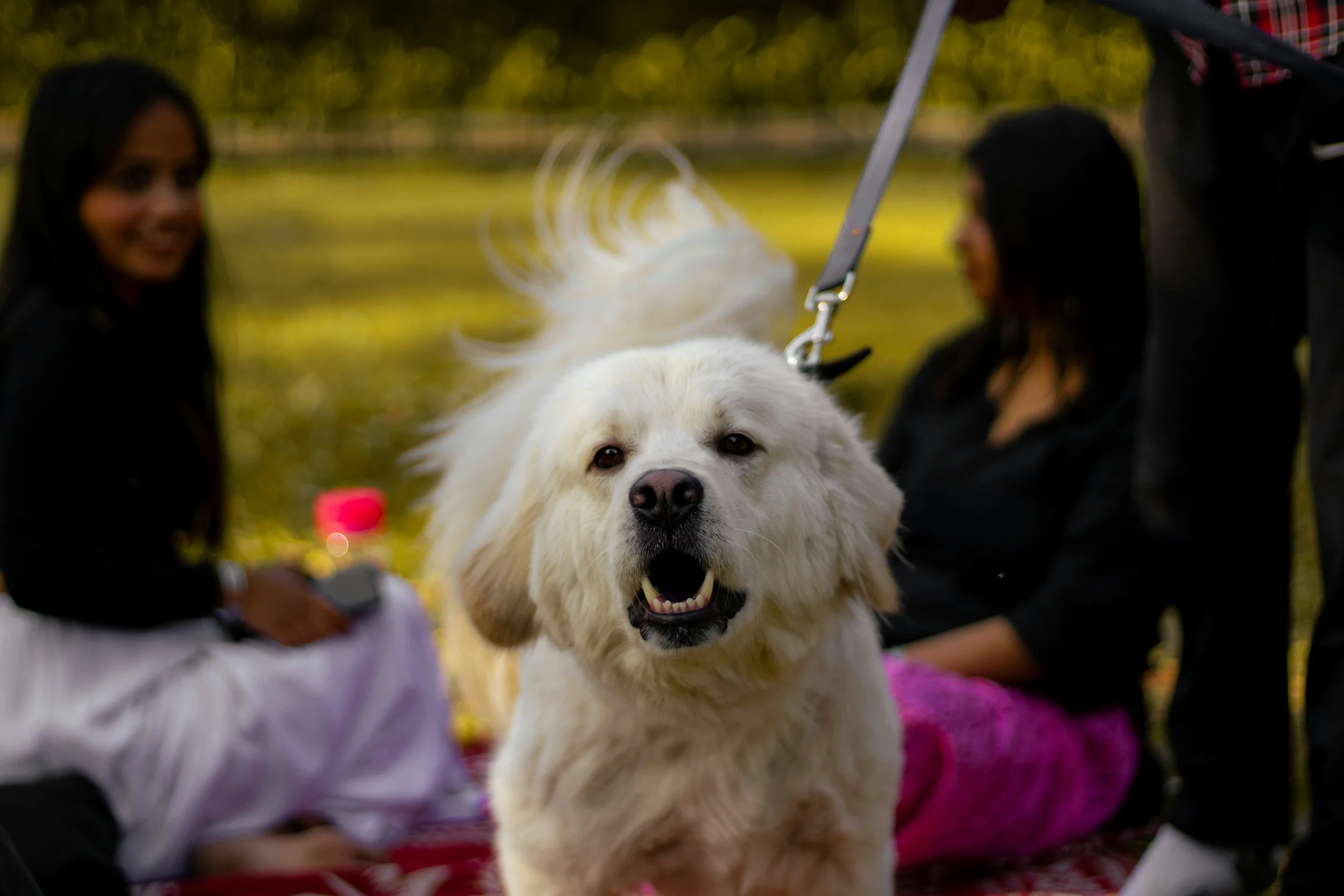
Canine vocalization on a leash is often the first visible sign of underlying emotional distress rather than simple stubbornness. Barking serves as a primary mode of communication for dogs, conveying messages ranging from alert warnings to acute fear or frustration. When a dog exhibits intense barking accompanied by forward lunging, hard stares, or stiff posture, they are expressing an internal state of high physiological arousal.
In high-density urban and suburban environments like San Francisco, Daly City, and across the South Bay in communities such as Palo Alto and Mountain View, dogs face frequent environmental stressors that can push them past their reactivity thresholds. Walking down crowded sidewalks in neighborhoods such as Hayes Valley or navigating tight park trails near Mussel Rock Park presents a non-stop stream of close-quarters triggers. Delivery vehicles, bicycles, off-leash dogs, and passing pedestrians constantly challenge a dog's coping mechanisms.
Research indicates that eight out of 10 dogs experience stress when left alone or navigating high-pressure situations, often manifesting that stress through vocalizations. When these environmental demands exceed a dog's capacity to process them calmly, reactivity takes over. By recognizing early stress signals and understanding core behavior modification principles, handlers can proactively intervene before vocal communication escalates into aggressive barking.
Deciphering the Root Causes of Canine Reactivity and Vocal Threat Displays
Addressing excessive barking requires identifying the underlying root motivations driving the behavior, such as fear, barrier frustration, or territorial defense. Barking is rarely a random act. It is a functional behavior intended to produce a specific outcome, most commonly increasing distance between the dog and a perceived threat.
Subtle posture cues and distance-increasing behaviors reveal whether a dog is attempting to create space or defend resources. A fearful dog might lean back, tuck their tail slightly, and bark while backing away or holding their ground defensively. Conversely, a dog driven by resource guarding or territorial boundary defense might display a forward-leaning posture, weight placed on front paws, and an elevated, stiff tail carriage. Reading these nuanced body signals helps handlers evaluate real behavioral intent, as explored in our guide on Living with a Reactive Dog: What Does Progress Really Look Like?.
Fear-Based vs. Territorial Vocalization
Fear-based barking is typically driven by an adrenaline response and defense drive. The dog perceives a person, another animal, or an unfamiliar object as a direct threat to their physical safety. Their vocalization is an urgent attempt to say, "Stay away from me." If the trigger approaches despite the barking, a fearful dog may feel forced to escalate to lunging or snapping to enforce their boundary.
Territorial vocalization centers on perimeter guarding and space control. This frequently occurs inside the home, in private yards, or within vehicles. When a passerby or mail carrier approaches the house and subsequently walks away, the dog internalizes a powerful lesson: "My barking made the intruder leave." Because successful barking drives triggers away and creates self-rewarding cycles, distinguishing between fear and defense is essential for effective intervention, as detailed in the American Kennel Club's guide on Understanding and Managing Excessive Barking in Dogs.
How to Get Your Dog to Stop Aggressive Barking by Identifying Key Triggers
Learning how to get your dog to stop aggressive barking begins with identifying specific environmental triggers and preventing trigger stacking throughout the day. Trigger stacking occurs when multiple small stressors accumulate over time. A dog might tolerate a sudden loud noise in the morning, a brief startle at the apartment elevator at noon, and a passing skateboarder in the afternoon. However, by the evening walk, their nervous system is primed for an explosive reaction at the sight of an oncoming dog.
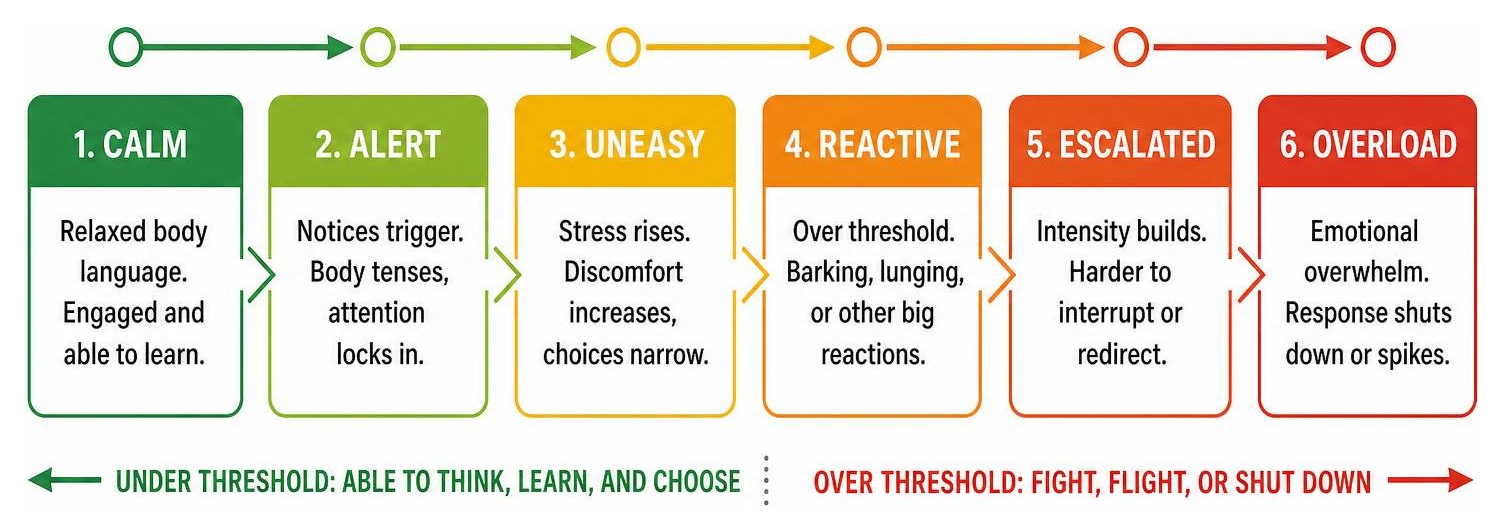
Handlers must learn to read early indicators of arousal before the dog reaches full emotional overload. Watch for these progressive warning signs:
- Body stiffening and muscle tension along the spine
- Hard glaring or fixating on a specific target
- Mouth closing suddenly after panting
- Ear position shifting sharply forward or pinned back tightly
- Subtle changes in tail carriage, such as a high, slow, rigid wag
Catching these subtle cues allows you to create distance or redirect your dog long before they break into loud, aggressive barking.
How to Get Your Dog to Stop Aggressive Barking Using Counterconditioning and Desensitization
Counterconditioning alters a dog's underlying emotional state by pairing the sight of a trigger with high-value food rewards using classical conditioning principles. Rather than simply suppressing the outward behavior, counterconditioning changes how the dog feels about the trigger. Over time, the presence of a scary or provoking stimulus transitions from predicting danger to predicting something fantastic.
This systematic approach changes the dog's involuntary reaction to a trigger from threat to positive anticipation, a foundational concept highlighted in our article Lessons from Grimm: Living with a Reactive Dog. When implemented alongside desensitization, which involves presenting the trigger at a controlled, low intensity, your dog builds new neural pathways that support calm composure.
| Training Approach | Primary Goal | Learning Mechanism | Typical Execution |
|---|---|---|---|
| Classical Counterconditioning | Change internal emotional response | Pavlovian Association (Trigger = Good Things) | Feed high-value treats continuously while trigger is visible, regardless of dog's action, as long as sub-threshold. |
| Operant Alternative Behavior | Teach specific active physical task | Operant Conditioning (Behavior = Reinforcement) | Cue a specific incompatible physical behavior, such as 'Look at Me', 'Place', or 'Heel', when trigger appears. |
Understanding Thresholds and the Open Bar Counterconditioning Protocol
Effective counterconditioning requires working strictly at a sub-threshold distance where the dog notices the trigger without becoming overwhelmed. A dog's threshold is the physical boundary line where they can acknowledge a trigger while remaining calm, capable of taking food, and able to process handler cues. Once a dog goes over threshold, their brain shifts into fight-or-flight mode, making active learning impossible.
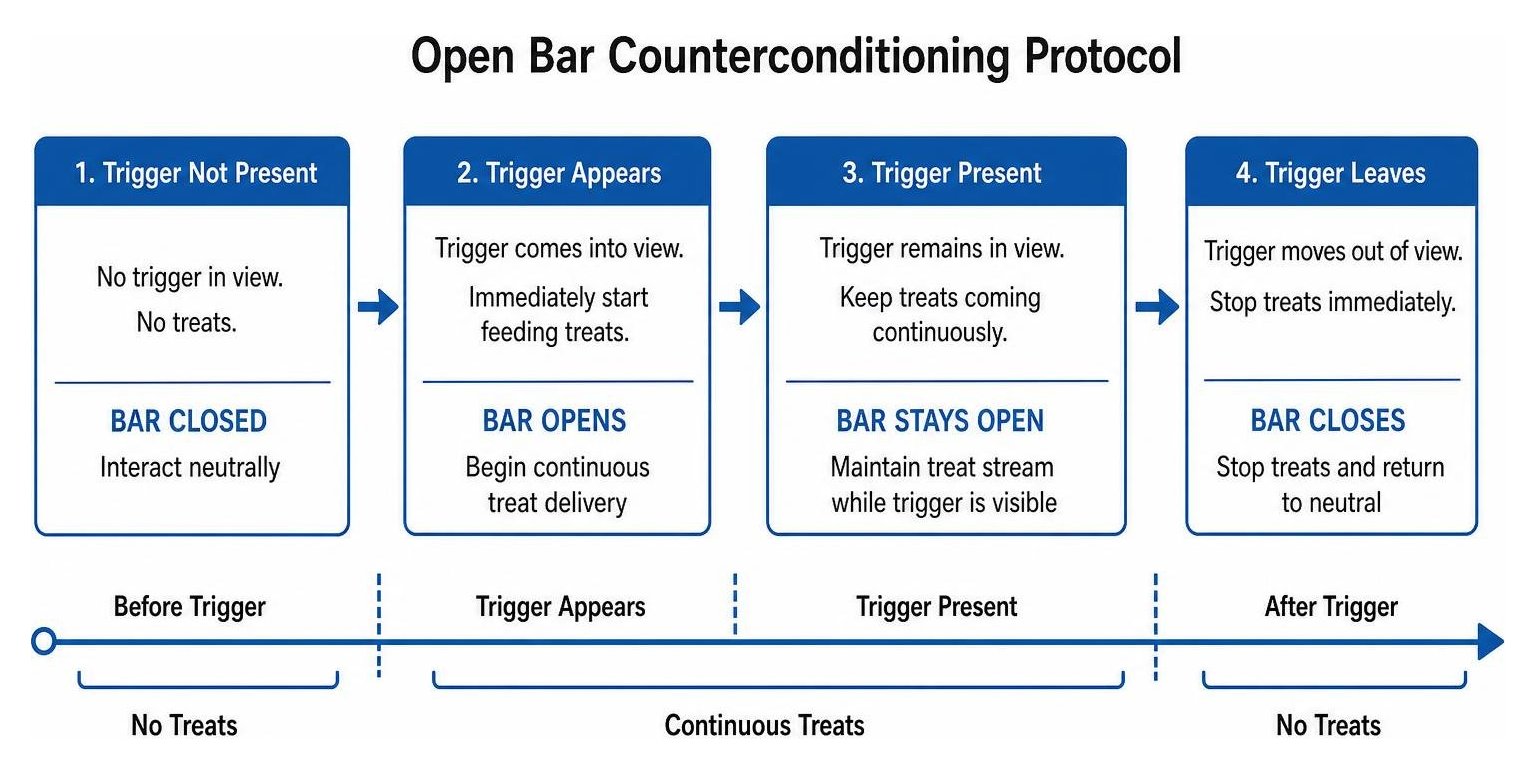
The "Open Bar" protocol is a classic counterconditioning technique designed for precise emotional modification:
- Position your dog at a safe, sub-threshold distance from the trigger (e.g., watching dogs walk past a park from 50 feet away).
- The moment the trigger comes into view, the "bar opens." Immediately begin feeding small, high-value treats (such as freeze-dried liver or real chicken) continuously.
- Keep the stream of treats going as long as the trigger remains in sight.
- As soon as the trigger moves out of view, the "bar closes." Stop feeding treats completely and return to neutral interaction.
Delivering high-value treats the moment the trigger appears and stopping immediately when it leaves creates a clear emotional shift through precise reward timing.
Teaching Replacement Behaviors and the Quiet Cue
Once a dog's emotional state stabilizes through initial counterconditioning, handlers can teach alternative default behaviors. An alternative behavior gives the dog a productive, structured job to do instead of barking. Teaching a targeted mat placement cue, a tight heel, or an automatic "look at handler" cue gives your dog clear direction during stressful moments.
For immediate disruptions during mild arousal, techniques like the sniff disruption technique engage the dog's olfactory system to lower physiological arousal and interrupt barking, as outlined in VCA Animal Hospitals' resource on Barking in Dogs. Because a dog cannot easily bark while pressing their nose to the ground to track high-value treats scattered in the grass, sniffing serves as a natural, calming interrupter that lowers heart rates.
To teach a structured "Quiet" cue:
- Allow your dog to bark once or twice to acknowledge an alert stimulus.
- Hold a fragrant, high-value treat directly in front of their nose.
- Pause while they stop barking to sniff the treat.
- Say your chosen cue, such as "Quiet," in a clear, neutral tone.
- After two seconds of silence, mark with "Yes!" and deliver the reward.
- Gradually extend the duration of required silence before marking and rewarding.
Environmental Management Strategies to Prevent Reactive Triggers
Environmental management relies on visual barrier management and trigger preemption to minimize unnecessary stress. Training cannot succeed if a dog is constantly practicing aggressive barking at home throughout the day. Every time a dog barks frantically at passersby from the living room window, their internal stress response is rehearsed and reinforced.
Blocking visual access to street activity prevents self-reinforcing barking habits indoors, significantly reducing daily arousal levels. Simple adjustments like applying frosted window film to lower panes, closing solid blinds, or using baby gates to restrict access to front windows make a profound difference in stabilizing your dog's baseline mood.

Managing Visitors and Indoor Entryways Safely
Indoor reactivity can be managed through designated spot training and maintaining an 8-foot buffer rule from entryways during visitor arrivals. Front entryways are high-arousal bottlenecks. Expecting a reactive dog to sit calmly right at the front door when a stranger enters sets them up for failure.
Implement these practical steps for guests:
- Establish a "place" bed or crate at least eight feet away from the front door.
- Secure your dog in a quiet back room with an interactive frozen food chew before guests arrive.
- Use white noise machines or calm background music to mask the sound of doorbells and footsteps outside.
- Instruct guests to completely ignore the dog upon entering, avoiding eye contact, soft talking, or reaching out to pet them.
Managing guest entryways calmly protects your dog's space and keeps everyone safe while long-term training takes root. Additional guidelines on preventing home territorial behavior can be found in the RSPCA's educational material on How To Stop Your Dog Barking Too Much.
How to Get Your Dog to Stop Aggressive Barking Through Controlled Socialization
Understanding how to get your dog to stop aggressive barking outdoors involves controlling exposure distance during daily outings. Socialization for a reactive dog does not mean forcing them to greet every dog or human they meet on the street. In fact, face-to-face leash greetings frequently cause immense pressure, leading to barrier frustration and defensive outbursts.
Practicing neutral parallel walks while avoiding forced greetings protects the dog's threshold and builds calm focus around external triggers. Find a quiet park in San Mateo or Oakland where you can walk parallel to another handler and dog at a safe 30-foot distance. The goal is complete neutrality, teaching your dog that other dogs and people can exist nearby without requiring any direct interaction. Helpful context on seasonal reactivity shifts can be found in our post Your Dog's Reactivity Isn't Getting Worse: Spring Just Exposed It.
The Truth About Anti-Bark Devices and When to Seek Professional Guidance
Automated anti-bark devices and static correction tools focus primarily on interrupting vocalizations rather than addressing the underlying emotional state or trigger driving the behavior. Without proper handler guidance and structured behavior modification, dogs frequently become collar-wise, learning to suppress barking only while wearing a specific device and reverting to vocal behavior once it is removed.
When addressing reactive barking, relying strictly on automated tools without building clear handler communication can limit long-term training progress. Research comparing citronella spray devices and electronic collars shows that while interruptive tools can temporarily suppress barking, effectiveness varies depending on the individual dog and situation. Studies indicate that citronella collars are often viewed favorably by handlers for noise control, but long-term success still depends on addressing the underlying motivation through consistent training and positive reward structures.
Evaluating Collars, Halters, and Safety Tools
Every tool in dog training serves a specific function, and selecting the right equipment depends on the dog's temperament, handler experience, and training goals. While automated correction devices aim to interrupt vocalizations, they do not teach the dog what to do instead. Proper tool application requires pairing any management tool with active instruction and reinforcement.
Properly fitted head halters, front-clip harnesses, and standard training collars offer handlers safe physical control while maintaining clear communication. A head halter allows handlers to guide a large dog's focus away from a trigger smoothly without needing excessive physical strength. Preserving clear warning signals like growling or alert barking gives handlers vital information about a dog's stress level before escalation occurs. By combining appropriate management gear with counterconditioning, handlers can systematically lower arousal while reinforcing calm behavior. For broader guidance on managing barking habituation, review the ASPCA's overview on Barking.
Knowing When to Work with a Qualified Behavior Professional
When reactive behavior poses safety concerns or requires a formal bite risk assessment, working with an experienced trainer is essential. Handling aggressive barking in dense urban environments requires precise timing, proper safety equipment, and tailored behavioral modification protocols.
A qualified professional can develop an individualized training plan tailored to your household, such as the structured options offered in our Dog Obedience Training Classes. Professional guidance helps ensure you are reading your dog's thresholds accurately, applying counterconditioning correctly, and maintaining total handler safety at all times. You can explore our foundational methodology on our Training Approach page.
Frequently Asked Questions About Stopping Aggressive Barking
What should I do immediately when my dog starts aggressively barking on a walk?
Immediately create distance by turning around smoothly with a calm U-turn. Do not pull frantically back on the leash or yell at your dog, as vocalizing back can sound like you are joining in on the barking. Hold the leash securely against your center of gravity, use a clear directional cue, and walk briskly in the opposite direction until your dog recovers their composure.
Why shouldn't I punish my dog for growling or barking aggressively?
Punishing warning signs suppresses vital communication, increasing the risk of sudden bite escalation without warning. Growling and alert barking are your dog's way of saying they feel uncomfortable or threatened. If you punish the bark, you remove the warning system while leaving the underlying fear or hostility intact. The dog may then proceed straight to snapping or biting the next time they are pushed over threshold.
Can older dogs unlearn aggressive barking habits?
Yes, thanks to canine neuroplasticity, mature dogs can learn new emotional responses and behavioral habits at any age. While long-standing habits take consistent repetition to modify, older dogs respond exceptionally well to structured routines, desensitization, and clear management. Scheduling a veterinary health check rules out underlying pain, joint discomfort, or sensory loss that might be contributing to increased irritability.
Building Lasting Behavioral Transformation
Achieving long-term behavioral transformation requires consistent management and a relationship-focused methodology. Overcoming aggressive barking is not about quick fixes or finding a magic button. It is about committing to clear communication, managing your dog's exposure to triggers, and systematically rebuilding their emotional confidence in challenging environments.
At Grimm & Co. Dog Training in Daly City and San Francisco, personalized guidance helps dog owners build supportive bonds and deep mutual trust with their dogs, creating lasting real-world progress across the Bay Area. Whether you are navigating busy city streets or seeking peace within your home, structured support makes all the difference. Learn more about our comprehensive training solutions by visiting our Dog Training Services page, or explore working with our specialized Dog Behaviorists to design a customized plan for your pet through our tailored Dog Training Program.