
Introduction

Finding the right dog trainer in Burlingame depends on matching your dog's specific behavioral needs with the right instructional format. For targeted issues like leash reactivity, doorway manners, or foundational puppy routines, private in-home lessons provide personalized mechanics directly in your daily living space. For dogs with basic baseline skills needing distraction proofing, structured group classes build environmental focus and neutrality around unfamiliar dogs and people. Choosing a qualified professional requires assessing verifiable credentials, practical handling mechanics, and experience navigating high-distraction Peninsula environments.
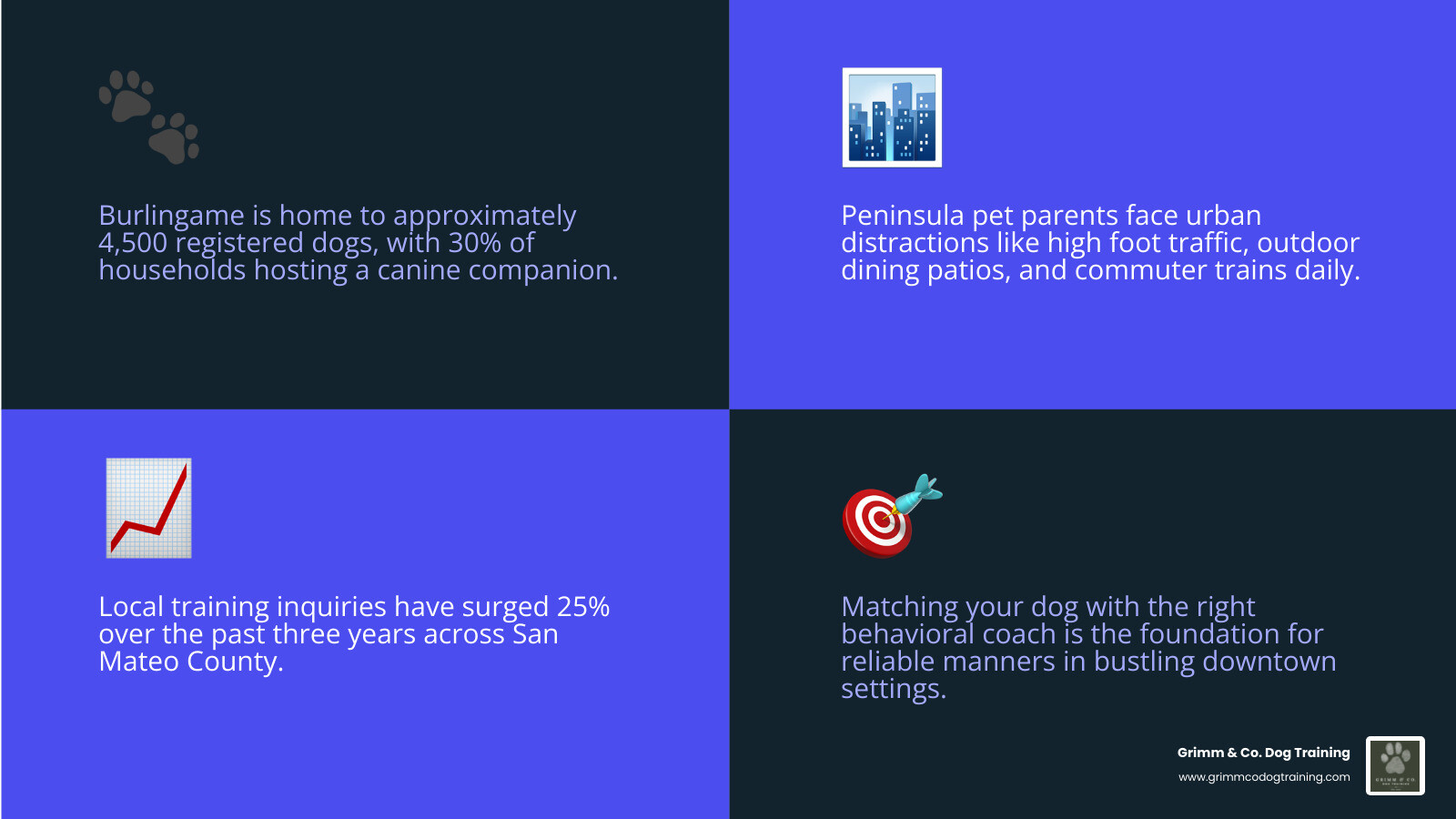
Burlingame is home to approximately 4,500 registered dogs, with an estimated 30% of households sharing their living spaces with at least one canine companion. Living along the Peninsula offers a distinct lifestyle: sunny afternoons exploring Washington Park, weekend strolls along Burlingame Avenue, and scenic walks near the Bay Trail. These vibrant public spaces mean that local dogs face complex social landscapes daily. High foot traffic, outdoor dining patios, commuter trains, and active neighborhood corridors require a solid behavioral foundation.
Demand for professional canine education across San Mateo County has grown significantly, reflecting a 25% increase in local training inquiries over the past three years. Peninsula pet parents expect reliability and refinement from their companions. Whether addressing manners in a bustling downtown setting or creating harmony inside a multi-level home, matching your dog with the right behavioral coach sets the foundation for lifelong success.
Core Training Formats Available Across the Peninsula
Finding the right instruction format depends heavily on your dog's current baseline, learning speed, and specific behavioral goals. Our dog training services are built around the understanding that every canine-human partnership has individual needs. Selecting between one-on-one coaching and structured group environments is the first step in designing an effective education plan.
Private lessons offer focused, individualized instruction tailored directly to your household routines. These sessions take place in your home, neighborhood streets, or local parks where triggers naturally occur. In-home coaching is especially advantageous for working on boundary control at doorways, polite greeting behaviors, nuanced leash reactivity, and early puppy development protocols. Handlers receive real-time feedback on leash handling, body language cues, and reward timing without the sensory overload of other dogs present.
For dogs that have established basic impulse control, dog obedience training classes provide a structured platform to proof skills around controlled distractions. Group environments teach dogs to focus on their handlers despite the presence of unfamiliar dogs and people nearby, bridging the gap between quiet living-room practice and real-world execution. These classes also help pet parents build confidence when handling their dogs around other teams in a supportive, professionally supervised setting.
| Training Format | Best Suited For | Primary Focus Areas | Typical Environment |
|---|---|---|---|
| Private Lessons | Specific behavioral issues, puppies, reactive dogs, busy schedules | Custom obedience, leash mechanics, threshold management, home manners | In-home, neighborhood streets, parks |
| Group Classes | Socialized dogs needing distraction proofing, foundational polish | Loose leash walking, stays, reliable recall, neutrality around dogs | Indoor facilities, designated outdoor parks |
| Pack Walks & Field Work | Intermediate to advanced dogs building real-world neutrality | Environmental focus, pack neutrality, impulse control | Public trails, urban downtowns, open spaces |
Evaluating Credentials and Methods of a Dog Trainer Burlingame Provides
Dog training remains an unregulated industry, which makes evaluating a professional's actual education and background critical. Over 15 certified dog trainers operate within local directories, holding average client satisfaction ratings of 4.7 out of 5 stars. Independent review platforms, such as the Burlingame pet training directory, provide an overview of regional options and client feedback.
Look for trainers with verifiable education, such as certifications through established independent bodies like the CCPDT (CPDT-KA), formal academy accreditations, or extensive apprenticeships under master trainers. A skilled professional understands learning theory, behavioral mechanics, and proper tool application. They will clearly articulate how they teach new behaviors, reinforce reliable habits, and humanely clarify boundaries without causing confusion or unnecessary distress. Asking how a trainer manages arousal, sets clear criteria, and supports owners between sessions ensures you find a coach who delivers lasting results.
Navigating Specific Behavioral Challenges in Burlingame Environments
Living in Burlingame presents specific environmental variables that test canine impulse control daily. A calm walk along Broadway or Burlingame Avenue requires a dog to ignore discarded food near outdoor cafes, navigate tight sidewalk passes near strollers, and tune out Caltrain whistles. Neighborhood parks like Ray Park and Victoria Park feature off-leash play areas, active sports courts, and passing joggers that challenge even well-mannered companions.
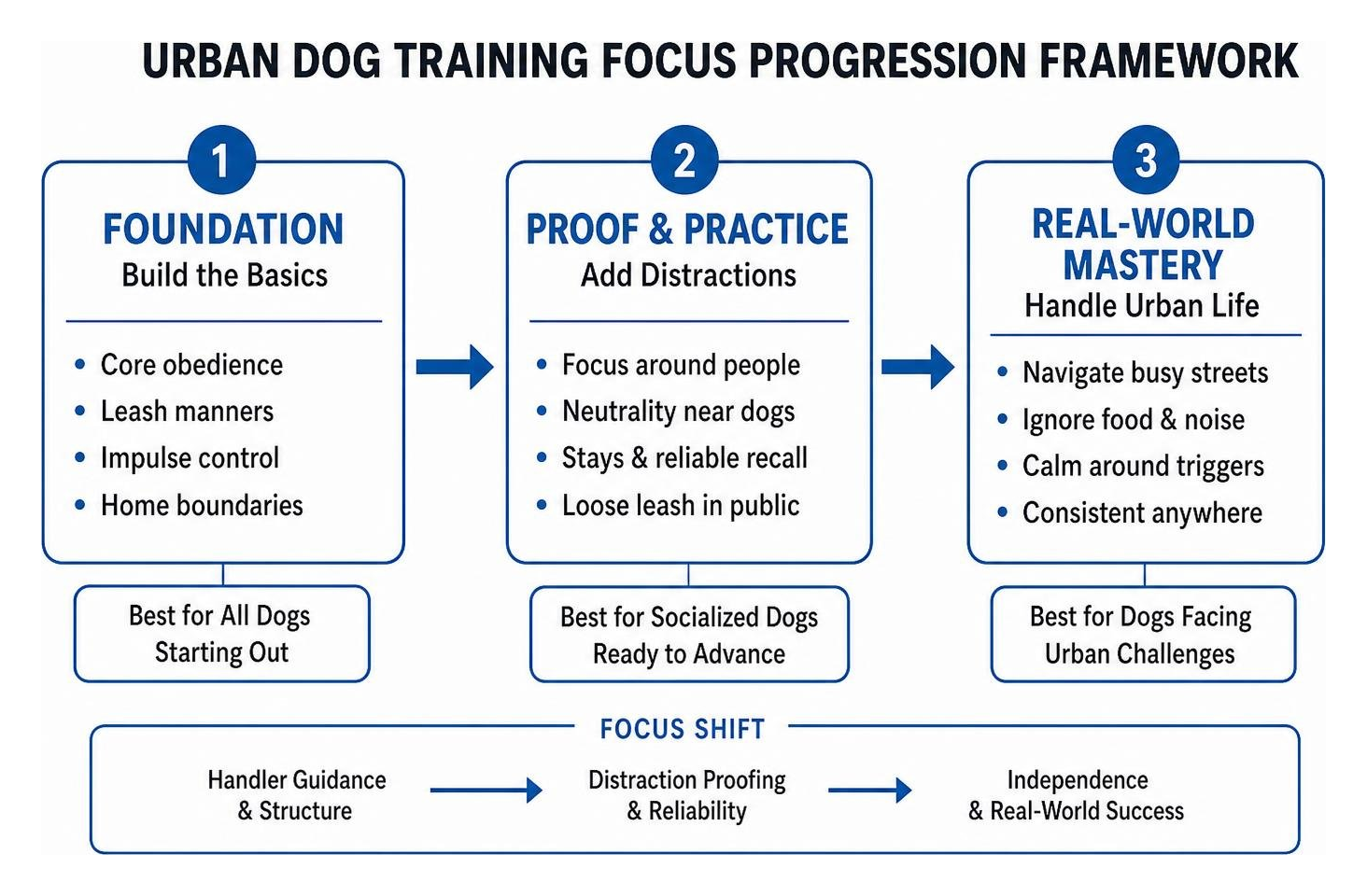
Over 60% of Burlingame dog owners seek professional guidance for core manners, while roughly 25% need targeted interventions for complex challenges like fear, leash reactivity, or separation distress. When a dog displays vocal outbursts, lunging, or frantic pulling, the underlying issue is rarely simple disobedience. It is typically rooted in over-arousal, environmental insecurity, or unmanaged frustration.
Our comprehensive training approach focuses on emotional regulation, handler engagement, and clear communication frameworks that translate reliably to high-distraction Peninsula environments. Rather than relying on temporary fixes, we build reliable default behaviors that hold up under real-world pressure.
Working with a Dog Trainer Burlingame Families Choose for Behavioral Challenges
When addressing complex behavioral concerns such as inter-dog reactivity or fear-based aggression, standardized obedience drills alone are insufficient. Successful rehabilitation requires systematic desensitization, classical counter-conditioning, and precise threshold management.
Working below your dog's reactivity threshold prevents the panic-driven neurochemical responses that solidify defensive habits. Through a customized dog training program, handlers learn to identify early physiological stress signals, such as lip licking, body freezing, or hard staring, before explosive reactions occur.
We systematically restructure your dog's conditioned emotional response to triggers while giving you dependable mechanical handling skills to manage unexpected encounters smoothly. This balanced, structured methodology builds canine resilience, allowing your dog to stay calm, engaged, and cooperative throughout San Mateo County's active community corridors.
How to Select the Right Dog Trainer Burlingame Specialists Recommend
Selecting the best training match requires looking beyond marketing catchphrases to evaluate a trainer's diagnostic abilities and teaching clarity. An effective trainer coaches the person holding the leash just as much as the dog, ensuring long-term consistency at home.
When interviewing prospective trainers, prioritize these evaluation steps:
- Initial Behavioral Evaluation: A quality trainer conducts a thorough intake assessing your dog's history, daily routines, diet, exercise levels, and stress triggers before prescribing a regimen.
- Temperament-Specific Planning: High-drive working breeds, sensitive companion dogs, and rescue dogs with unknown backgrounds require distinct pacing, motivation strategies, and handling adjustments.
- Transparent Mechanical Instruction: The trainer should clearly explain their leash handling, marking systems, and reinforcement schedules so you can replicate them confidently at home.
- Realistic Timelines: Modifying established behavioral patterns takes structured repetition. Avoid any provider promising permanent behavioral transformations in unrealistic timeframes.
- Comprehensive Handler Coaching: True success relies on handler clarity. A skilled coach breaks down complex canine body language and shows you exactly how to maintain consistency between formal lessons.
Enrolling in structured dog training classes or starting private coaching should feel collaborative, clear, and focused on practical progress.
Understanding Pricing and Program Structures in San Mateo County
Training rates across Burlingame and neighboring Peninsula communities reflect the local cost of living and the extensive experience of local practitioners. Understanding the prevailing fee structures helps you budget effectively for your dog's educational journey.
Private one-on-one sessions in the Burlingame area generally range from $75 to $150 per hour, depending on the trainer's specialization and whether sessions occur at a facility or in your home. Comprehensive multi-week private packages or intensive behavioral modification protocols often scale according to complexity and the level of direct support provided between sessions.
Structured group obedience classes average between $200 and $400 for a standard six-week program. Investing in high-level instruction early prevents costly management solutions and property damage while keeping your dog safe, confident, and reliable throughout their life.
Frequently Asked Questions About Dog Training in Burlingame
How much does professional dog training typically cost in Burlingame?
Private instruction generally runs between $75 and $150 per hour, with customized multi-session behavioral packages priced according to the level of intervention required. Group courses typically range from $200 to $400 for a six-week curriculum covering foundational manners or intermediate handling.
What should I expect during an initial dog training consultation?
An initial consultation begins with a detailed review of your dog's medical background, behavioral history, home environment, and your family's specific training goals. The trainer will evaluate your dog's baseline temperament, demonstrate foundational handling mechanics, and outline a realistic, step-by-step training roadmap.
How do trainers handle high-prey-drive or reactive breeds locally?
Trainers address high drive and reactivity by implementing structured impulse-control exercises, predatory motor pattern channeling through controlled play, and rigorous threshold management. Dogs learn clear alternative behaviors, allowing handlers to navigate urban Peninsula environments safely and calmly.
Building a Lasting Relationship with Your Dog
Achieving dependable obedience and a balanced household comes down to mutual clarity, fair boundaries, and consistent daily habits. True behavioral transformation happens during your regular routines, from morning strolls through your neighborhood to relaxing evenings at home.
By partnering with a knowledgeable professional who respects your dog's individual temperament, you develop the clear communication needed for real-world reliability. At Grimm & Co. Dog Training, we help Peninsula owners build deep, rewarding relationships with their dogs through personalized coaching, practical mechanics, and supportive community training opportunities. When you are ready to start building a more confident, reliable partnership with your dog, contact our team to schedule your initial evaluation.