
Understanding How Modern Dog Training E-Collars Work
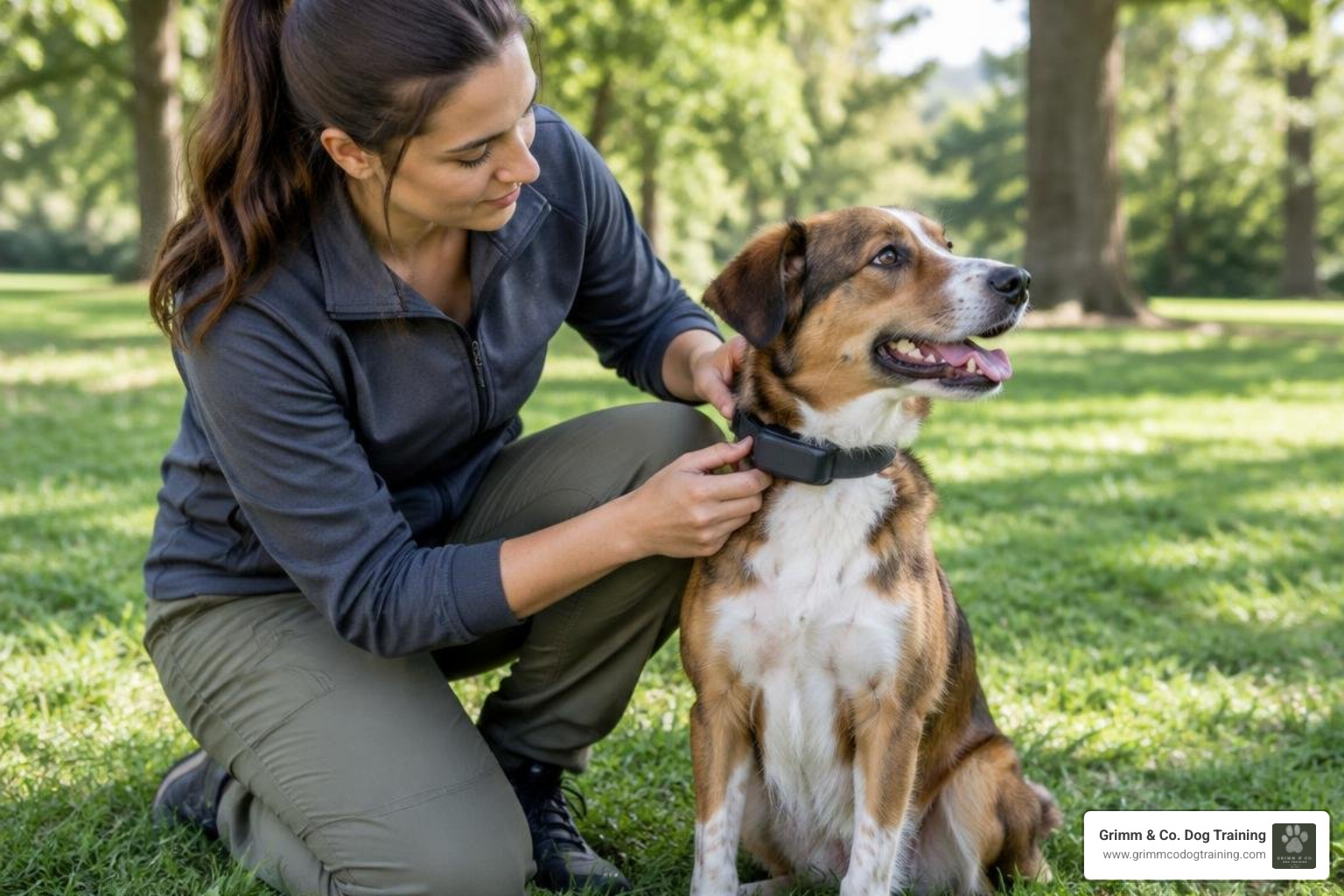
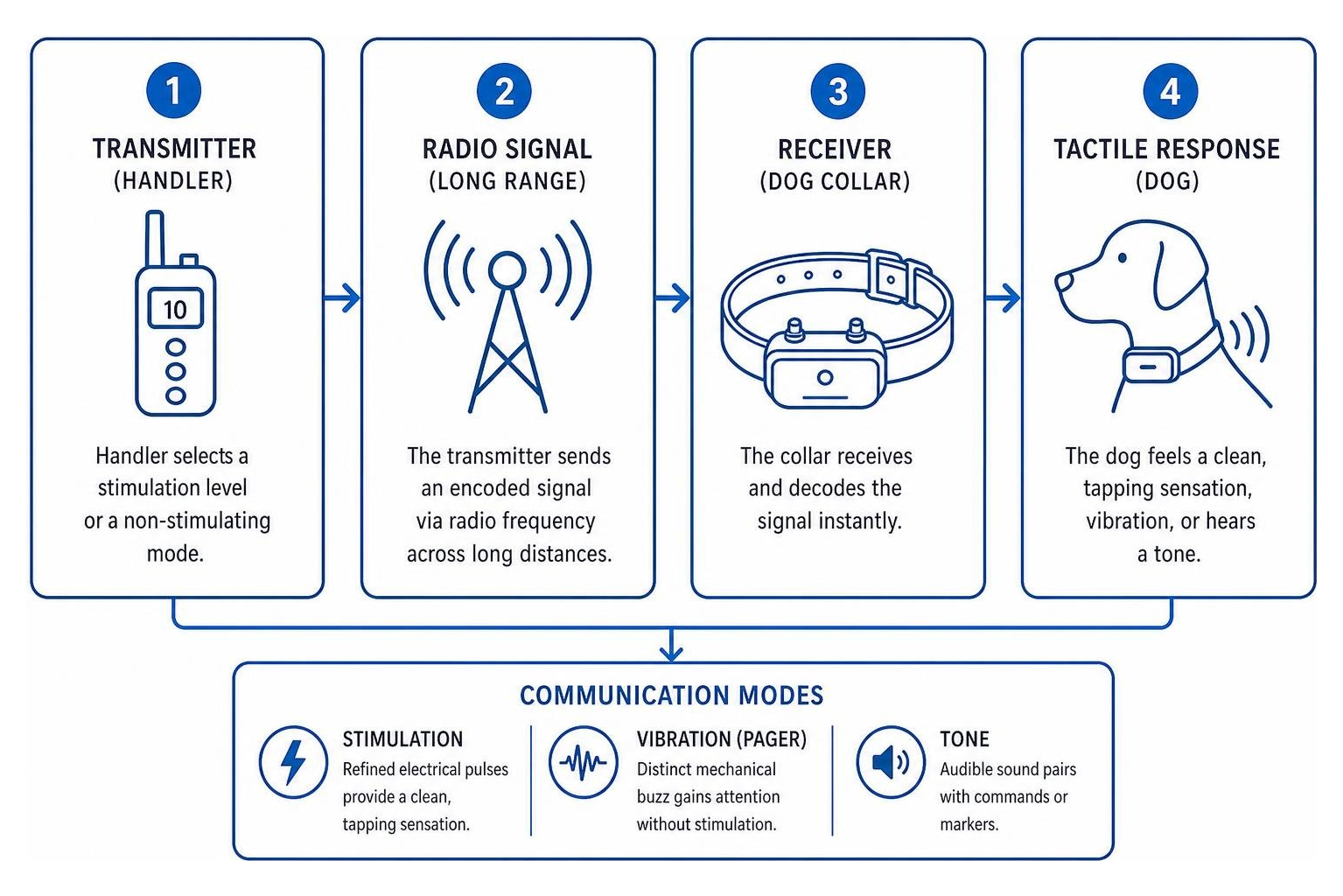
Modern remote training technology has evolved far beyond the crude instruments of decades past. Today, a high-quality remote collar acts as an invisible, tactile leash line that allows clear, nuanced communication across significant distances. Rather than delivering an indiscriminate jolt, modern devices utilize refined electrical waveforms similar to Transcutaneous Electrical Nerve Stimulation (TENS) units used in human physical therapy. Devices such as those featuring medical-grade blunt pulse technology excite sensory nerves and underlying muscle fibers without penetrating deeper nerve layers, producing a clean tapping sensation rather than a sharp sting.
Beyond static stimulation, high-performance systems integrate non-stimulating modes that serve as clear communication bridges. Pager vibration modes deliver distinct mechanical buzzes that gain a dog's attention instantly without any electrical pulse. Audible tone features allow handlers to pair sounds with commands or marker systems, providing a Pavlovian bridge that cues an upcoming behavior or confirms compliance. When integrated into a thoughtful, relationship-first system, these tactile sensations function as clear prompts, giving dogs dependable guidance during off-leash adventures through varied Bay Area terrain.
Key Hardware Features and Specifications
Choosing a reliable device requires looking closely at durability, signal fidelity, and mechanical safety controls. Handlers navigating wet coastal trails from Mussel Rock Park down through the Peninsula require gear that withstands heavy moisture, salt air, and sudden changes in temperature.
- Waterproof Integrity: Look for an IPX9K waterproof rating on receivers. This industrial standard guarantees that the electronic housing can withstand close-range, high-pressure, and high-temperature water jets, ensuring seamless operation when a dog plunges into Pacific surf or runs through damp coastal fog.
- Transmission Range: Consumer units typically offer ranges from 300 yards up to a full mile. Line-of-sight range decreases in dense eucalyptus groves, urban concrete corridors, or rolling coastal hills, making a higher manufacturer rating valuable for preserving signal consistency.
- Fine-Tuned Rheostat Dials: Professional hardware offers 100 to 127 micro-levels of static stimulation. This granular precision lets you match your dog's exact sensory threshold rather than jumping between wide, jarring intensity gaps.
- Safety Level Locks: Accidental dial shifts inside a jacket pocket can lead to improper correction levels. Reliable transmitters include physical switch guards or digital lock-and-set features that lock your working level firmly in place.
- Multi-Dog Expandability: Advanced transmitters can manage up to three or four individual dogs on separate buttons, allowing custom stimulation profiles for each animal.
- Contact Point Architecture: Standard 5/8-inch contact probes suit smooth-coated dogs, while 3/4-inch or 1-inch probes reach through thick double coats. Nickel-free titanium contact pads and winged comfort pads distribute physical contact evenly, reducing localized skin friction.
Top Dog Training E-Collar Models Compared
Selecting the right training unit depends on your dog's size, drive, coat density, and training environment. The table below outlines the core specifications of leading systems designed for field reliability.
| Model | Range | Stimulation Levels | Waterproof Rating | Dog Size Minimum | Multi-Dog Expandability | Best Suited For |
|---|---|---|---|---|---|---|
| SportDOG FieldTrainer 425X | 500 Yards | 21 Static Levels | DryTek (Submersible to 25 ft) | 8 lbs | Up to 3 Dogs | Close-working field dogs, hunting, everyday park obedience |
| Dogtra EDGE | 1.0 Mile | 0–127 Rheostat / 0–8 Step | IPX9K Waterproof | 35 lbs | Up to 4 Dogs | High-drive working breeds, large properties, multi-dog packs |
| Dogtra 1900X | 3/4 Mile | 0–100 Output Levels | IPX9K Waterproof | 35 lbs | Up to 3 Dogs | Rugged terrain, high-distraction environments, strong working dogs |
| Dogtra 280C | 1/2 Mile | 0–127 Rheostat | IPX9K Waterproof | 10 lbs | Up to 2 Dogs (282C) | Small to medium companion dogs, urban settings, sensitive temperaments |
| Educator FE-560 FOB | 300 Yards | 100 Blunt Pulse + 60 Boost | Waterproof Receiver & Remote | 5 lbs | Single Dog | Small breeds, hiking companion dogs, discreet urban handling |
For working dogs operating in close brush, the SportDOG FieldTrainer 425X field capabilities deliver lightweight convenience with dependable 500-yard coverage. Handlers running high-drive working lines on expansive acreage benefit from Dogtra EDGE long-range features, which provide up to four-dog expandability and interchangeable selector dials.
If you require an ultra-durable tool with high-output capacity, the Dogtra 1900X high-output system features an armor-like protective case, high-intensity locating light, and strong tactile vibration. For smaller companions requiring light handling in compact Bay Area neighborhoods, the Dogtra 280C compact unit specs package full 127-level rheostat control inside an ultra-compact receiver that rests comfortably on dogs as small as 10 pounds.
Safe Fitting and Baseline Calibration
A safe training program begins with a correct physical fit. If an e-collar fits loosely, the contact points slide across the skin, causing inconsistent electrical contact and severe friction. If the collar is fitted too tightly, sustained mechanical force restricts circulation and compromises skin health.
Position the receiver high on your dog's neck, directly below the jawline or just to the side of the trachea. Fasten the strap snugly so the probes press firmly through the undercoat to touch the skin directly. You should be able to slide two fingers snugly between the collar strap and the back of your dog's neck. Never attach a standard walking leash or long line to the e-collar strap itself, as pulling forces drive the contact points into the neck tissue. Instead, place an independent flat collar or harness on your dog for mechanical control.
To prevent pressure sores, never leave an e-collar on a dog for more than 12 consecutive hours in a single day. Rotate the physical position of the receiver on the neck every few hours during active training sessions, moving the box from the left side of the neck to the right. After each outing, inspect the contact sites under bright light for redness, dampness, or skin sensitivity.
Finding the Working Level Threshold
Finding your dog's baseline working level requires patience, quiet surroundings, and close observation. The baseline working level is the lowest possible stimulation setting your dog can perceive without experiencing pain, startle, or distress.
Begin calibration inside a quiet, low-distraction indoor space. Place the fitted collar on your dog, power on the transmitter, and set the intensity dial to zero. While your dog is relaxed, deliver a brief tap of continuous or momentary stimulation at level one. Watch your dog's micro-expressions closely.
If there is no physical change, advance the dial upward one single digit at a time, pausing several seconds between presses. Look for subtle behavioral indicators that confirm your dog senses the pulse:
- A soft twitch or rotation of an ear tip toward the receiver.
- A subtle head tilt or gentle change in blinking.
- A momentary pause in sniffing or pacing.
- A slight shift in breathing rhythm.
The setting that elicits this calm, subtle recognition is your baseline working level. If your dog vocalizes, shakes their head vigorously, scratches at the collar, or tucks their tail, you have dialed past their working threshold. Immediately drop the intensity down. Once you confirm the correct baseline level, engage the lock-and-set feature on your transmitter to prevent unintentional adjustments.
Essential Training Foundations Before Going Off-Leash
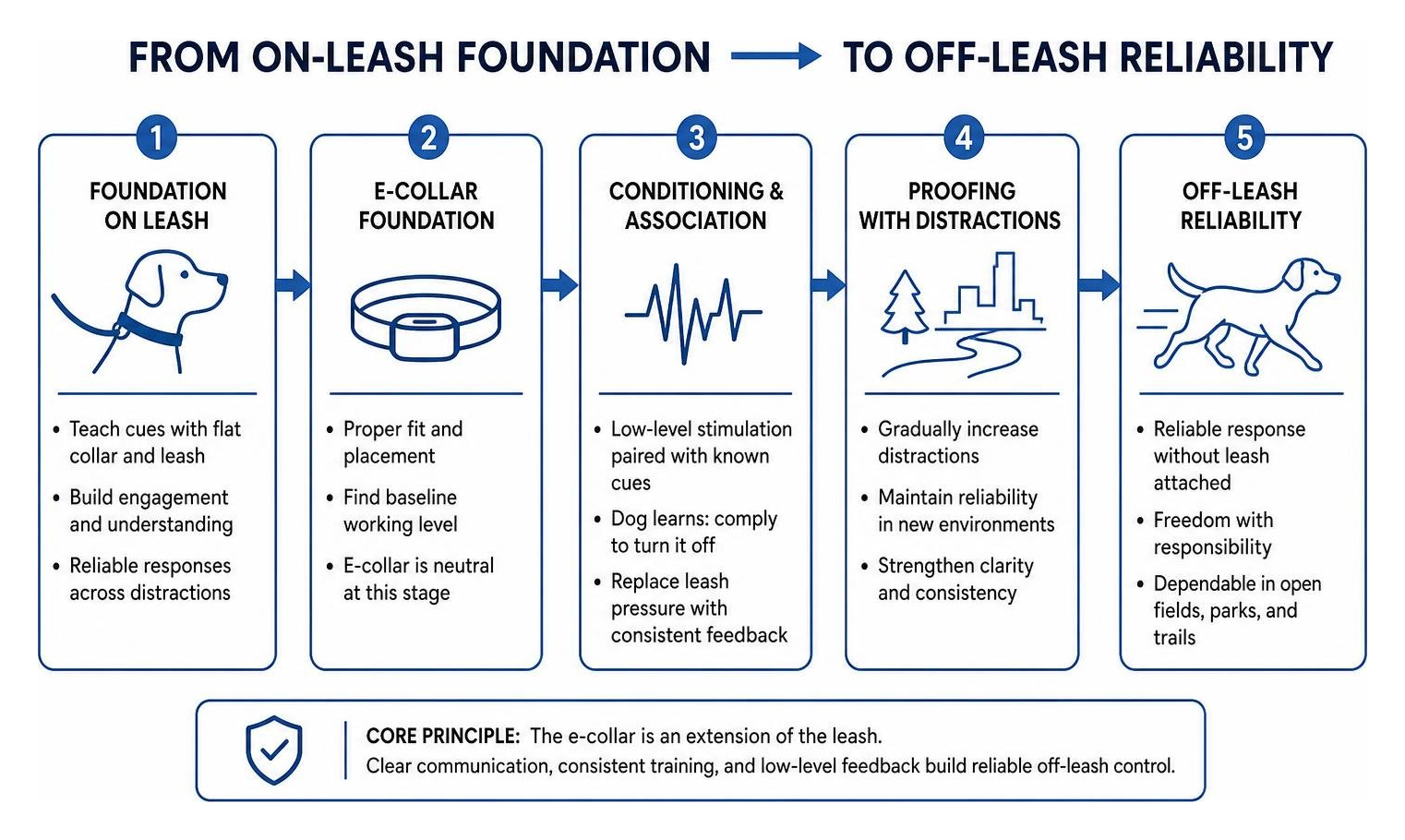
An electronic collar cannot teach a dog what a cue means. It cannot explain the mechanics of a recall, a heel, or a boundary stay from scratch. Successful e-collar training begins with establishing clear foundations for effective dog training using proven, structured handling on a flat collar and leash.
Our comprehensive training approach focuses on building clear communication, engagement, and reliable responses using standard leash handling before introducing remote tools. A dog must demonstrate dependable understanding of verbal cues, responding promptly to leash guidance across varied distraction levels. Once these mechanical habits are solid, an e-collar acts as an extension of the leash, allowing you to bridge the physical gap and build reliable off-leash control in open fields, park environments, and urban trails.
Step-by-Step Conditioning with a Dog Training E-Collar
Proper e-collar conditioning teaches your dog that e-collar stimulation is simply tactile feedback that they can control and turn off through compliance. By applying the established electronic collar conditioning fundamentals, you replace physical leash pressure with low-level electronic prompts.
- Introduce the Neutral Collar: Have your dog wear the powered-off e-collar alongside their standard walking gear for several days during regular routines. This prevents them from associating the physical presence of the collar with training corrections.
- Pair Low-Level Stimulation with Known Leash Cues: Attach a 15-foot biothane long line to a standard flat collar. Give your known verbal recall cue (such as "Come" or "Here") while pressing continuous low-level stimulation at your dog's baseline working level, paired with a gentle directional guide on the long line.
- Release the Stimulation Instantly Upon Movement: The moment your dog turns their head and takes a single step toward you, immediately release the transmitter button. This immediate cessation of low-level pressure teaches the dog that moving toward you turns off the sensation.
- Reward with High-Value Positive Reinforcement: When your dog reaches you, mark the completion with enthusiasm, physical affection, and high-value food rewards or a favorite toy.
- Observe the Acceptance Signal: During training pauses, look for a relaxed physiological response, such as a lip lick or swallow response, indicating your dog is calm and processing the interaction clearly.
Repeat this sequence across hundreds of repetitions in controlled environments before fading out leash guidance. Gradually proof the behavior around mild distractions, moving from quiet indoor spaces to enclosed yards, and eventually to open outdoor spaces.
Managing High Distractions and Impulse Control
Once foundational recall and focus are reliable under baseline conditions, you can begin proofing your dog around challenging outdoor triggers. Urban environments, coastal parks, and open open spaces present heavy real-world distractions, including off-leash neighborhood dogs, bicycles, runners, and wildlife such as deer, squirrels, and shorebirds.
Developing solid training methods for impulse control requires gradually raising environmental criteria while monitoring your dog's focus. When unexpected high-drive distractions occur, such as a dog bolting after a flushing bird, their baseline working level may no longer register through high arousal. Handlers can use programmed safety boost buttons on units like the Dogtra 1900X or Educator FE-560 to break through intense tunnel vision with an immediate, pre-set step up in intensity.
Handlers managing environmental over-arousal must also apply proper leash reactivity protocols. If a dog shows emotional distress or defensive aggression toward oncoming triggers, pressing an e-collar button without proper foundation work can elevate frustration or create negative associations. An e-collar should only reinforce known directional commands (such as a structured heel or an about-turn) rather than being applied directly to an emotionally over-threshold dog.
Maintenance, Care, and Common Mistakes to Avoid
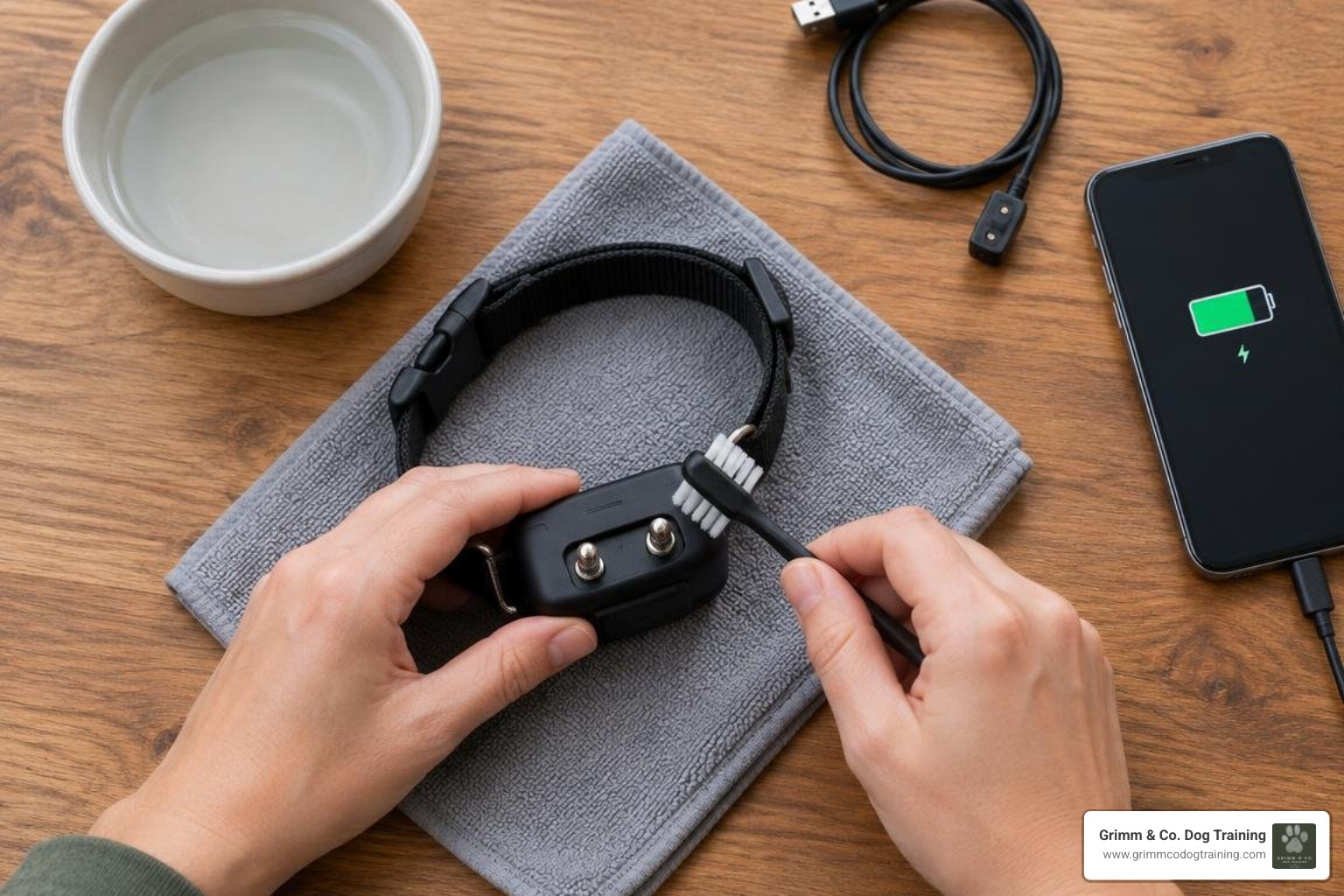
Maintaining your training equipment ensures accurate signal transmission, extends hardware life, and protects your dog's skin.
- Clean Probes After Every Session: Salt residue, mud, body oils, and shedding hair accumulate quickly around contact posts. Wipe down the receiver box and scrub the stainless steel or titanium probes with warm water and mild antibacterial soap after every outdoor session.
- Inspect Housing Seals: Before training in wet conditions, confirm that charging port rubber covers are fully seated and that the casing screws remain tight.
- Maintain Battery Health: Modern lithium-ion systems charge quickly, typically requiring about two hours for a full cycle. Avoid leaving units plugged into chargers for days at a time, and avoid letting batteries completely drain for extended periods during off-seasons.
- Conduct Routine Skin Checks: Check your dog's neck under direct lighting every time you remove the collar. If you observe slight redness, discontinue all collar use immediately until the skin fully heals.
Mistakes to Avoid in E-Collar Training
- Delivering Corrections Without Teaching First: Never apply stimulation for a command your dog does not thoroughly understand on-leash.
- Correcting Out of Frustration: Deliver cues with calm, deliberate timing. Applying high stimulation out of anger damages your dog's trust and impairs their ability to learn.
- Inconsistent Working Levels: Failing to calibrate the working level for changing environments can lead to under-stimulating in high-distraction settings or over-stimulating in quiet ones.
- Creating a Collar-Wise Dog: Putting the collar on only during training sessions teaches your dog that they only need to respond when wearing the device.
- Leaving the Collar on Too Long: Exceeding the 12-hour continuous wear limit can cause pressure sores and localized skin irritation.
Frequently Asked Questions About E-Collar Training
At what age can you start using an e-collar with a dog?
You should not introduce an e-collar to very young puppies. Dogs should be at least six months old, showing emotional maturity and a solid foundation in basic obedience commands. Review our puppy training progression guide to ensure your young dog has mastered essential leash manners, impulse control, and focus games before introducing remote communication tools.
Will an e-collar burn my dog's skin?
Modern electronic collars run on small lithium-ion batteries that do not generate enough thermal heat or electrical current to burn biological tissue. Wounds that are mistakenly labeled as "burns" are almost always cases of pressure necrosis. Pressure necrosis occurs when hard metal contact points press continuously against the exact same skin location for extended periods, restricting blood flow and causing tissue breakdown. You can prevent this entirely by fitting the collar properly, limiting wear time to under 12 hours daily, and rotating receiver placement regularly.
How do I prevent my dog from becoming collar-wise?
A dog becomes "collar-wise" when they realize that commands are only enforced when the e-collar is physically on their neck. To prevent this pattern:
- Have your dog wear the e-collar (turned off) during neutral daily activities, such as eating meals, resting at home, and going on routine neighborhood walks.
- Put the collar on at least 20 to 30 minutes before training starts, and leave it on for 20 to 30 minutes after training ends.
- Maintain clear behavioral standards during every interaction, regardless of the equipment your dog is wearing.
- Join structured dog obedience classes to reinforce handler engagement, proof obedience around other dogs, and maintain clear communication across varied settings.
Building Lasting Communication and Off-Leash Reliability
An e-collar is ultimately an extension of your relationship with your dog. When selected carefully, fitted properly, and introduced with patience and clear training foundations, it provides a safe, dependable communication bridge that unlocks true off-leash freedom across open trails, parks, and beaches.
At Grimm & Co. Dog Training, we help dog owners across Daly City, San Francisco, and the wider Bay Area build reliable obedience and strong working partnerships. Whether you are looking to build solid recall foundations, advance your obedience, or explore outdoor tracking through mantrailing, explore our comprehensive dog training services to start your journey toward clear, balanced communication.