
How to Handle SF Leash Reactivity: San Francisco SPCA and Beyond
Start Leash Reactivity Training in San Francisco With Distance and a Plan
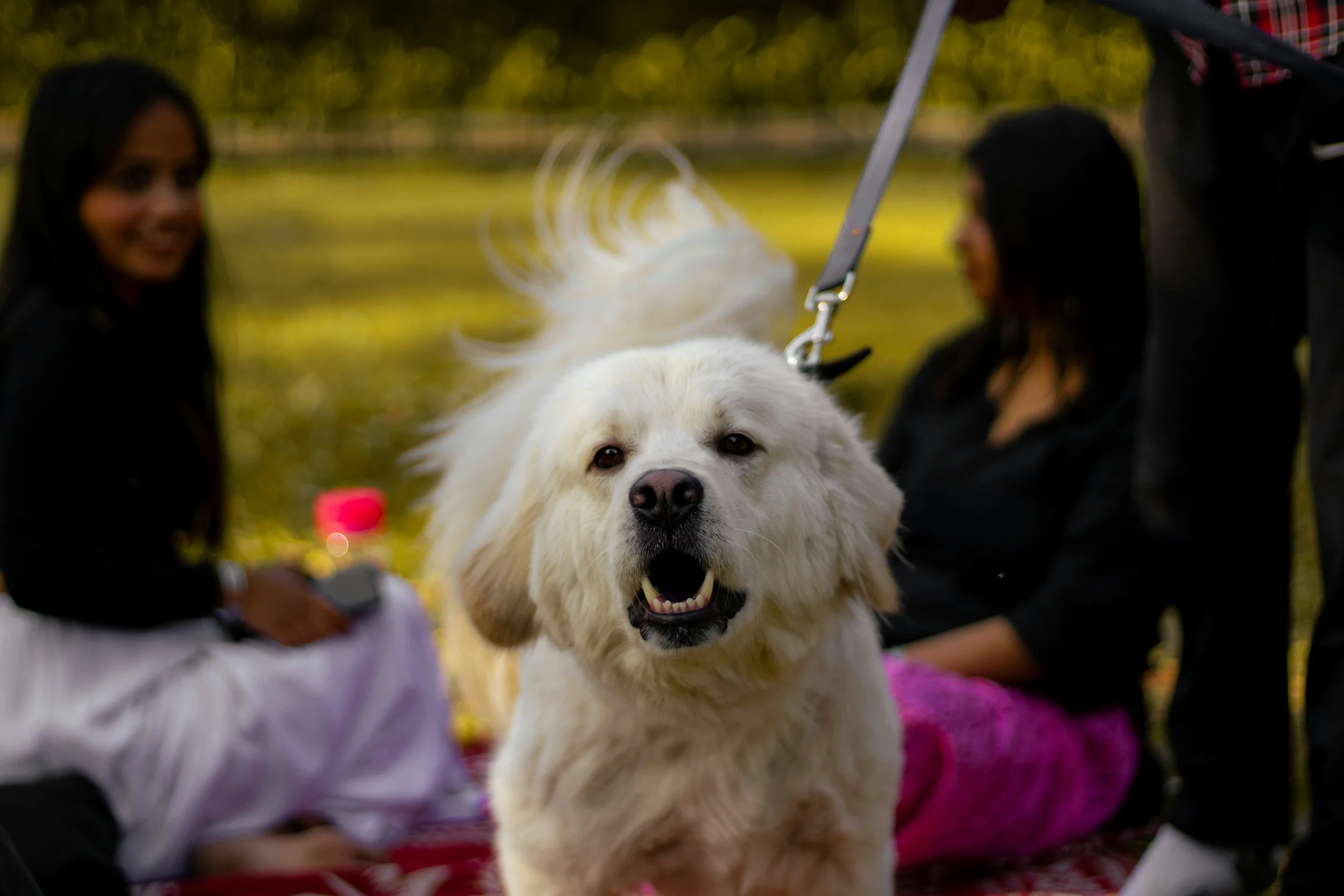
For effective leash reactivity training San Francisco dog owners should start by creating distance from triggers, rewarding calm behavior before the dog explodes, and leaving situations that are too close or crowded. Use a secure harness and standard leash, choose quieter routes or off-peak times, and practice simple skills such as a U-turn and checking in with you.
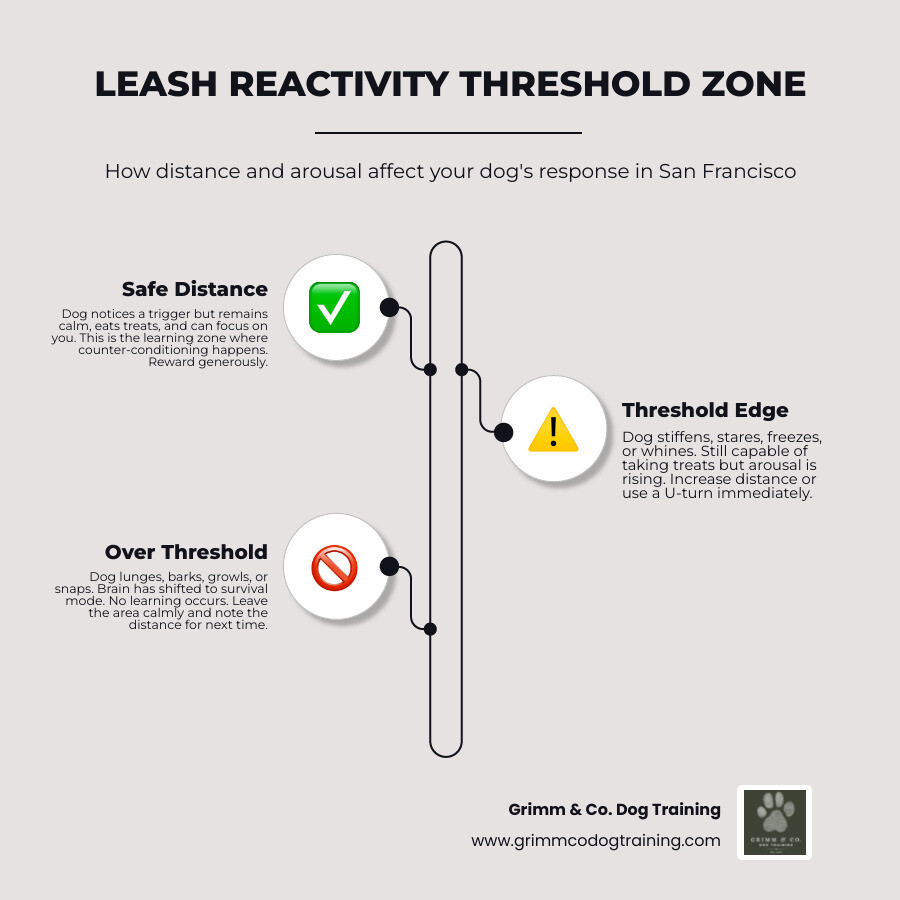
Leash reactivity is not a dog being "bad." It is usually an emotional response to fear, frustration, or overwhelm. In San Francisco, narrow sidewalks, blind corners, off-leash dogs, traffic, and busy parks can push a dog over their threshold quickly. The goal is not forced greetings or perfect obedience. It is helping your dog feel safer and more able to make good choices around triggers.
I am Bailey Milne-Davies, a trainer and dog owner who has worked through frustration, pulling, and dog neutrality with my own dog, Grimm, while continuing education in obedience, behavior, and dog sports. This guide to leash reactivity training San Francisco owners can use will help you build safer, calmer walks without asking your dog to cope with more than they can handle.
Understanding Urban Triggers: Why San Francisco Challenges Reactive Dogs
San Francisco poses an intense combination of spatial constraints and sensory stimulation. Dense architecture, narrow residential corridors, and steep topographies mean that handlers rarely have the luxury of open sightlines. A casual morning walk around Nob Hill or the Mission frequently involves unexpected encounters within arm's reach.
Urban density changes how dogs process stimuli. On a standard city block, a dog might encounter delivery trucks, electric scooters, skateboarders, outdoor dining setups, and dozens of other dogs within a five-minute window. This rapid succession of novel or intense events leads directly to trigger stacking. When multiple low-level stressors happen back-to-back, cortisol builds in the system. A dog that usually ignores a passing jogger might suddenly lunge at one simply because they already endured a crowded Muni bus stop and a surprise encounter at a blind corner minutes earlier. In addition, seasonal shifts in foot traffic can suddenly amplify baseline arousal, reminding us that your dog's reactivity isn't getting worse, spring just exposed it.
The Physics of City Walks: Tight Sidewalks, Cable Cars, and Crowded Parks
Navigating urban micro-environments requires an understanding of spatial pressure. Sidewalks in neighborhoods like North Beach or Hayes Valley offer very little buffer space, forcing passing dogs into head-on trajectories that feel inherently confrontational in canine body language. In natural settings, dogs approach each other on gentle arcs rather than rigid straight lines.
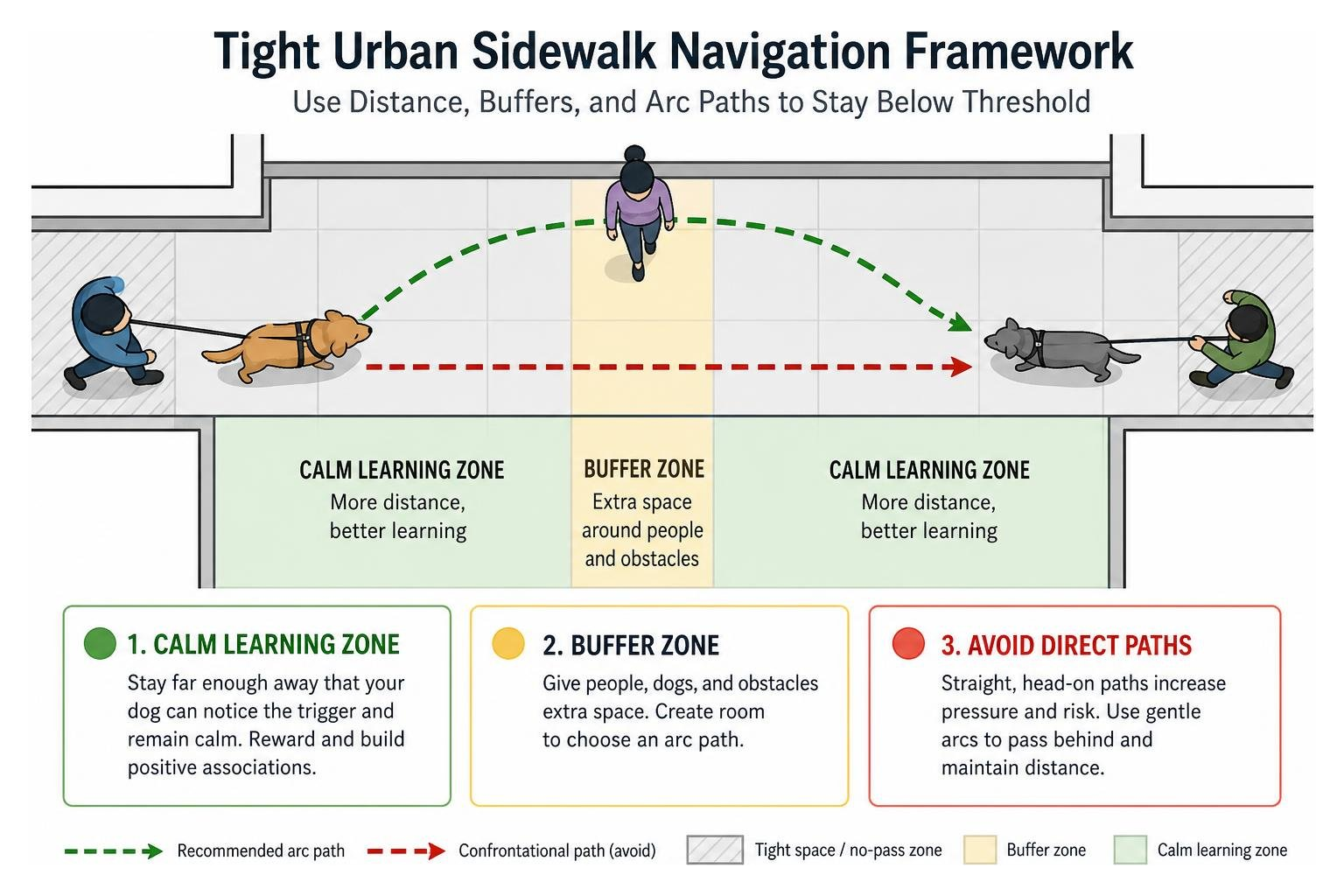
Off-leash dogs in multi-use areas like Dolores Park, Duboce Park, or the Marina Green add another layer of unpredictability. Even well-meaning dogs that rush up to greet can cause severe setbacks for a dog working through spatial anxiety. Combine this with the mechanical rumble of cable cars, screeching transit brakes, and steep hills that alter leash tension, and urban walks can quickly become overwhelming. Recognizing early stress signals, such as lip licking, hard stares, sudden sniffing, or body stiffness, allows you to intervene before a full reaction occurs, drawing on practical lessons from living with a reactive dog.
Root Causes: Fear, Frustration, and Leash Restrictions
Reactivity primarily stems from two internal states: fear-based defensiveness or barrier frustration. In a natural, off-leash state, a fearful dog's primary evolutionary response to a threat is avoidance (flight). When restrained by a six-foot leash, that option vanishes. Feeling trapped, the dog shifts to a forward-moving defense display (fight), which can include barking, lunging, and growling to force the trigger to move away.
Frustration-based reactivity, on the other hand, frequently affects highly social or excited dogs. When a dog desperately wants to greet another dog or person, the physical restriction of the leash prevents access. This barrier creates acute emotional arousal. Over time, the repeated frustration of being restrained while looking at a trigger transforms into conditioned agitation. In both cases, the dog's display is an involuntary emotional reaction rather than deliberate defiance.
Proven Strategies for Leash Reactivity Training San Francisco Dogs Need
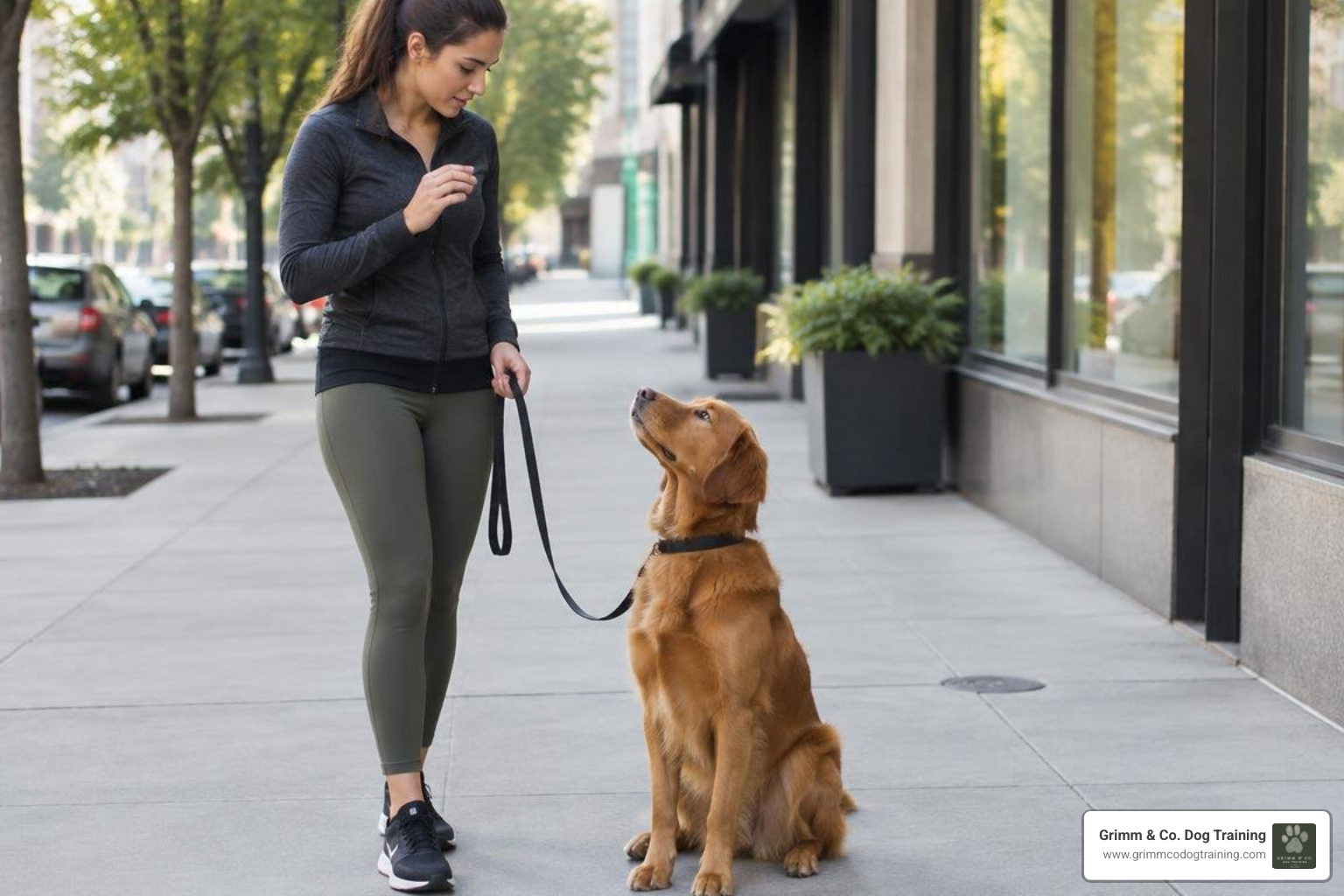
Addressing reactivity requires systematic behavior modification rather than simple obedience drills. While basic obedience teaches a dog specific actions (such as sit or down), behavior modification changes the underlying emotional association with the trigger.
We accomplish this through classical counter-conditioning and systematic desensitization. Desensitization means exposing your dog to the trigger at an intensity (usually distance) so low that it does not provoke a stress response. Counter-conditioning pairs the presence of that trigger with a high-value primary reinforcer, changing the emotional needle from "that dog is a threat" to "that dog predicts safety and high-value rewards." Handler mechanics and emotional composure play a major role here. When a handler tenses up, shortens the leash drastically, or holds their breath, those tactile and energetic signals travel down the line, signaling to the dog that an emergency is imminent.
| Training Approach / Tool | Primary Purpose | Best Used For | City Application Notes |
|---|---|---|---|
| Counter-Conditioning & LAT | Changes emotional response to triggers | Fear and frustration modification | Best at wide street corners and park edges |
| Emergency U-Turn | Immediate exit from high-pressure zones | Managing surprise encounters | Essential for blind corners and narrow sidewalks |
| Front-Clip Harness | Biomechanical control and steering | Reducing pulling leverage | Ideal for hilly terrain without neck strain |
| Fixed 6-Foot Leash | Consistent boundary and safety | Daily urban walks | Avoids dangerous tangles in congested spaces |
Core Techniques in Leash Reactivity Training San Francisco Owners Should Master
Every city handler should have a structured toolkit for navigating reactive moments. The foundation is the Look-at-That (LAT) game, where the dog is rewarded simply for looking calmly at a trigger from a safe distance and then turning back to the handler. Using clear marker cues (such as a crisp verbal "yes" or a clicker), you mark the split-second your dog notices the other dog, then deliver a high-value treat (such as roast beef, string cheese, or freeze-dried liver). Over repeated repetitions, the sight of another dog becomes the cue to orient toward you.
For unexpected encounters at close quarters, master the emergency U-turn. Pair a cheerful verbal cue (such as "Let's go!") with a smooth pivot away from the trigger, rewarding your dog generously as they follow your change of direction. Progress in behavior modification is rarely linear. Tracking small wins helps you understand what progress really looks like over weeks and months of consistent practice.
Practical Daily Management and Equipment Setup
Daily management prevents the reactivity habit from being practiced and reinforced while your training takes root. Choosing the right gear is critical:
- Biothane or Nylon 6-Foot Fixed Leashes: Provides reliable grip, durability in coastal fog, and predictable boundary control.
- Y-Front or Dual-Clip Harnesses: Distributes physical pressure across the skeletal structure while giving handlers front-point steering leverage on steep hills.
- Visual Barrier Navigation: Use parked cars, utility boxes, retaining walls, or tree basins as temporary visual shields to break eye contact when a trigger passes.
- Strategic Route and Time Selection: Walk during lower-density hours (such as early mornings or mid-afternoons) and map out streets with broad sidewalks or center medians, avoiding narrow bottlenecks.
Navigating Public Spaces, Local Laws, and Professional Support

City living requires a clear grasp of civic responsibilities and community safety. San Francisco Health Code (Article 1, Section 40) explicitly mandates that dogs must be kept on a leash no longer than eight feet in all public areas, except within designated off-leash park zones. Maintaining leash control is both a legal requirement and a safety buffer that protects reactive and non-reactive dogs alike.
When navigating shared areas, clear communication with fellow residents is essential. Advocating for your dog by requesting space is entirely appropriate. For complex cases involving defensive aggression, working with specialized reactive dog training in San Francisco helps build reliable real-world habits.
Choosing Expert Leash Reactivity Training San Francisco Specialists and Behaviorists
Selecting professional support for reactivity requires careful vetting. Look for practitioners holding recognized professional credentials, such as Certification Council for Professional Dog Trainers (CPDT-KA/KSA) or International Association of Animal Behavior Consultants (IAABC) accreditations.
A qualified behavior consultant will conduct a thorough functional assessment of your dog's triggers, design a structured desensitization protocol, and guide you through real-world scenarios. For complex behavioral histories, consulting experienced dog behaviorists or scheduling private dog training ensures personalized support tailored directly to your neighborhood's challenges.
Outdoor Enrichment Beyond Sidewalk Walks
Reactivity modification should not be confined strictly to stressful sidewalk walks. Dogs require outlets for decompression, physical exertion, and natural instincts in low-stress environments. Olfactory enrichment provides significant cognitive stimulation and helps lower overall arousal levels.
Taking your dog on decompression walks using a long line in quiet, open spaces, such as wide coastal paths near Oyster Point, expansive trails in the Presidio during off-peak hours, or quiet coastal pockets in Daly City, gives them room to explore naturally without spatial pressure. Introducing structured outdoor sports through a comprehensive dog training program channels your dog's focus into collaborative activities. At Grimm & Co. Dog Training, we specialize in mantrailing: an outdoor search sport where dogs use their natural scenting abilities to find specific human targets. Mantrailing provides reactive dogs with a structured, high-drive job in controlled outdoor environments, building handler focus, confidence, and mental fulfillment without forced social pressure.
Frequently Asked Questions About Reactive Dogs in San Francisco
What should I do if an off-leash dog approaches my reactive dog in San Francisco?
If an off-leash dog approaches you in an on-leash area, stay calm and step directly between the approaching dog and your own dog. Use a firm, authoritative vocal command accompanied by an open-palm hand signal: "NO. STOP. GO HOME." If the dog continues approaching, toss a handful of high-value treats directly at their face and ground; most dogs will stop to vacuum up the food, giving you five to ten seconds to turn a corner and create distance. If the handler is nearby, advocate clearly: "Please recall your dog, mine needs space!"
How long does it take to modify leash reactive behavior in an urban environment?
Behavior modification timelines depend on the dog's age, genetic predisposition, trauma history, and consistency of environmental management. While immediate safety protocols can reduce daily blowups within a few weeks, meaningful neural repatterning and emotional desensitization generally require three to six months of steady, structured practice. Progress is measured by faster recovery times after a trigger is spotted, reduced intensity of vocalizations, and smaller working threshold distances.
What equipment should I avoid when walking a reactive dog on city hills?
Avoid retractable (flexi) leashes entirely in urban environments. They offer zero physical leverage, can cause severe friction burns, drop unpredictably, and teach dogs that constant tension on the collar is normal. Thin slip leads or poorly fitted collars that exert direct, concentrated pressure on the trachea should also be avoided, as sudden lunges can cause physical injury to the dog's airway and exacerbate panic-induced arousal.
Building Confident Urban Walks with Grimm & Co.
Living with a leash-reactive dog in San Francisco can feel isolating, but you do not have to manage high-stress walks alone. With deliberate threshold management, smart environmental navigation, and relationship-centered handling skills, you can transform chaotic neighborhood strolls into calm, cooperative partnerships.
At Grimm & Co. Dog Training, we help owners across San Francisco, Daly City, and the wider Bay Area build practical handling mechanics, deep focus, and rewarding outdoor lifestyles. From structured pack walks and foundation coaching to unique outdoor sports like mantrailing, our team is committed to providing actionable guidance for real urban environments. Explore our dog training services to begin developing a tailored training plan for you and your dog.