
How Scent Work Differs from Other Canine Sports
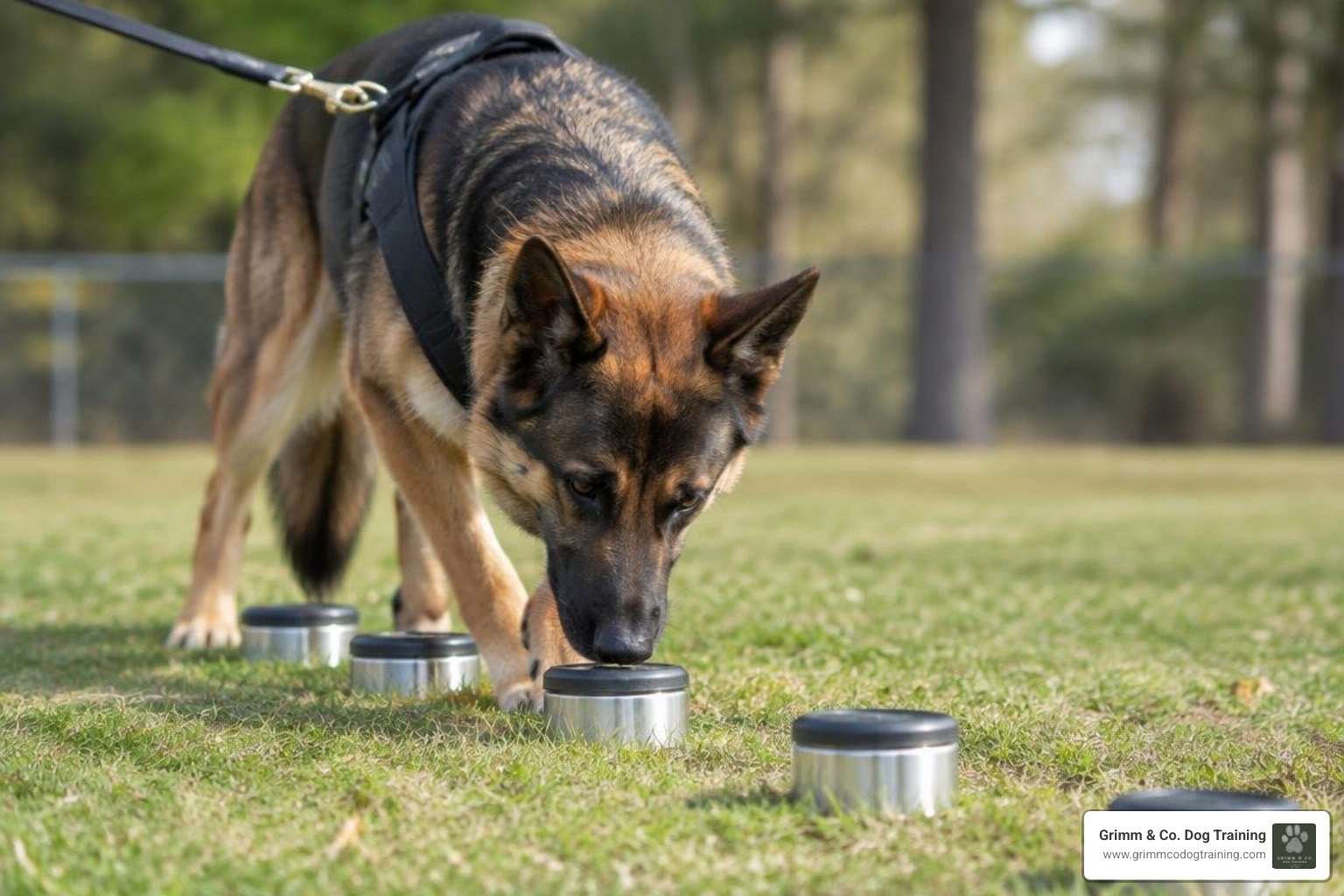
Dog scent work competition is a sport where dogs search timed search elements for specific essential oil odors under sanctioning bodies like AKC or NACSW to earn titles. Unlike most traditional dog sports that focus on high-precision handler cues, scent work flips the dynamic. In competition obedience, agility, or heelwork, the human directs every stride, turn, and jump. Because a dog's olfactory system is between 10,000 and 100,000 times as acute as a human's, we cannot see, smell, or locate the target ourselves. In this sport, the dog is the absolute subject-matter expert, and our role shifts to reading micro-expressions and supporting their search pattern.
This unique partnership creates profound behavioral benefits. Sniffing has been shown to lower heart rates, reduce blood pressure, and improve optimism in dogs. For energetic, high-drive working breeds or naturally anxious dogs living in urban Bay Area neighborhoods like San Francisco or Daly City, systematic odor work acts as an ideal mental decompression tool. Structured dog scentwork training channels raw canine instincts into a focused, highly rewarding game where the dog feels genuine agency.
The Core Elements and Search Environments
Sanctioned competitions divide searches into specific elements. Each element challenges the dog to solve different environmental scent puzzles:
- Containers: The dog searches an array of identical boxes, luggage, plastic bins, or metal tins to pinpoint the single vessel containing the scent aid. This is often the foundational element for new teams.
- Interior: Searches take place inside everyday indoor rooms such as offices, kitchens, bathrooms, or storage spaces. Dogs must negotiate airflow from heating ducts, furniture voids, and competing odor plumes.
- Exterior: Conducted outdoors in open or partially enclosed areas. Teams face shifting wind currents, sun-baked ground, changes in barometric pressure, and natural distractions like grass, dirt, and wildlife scent.
- Buried: Popularized by kennel club programs, this element hides target odors beneath natural substrates like clean playground sand, soil, or water, requiring the dog to work deep underground plumes.
- Vehicles: Found in several organizational frameworks, where hides are placed on the exterior surfaces, bumpers, seams, and wheel wells of static cars, trucks, or trailers.
Major Sanctioning Organizations in Dog Scent Work Competition
Several recognized bodies sanction scent work trials, each with its own rule structures, target odors, and division tiers.
| Organization | Primary Target Odors | Search Elements | Entry Prerequisites | Distinctive Features |
|---|---|---|---|---|
| AKC Scent Work | Birch, Anise, Clove, Cypress | Container, Interior, Exterior, Buried, Handler Discrimination | AKC Reg, PAL, or Canine Partners number | Standardized elements, large trial networks, national championship circuit |
| NACSW | Birch, Anise, Clove | Container, Interior, Exterior, Vehicles | Dog and handler NACSW membership; must pass Odor Recognition Test (ORT) | Emphasis on real-world novel venues, blind searches, strict staging rules |
| UKC Nosework | Birch, Anise, Clove, Myrrh, Vetiver | Container, Interior, Exterior, Vehicles | UKC Dog Permanent Registration; Pre-Trial test per odor | Pre-trial tests required; Novice A (new handlers) and B divisions |
| Dogs Australia | Birch, Anise, Clove, Cypress | Containers, Interior, Exterior, Vehicles | Member body registration; minimum 6 months of age | Clear certificate milestones across 5 tiered classes including Ultimate |
| USCSS | Birch, Anise, Clove, Cypress | Interior, Exterior, Container, Vehicle | Free online membership registration | Classic and Variable titles, accessible games, bitches in season welcome |
When selecting an organization, consult the official AKC Scent Work regulations or the rules for your chosen circuit to confirm current paperwork, search area dimensions, and judging guidelines.
Title Progression and Class Hierarchy
Every sanctioning organization structures skill advancement through progressive title tracks.
Under the NACSW Rule Book, teams begin by passing an Odor Recognition Test (ORT) to verify the dog can reliably identify target scents. From there, teams enter full trials across four elements to earn titles starting at Nosework 1 (NW1), advancing through NW2, NW3, Elite, and the Summit League. In UKC programs, teams pass a pre-trial for each target odor before competing in element classes.
In AKC trials, dogs progress through Novice, Advanced, Excellent, and Master levels within each individual element, earning composite titles like Scent Work Novice (SWN) or Scent Work Master (SWM) when completing all four elements at a given level. In Australian circuits, a dog must earn six Qualifying Certificates under multiple judges to secure a Scent Work Novice (SWN) title, while reaching the elite Scent Work Champion (SW Ch.) designation requires completing Master, Ultimate, and individual element titles.
Target Odors, Imprinting, and Alert Indications
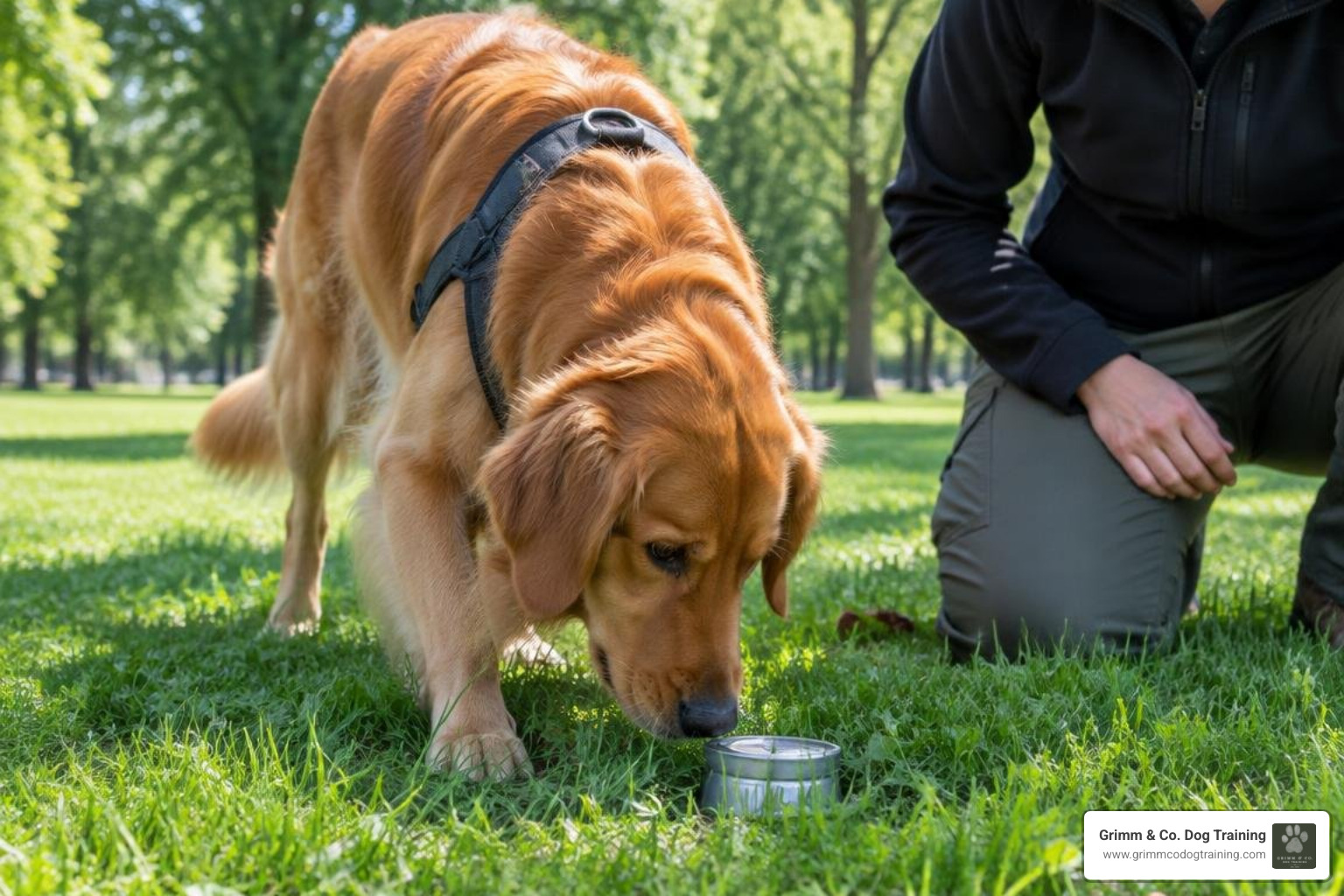
Before stepping into a competition ring, your dog must learn to recognize the target odor as the most valuable scent in the room. Imprinting begins by pairing the target odor directly with high-value food or toy rewards. Over time, we fade the food so the odor itself becomes the trigger that predicts the reward, building solid fluency across novel contexts. Detailed step-by-step progressions for odor mechanics are covered in our dog scent training guide.
Once your dog reliably seeks the scent, you must teach a clear indication:
- Nose Touch / Freeze: The dog places its nose directly on or within an inch of the hide source and freezes motionless. This is the gold standard for sport trials because it leaves no ambiguity for the judge.
- Passive Alert (Sit or Down): The dog sits or lies down as close to the source as possible upon locating the odor. Common in professional detection, this prevents damage to search property.
- Natural Behavioral Alerts: Changes in breathing, head whips, deep respiration, and tail tempo. While useful, subtle natural alerts require extreme handler fluency to call accurately under trial pressure.
Understanding Target Odors in Dog Scent Work Competition
Sanctioned trials do not use raw plants or recreational scents; they rely on medical-grade cotton swabs infused with specific pure essential oils. The most common target oils are:
- Sweet Birch (Betula lenta)
- Aniseed (Pimpinella anisum)
- Clove Bud (Eugenia caryophyllata)
- Cypress (Cupressus sempervirens)
- Myrrh (Commiphora myrrha) and Vetiver (Chrysopogon zizanioides), used in specific advanced circuits.
Standard rules, such as the rules for the conduct of scent work trials, enforce strict dilution standards to ensure safety and fair hide strengths. Typically, a single drop of pure essential oil is applied to multiple clean cotton swabs sealed inside a glass jar, allowing the vapor to saturate the cotton without leaving liquid residue. Handlers must always use dedicated tweezers and airtight glass or metal containers to prevent contaminating search areas or trial grounds.
Trial Day Preparation and Competition Rules
Preparation for your first trial day requires an understanding of ring protocol and equipment regulations. Enrolling in structured scentwork classes gives dogs practice working around staging areas, unfamiliar judges, and ring stewards.
When you arrive at a trial:
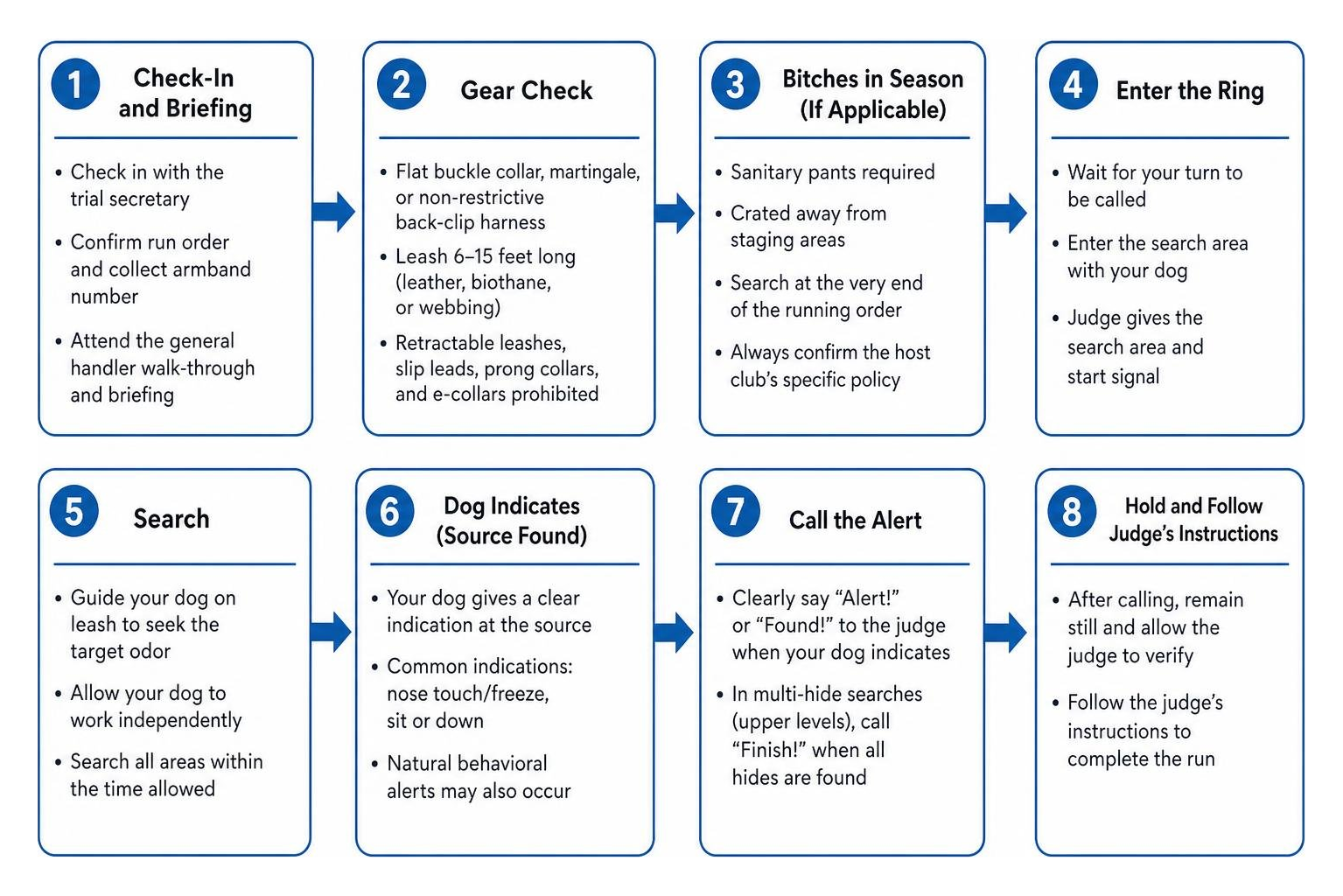
- Check-In and Briefing: Check in with the trial secretary to confirm your run order, collect your armband number, and attend the general handler walk-through and briefing.
- Approved Gear: Most sanctioning bodies require dogs to wear flat buckle collars, martingales, or non-restrictive back-clip harnesses. Leashes must be between six and fifteen feet long, made of leather, biothane, or webbing. Retractable leashes, slip leads, prong collars, and electronic collars are prohibited in search areas.
- Bitches in Season: Many organizations (such as USCSS and Dogs Australia) allow females in season to run provided they wear sanitary pants, remain crated away from staging zones, and search at the very end of the running order. Always verify the host club's specific policy in their premium list.
Handler Etiquette and Common Pitfalls in Dog Scent Work Competition Trials
The most decisive moment in any run is calling the alert. When your dog reaches source and indicates, you must clearly vocalize "Alert!" or "Found!" to the judge. If you are competing in upper levels with multi-hide areas, call "Finish!" once you believe all target hides have been discovered.
Common beginner trial pitfalls include:
- Tight Leash Tension: Pulling or steering your dog through the search zone restricts their natural scenting pattern and creates false alerts. Maintain a soft, flowing leash.
- Handler Cueing: Moving toward a box, staring at a specific corner, or pausing abruptly can cause a sensitive dog to offer a false sit or touch simply to please you.
- Missing the Fringe: When wind moves scent, the odor pool may gather feet away from the actual hide. Rushing to call an alert before the dog works the plume to its source results in a non-productive call.
Frequently Asked Questions About Scent Work Trials
What age and registration requirements apply to enter a first trial?
Most sanctioning organizations allow dogs six months of age or older to enter beginner titling events or pre-trials (such as an ORT). All dogs must hold a registration number with the hosting body, whether through purebred registries or mixed-breed enrollment programs like AKC Canine Partners.
Can reactive or sensitive dogs compete in scent work trials?
Yes. Scent work is widely recognized as one of the most accessible sports for reactive or environmentally sensitive dogs. Trials run one dog at a time in the search area. Organizations enforce strict spacing guidelines, require non-searching dogs to remain crated safely in vehicles, and maintain designated staging corridors to prevent dog-to-dog interactions.
How does competitive scent work compare to mantrailing?
While competitive scent work challenges a dog to find stationary essential oil hides in small, defined areas, our nosework and mantrailing training guides explore how mantrailing teaches dogs to follow specific human scent trails across varied urban and wilderness environments. Both sports build deep biological focus, but mantrailing involves extended outdoor tracking across real terrain.
Stepping to the Line with Confidence
Stepping to the start line of a trial is a celebration of your dog's unique capabilities. By setting aside handler control and trusting their natural instincts, you build an unbreakable communication loop that strengthens your everyday relationship.
At Grimm & Co. Dog Training, we help dog owners across San Francisco, Daly City, and the Peninsula channel this raw olfactory talent into fulfilling teamwork. Whether you are aiming for your first trial title or want a structured outdoor weekend pursuit through our specialized mantrailing courses and workshops, we provide the expert coaching and community to help you and your dog thrive together.