
What Is Dog Reactivity vs. Aggression?
Navigating urban neighborhoods like San Francisco or Daly City requires a clear understanding of canine communication. Pet parents frequently confuse reactive outbursts with true aggression. While the behaviors can look identical on the surface, their internal drivers and goals are distinct.
Reactivity represents an exaggerated emotional response to an environmental trigger. It is characterized by distance-increasing behaviors such as vocalizing, lunging, spinning, or pulling. The dog is experiencing intense physiological arousal and an inability to cope with the sensory input in their immediate environment. In contrast, aggression involves behaviors carried out with the clear functional intent to threaten, intimidate, or cause physical harm.
Research demonstrates that high arousal does not automatically translate to violence. In behavioral studies examining dog-to-dog reactivity, 79% of dogs showed piloerection (raised hackles), confirming extreme sympathetic nervous system activation. However, biting occurred in only 24% of that reactive study population. Many dogs display dramatic vocal displays simply because barrier frustration on a tight leash prevents them from moving naturally or greeting comfortably. For a detailed breakdown of these behavioral boundaries, review this scientific comparison of Dog Reactivity vs Aggression: Causes, Risks, and Training.
| Behavioral Dimension | Dog Reactivity | Canine Aggression |
|---|---|---|
| Primary Driver | Fear, overarousal, or barrier frustration | Resource defense, territory, or targeted threat |
| Behavioral Goal | Create distance or relieve barrier tension | Drive away, suppress, or physically injure target |
| Leash Dynamic | Often calm off-leash, reactive when restrained | Displayed consistently on or off leash |
| Arousal State | Sympathetic overload, difficulty recovering | Focused, deliberate, often low-to-moderate arousal |
| Bite Incidence | Low contact rate (24% in study populations) | Higher incidence of direct physical contact |
To explore standard clinical recommendations for handling these outbursts, consult Managing reactive behavior | Cornell University College of Veterinary Medicine.
The Science Behind Dog Reactivity and Risk Clusters
Recent behavioral research has moved beyond generic labels to categorize reactive profiles into distinct risk tiers. A landmark University of Lincoln study evaluated over 1,300 reactive dogs, identifying four primary behavioral clusters:
- Cluster 1: Low-Risk Signalers (40%): Dogs who display clear visual posturing, growling, or barking to request space without rapid escalation.
- Cluster 2: Frustrated Escalators (18%): Dogs whose behaviors are driven by high desire to interact combined with restraint barriers.
- Cluster 3: Impulsive Escalators (32%): Dogs who switch rapidly from low-level arousal to explosive vocalization with minimal warning.
- Cluster 4: Risky Rapid Escalators (10%): Dogs exhibiting intense forward lunging, snapping, or high-risk oral contact behaviors.
The data revealed critical diagnostic patterns. Dogs that react specifically to children are almost twice as likely to belong to Cluster 4 (Risky rapid escalators), demanding immediate structural management. Interestingly, a dog's sex, sterilization status, age, or physical size showed zero correlation with which risk cluster they occupy. When working through complex risk hierarchies, collaborating with qualified dog behaviorists ensures safety protocols match your dog's specific profile.
Common Triggers and Early Body Language Warnings
Reactivity rarely happens out of nowhere. Before a dog lunges or barks, their autonomic nervous system shifts through distinct warning stages. Recognizing subtle canine body language allows you to intervene before your dog crosses their threshold.
- Environmental Hypervigilance: Head held high, ears pinned forward or back, scanning the environment rapidly.
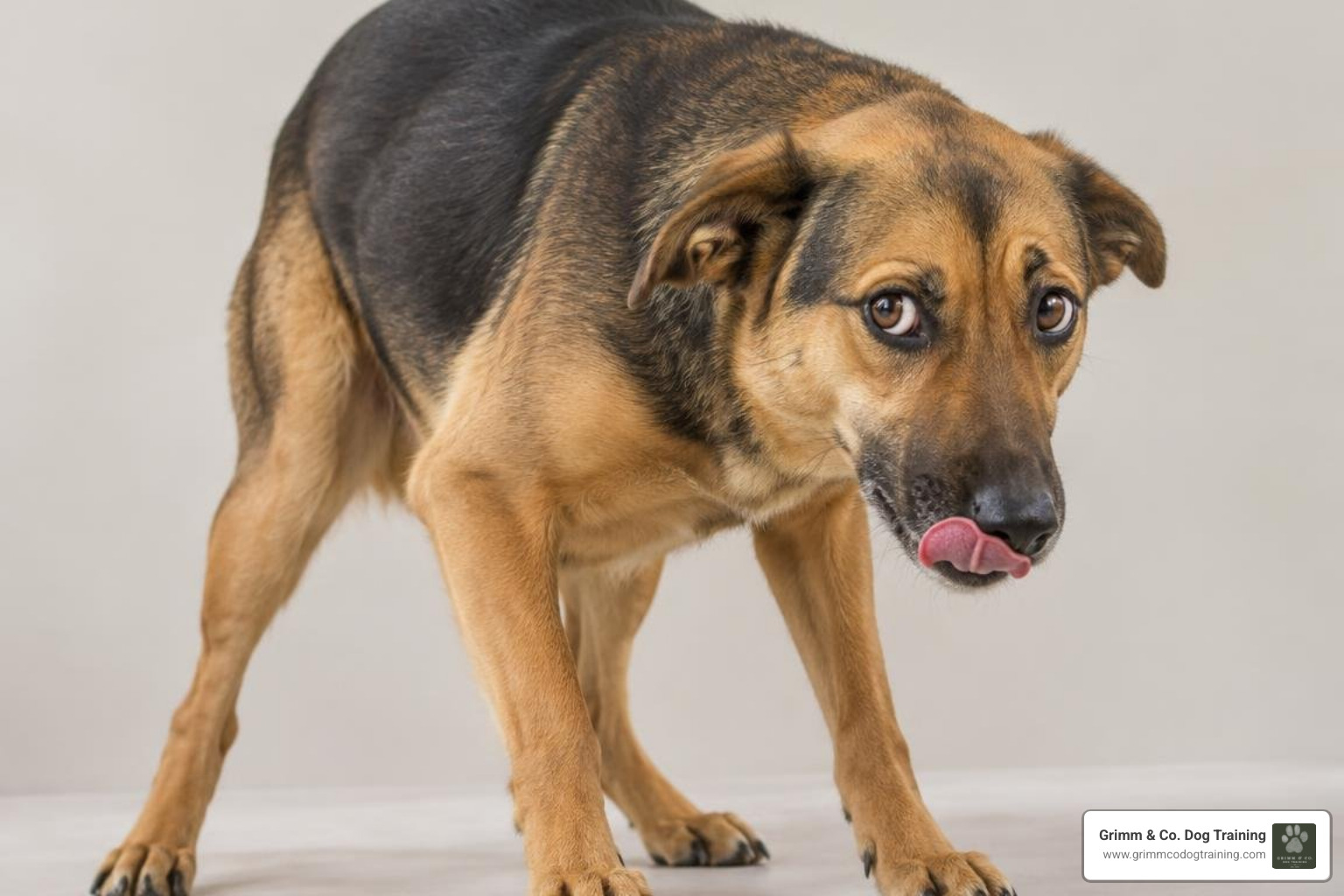
- Micro-Stress Indicators: Lip licking without food present, sudden yawning, rapid blinking, or sniffing the ground abruptly (displacement sniffing).
- Freezing and Muscular Tension: A closed mouth, weight shifting forward over the front paws, and a fixed, unblinking hard stare.
- Physiological Flare: Piloerection along the neck, back, or tail base, accompanied by shallow, rapid respiration.
When these signs appear, the dog's endocrine system floods their bloodstream with cortisol and adrenaline. The UK organization Understanding Reactive Dogs | Dogs Trust emphasizes that stress hormones can take 48 to 72 hours to return to baseline following an intense reaction.
Root Causes of Reactive Behavior in Dogs
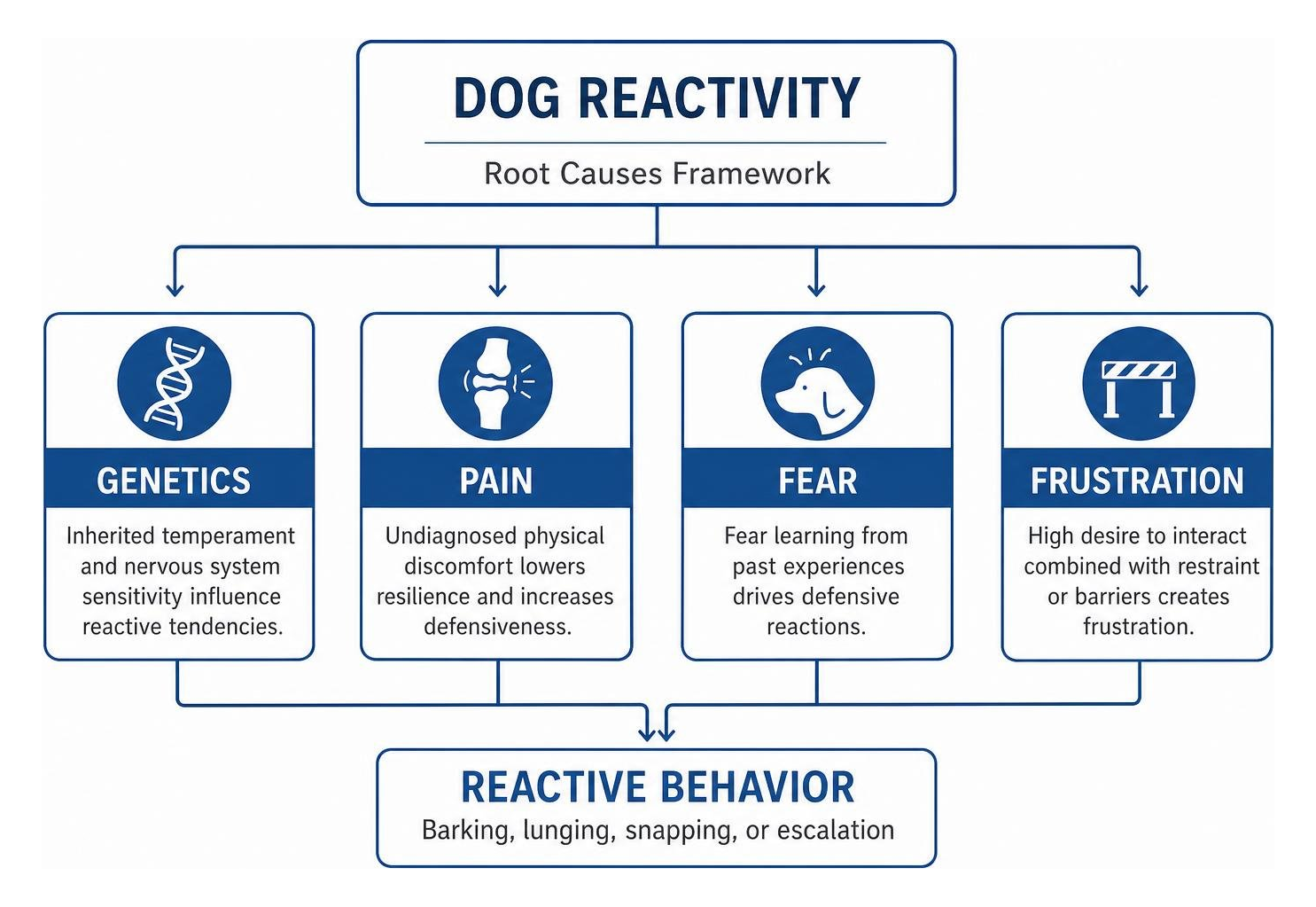
Dog reactivity stems from a blend of neurobiology, genetics, and lived experience. Fear conditioning is the most common foundation: an unfamiliar stimulus triggers fear, the dog barks, the stimulus moves away, and the dog learns that explosive displays successfully preserve personal space.
Under-socialization during the critical development period (weeks 3 through 14) often leaves adult dogs ill-equipped to process busy Bay Area stimuli like skateboards, strollers, or construction equipment. In other cases, single-event learning, such as an off-leash dog rushing them in an open space, produces long-term defensive reactivity.
Environmental pressure plays a significant role in urban settings. Narrow sidewalks along streets like San Francisco's Mission Street or Geary Boulevard force dogs into tight proximity with triggers. Seasonal shifts also change neighborhood dynamics; for instance, your dog’s reactivity isn’t getting worse, spring just exposed it explains how longer daylight and increased pedestrian foot traffic elevate baseline stress.
The Critical Role of Medical and Veterinary Evaluations
Behavior modification should never proceed without a thorough veterinary evaluation. Undiagnosed physical discomfort directly lowers a dog's emotional resilience, converting minor daily surprises into defensive reactivity.
- Musculoskeletal Pain: Undetected hip dysplasia, cruciate ligament tears, or early-stage spinal arthritis make dogs feel physically vulnerable when leashed.
- Endocrine Dysregulation: Hypothyroidism or atypical adrenal function can destabilize emotional control and produce sudden irritability.
- Sensory Impairments: Progressive vision degradation or chronic ear infections create startling reactions when dogs cannot assess approaching objects accurately.
- Gastrointestinal Distress: Chronic gut inflammation directly impacts neurotransmitter production, including serotonin synthesis.
In persistent or high-arousal cases, working alongside a veterinary behaviorist to introduce daily behavioral medications (such as SSRIs) can balance neurotransmitters, raise stress thresholds, and make behavioral counter-conditioning significantly more effective.
Step-by-Step Strategies to Reduce and Manage Reactivity
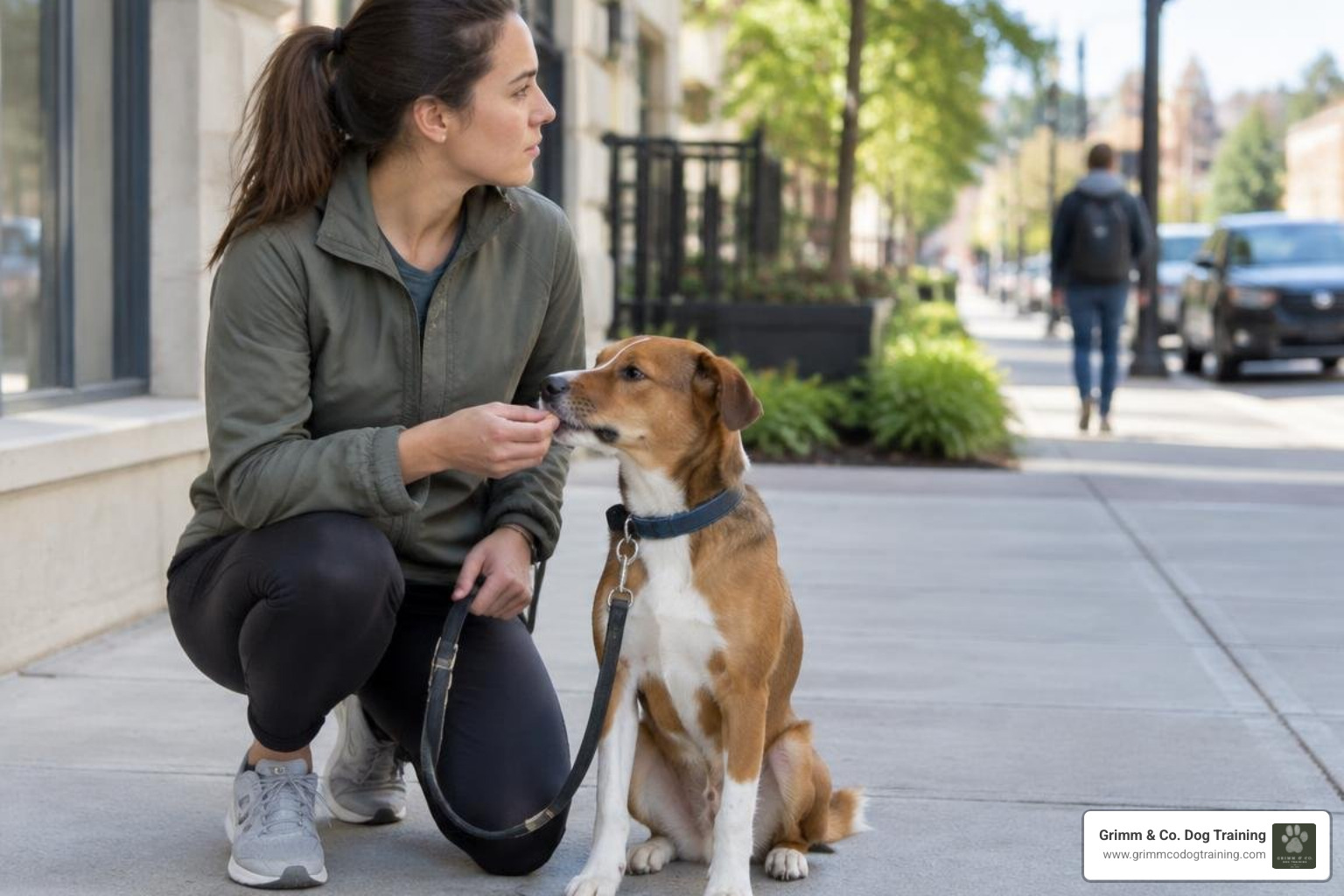
Successful behavior modification rests on two parallel paths: proactive environmental management and systematic behavioral training. Management prevents your dog from practicing the unwanted behavior, keeping adrenaline and cortisol levels stable.
For local handling strategies built for dense urban sidewalks, see our leash reactivity guide 2026. Threshold management, distance control, and emergency U-turns form the backbone of any structured leash reactivity protocol, giving you practical tools to navigate crowded coastal sidewalks before a reaction ever starts.
How Positive Reinforcement Resolves Dog Reactivity
To change a dog's outward reaction, we must alter their underlying emotional state through classical counter-conditioning and desensitization. When a trigger appears at a safe distance, we immediately pair its presence with high-value food rewards (roasted meats, freeze-dried liver, or squeeze cheese). Over repeated, low-stress repetitions, the trigger changes from a predictor of danger into a conditioned cue that good things are coming.
We then layer operant behaviors on top of that positive emotional foundation. Using games like Leslie McDevitt's Look-At-That (LAT), the dog learns that simply acknowledging a trigger is their cue to turn back to the handler for reinforcement.
Building durable impulse control in everyday settings is essential; read more about dog training for impulse control San Francisco to strengthen focus around city distractions. Our training approach focuses on building clear two-way communication between dog and handler, creating steady focus in distracting real-world settings.
Setting Up Safe Outings and Low-Stress Enrichment
Reactive dogs cannot decompress if every walk puts them on high alert. Structured decompression walks on a 15- to 30-foot long line give dogs the physical freedom to explore, sniff, and lower their physiological stress.
- Sniffing and Olfactory Work: Scent exploration activates the parasympathetic nervous system, lowering canine heart rates and decreasing baseline cortisol.
- Low-Traffic Trail Selection: Plan excursions to open, wide-visibility natural spaces such as the Mussel Rock Park and Beach - Dog-Friendly in Daly City trails during quiet weekday mornings.
- Structured Community Activities: Group scent sports and structured parallel activities allow reactive dogs to work productively in controlled outdoor environments without direct dog-to-dog pressure.
At Grimm & Co. Dog Training, we specialize in mantrailing for dogs throughout San Francisco, Daly City, and the Peninsula. Mantrailing engages a dog's natural tracking instincts in a structured, individual outdoor sport. Because dogs work one at a time on long tracking lines, even highly reactive dogs can build confidence and focus without facing direct social pressure from other animals.
Measuring Progress and Mistakes to Avoid
Modifying reactive behaviors is rarely a straight line. Many owners get discouraged because progress in behavior modification is gradual and easy to miss without structured tracking.
According to community studies summarized in Reactive dog research: the top 10 problems for owners of reactive and fearful dogs, owners regularly experience the "one-bad-walk fallacy." A single reactive outburst leads them to believe weeks of progress have vanished, even though their dog's recovery time may have dropped from 20 minutes down to two. To build a realistic perspective on behavioral benchmarks, read our guide on living with a reactive dog: What does progress really look like?.
When managing reactivity, avoid these common training missteps:
- Flooding: Forcing a fearful dog into crowded parks or close proximity to triggers in hopes they will get used to it. This heightens panic and strengthens reactive pathways.
- Misreading Incompatible Behavior: Demanding an inflexible sit-stay while a trigger approaches closely. Moving away is a much more functional, low-stress choice for an anxious dog.
- Punishing Warning Signals: Scolding a dog for growling or barking removes their early communication signals without fixing the underlying fear, increasing the risk of sudden bites.
- Ignoring the 48-Hour Cortisol Window: Pushing a dog into busy environments the day after an intense reaction, which leads directly to trigger stacking.
Frequently Asked Questions About Dog Reactivity
How long does it typically take to modify reactive behavior?
Meaningful behavior modification takes time because you are reshaping conditioned neurological pathways. While management adjustments yield immediate relief within the first two weeks, measurable counter-conditioning progress typically shows up between 6 to 12 weeks of consistent work. Substantial, durable behavioral transformation in complex urban environments generally spans 6 to 24 months of steady training.
Can dog reactivity turn into genuine aggression if left untreated?
Yes. If a reactive dog is continually forced over threshold and cannot escape uncomfortable situations, they may learn that barking and lunging fail to keep triggers away. In these moments, the dog may escalate to defensive snapping or biting. Over time, that defensive behavior can turn into learned aggression, which is why early intervention is so valuable.
Why can behavior changes be difficult to generalize?
Canine learning is deeply tied to environment and context. A dog who demonstrates calm focus in a quiet living room or an empty park may struggle on a busy street corner in San Francisco or Oakland. Behaviors must be taught, practiced, and generalized across varying distances, locations, handlers, and trigger types before the response becomes reliable.
A Balanced Path Forward for You and Your Dog
Living with a reactive dog takes patience, deliberate environmental planning, and consistent practice. When you trade unrealistic expectations of universal friendliness for clear advocacy and structured decompression, walks become enjoyable again.
If you are navigating leash reactivity, overarousal, or hypervigilance in the San Francisco Bay Area, professional support makes all the difference. Grimm & Co. Dog Training provides personalized private coaching, structured group work, and specialized mantrailing throughout Daly City, San Francisco, and surrounding Peninsula communities.
To build clear communication, practical leash handling, and a calmer partnership with your dog, explore our customized relationship-centered dog training services and book your initial consultation today.