
The Foundations of Puppy Obedience: Developmental Milestones and Timing
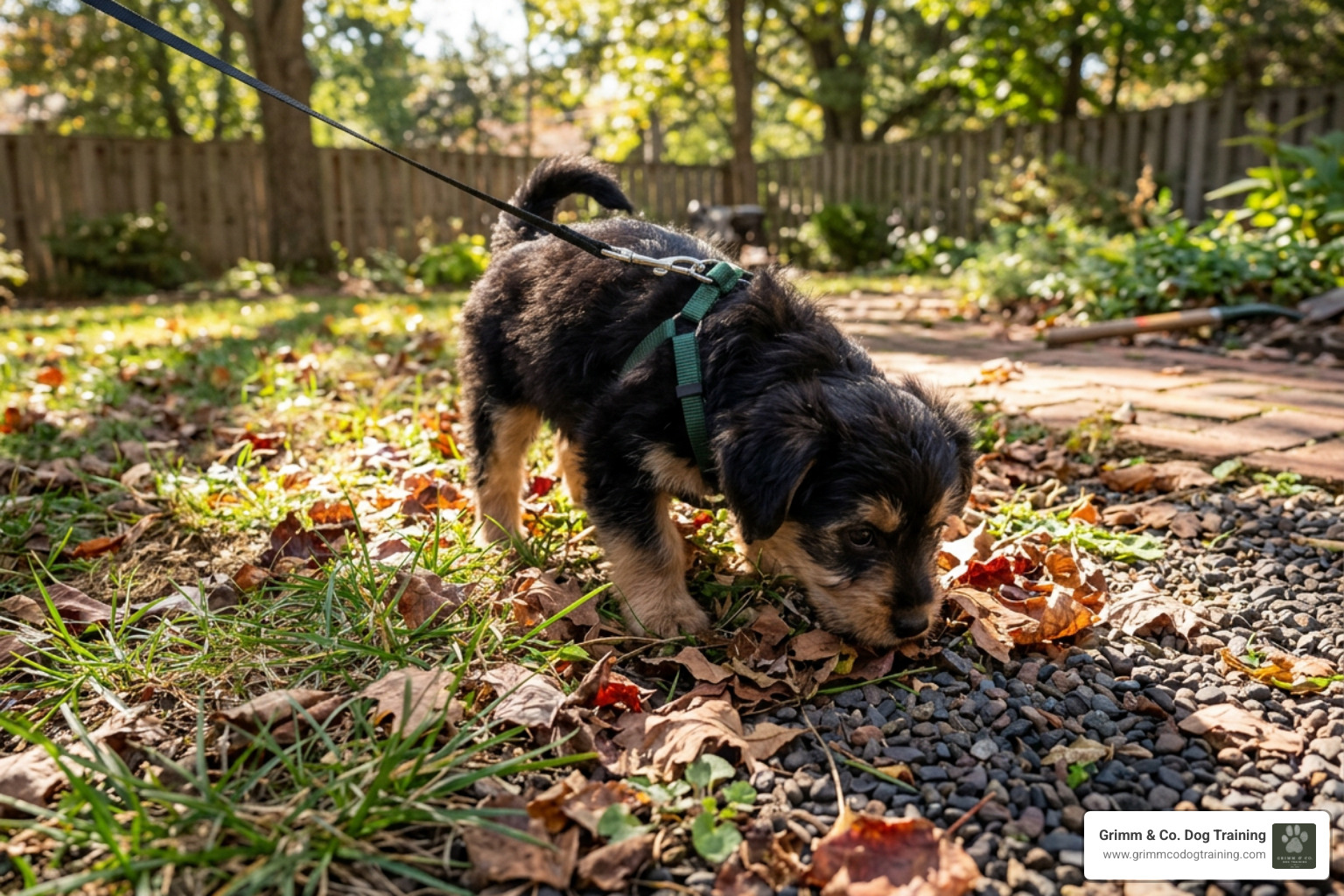
Navigating early canine development requires an understanding of neurobiology and behavioral timing. The optimal window for rapid learning and memory retention occurs between 6 and 16 weeks of age. During this phase, neural pathways form rapidly based on daily experiences. Puppies can grasp name recognition, basic spatial boundaries, and foundational cues as early as eight weeks old.
Establishing clear communication begins with marker conditioning. A marker is a precise auditory signal, such as the word "yes" or a clicker, that bridges the exact moment a desirable behavior occurs with the delivery of a reward. The latency of reinforcement matters tremendously: delivering high-value rewards within one to two seconds of the marker pinpointing the behavior accelerates associative learning.
Integrating proven puppy obedience training tips 2026 allows handlers to build voluntary focus without conflict. Clear structure, consistent rules, and proactive guidance create a cooperative working relationship from the start.
The Critical Socialization Window and Safe Early Exposure
The primary socialization period closes between 12 and 16 weeks of age. Contrary to common belief, socialization is not about letting your dog greet every dog or human on the sidewalk. It is the active process of building environmental neutrality and confidence around novel textures, sounds, sights, and moving objects.
Under-socialization during early fear periods carries lifelong behavioral risks. According to the American Veterinary Society of Animal Behavior (AVSAB), behavioral issues are the leading cause of relinquishment in dogs under three years of age. Socialization can and should begin safely before full vaccination series completion, provided that exposure occurs in controlled, hygienic environments.
For Bay Area owners, thoughtful Daly City puppy socialization involves balancing safety with intentional exposure. You can carry your puppy or use an elevated blanket at lower-density public spaces like controlled outdoor environments to let them observe traffic, ocean breezes, bicycles, and joggers from a distance. Pair these observations with high-value food to build positive emotional associations with urban stimuli.
Structuring Daily Puppy Obedience Sessions for Maximum Retention
Young puppies possess limited cognitive stamina and short attention spans. Attempting long, arduous training sessions leads to mental fatigue, frustration, and loss of focus.
- Age 8 to 12 weeks: 3 to 5 minutes per session, 3 to 5 times daily.
- Age 3 to 6 months: 5 to 10 minutes per session, 2 to 3 times daily.
- Total daily structured training: Cap at approximately 15 minutes total per day.
Adhering to principles for setting your dog up for success: foundations for effective dog training means working in low-distraction environments (like a quiet hallway) before introducing external stimuli. End each session on a successful repetition to maintain enthusiasm. Use jackpot rewards, which are three to five small treats delivered sequentially, when your puppy offers exceptional focus or a rapid recall.
The 3-3-3 Adjustment Framework and 7-7-7 Socialization Protocol
Bringing a puppy home triggers physiological stress responses and elevated cortisol levels. Understanding developmental frameworks helps handlers set realistic expectations.
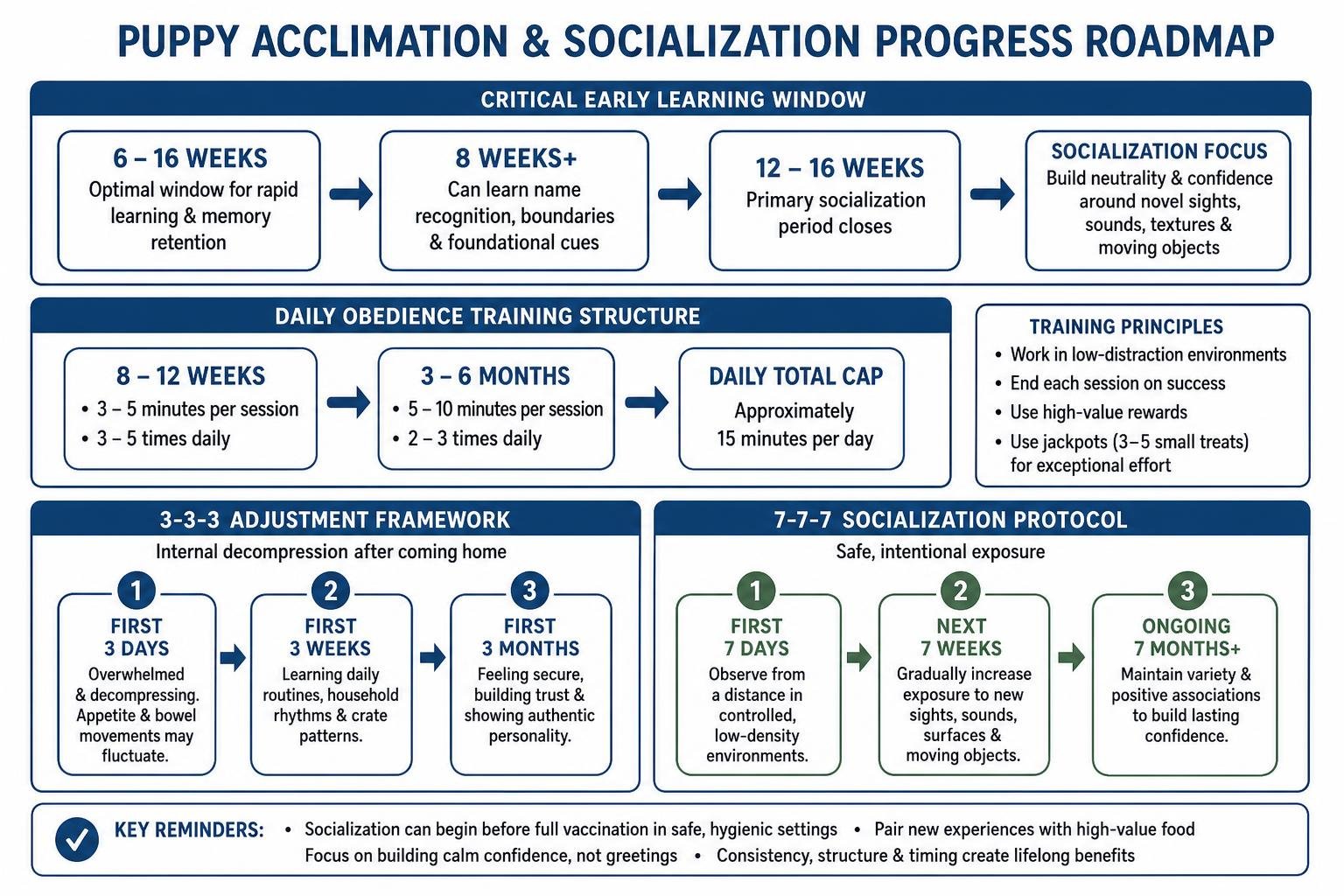
The 3-3-3 Framework tracks internal decompression:
- First 3 Days: The puppy feels overwhelmed and decompressing. Appetite and bowel movements may fluctuate.
- First 3 Weeks: The puppy begins learning daily routines, household rhythms, and crate patterns.
- First 3 Months: The puppy feels secure, establishes trust, and exhibits their authentic personality.
The 7-7-7 Socialization Protocol ensures balanced, non-threatening exposure before 16 weeks. Ensure your puppy safely experiences:
- 7 novel walking surfaces (concrete, grass, wood, tile, metal grates, rubber mats, sand)
- 7 distinct environments (living room, quiet car ride, veterinary lobby, urban sidewalk from a carrier, backyard, patio, garage)
- 7 categories of people (people wearing hats, carrying umbrellas, wearing high-visibility jackets, children at a distance, individuals of varying heights and tones)
- 7 gentle challenges (stepping over low objects, exploring cardboard boxes, walking up low steps, hearing household vacuums from across the house, wearing a harness, gentle paw handling, brief restraint)
Five Core Behaviors for Household Harmony
Foundational training relies on clear mechanics rather than force. Before adding verbal labels to cues, we capture or lure the physical movement, reward it immediately, and then introduce the cue word once the movement is predictable. For first-time handlers, mastering early foundational manners establishes safe household boundaries.
Essential Puppy Obedience Commands: Step-by-Step Execution

1. Sit (The Universal Default)
Sit provides a functional alternative to jumping or demand barking.
- Hold a small, high-value treat right at your puppy's nose.
- Slowly move your hand upward and slightly back over their head toward their tail.
- As their head tracks upward, their hindquarters will naturally lower to the floor.
- The millisecond their rump touches down, mark with "yes!" and reward.
- Fade the food lure within two to three repetitions by using the same hand motion without food, rewarding from the other hand.
2. Emergency Recall ("Come" or "Here")
Recall is your primary safety net in high-traffic urban areas like San Francisco and the Peninsula.
- Start in a boring room with minimal distractions, standing just three feet away.
- Call your puppy's name followed by a clear, upbeat "Come!"
- Open your arms or take two rapid steps backward to trigger their natural chase drive.
- As they reach you, mark "yes!" and deliver a jackpot of treats one after another while gently touching their collar.
- Prevent Cue Poisoning: Never call your puppy to you to administer ear drops, end fun at a dog park, or put them in time-out. Go collect them manually for unpleasant events so the recall cue maintains a purely positive value.
Impulse Control: Stay, Leave It, and Loose-Leash Walking
Teaching impulse control prepares dogs to navigate busy streets, cafe patios, and trailheads.
Stay:
- Ask for a Sit or Down.
- Present an open palm toward the puppy's face and wait two seconds.
- Mark "yes!" and reward directly in position without letting the puppy break.
- Introduce a clear release cue, such as "Break" or "Free," signaling they can move.
- Build duration first (up to 30 seconds) before taking steps backward. Never increase distance and distraction at the same time.
Leave It:
- Present a closed fist containing a low-value treat.
- The puppy will sniff, lick, or paw at your hand. Remain completely still and silent.
- The moment the puppy pulls their nose back even half an inch, mark "yes!" and deliver a high-value treat from your opposite hand.
- Once they reliably back away instantly, add the verbal cue "Leave it" before presenting the hand.
- Advance to placing food on the floor beneath your foot, building toward open items dropped during walks.
Loose-Leash Walking:
- Connect a flat collar or well-fitted Y-harness to a standard six-foot leather or biothane leash.
- Position your puppy on your preferred side with their shoulder aligned with your hip.
- Take three steps forward. If the puppy keeps the leash slack, mark and reward right at your seam line.
- If the leash tightens, stop immediately. Become a stationary post.
- The moment the puppy yields to the pressure and turns back toward you to create slack, mark and resume walking.
Navigating Common Developmental Challenges and Behavioral Regressions
Early development includes behavioral plateaus and sudden regressions. Recognizing the difference between normal developmental phases and behavioral problems prevents handler frustration.
When puppies exhibit sudden frantic outbursts or excessive biting, it rarely indicates defiance. More often, it reflects an overtired nervous system processing sensory overload. Developing a deeper understanding of what your puppy is trying to tell you and how to respond allows you to address biological needs before behavioral problems escalate. Reviewing the top 3 mistakes to avoid when raising a puppy or newly adopted dog also keeps your home structure on track.
Resolving Crate Crying, House Soiling, and Teething Biting

- Crate Management and Distress: Proper crate training builds secure independence. Size the crate so your puppy can stand, turn around, and lie down comfortably, but not walk to a far corner to eliminate. Feed meals inside the open crate and provide frozen stuffed enrichment toys. If crying occurs, wait for a two-second lull of silence before opening the door to avoid rewarding vocal protests.
- House Soiling Protocols: Puppies have limited bladder control until roughly 16 to 20 weeks. Take them out every 60 to 90 minutes while awake, immediately upon waking, five minutes after eating, and after intense play sessions. Clean indoor accidents with specialized enzymatic cleaners to eliminate organic scent markers. Avoid scolding after accidents, which can teach puppies to hide and eliminate out of sight.
- Biting and Mouthing: Teething and play biting peak between 8 and 16 weeks. When sharp puppy teeth make contact with human skin, emit a calm "Ouch," immediately disengage for five seconds, and redirect their teeth onto an appropriate rubber chew or frozen washcloth. If biting intensifies during late evenings, your puppy likely needs an enforced nap in a quiet, darkened room.
Managing Adolescent Shifts from Five to Twelve Months
Around five to six months of age, hormonal shifts and brain remodeling initiate canine adolescence. During this period, you may notice:
- Selective responsiveness to known cues
- A secondary fear period where previously accepted objects trigger barking or avoidance
- Increased drive to explore the environment rather than engage with the handler
- Barrier frustration or reactivity on leash
Adolescence requires management adjustments rather than increased pressure. Temporarily attach a 15-to-30-foot long line in open outdoor spaces to maintain safety and recall reliability. Lower your criteria when training in novel settings, re-establish high reward values, and practice structured focus games around urban distraction thresholds.
Selecting the Right Instructional Format: Classes, Private Coaching, and Digital Tools
Selecting the right training structure depends on your dog's disposition, your lifestyle, and your specific goals. While digital apps provide convenient reference materials, they cannot replace real-time visual feedback or controlled social environments.
| Training Format | Best Suited For | Key Advantages | Bay Area Considerations |
|---|---|---|---|
| Puppy Group Classes | Puppies 8–20 weeks needing environmental neutrality and early social exposure | Supervised distraction work; structured exposure to unfamiliar dogs and people; foundational curriculum | Excellent for learning calm focus in dense, distracting suburban and urban settings |
| Private Coaching | Specific behavioral concerns (fear, crate anxiety, severe mouthing) or busy executive schedules | Customized lesson plans; in-home management adjustments; direct handler focus | Ideal for tailored handling in specific neighborhoods like San Francisco or Peninsula flats |
| Digital Training Apps | Step-by-step cue reminders and supplemental home practice | Budget-friendly; self-paced; convenient logging of schedules | Lacks real-time handler mechanic corrections and dynamic distraction proofing |
Enrolling in structured dog obedience training classes teaches puppies how to disengage from active distractions and look to their handlers for guidance. Exploring why dog training classes might be the right fit for you helps clarify how group environments build long-term neutrality.
If you are searching for local professional options, searching for puppy obedience classes near me will connect you with certified instructors who understand the unique demands of raising a dog in the Bay Area.
Frequently Asked Questions About Puppy Training
What is the most important command to teach a puppy first?
The most important foundational skill is not a traditional command, but name recognition paired with a reliable default check-in. Teaching your puppy that making eye contact with you is rewarding establishes the foundation for recall, loose-leash walking, and impulse control cues like sit and stay.
How do you stop a puppy from biting when overstimulated?
Overstimulated biting is usually caused by physical and sensory fatigue. Puppies need 16 to 18 hours of sleep per day. When biting escalates and redirection fails, calmly place your puppy in their crate or exercise pen with a safe chew item for an enforced nap.
When is it safe to begin group training classes?
According to veterinary guidelines, puppies can safely begin clean, indoor group classes as early as eight weeks of age, provided they have received their first round of core vaccinations and a deworming treatment at least seven days prior to the first class.
Building Lifelong Communication Through Relationship-Based Training
Raising a steady, well-adjusted dog in the Bay Area takes clarity, patience, and realistic expectations. Foundational puppy skills are not built in a single weekend. They develop through consistent, brief daily interactions, clear boundaries, and strong handler engagement.
At Grimm & Co. Dog Training, we focus on relationship-based training that creates clear communication between dogs and their owners. Whether you are navigating early crate routines in Daly City, practicing trail manners along Peninsula paths, or working toward dependable off-leash recall, establishing a thoughtful foundation today sets you and your puppy up for years of reliable partnership.