
Is My Dog Bored or Tired? Key Differences in Canine Behavior

Telling the difference between true physical fatigue and mental under-stimulation requires looking closely at how your dog responds to their immediate environment. Dogs that lack mental enrichment often exhibit restless kinetic energy or default to a dull, listless resting state that mimics sleep. In contrast, a physically and mentally satisfied dog demonstrates genuine physiological recovery through low muscle tone, soft facial expressions, and deep, restorative rest.
| Behavioral Indicator | Bored Dog | Tired Dog |
|---|---|---|
| Response to Low-Pressure Interaction | Pops up immediately, eyes widen, seeks intense engagement | Acknowledges softly, wags tail gently, stays lying down |
| Arousal Threshold | Low; easily overstimulated by outdoor noises or movement | High; ignores mild background sounds and settles quickly |
| Rest Quality | Light, shallow napping; frequently shifts positions or paces | Deep sleep, rhythmic breathing, visible muscle relaxation |
| Vocalization & Demands | Persistent whining, demand barking, pawing, or nudging | Occasional deep sigh or sleepy yawn before drifting off |
| Activity After Exercise | Restless pacing, chewing household items, frantic zoomies | Finds a quiet, cool spot and remains settled for hours |
When assessing your companion, observe their baseline arousal. A tired dog displays smooth, measured movement and steady focus, while an under-stimulated dog often presents a jittery vigilance, reacting abruptly to small household changes.
Decoding True Canine Fatigue and Sleep Needs
Canine sleep architecture differs significantly from human sleep. While humans consolidate their rest into a single overnight block, dogs are polyphasic sleepers who disperse their rest across twenty-four hours. Adult dogs generally require 12 to 14 hours of sleep per day, whereas growing puppies can spend 18 to 20 hours resting to support rapid neurological and physical development.
A truly tired dog demonstrates profound physical release. When your dog lies down after an intensive pack walk along the coastal trails of Mussel Rock Park or an obedience session in San Francisco, you will notice heavy limbs, soft eyes, and slow, even respiration. These normal tiredness signs reflect healthy recovery rather than mental apathy. If your dog has had their biological needs met, they will not follow you from room to room demanding entertainment. They will remain comfortable on their bed, confident that their workday is done.
Spotting the Subtle and Overt Signs of Dog Boredom
Boredom in dogs presents in two distinct ways: externalized frustration and internalized withdrawal. Externalized boredom is easy to identify. It frequently appears as destructive chewing on baseboards, unravelling rugs, counter surfing, or digging through the backyard lawn. Dogs that are under-stimulated often resort to nuisance barking at fence lines or windows, vocalizing at passing pedestrians along busy Bay Area sidewalks.
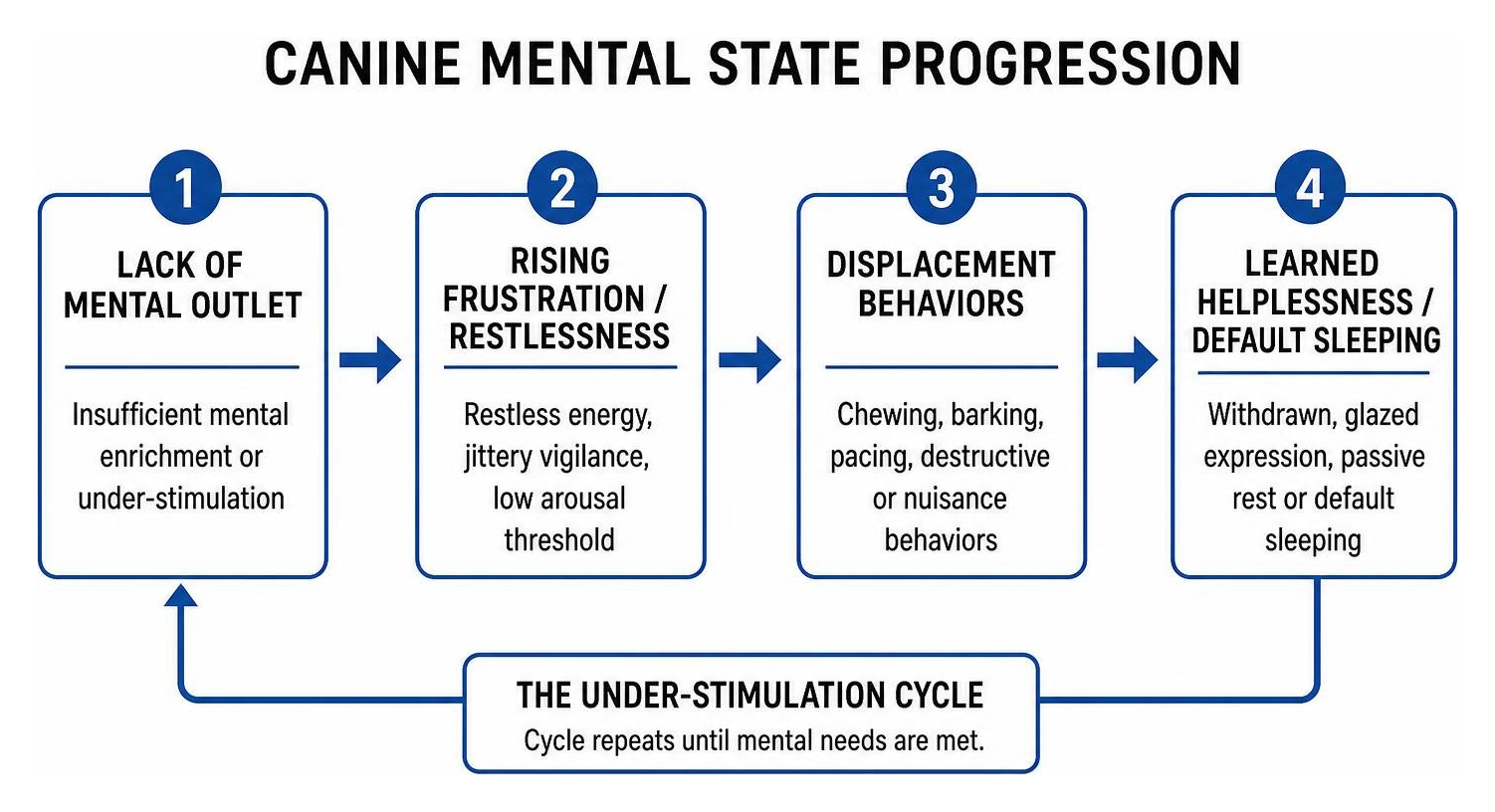
Internalized boredom is quieter and often misdiagnosed as good behavior or simple fatigue. When an intelligent dog realizes that no stimulation is coming, they may slip into a state resembling learned helplessness. They lie on the living room floor with glazed eyes, showing little interest in their surroundings simply because their environment lacks variety. When assessing how to keep a dog mentally satisfied, preventing chronic dog boredom requires recognizing that passive, default sleeping during peak daylight hours is frequently a sign of an empty schedule rather than genuine physical exhaustion.
How Context, Health, and Breed Needs Reveal Your Dog’s State
Context is the ultimate diagnostic filter when evaluating your dog's behavior. A two-mile neighborhood leash walk through the quiet residential streets of Burlingame or San Bruno provides mild physical exertion, but it barely scratches the surface of the sensory needs of working, herding, or sporting breeds. Breeds like Belgian Malinois, German Shepherds, Australian Shepherds, and Border Collies were selectively bred to make complex decisions, process complex scent pictures, and exert sustained mental effort.
Daily routine changes and weather conditions also alter energy expenditure. On foggy, damp mornings across Daly City or during hot inland afternoons in Palo Alto, dogs may spend fewer hours exploring outdoors. Without structured indoor enrichment or focused training to balance these environmental constraints, a dog will inevitably direct their pent-up drive into displacement behaviors or heavy, non-restorative moping. Providing opportunities for decompression and processing through olfactory enrichment allows dogs to decompress far more efficiently than physical pacing ever could.
Is My Dog Bored or Tired: Quick At-Home Tests to Find Out
If you are uncertain whether your dog needs a structured nap or a stimulating job, you can run a simple, low-pressure diagnostic test at home.
- The Novel Toy or Chew Presentation: Take a high-value toy or puzzle that has been stored out of sight for a week. Offer it without excessive hype. A bored dog will immediately engage with high enthusiasm, while a fatigued dog will sniff it politely, perhaps give it a brief lick, and return to their bed.
- The Quiet Threshold Check: Walk toward the door or pickup their harness. If the dog springs up with alert ears and high tail carriage, their low energy was merely circumstantial. If they raise their head slowly, blink softly, and remain lying down, their body requires recovery.
- The Micro-Training Cue: Ask for a basic, highly practiced cue like a "touch" or "down." A tired dog will perform the movement slowly, while a bored dog will snap into position, eager to unlock the reward and continue the game. Establishing solid foundations for effective dog training gives you a reliable behavioral baseline to read these subtle shifts clearly.
Physical Exhaustion vs. Chronic Lethargy and Medical Concerns
It is essential to distinguish between a tired dog resting after exertion and a dog experiencing clinical lethargy. Normal fatigue resolves predictably with rest, quiet decompression, and a solid night of sleep. Lethargy, however, is a non-specific clinical symptom that does not improve after downtime and often points to underlying systemic illness, musculoskeletal pain, endocrine disorders, or infection.
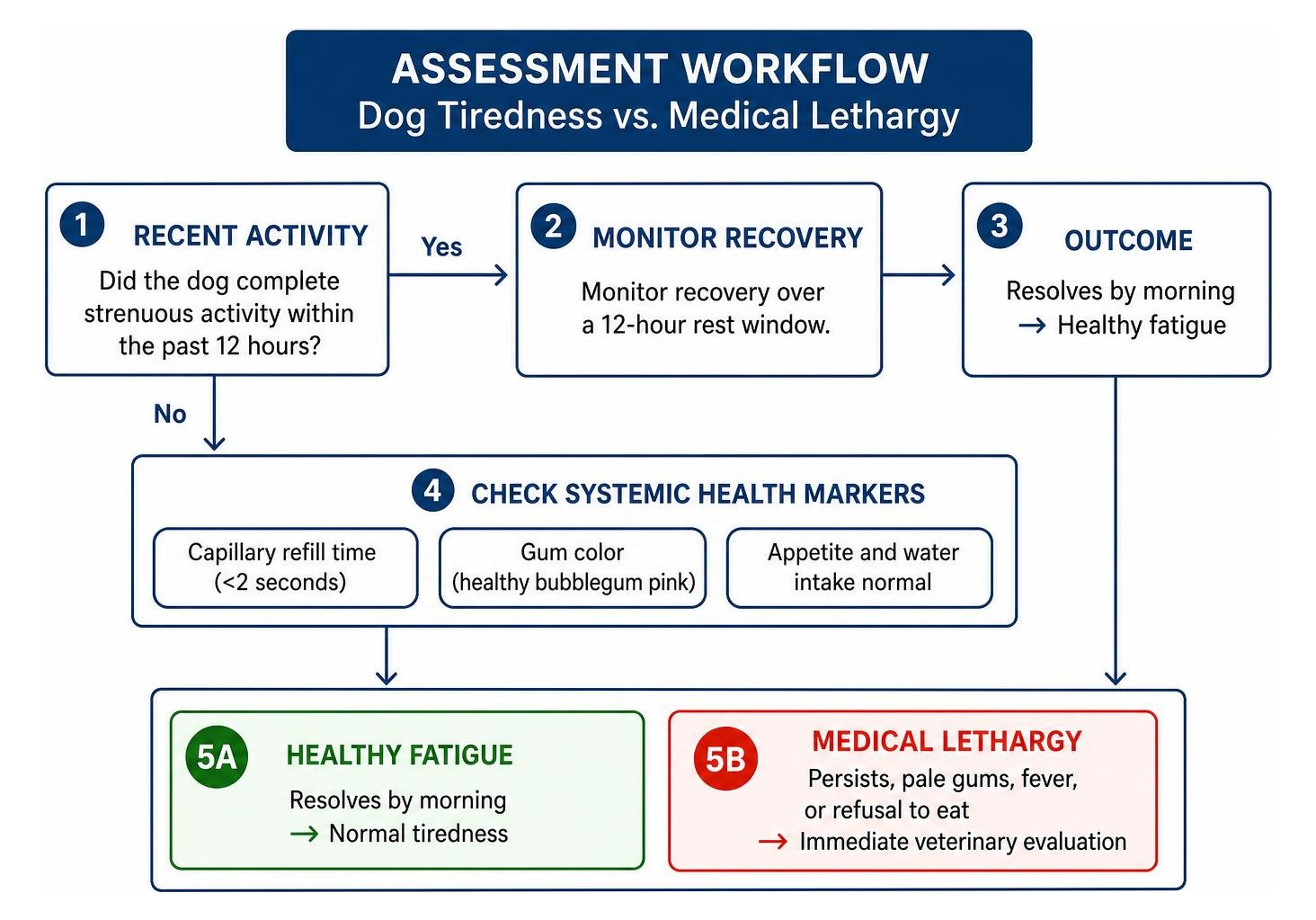
When differentiating lethargy from normal tiredness, inspect your dog's physiological markers. Lift their lip to check the gums; they should be a healthy bubblegum pink and moist to the touch. If the gums appear pale, gray, tacky, or bluish, or if low energy is paired with rapid shallow breathing, refusal of high-value food, limping, or vomiting, discontinue activity and consult a veterinarian immediately.
Actionable Strategies to Support Rest and Cure Boredom
Solving canine boredom while safeguarding proper rest requires a dual approach: high-value mental challenges paired with structured, undisturbed downtime. Most adult dogs need between 30 minutes to two hours of physical exercise daily, but physical movement alone often builds cardiovascular stamina without addressing the dog's cognitive capacity. Integrating 15 to 30 minutes of focused mental work into their daily routine creates a balanced state of calm.

To prevent toy habituation, maintain an active toy rotation. Keep toys in a closed container, providing only two or three items per day, then swapping them every forty-eight hours. Replace repetitive backyard ball throwing with structured scent games, scatter-feeding meals across a lawn, or taking decompression sniff walks through the sensory-rich trails of Jack London Square or Oyster Point.
Engaging in functional dog sports provides working outlets that channel canine drive into constructive focus. Exploring enrichment and sports engagement allows urban and suburban dogs to satisfy their natural instincts safely and productively.
Frequently Asked Questions About Canine Energy Levels
Is My Dog Bored or Tired When Sleeping All Afternoon?
Assess the context of the preceding 24 hours. If your dog completed an intense training session, a long pack walk, or an unfamiliar outdoor outing earlier in the day, afternoon sleeping is normal physiological recovery.
However, if your dog spent the entire morning unattended in a quiet apartment with no physical or cognitive tasks, afternoon sleep is often a coping mechanism for under-stimulation. Offer a short training game or a novel scent puzzle; a bored dog will immediately mobilize, while an exhausted dog will prefer to keep resting.
Can Chronic Boredom Cause Long-Term Health Issues?
Yes. Chronic under-stimulation leads to elevated baseline cortisol levels and persistent frustration. Over time, this unspent energy manifests as generalized anxiety, obsessive-compulsive behaviors such as flank sucking or tail chasing, and excessive self-grooming that causes acral lick granulomas.
Additionally, bored dogs frequently turn to scavenging or overeating when food puzzles are misused, raising the risk of obesity, metabolic strain, and premature cognitive decline in their senior years.
When Should I Consult a Veterinarian About Low Energy?
You should consult a veterinarian whenever low energy appears suddenly without a clear physical cause, or when it persists for more than 24 hours despite opportunities for rest.
Immediate medical attention is warranted if lethargy is accompanied by:
- Refusal to drink water or eat meals for more than 12 hours
- Gums that appear pale, bright red, or white
- Persistent vomiting, diarrhea, or visible signs of abdominal pain
- Reluctance to stand, stiffness, limping, or heavy panting while at rest
Building a Fulfilling Routine for Your Bay Area Dog
Understanding whether your dog is ready for sleep or searching for purpose is a cornerstone of relationship-based dog handling. By observing their subtle body cues, tracking their recovery patterns, and evaluating the quality of their daily challenges, you can easily provide the right balance of active work and calm rest.
At Grimm & Co. Dog Training, we work with dog owners across San Francisco, Daly City, and the Peninsula to replace behavioral frustration with clear, purposeful communication. For owners seeking a structured, enriching weekend hobby that honors a dog's natural working drives while building rock-solid engagement, our structured outdoor mantrailing adventures offer an exceptional outlet. By tapping into your dog's extraordinary olfactory system across diverse Northern California terrain, you can provide the ultimate mental challenge, turning restless energy into calm, deep satisfaction.