
What a German Shepherd Puppy Needs to Thrive
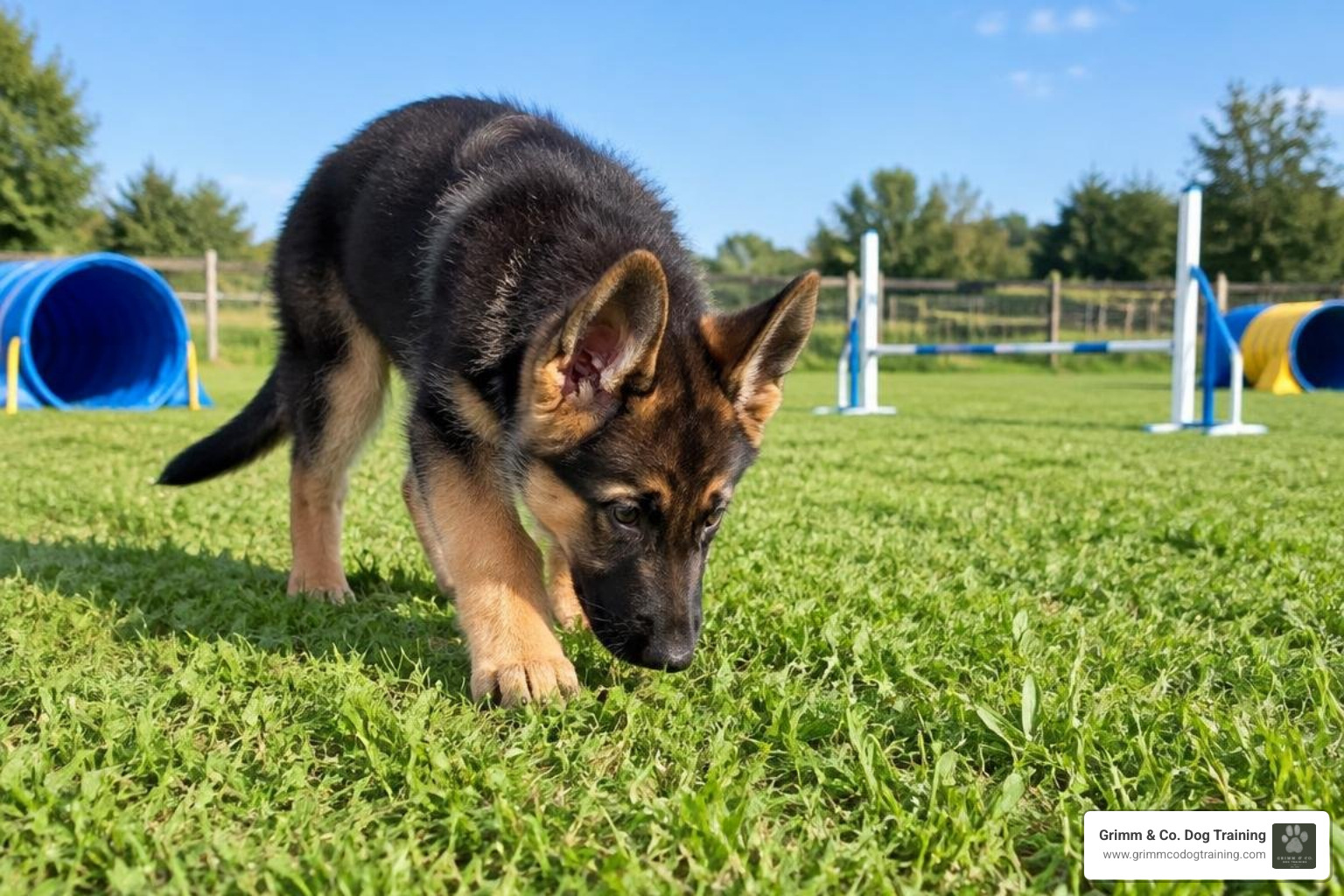
A German Shepherd puppy needs short, age-appropriate activity, daily mental enrichment, plenty of rest, and consistent training. Start with simple cues, scent games, and calm exposure to new people and places. Before bringing one home, ask the breeder for the parents' hip and elbow screening results.
German Shepherds were bred to work closely with people. Their intelligence and energy can make them excellent companions, but they need guidance as well as exercise. Their double coat also sheds, so plan on regular brushing.
I'm Bailey Milne-Davies, a dog trainer whose work with Grimm has included obedience, scent sports, and building calm behavior around other dogs. That experience shapes my practical approach to raising a German Shepherd puppy, starting with the habits that matter most at each stage.
Breed Characteristics, Coat Types, and Lineage Differences
Originating as an agile pastoral herder in Germany, the German Shepherd Dog was refined by Max von Stephanitz to embody utility, intelligence, and anatomical balance. As a medium to large working breed, mature German Shepherds typically weigh between 25 and 40 kg (55 to 90 pounds) and measure 55 to 65 cm (22 to 26 inches) in height at the shoulder. Their physical framework is athletic, deep-chested, and built for endurance, presenting a silhouette of smooth curves rather than sharp angles.
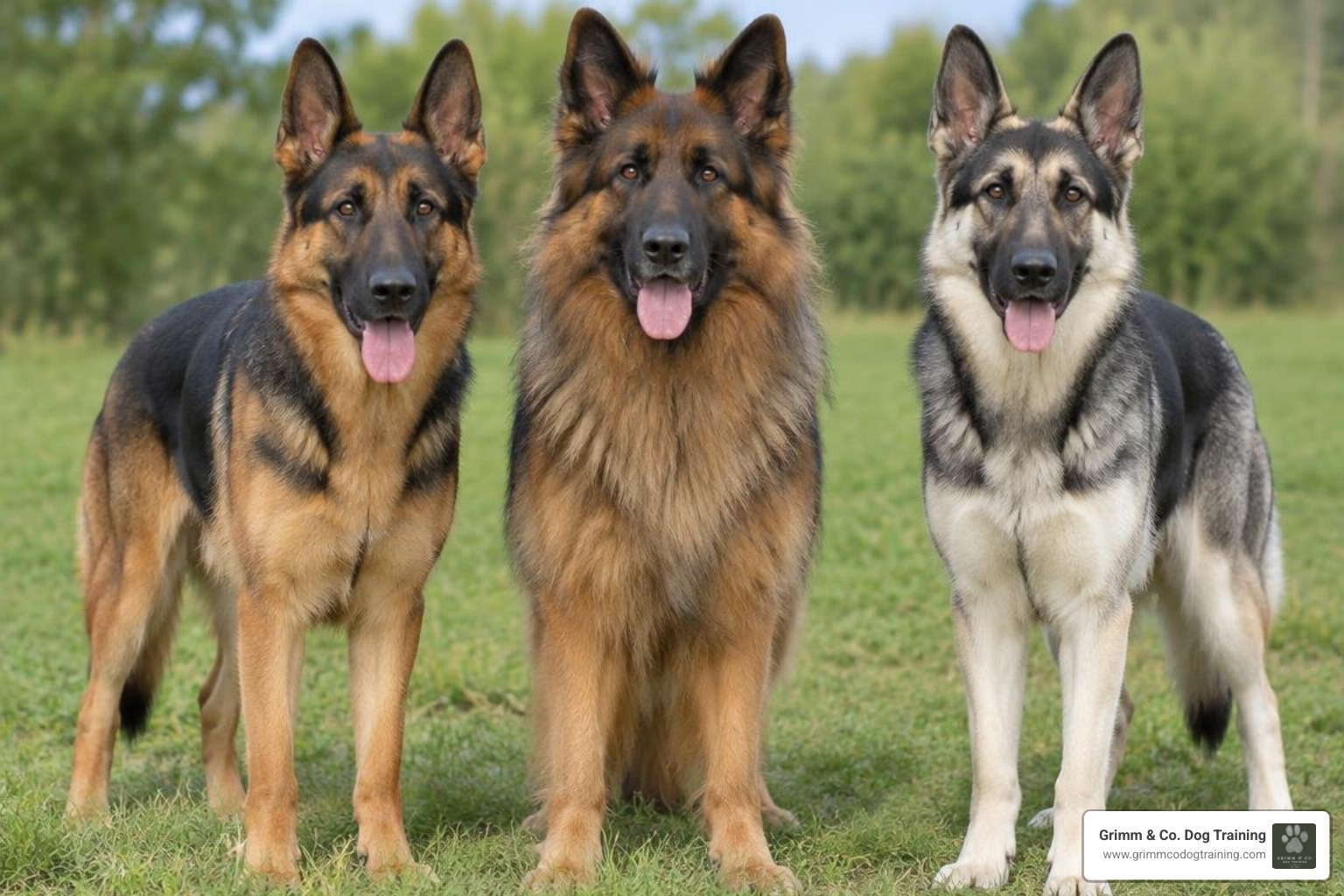
The breed standard recognizes two primary coat varieties: the traditional short-haired (stock coat) and the long-haired (plush or long stock coat). Both possess a weather-resistant double coat designed to protect the working dog from rain, wind, and harsh terrain. Under global breed guidelines, short-coated and long-coated variants are maintained as distinct breeding populations. Beyond coat length, the breed exhibits distinct color genetics:
- Black and Tan: The classic pattern, featuring a black saddle and mask with rich tan markings.
- Sable: A banded wolf-gray or agouti pattern where individual hairs feature multiple pigments, common in classic working lineages.
- Bi-Color: Predominantly black dogs with tan points limited to the feet, chest, and face.
- Solid Black: A striking, recessive or dominant solid coat with deep pigmentation.
Choosing the Right German Shepherd Puppy: Working, Show, and Pet Lines
Not all German Shepherds share identical temperamental drives or skeletal structures. The division between working, show, and pet-quality lines represents one of the most critical considerations for prospective owners navigating dense Bay Area neighborhoods.
Working-line dogs (frequently sourced from East German DDR or Czech lineages) are bred for intense focus, high prey drive, structural durability with straighter backs, and extreme physical stamina. Show lines (both West German and American show variants) emphasize breed ring conformation, fluid movement, and standardized physical aesthetics, often displaying a more pronounced angulation. Pet-quality puppies from reputable preservation breeders represent individuals with balanced drives and moderate energy profiles suitable for active family life.
| Trait / Feature | Working Line | Show Line | Pet Quality |
|---|---|---|---|
| Primary Focus | Drive, nerve stability, tracking stamina | Conformation, gait, ring aesthetics | Balanced temperament, daily companionship |
| Energy & Drive | High to extreme; requires daily task work | Moderate to high; needs regular outlets | Moderate; adaptable to household routines |
| Back Structure | Straighter topline, athletic build | Pronounced angulation, sloping topline | Moderate angulation, balanced frame |
| Best Suited For | Scent sports, mantrailing, active handlers | Structured sports, active suburban homes | Urban/suburban families, weekend hikers |
Bringing Home a German Shepherd Puppy: Costs, Breeders, and Adoption
Investing in a well-bred German Shepherd involves understanding the global and local market realities. In the United States, purebred AKC-registered German Shepherd puppies from health-tested lines generally range between $850 and $2,000, with deposits typically requiring $250 to $500. In the United Kingdom, listings span £1,000 to £3,000 against a broader purebred average of approximately £681.
Adoption provides a wonderful alternative path. Across North American rescues, such as regional Canadian databases that document hundreds of adoptable dogs across dozens of rescue groups, adoption fees generally sit between $450 and $800 CAD for puppies and $250 to $650 CAD for adults. These fees routinely cover deworming, microchipping, core vaccinations, and spay or neuter procedures. Prospective owners can review dedicated German Shepherd rescue resources to explore rescue networks and learn about breed-specific adoption criteria.
Identifying a responsible preservation breeder requires diligence. Ethical breeders openly provide certified orthopedic evaluations (OFA or SV hip and elbow scores), permit visits to the whelping environment, and prioritize early neurological stimulation. Red flags include high-pressure sales tactics, failure to provide parental health documentation, offering puppies under eight weeks old, or breeding without clear temperamental purpose.
Breeder Documentation, KC/AKC Pedigree, and Adoption Alternatives
A reputable breeder should equip you with comprehensive documentation before you sign a contract. Expect to receive:
- Official kennel registration paperwork (AKC, KC, or UKC litter registration).
- A multi-generation certified pedigree illustrating working titles or conformation championships.
- Parental hip and elbow clearance certifications along with DNA screening results.
- Veterinary health records documenting microchip placement, initial deworming, and core puppy immunizations.
When deciding between a puppy and an adult dog, weigh your lifestyle realistically. Adult rescues often come with established temperaments and foundational house training, bypassing the high-management teething and potty-training phases. Conversely, a puppy allows you to shape early environmental neutrality and drive thresholds from eight weeks onward.
Health, Nutrition, and Lifespan Essentials
German Shepherds have a typical lifespan of 9 to 13 years. Maintaining their vitality requires proactive management of several genetic and structural predispositions:
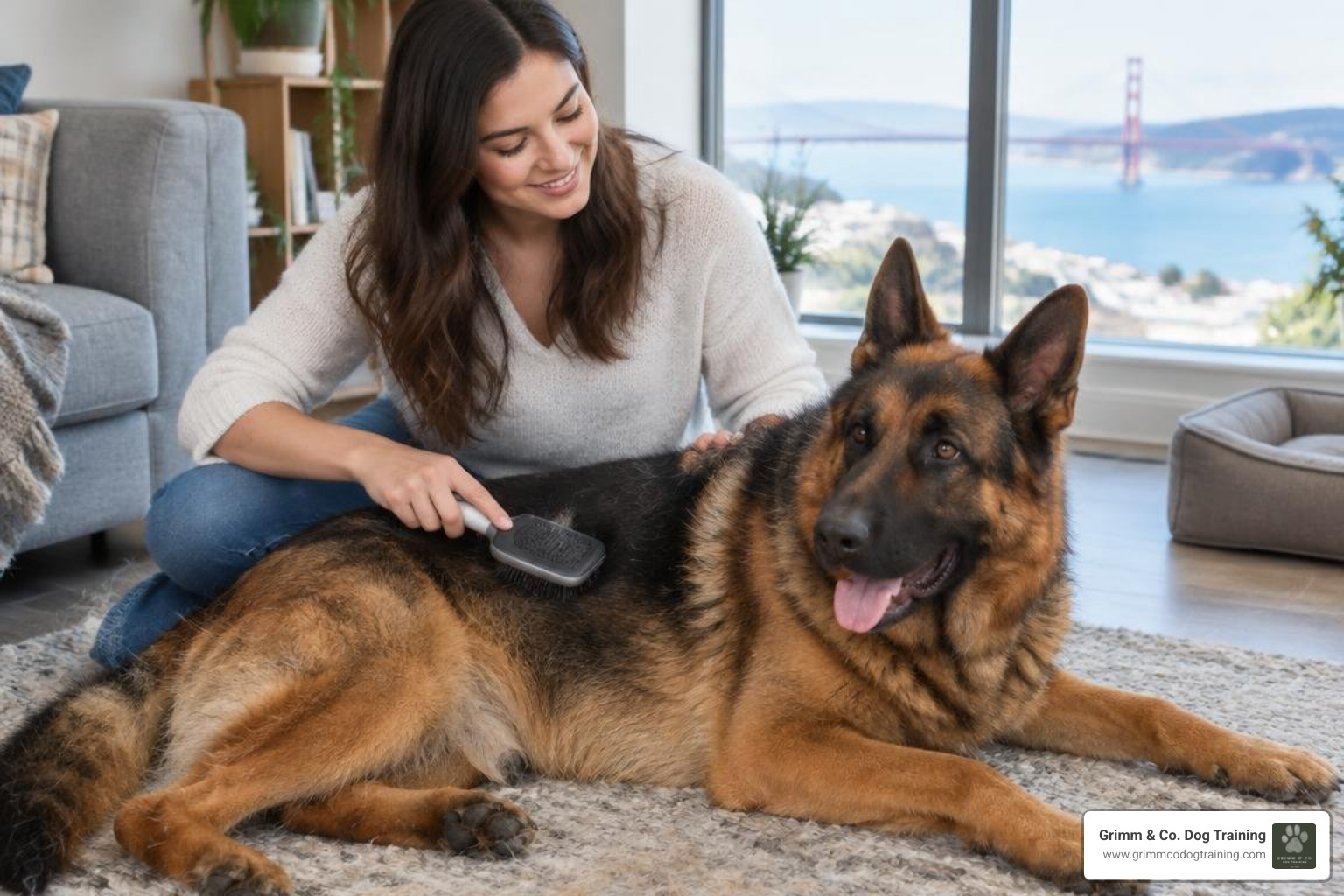
- Double Coat Grooming: Expect continuous low-level shedding with two intense seasonal coat blows each year. Use an undercoat rake and slicker brush two to three times weekly to prevent matting and remove dead fur.
- Large-Breed Puppy Nutrition: Feed a nutritionally complete large-breed puppy formula that regulates calcium and phosphorus ratios to ensure steady, controlled musculoskeletal growth rather than rapid weight spikes.
- Bloat (Gastric Dilatation-Volvulus): Deep-chested breeds carry an elevated risk of bloat. Feed structured meals using slow-feeder bowls and enforce a mandatory 45-minute rest period before and after vigorous exercise.
- Degenerative Myelopathy (DM): A progressive spinal cord disease seen in the breed. Insist on parental DNA testing (showing DM clear or carrier status) prior to selecting a puppy.
Essential Health Screenings and Care for a German Shepherd Puppy
Orthopedic health forms the foundation of your puppy's physical future. The Orthopedic Foundation for Animals (OFA) and the German SV registry evaluate hip and elbow joints to minimize the inheritance of crippling dysplasia.
During the puppy's first 12 to 18 months, protect unclosed growth plates by avoiding repetitive high-impact activities such as repetitive jumping, high-speed agility weaving, or running on slick hardwood floors. Couple these physical safeguards with structured mental challenges, leveraging established puppy obedience training tips to channel youthful energy without overtaxing immature joints.
Daily Exercise, Mental Enrichment, and Early Socialization
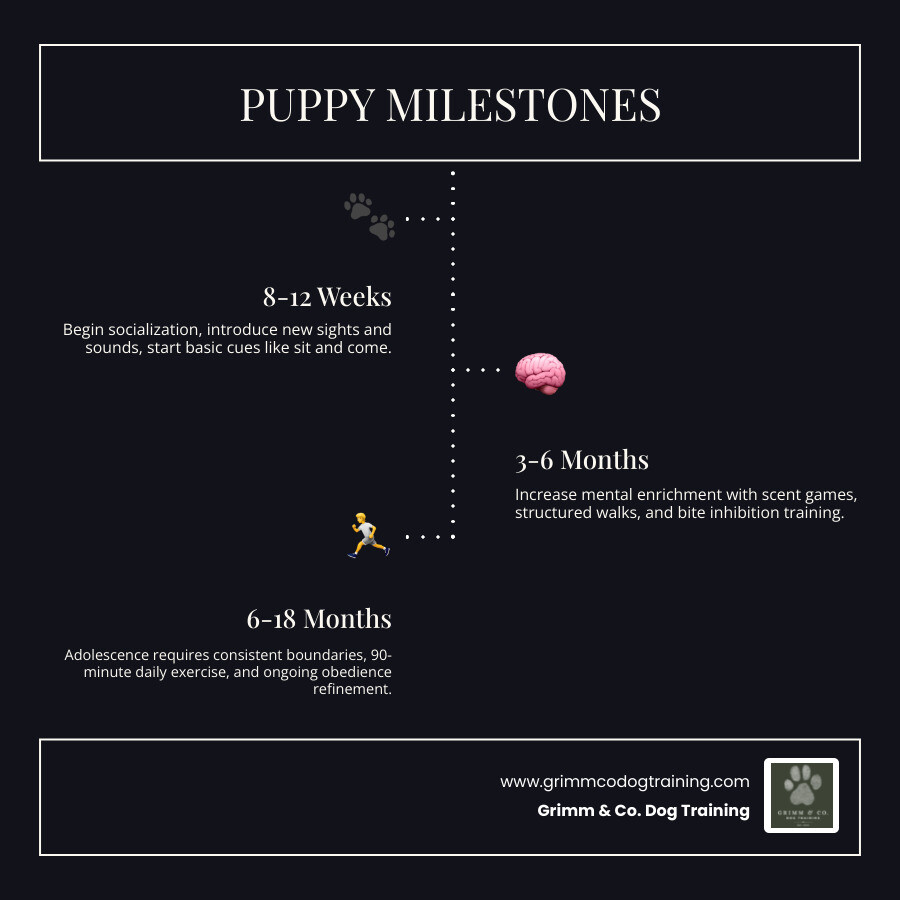
An adult German Shepherd requires approximately 75 minutes of daily exercise, while high-drive adolescents often need up to 90 minutes. However, physical stamina alone will not satisfy this working breed. If you simply jog your puppy for miles, you will build an athlete with boundless endurance and an under-stimulated brain.
True balance comes from structured mental challenges. Scent games, tracking tasks, food puzzle toys, and purposeful exploration provide cognitive decompression. Taking your puppy to scenic coastal environments, such as dog-friendly coastal areas in Daly City, allows them to navigate diverse sensory inputs while practicing engaged handler focus on a long line.
Structured Socialization and Foundation Manners
Socialization does not mean forcing your German Shepherd puppy to greet every strange dog or person on urban sidewalks. In dense Bay Area environments, proper socialization means cultivating calm neutrality to environmental noise, strollers, cyclists, and traffic.
Foundation training should prioritize bite inhibition, clear crate routines, impulse control around food bowls, and loose-leash walking mechanics. Owners looking for a step-by-step roadmap can reference our puppy training comprehensive overview or enroll in our foundation puppy obedience classes to build reliable communication in structured group settings.
Frequently Asked Questions About German Shepherd Puppies
How much does a German Shepherd puppy cost on average?
In the United States, purebred German Shepherd puppies from health-tested parents generally cost between $850 and $2,000. In the United Kingdom, puppies from registered breeders average between £1,000 and £3,000 against a national purebred median of £681. Adoption fees through specialized rescues generally range from $250 to $800 CAD depending on the dog's age and medical rehabilitation needs.
How much daily exercise does a growing German Shepherd need?
Growing puppies should follow the five-minute rule: five minutes of structured, low-impact exercise per month of age, once or twice daily. An eight-week-old puppy needs only ten minutes of light walking, whereas an adolescent requires 75 to 90 minutes of combined physical activity and cognitive scent games.
Are German Shepherds easy to train for first-time owners?
German Shepherds are exceptionally biddable and quick to learn, but their high drive and sharp intelligence mean they will learn unwanted behaviors just as quickly if boundaries are unclear. First-time owners benefit tremendously from early partnership with a professional GSD training specialist who understands breed-specific drives, engagement thresholds, and working genetics.
Building a Fulfilling Partnership with Your Working Companion
Raising a German Shepherd puppy into a balanced, confident adult requires more than basic sit and down cues. These dogs thrive when given a clear job, reliable leadership, and an outdoor lifestyle that honors their natural working heritage.
At Grimm & Co. Dog Training, we help owners across San Francisco, Daly City, and the Peninsula channel their dog's natural drives into enriching weekend activities like mantrailing. By engaging your dog's nose in real-world tracking scenarios, you satisfy their working instincts while deepening your communication and mutual trust. For hands-on support tailored to your dog's lineage and drive, explore our expert guidance on training your German Shepherd and start building a resilient, lifelong partnership today.