
What German Shepherd Family Protection Training Should Start With

Start with temperament and obedience, not bite work. If you are looking for German Shepherd training for family protection, ask a qualified protection trainer to assess your dog before any protection exercises begin. A suitable dog needs to stay calm around guests, children, and other pets, and respond reliably to cues such as recall, heel, leave it, and out. Protection work should build on that control, not replace it.
Grimm & Co. Dog Training does not offer German shepherd family protection training, nor do we recommend ourselves as a provider of protection training services. However, as a trainer knowledgeable about dogs with protection-training backgrounds and high-drive working lineages, I provide supplemental support to help handlers maintain environmental balance. For families in Daly City, San Francisco, and the Peninsula, we prioritize mantrailing as a fulfilling working outlet, offering structured obedience and socialization training as additional services to reinforce real-world neutrality alongside a specialist's work.
I’m Bailey Milne-Davies. Since 2022, I’ve trained my dog, Grimm, in obedience and dog sports, completed a month-long professional obedience trainer course, and worked closely with high-drive working dogs. That background shapes my focus on safe foundations in this guide to german shepherd family protection training.
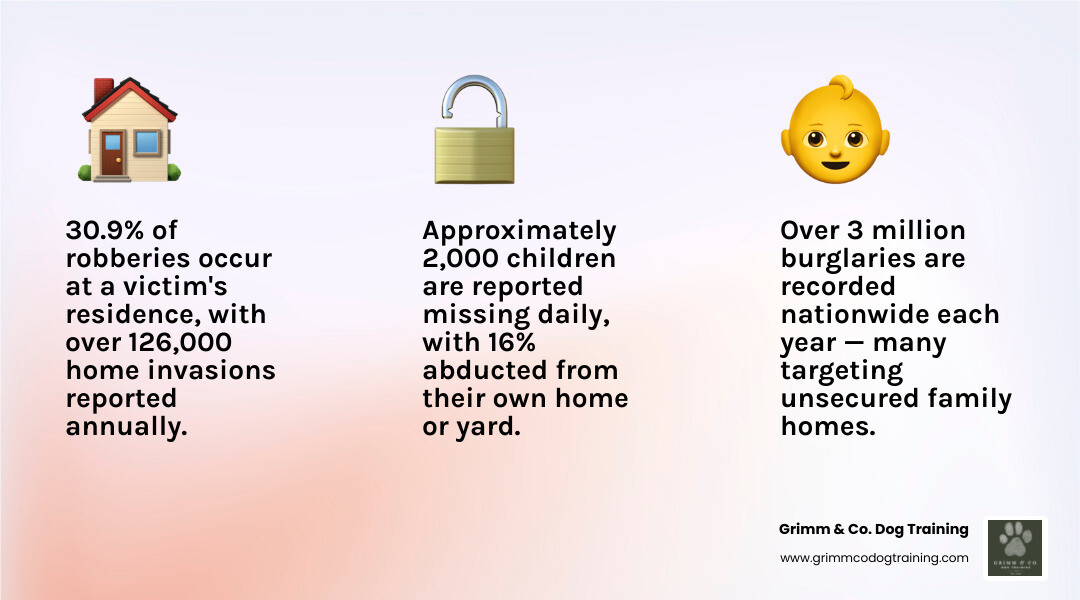
Residential security remains a top priority for modern households. According to historical FBI Uniform Crime Reporting data, 30.9% of robberies occur at a victim's residence (accounting for over 126,000 home invasions annually), and over 3 million burglaries are recorded nationwide each year. Furthermore, data indicates that 70% of violent assaults happen in the home, while approximately 2,000 children are reported missing daily, with 16% abducted directly from their home or yard. These sobering realities lead many owners across the Bay Area to explore protection training. However, keeping your household safe requires understanding how specialized training operates before introducing dynamic defense work into a family setting.
Understanding German Shepherd Family Protection Training vs. Guard and Attack Dogs
A family protection dog is fundamentally different from a commercial guard dog or an aggressive attack dog. The critical distinction lies in handler authority, social stability, and the dog's internal motivation. While a guard dog relies on territorial instinct to keep strangers away from property and an attack dog is conditioned to bite indiscriminately on sight, a personal protection dog (PPD) acts strictly upon handler command or clearly defined direct physical threats.
A true protection animal possesses an unequivocal "on and off switch." When relaxing inside a living room in San Francisco or walking past crowded cafes in Burlingame, the dog is neutral, social, and affectionate. Protection behaviors are authorized strictly by the handler, preventing dangerous misunderstandings.
| Dog Classification | Primary Motivation | Level of Socialization | Environmental Stability | Household Suitability |
|---|---|---|---|---|
| Personal Protection Dog (PPD) | Defense of handler on cue, pack loyalty | High (proofed around children, pets, dense urban areas) | Exceptional (calm under chaotic pressure) | Excellent (lives indoors as a trusted family member) |
| Guard Dog | Territorial defense, resource guarding | Low to moderate (often isolated to property) | Moderate (territory-specific confidence) | Poor (risk of territorial biting inside the house) |
| Attack Dog | Uncontrolled aggression, indiscriminate bite drive | Minimal to none | Unstable (reactive to general movement or noise) | Dangerous (unsuitable for residential living) |
| Police / Dual-Purpose K9 | High prey drive, suspect apprehension, tracking | Variable (task-specific training) | High (conditioned to complex tactical settings) | Specialized (requires experienced working-dog handlers) |
The Psychology of Personal Protection Dogs vs. Attack and Guard Dogs
The psychology behind an executive protection dog centers on supreme nerve stability rather than fear or undirected aggression. An unstable dog bites out of panic or insecurity when cornered. In contrast, a sound German Shepherd relies on balanced defense and prey drives backed by clear environmental neutrality.
In everyday environments, such as navigating busy sidewalks in Emeryville or walking near Muscle Rock Park in Daly City, the dog remains completely indifferent to neutral passersby, joggers, and other dogs. The dog does not perceive neutral strangers as threats, ensuring absolute social safety for your family and community.
The Role of Schutzhund and IGP as a Foundation for Protection Work
Historically, the sport of Schutzhund (now known as IGP) was developed in Germany specifically as a breed suitability test for the German Shepherd. It evaluates three disciplines: tracking, precision obedience, and courage under pressure during protection routines.
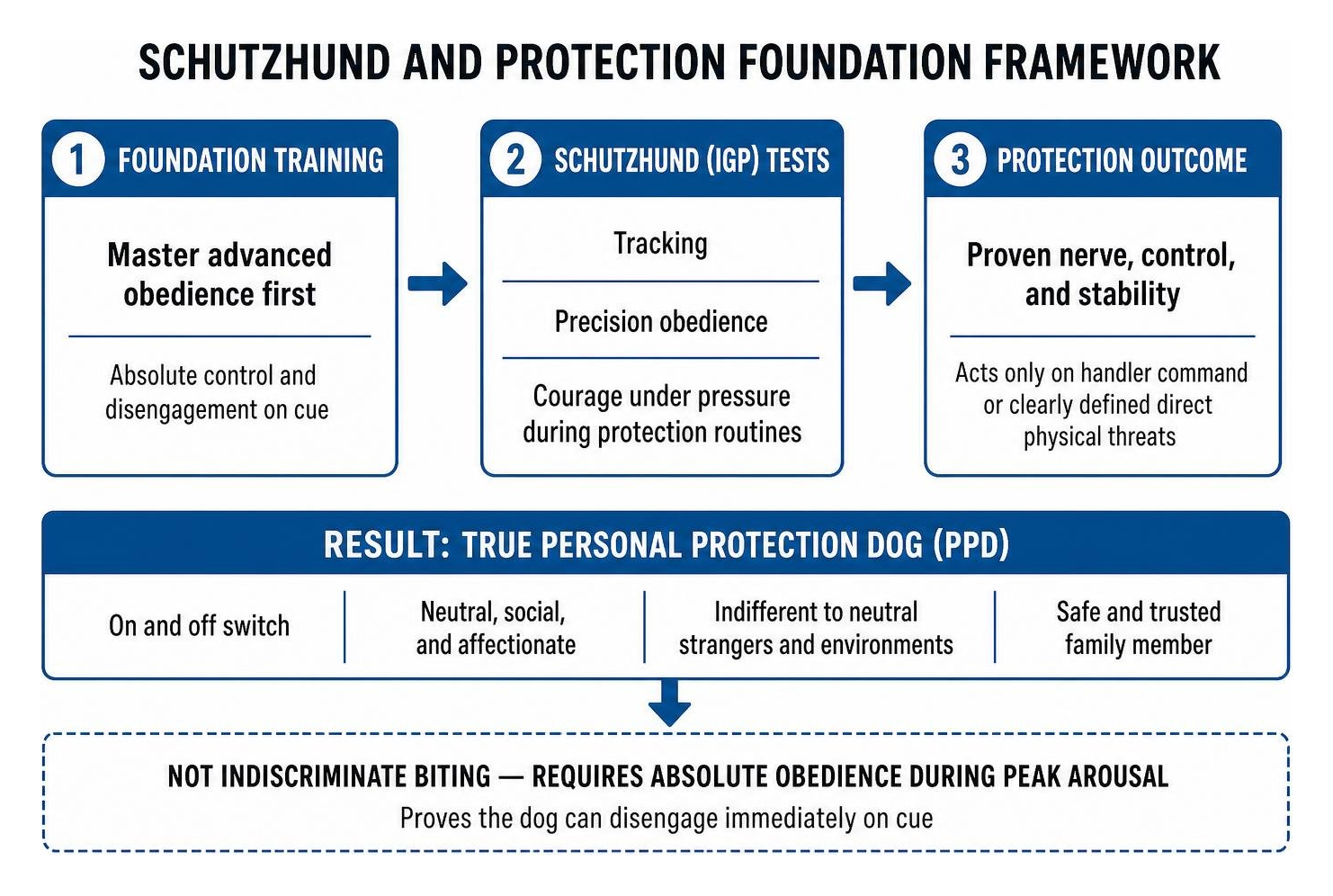
Schutzhund serves as a valuable framework because it tests a dog's mental endurance, structural soundness, and emotional control against an agitator (decoy). Rather than teaching indiscriminate biting, it requires absolute obedience during peak arousal, proving whether an animal can disengage immediately on cue. Mastering these standards requires advanced dog obedience training long before high-arousal scenarios are introduced.
Core Skills and Real-World Threat Scenarios in Family Protection Work
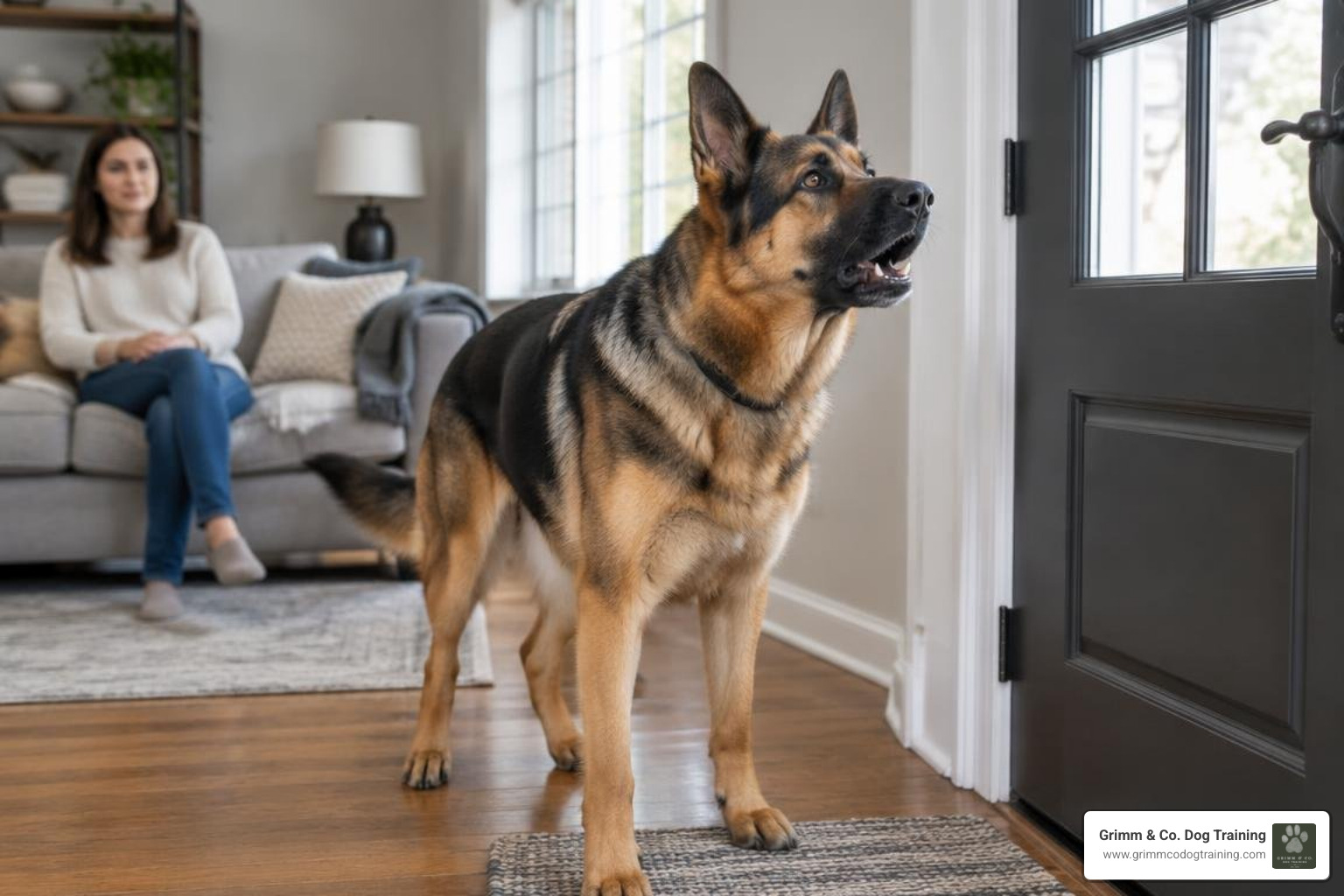
A personal protection dog must be trained for real-world scenarios rather than sport routines alone. In residential settings, a dog is conditioned to deter burglars through a booming alert bark at entry points, giving homeowners precious time to secure their families while law enforcement responds. Breed organizations emphasize that Schutzhund training was originally developed to test German Shepherds for the traits required for police and protection work, including courage, trainability, and a sound temperament.
Real-world scenarios encompass multiple critical threat environments:
- Home Invasions and Hallway Defense: The dog establishes a physical barrier between an intruder and the family, holding position or engaging on command.
- Carjacking and Vehicle Security: The dog alerts to threats approaching vehicle windows at stoplights or parking structures, defending occupants if entry is breached.
- Kidnapping and Abduction Prevention: The dog creates an immediate physical deterrent against an assailant attempting to grab a child or adult in a yard or park.
- Perimeter Vigilance: Patrolling fence lines and alerting handlers to suspicious activity without reactive nuisance barking.
Managing these intense drills safely demands exceptional focus, which is why owners must prioritize foundational dog training for impulse control before any dynamic defensive engagement is introduced.
Essential Obedience Foundations for German Shepherd Family Protection Training
Protection capability is only as safe as the obedience supporting it. Before a German Shepherd ever encounters a bite sleeve, bite suit, or agitator, its handler must achieve flawless compliance across foundational cues under heavy distraction:
- Precision Heel: The dog remains in tight position beside the handler, ignoring outdoor stimuli in busy Bay Area corridors like Jack London Square in Oakland or downtown Berkeley.
- Immediate Recall: A non-negotiable emergency return cue that functions regardless of prey drive, environmental excitement, or novel threats.
- Firm "Leave It" (Disengagement): Cues the dog to redirect attention entirely away from an approaching person, animal, or object without physical contact.
- Reliable "Out" / Drop It (Release): Commands the dog to instantly release physical grip from a toy, sleeve, or object.
Handlers seeking this level of focus frequently pursue reliable off-leash control to ensure safety across open spaces, parks, and trails.
Managing Child Safety and Multi-Pet Integration
A protection dog must be an unconditionally safe companion for children and other household animals. True stability requires clear bite inhibition, strict handler authority, and consistent boundaries.
Children should never be responsible for managing protection cues. Instead, the dog must view children as protected pack members, displaying high frustration tolerance during chaotic household play. When integrating a high-drive working dog into a home with existing pets, careful environmental structuring and slow introductions are essential. If you encounter behavioral conflicts or resource guarding at home, consulting certified dog behaviorists ensures safety risks are identified and corrected promptly.
Selecting Candidates, Breed Comparisons, and Training Investment
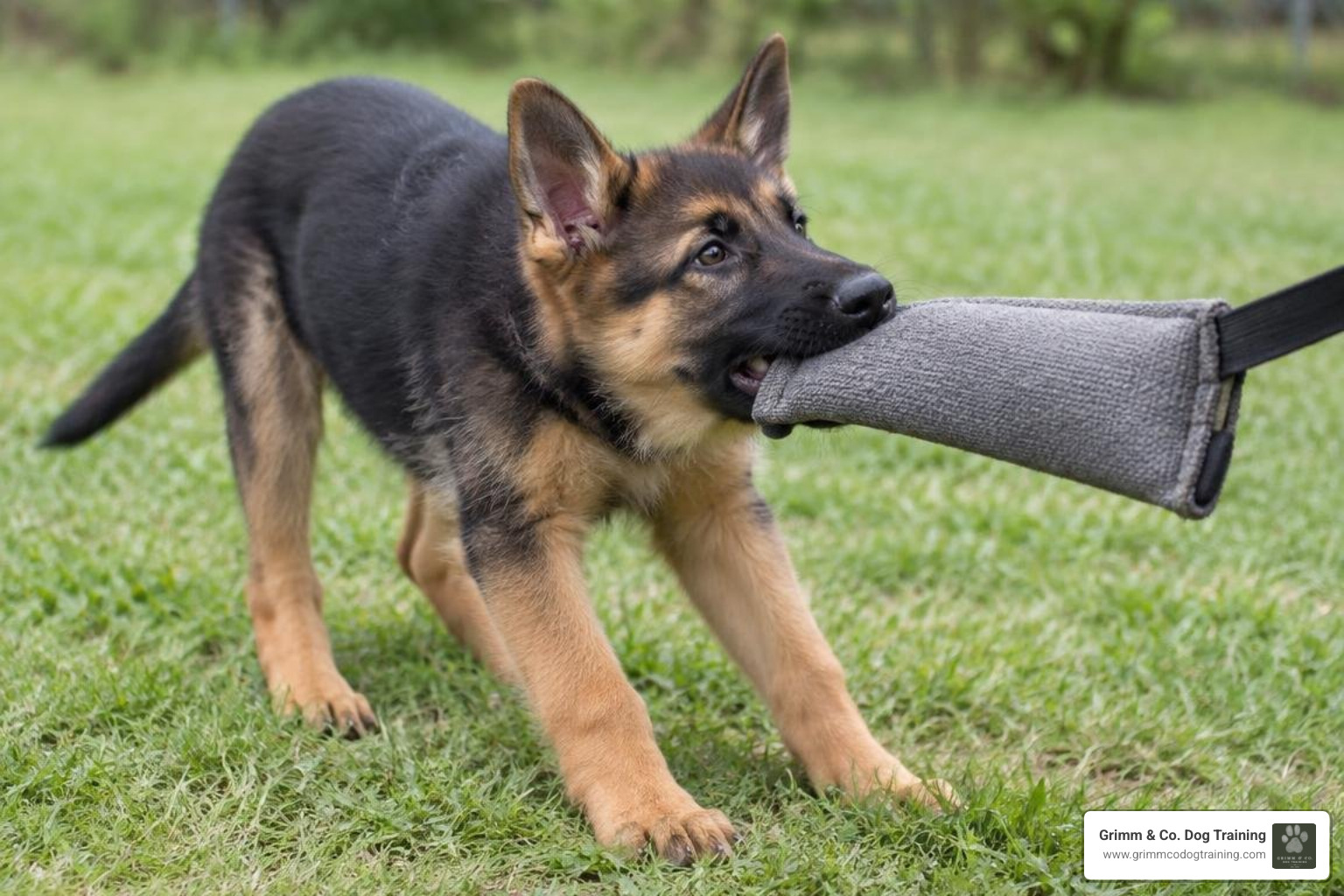
Not every German Shepherd possesses the genetic temperament required for protection work. Elite protection candidates undergo rigorous screening during puppyhood, assessing their recovery time after sudden loud noises, willingness to engage strange surfaces, and natural grip strength during controlled tug play.
Developing a fully trained executive protection dog demands significant time and resources, often exceeding 1,000 hours of specialized foundational and scenario-based training over two years.
- Level 1 (Basic Deterrence and Family Alert): Focuses on home alerts, alert barking on cue, and strict on-leash obedience ($15,000 to $20,000).
- Level 2 (Advanced Home & Estate Defense): Incorporates hallway drills, perimeter defense, vehicle security, and off-leash obedience ($25,000 to $35,000).
- Level 3 (Executive Personal Protection): Delivers fully proofed civil defense across novel environments, multi-threat engagement, transport security, and complex family integration ($40,000 to $100,000+).
| Breed | Primary Strengths | Energy & Drive Level | Family Living Profile | Handling Complexity |
|---|---|---|---|---|
| German Shepherd Dog | Balanced drives, highly versatile, loyal | High (manageable with routine structured exercise) | Outstanding family pet; calm indoors when properly fulfilled | Moderate (adaptable for dedicated suburban owners) |
| Belgian Malinois | Extreme speed, relentless work ethic, unmatched agility | Very High (requires near-constant engagement) | Intense; often overwhelming for busy households with young kids | Expert (requires experienced working-dog handlers) |
| Doberman Pinscher | Sleek personal guardian, tight handler bonding | Moderate to High (athletic and sensitive) | Excellent indoor house dog; prefers close physical contact | Moderate (sensitive to harsh training methods) |
| Dutch Shepherd | Resilient, athletic, serious biting mechanics | Very High (demanding physical and mental needs) | Driven; best suited for active, highly structured households | High (needs distinct work outlets and clear leadership) |
Evaluating Genetics and Temperament for German Shepherd Family Protection Training
Genetics dictate the biological ceiling of a dog's nerve stability. Working lines (such as East German DDR or Czech lineages) are traditionally bred for thicker nerves, substantial bone structure, and high biddability compared to lines bred exclusively for conformation shows.
Puppy evaluations conducted during the critical developmental window (7 to 12 weeks) evaluate environmental curiosity, social comfort, and recovery from environmental pressure. A candidate that cowers, shows persistent handling sensitivity, or exhibits nervous aggression must be disqualified from protection work immediately.
Choosing a Trainer and Avoiding Dangerous Red Flags
If you are evaluating outside protection specialists, exercise extreme caution. Unqualified trainers often mask poor genetics by using excessive agitation, creating dangerous, fear-aggressive animals that pose immense legal and physical liabilities.
Avoid trainers who exhibit these clear red flags:
- Promising full protection readiness in a few short weeks.
- Agitating young puppies with heavy defense pressure before foundational obedience is established.
- Utilizing dogs that only bite when a visible sport sleeve is present (equipment fixation).
- Refusing to demonstrate an immediate, clean "out" (release command) off-leash during high drive.
- Lacking structured handler education programs for the family after placement.
Handler Responsibilities and Supplemental Outlets for Protection Breeds
Owning a working-line German Shepherd requires a long-term commitment to mental fulfillment, clear household leadership, and daily exercise. High-drive working dogs that lack mental challenges quickly find their own destructive outlets, such as nuisance barking, fence-running, or household destruction.
Grimm & Co. Dog Training does not provide German shepherd family protection training and does not recommend itself as a provider for personal protection or bite work. However, we are thoroughly knowledgeable about dogs with protection-training backgrounds and understand how to manage their distinct drives. We offer dedicated supplemental support to ensure these powerful dogs remain stable, well-mannered companions in urban and suburban environments.
Our primary, prioritized activity for working breeds across the Bay Area is mantrailing. Mantrailing allows your German Shepherd to deploy its natural olfactory capabilities to find a specific person across diverse terrain, from urban parks in San Bruno and South San Francisco to trails in San Mateo, Belmont, and Palo Alto. In addition to mantrailing, we provide focused obedience and socialization training as supplemental offerings to build flawless impulse control and social neutrality.
Engaging in dog training through outdoor sports and enrichment builds deep handler communication, exhausts high-drive dogs mentally, and gives Bay Area owners a rewarding weekend hobby without cultivating defensive aggression.
Frequently Asked Questions About Family Protection Dogs
Can a family protection German Shepherd safely interact with children and guests?
Yes, provided the dog has sound genetics and has undergone thorough social proofing alongside professional training. A properly developed protection dog is stable, social, and calm around house guests until a genuine, handler-verified threat emerges. They should never display unprovoked suspicion or guarding toward welcome household visitors.
How much does professional German Shepherd protection training typically cost?
A fully trained, reliable family protection dog generally represents an investment ranging from $18,000 for foundational alert and deterrence skills to well over $45,000 for elite executive-level protection. Purchasing an untrained puppy and developing it alongside professional protection trainers over two years also involves substantial costs for boarding, decoys, and specialized coaching.
What is the difference between the 'leave it' and 'out' commands during protection work?
The "leave it" command is a preemptive disengagement cue instructing the dog to ignore a target, person, or item without making physical contact. The "out" command is a physical release cue, directing the dog to immediately let go of a bite grip (such as a toy, sleeve, or threat) and return attention directly to the handler.
Fostering Balance and Focus in Your German Shepherd
A dependable family companion is built upon a foundation of calm biological stability, reliable obedience, and fulfilling mental outlets. While specialized protection work requires niche working-line trainers, every German Shepherd benefits immensely from clear household structure, consistent social proofing, and rewarding scent work.
At Grimm & Co. Dog Training, we help dog owners across Daly City, San Francisco, and the Peninsula build lasting partnerships with their dogs. Whether you are looking to master off-leash reliability, resolve daily behavioral challenges, or explore the exciting world of outdoor mantrailing, we invite you to explore our approach to training your German Shepherd for lifelong obedience and focus. Discover how structured relationship-based training and enriching dog sports can bring out the absolute best in your companion.