
How to Start Canine Scent Training at Home
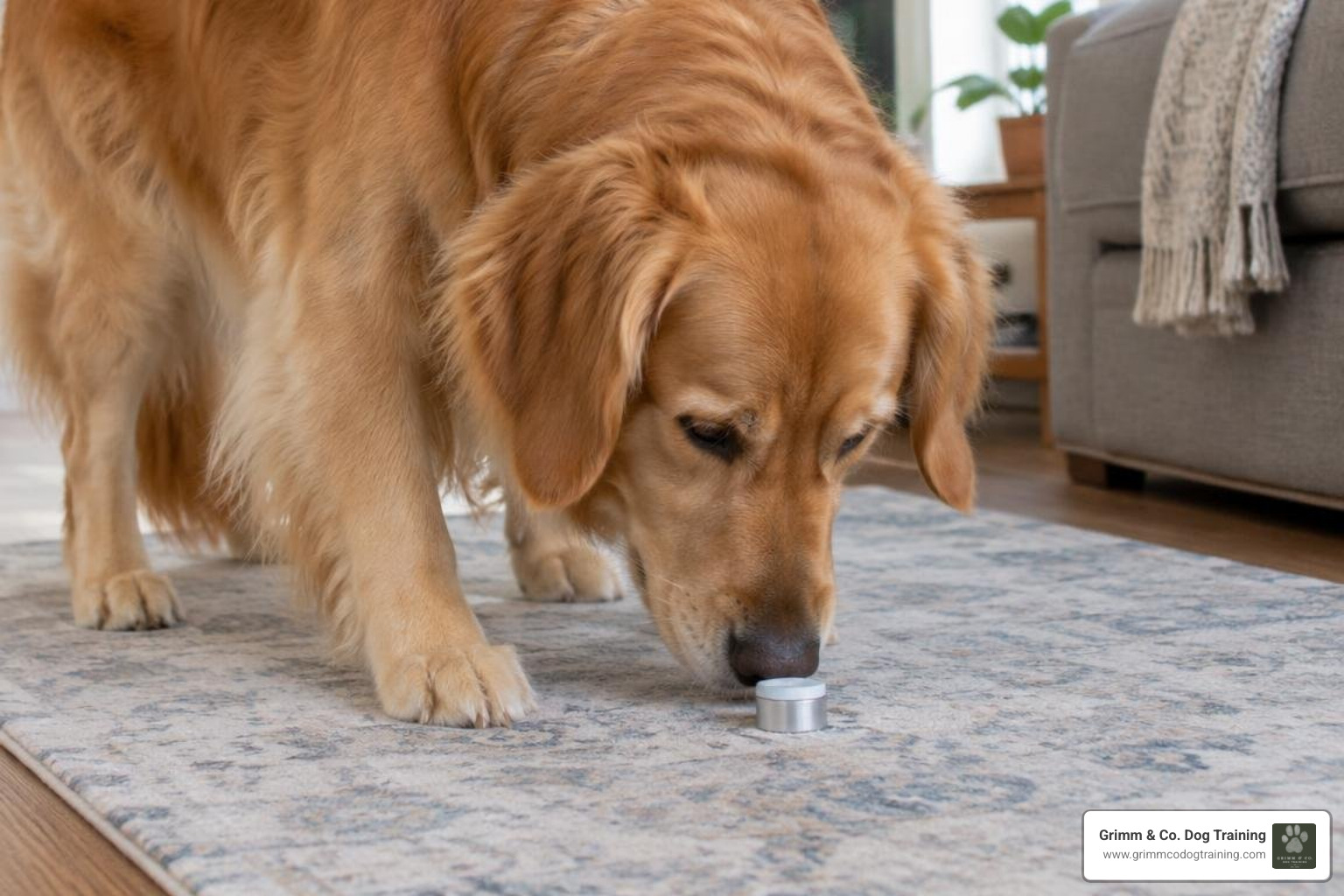
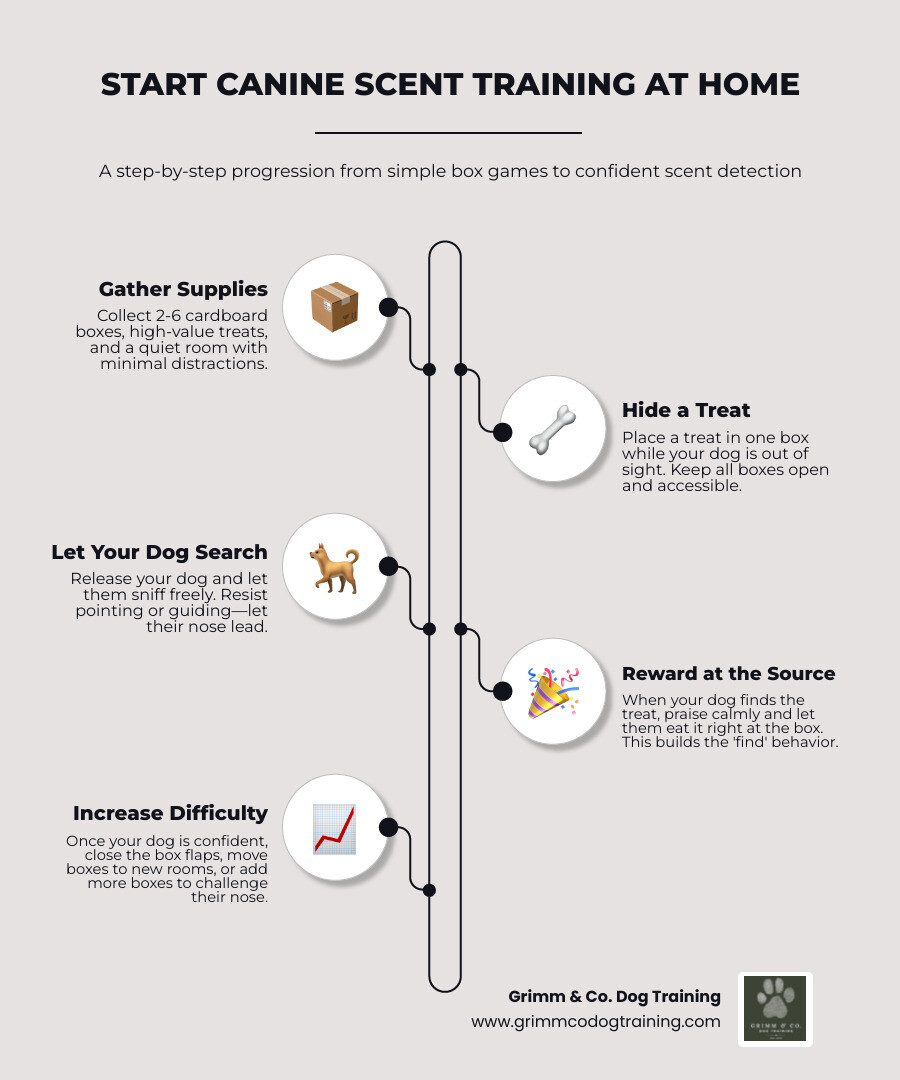
Start with a simple box search. Place a treat in one of several open cardboard boxes while your dog is out of sight. Let your dog search without pointing to the right box, then reward the find at that box. Keep the first rounds short. Once your dog searches with confidence, close the box flaps or move the boxes to a new room.
Canine scent training gives dogs a way to use their natural sniffing skills. It can be a low-impact activity for puppies, seniors, and dogs that need more mental stimulation.
I'm Bailey Milne-Davies, and I train with my dog Grimm in rat sports, including trailing and locating. That search experience shapes my approach to canine scent training: start with easy wins, then make one change at a time.
The Science and Benefits of Canine Scent Training
A dog's primary window into the world is their nose. While humans navigate daily life through sight, canines process complex environmental narratives through smell. The biological architecture supporting this sense is staggering. An average companion dog possesses around 225 million olfactory receptors in their nasal cavity, compared to roughly 5 million in humans. Scent-specialized breeds like Bloodhounds boast upwards of 300 million.
The canine brain reflects this specialization. The olfactory bulb, the region dedicated to analyzing scent profiles, is proportionately 40 times larger in dogs than in humans. Furthermore, canines possess a specialized respiratory structure featuring separate airflow pathways for breathing and sniffing. When a dog inhales, a bony subethmoidal shelf separates the air: a portion travels directly to the lungs for respiration, while the remainder is directed over sensory receptors for continuous, uninterrupted scent analysis.
Detailed veterinary research on canine olfactory capabilities confirms that sniffing activates the canine reward system, prompting the release of dopamine. This biological mechanism turns scent puzzles into a natural, self-soothing activity. Engaging in structured scent work satisfies predatory and foraging drives, effectively channeling mental energy and curbing unwanted behaviors through purposeful dog training through sports. Because the work relies entirely on cognitive processing rather than explosive physical exertion, it provides an exceptional outlet for dogs of every life stage, physical condition, and mobility level.
Olfactory Power: Why Every Dog Excels at Scent Work
Beyond the primary nasal passages, dogs utilize the vomeronasal organ, also known as Jacobson's organ, located above the roof of the mouth. This structure detects non-volatile chemical signals, such as pheromones, allowing dogs to gather social and emotional data from their environment. When combined with mobile nostrils that can sniff independently to determine the directional origin of an odor, dogs operate as sophisticated chemical detection units.
Every breed and mix possesses this foundational hardware. Whether working with a high-drive working breed or a companion terrier, scent training taps into existing biological hardwiring. It encourages independent problem-solving and fulfills natural instinctual drives without requiring formal obedience prerequisites.
Behavioral and Physical Benefits of Nose Work
For dogs living in dense urban settings like San Francisco or Daly City, the continuous sensory input from traffic, close-quarter foot traffic, and tight sidewalks can elevate baseline stress. Nose work acts as a reliable behavioral balancer. Structured scent searches encourage autonomous, focused decision-making, which noticeably reduces general anxiety and helps hyperactive dogs settle into calm focus.
For fearful or reactive rescue dogs, scent detection provides a predictable framework where they control their search pace and experience repeated, unambiguous wins. This builds environmental resilience. Because fifteen minutes of concentrated odor tracking requires substantial mental stamina, owners can thoroughly tire out high-energy dogs on foggy or rainy Bay Area afternoons without needing miles of open running space. Older dogs dealing with arthritis or limited mobility can also enjoy rich cognitive enrichment without joint strain.
Essential Gear and Target Odors for Scent Work
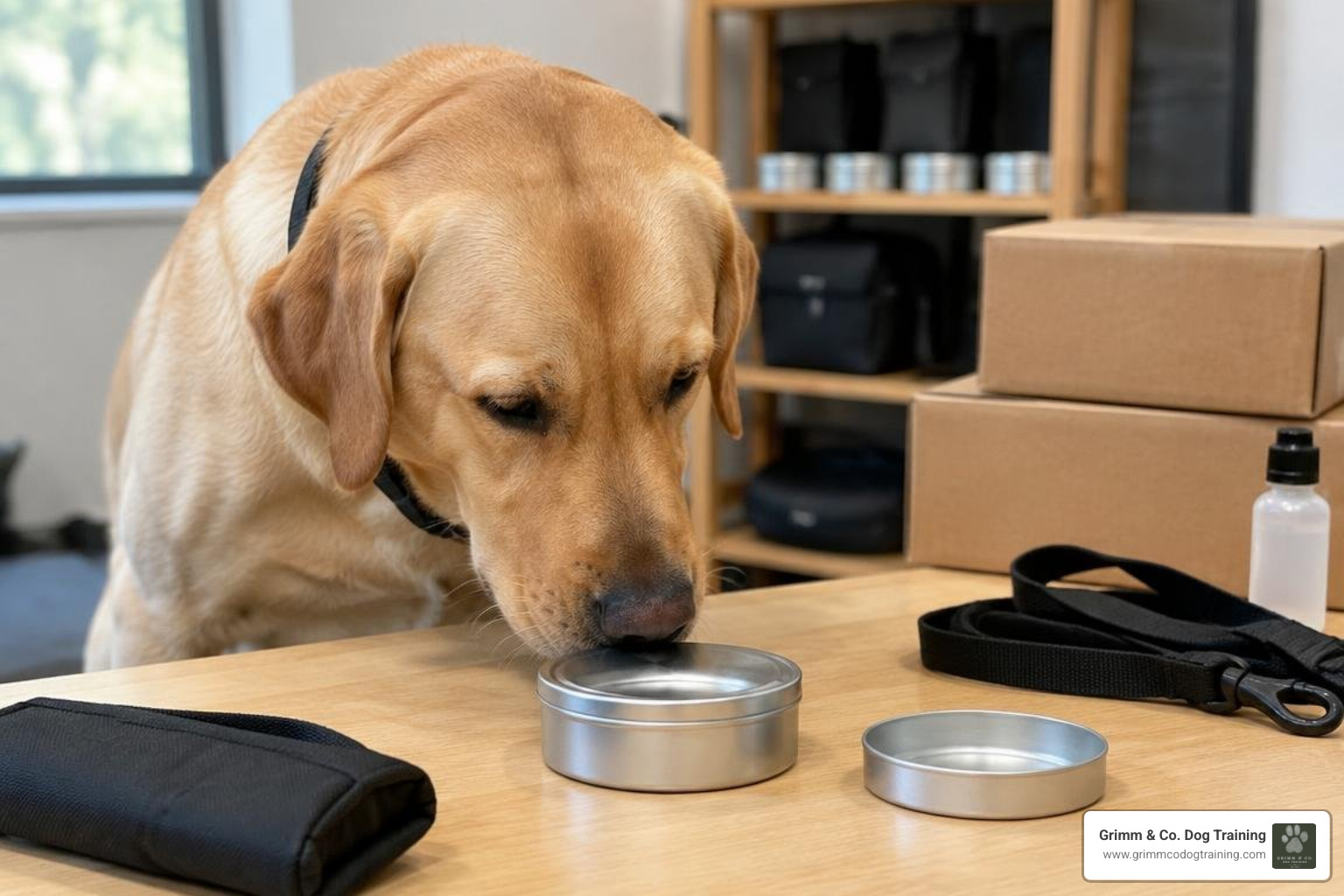
Setting up a functional canine scent training kit does not require industrial equipment. You only need a few durable, clean items to store and present odors without contaminating your training space.
Essential Supplies for Canine Scent Training at Home
To establish clear foundational routines as detailed in our guide to dog scentwork training, gather the following basic tools:
- Cardboard boxes: Six to ten clean, uniform shipping boxes with open tops.
- Target scent vessels: Small metal tins with pre-drilled aeration holes and magnetic backings.
- Airtight glass jars: Mason jars or small glass vials to store prepared scented swabs securely.
- Handling tools: Tweezers and disposable nitrile gloves to manipulate target odors without transferring human skin oils.
- High-value rewards: Soft, highly palatable treats like roast chicken, freeze-dried beef liver, or string cheese cut into pea-sized bites.
- Handling gear: A standard flat collar or comfortable search harness paired with a lightweight 6-foot leather or BioThane leash.
Target Odors: Essential Oils and Search Vessels
Competitive nose work sanctioning bodies rely on specific pure essential oils applied to cut cotton swab heads. In the American Kennel Club (AKC) Scent Work program, four primary target odors are tested across difficulty tiers:
- Birch (Betula lenta): Used in Novice trials.
- Anise (Pimpinella anisum): Introduced at the Advanced level.
- Clove (Eugenia caryophyllata): Introduced at the Excellent level.
- Cypress (Cupressus sempervirens): Introduced at the Master level.
Organizations such as the National Association of Canine Scent Work (NACSW), founded in 2006, test across Birch, Anise, and Clove.
When preparing scent vessels at home, safety and contamination control are critical. Essential oils should never be applied directly to a dog's skin, fur, or search containers. Place two drops of pure oil onto a cotton ball, place it at the bottom of a clean glass jar, and pack thirty cut cotton swab tips inside. Seal the jar for 24 hours. The vapor from the cotton ball will saturate the swabs with target odor. Always handle the swabs with tweezers and wear gloves during search setups to ensure your dog tracks the target odor profile rather than your residual skin scent.
Step-by-Step Guide to Building Scent Detection Skills
Canine scent training succeeds through clear reinforcement mechanics and systematic increases in difficulty. The core objective is teaching your dog that hunting for a distinct odor and clearly indicating its location produces high-value rewards. Follow these structured phases to build solid odor obedience while learning to read your dog's distinct change of behavior (COB).
Phase 1: The Treat Search and Box Game
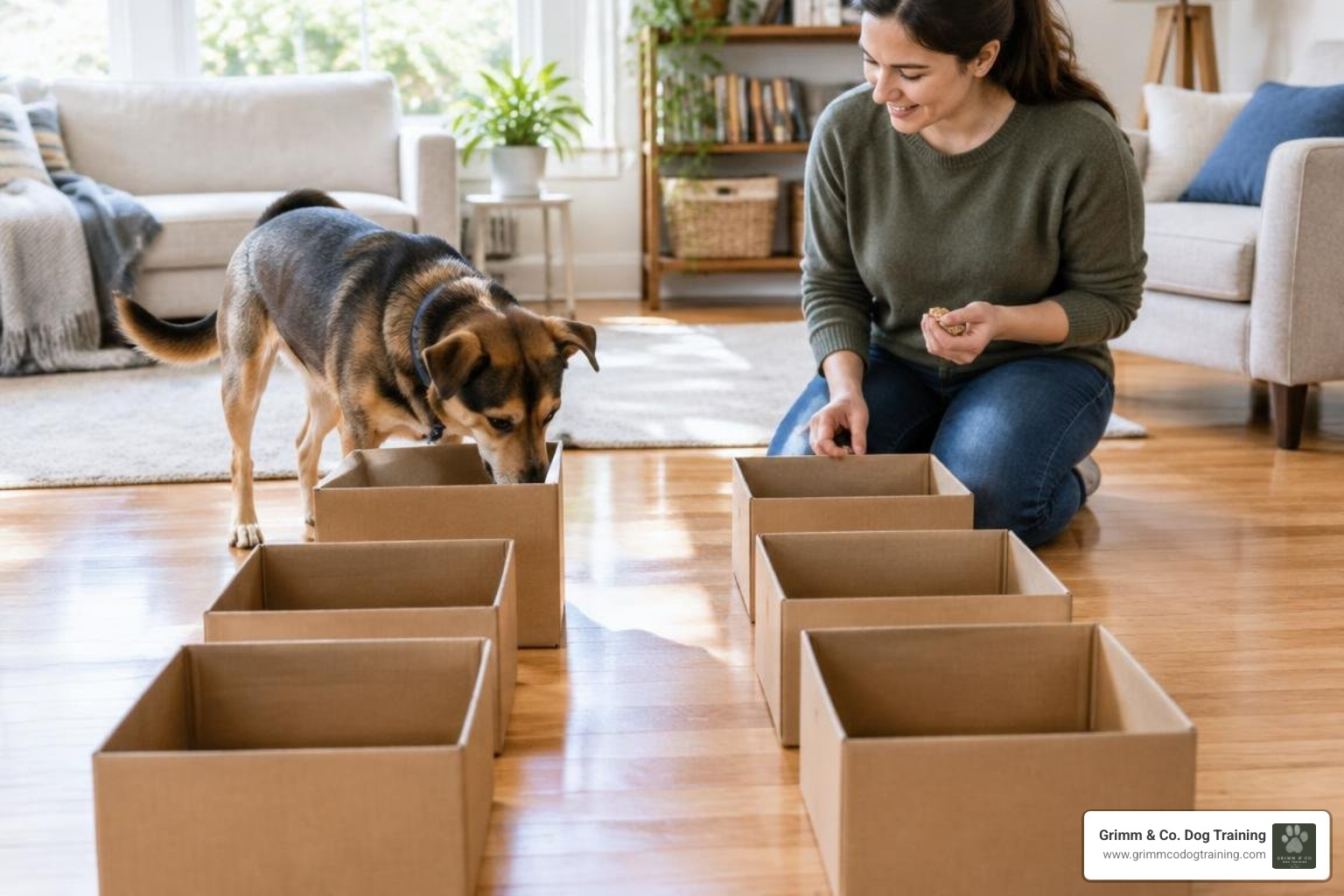
Before introducing target essential oils, you must awaken your dog's independent hunting drive. Start in a quiet, low-distraction room such as a hallway or living room.
- Set up the search area: Arrange six open cardboard boxes on the floor in two parallel rows, spaced about two feet apart.
- Bait a single box: While your dog is out of the room or secured on a leash behind you, place a high-value treat inside one open box. Leave the other five boxes empty.
- Release to search: Bring your dog to the baseline area, give your chosen release cue (such as "Find it" or "Search"), and let them approach the boxes. Keep the leash loose.
- Reward at the source: Allow your dog to investigate independently without pointing, tapping boxes, or offering verbal directions. The moment their nose dips into the baited box, offer immediate verbal praise and drop a second treat directly into the box.
- Run short sets: Repeat this exercise 4 to 6 times, changing which box holds the treat between reps. Keep each full session under 10 minutes.
Transitioning from Food to Target Odors in Canine Scent Training
Once your dog navigates the box game with focus and excitement, introduce the target odor profile using Birch. You can follow the structured frameworks detailed in this step-by-step dog scent training guide to cleanly pair odor with food.
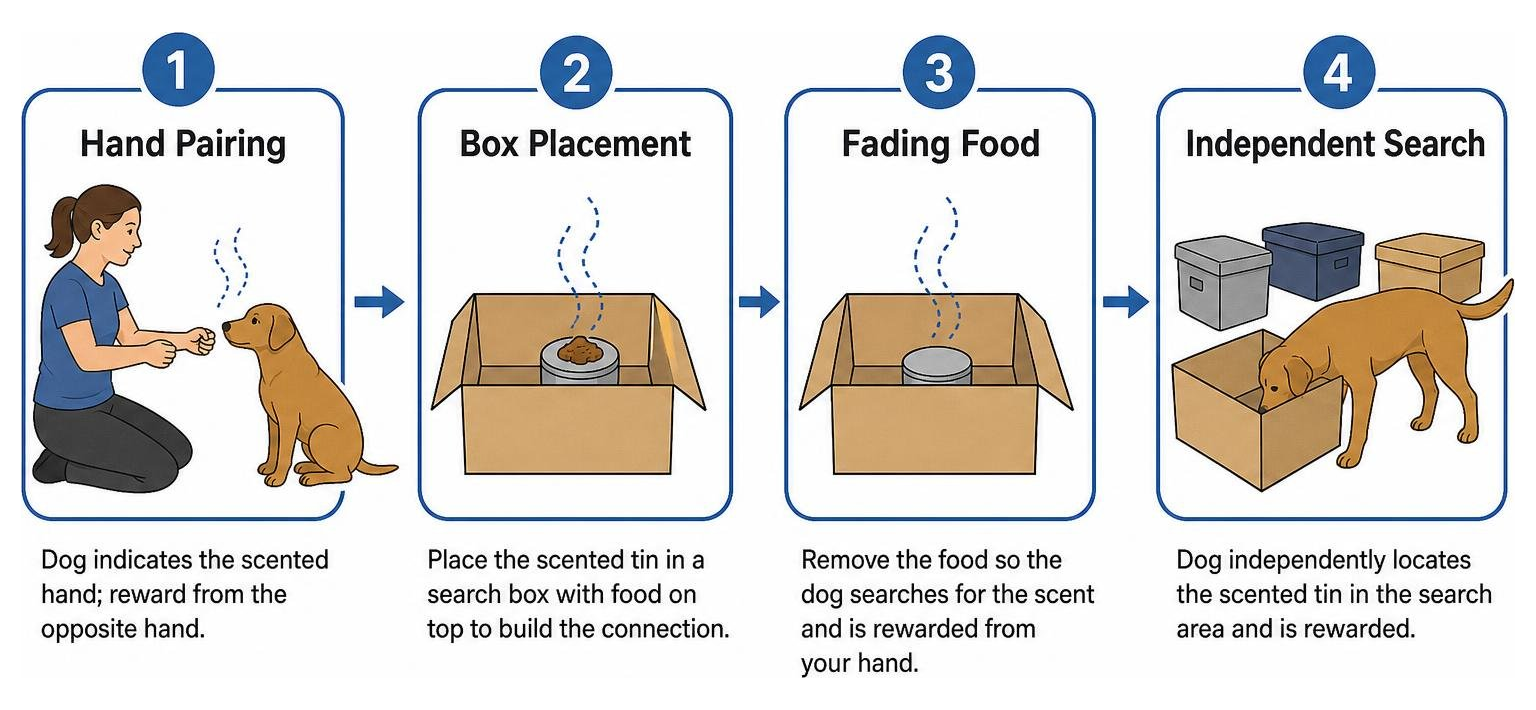
Begin with simple hand-to-hand scent pairing. Sit in front of your dog with a scented tin secured in one closed fist and a treat hidden in the other. Present both closed fists about twelve inches apart. When your dog sniffs the hand holding the scented tin, mark the action with your bridge word ("Yes" or a clicker) and immediately deliver the treat from the opposite hand directly at the scented tin.
Once your dog reliably chooses the scented hand over the empty one ten times in a row, move the scented tin into one of your cardboard search boxes. In the early stages, place a piece of food directly on top of the scented vessel inside the box. This pairs the target odor with the primary reinforcer, teaching the dog that Birch odor predicts food. Gradually remove the food from the box so the dog searches exclusively for the Birch tin, receiving their reward from your hand directly at the tin's location upon discovery.
Phase 2: Progressing to Containers and Varied Environments
Once your dog reliably locates Birch in open boxes, systematically increase the search complexity. Change only one variable at a time to keep your dog confident and successful.
Begin by folding down the top flaps of your search boxes, forcing your dog to work scent plumes escaping through seam edges. Next, replace the cardboard boxes with varied search containers, such as plastic totes, vented storage containers, luggage, or backpacks.
Move the search outside your primary training room. Work in utility rooms, garages, and sheltered outdoor spaces. Pay close attention to environmental factors:
- Threshold traps: Odors often pool near doorways or baseboards where air currents stall.
- Elevated hides: Placing a scent tin twelve to twenty-four inches above the floor challenges your dog to lift their head and track three-dimensional air currents.
- Airflow dynamics: Coastal breezes and indoor heating vents carry odor plumes away from the physical source. Your dog must learn to work backward through the scent cone to pinpoint the origin.
Phase 3: Developing Clear Final Indications
As searches become more complex, your dog must communicate the exact moment they locate the hidden scent source. This communication is known as a trained final response (TFR) or alert. Alerts generally fall into two categories:
- Passive indication: The dog sits, downs, or stands motionless with their nose frozen within an inch of the scent source.
- Active indication: The dog displays distinct physical behaviors such as persistent pawing, head snapping, or sustained focused sniffing at the source.
To build a clean passive freeze, delay your reward marker by one second when your dog's nose touches the tin. Gradually build duration up to three to five seconds of calm nose-to-source contact before delivering the reward.
Equally important is refining your handling skills. Watch for your dog's unique change of behavior (COB): a sudden head snap, an altered tail carriage, or a shift in breathing cadence when entering an odor plume. Learning to read these natural micro-cues prevents handler interference and helps you call alerts with confidence during blind searches.
Exploring Scent Sports: From Container Trials to Outdoor Mantrailing
Canine scent training can easily evolve from casual living room puzzles into competitive dog sports or field-based tracking activities.
| Feature | Casual Nose Work | AKC / NACSW Scent Trials | Outdoor Mantrailing |
|---|---|---|---|
| Primary Target | Food rewards, favorite toys, or single oils | Birch, Anise, Clove, Cypress swabs | Specific human scent article |
| Search Environment | Living rooms, backyards, garages | Containers, Interiors, Exteriors, Vehicles, Buried | Urban parks, trails, wilderness areas |
| Handling Setup | Off-leash or standard 6-foot house lead | 6-foot leash or short line under ring rules | 10 to 30-foot long line with tracking harness |
| Primary Goal | Mental enrichment and casual fun | Earning titles through standardized search trials | Finding a hidden person over distance and terrain |
Competitive Scent Work Elements and Title Progression
Competitive scent trials evaluated by organizations like the AKC or NACSW test search teams across standardized environments. In AKC Scent Work, dogs must be at least six months old to compete across four distinct difficulty levels: Novice, Advanced, Excellent, and Master. Trials test four core elements:
- Container: Searching cardboard boxes, luggage, or specialized scent vessels.
- Interior: Searching real-world indoor spaces like classrooms, warehouses, and offices.
- Exterior: Locating hides outdoors amid wind, weather, and environmental distractions.
- Buried: Pinpointing scent sources submerged under sand or water.
Top-tier competitors can also tackle the Detective Class, which features an unknown number of hides spread across a complex search area, mirroring real-world detection scenarios.
Taking Scent Work Outdoors: The Adventure of Mantrailing
While competitive nose work focuses on finding static target essential oils hidden in stationary vessels, mantrailing takes canine olfactory capabilities into open terrain. Mantrailing is the sport of training a dog to locate a specific person by following their individual scent trail across varied surfaces.
Handlers learn advanced long-line management using 15 to 30-foot lines, while dogs learn to differentiate between fresh scent trails, aged tracks, and background human odor. If you want a structured outdoor weekend hobby that takes you through Bay Area open spaces while building deep handler-dog communication, explore how the mantrailing dog sport expands upon foundational scent work mechanics.
Frequently Asked Questions About Scent Work for Dogs
How long should daily scent training sessions last?
Scent training sessions should stay relatively short, lasting between 5 and 15 minutes. Deep, rhythmic sniffing requires substantial physical exertion and cognitive focus. Watch for signs of mental fatigue, including lip licking, loss of focus, wandering, or frantic searching. Always offer fresh water between searches, as continuous sniffing dries out the nasal passages, and end each session on a successful find.
Can puppies and senior dogs participate in scent work?
Puppies as young as eight weeks old can begin basic food-search games to build confidence and focus. Scent work is equally suitable for senior dogs, including those with vision loss, reduced hearing, or joint stiffness. Because search setups can be customized to eliminate jumping, climbing, or fast turns, it offers gentle, low-impact enrichment that keeps senior minds sharp.
What should I do if my dog gets frustrated or stops searching?
If your dog leaves the search area, looks back at you repeatedly, or freezes, the puzzle is likely too difficult. Step in without reprimand, lower the search criteria, and reset the exercise. You can place the target scent in an obvious, open location, add a visual treat directly on top of the tin, or reduce room distractions. Ensure your food reward is highly motivating, and avoid crowding or pointing, which can create unnecessary handler pressure.
Developing Your Dog's Scent Capabilities
Canine scent training bridges the gap between innate natural instincts and clear handler teamwork. Starting with simple box games at home and progressing through target essential oils allows you to provide rich cognitive enrichment while developing clear non-verbal communication with your dog.
At Grimm & Co. Dog Training, we specialize in relationship-focused training designed for Bay Area dog owners. Whether you are working through foundational odor detection or looking to take your dog's nose work from the living room into open outdoor terrain, our structured programs provide clear, practical guidance. Ready to turn your dog's natural sniffing drive into an exciting outdoor activity? Join our outdoor mantrailing workshops and experience tracking in the Bay Area.