
Dog Boredom: How to Spot It and What to Do

Dog boredom happens when a dog lacks enough physical activity, mental challenge, or social contact. Common clues include chewing, digging, barking, and trouble settling. Start with a sniff-focused walk, a simple food-search game, and a few minutes of reward-based training. If the behavior starts suddenly, causes injury, or continues despite these changes, speak with your veterinarian. Boredom is only one possible cause.
I'm Bailey Milne-Davies. Training my dog, Grimm, taught me how much purposeful activity and clear guidance can help with dog boredom, and we continue to build those skills through obedience, tricks, and scent sports.
Recognizing the Common Signs and Health Risks of Dog Boredom
Dogs evolved alongside humans to perform demanding, complex jobs. From herding livestock across open pastures to retrieving game and guarding property, canine genetics are wired for purposeful activity, social engagement, and problem-solving. When an intelligent animal lives in a quiet home with limited stimulation, unmet behavioral needs inevitably surface. Boredom is not merely an inconvenience; it represents an emotional deficit that can erode your dog's welfare over time.
According to a scientific perspective on animal boredom, understimulation triggers negative affective states in animals similar to those experienced by humans. When dogs lack a constructive outlet for their cognitive and physical energy, they invent their own jobs. These self-assigned tasks rarely align with human household standards.
Common manifestations of boredom include:
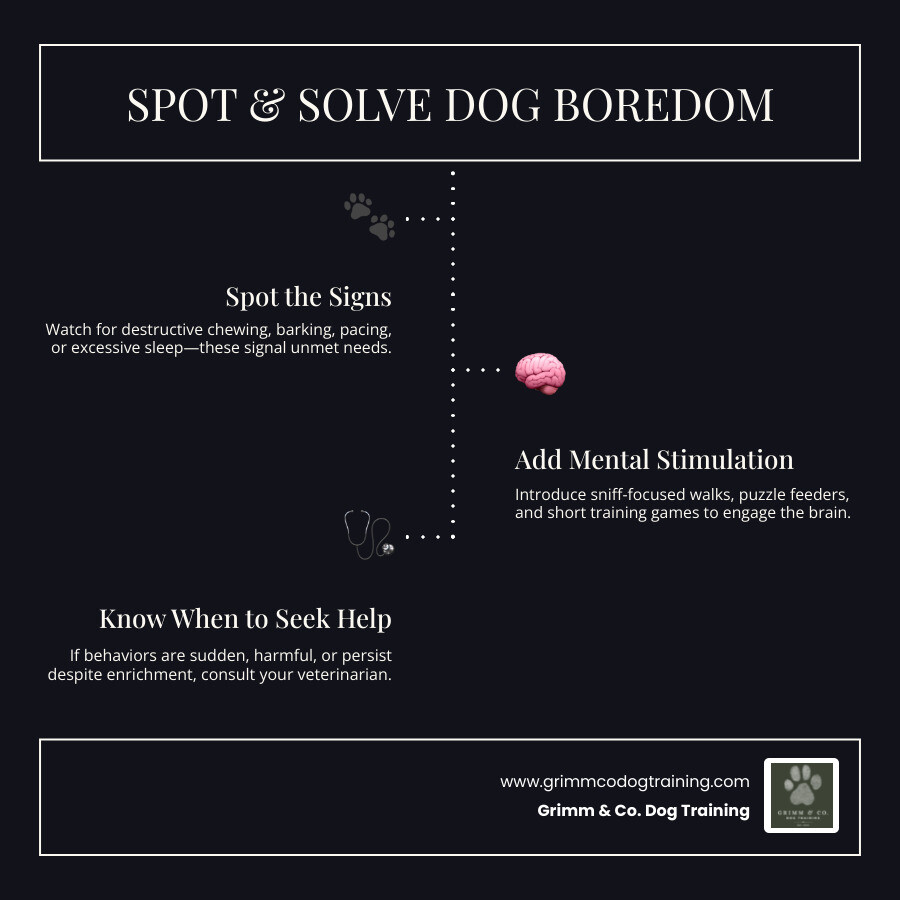
- Destructive chewing and digging: Disassembling baseboards, shredding couch cushions, or excavating flowerbeds provides instant sensory feedback and oral relief.
- Demand barking and vocalization: Persistent whining, barking at windows, or pacing often functions as an alert that your dog cannot settle their own central nervous system.
- Restlessness and over-arousal: Pacing the hallway, shadowing you constantly from room to room, or experiencing frantic evening hyperactivity (the zoomies) despite a lack of structured activity.
- Excessive sleeping and apathy: While adult dogs naturally sleep roughly 12 to 14 hours per day, a bored dog may sleep out of sheer lack of environmental options. This state can easily be misread as contentment when it is actually passive disengagement.
- Repetitive or self-directed behaviors: Tail-chasing, flank-sucking, or repetitive paw licking often begin as self-soothing mechanisms to cope with chronic understimulation.
Left unaddressed, chronic understimulation elevates baseline stress hormones, increases the likelihood of weight gain due to inactivity, and can lead to long-term behavioral deterioration.
Differentiating Dog Boredom from Separation Anxiety and Medical Issues
Before implementing an enrichment plan, it is critical to determine whether your dog is genuinely understimulated or dealing with true separation distress or a physical ailment. The chart below breaks down how these root causes typically present.
| Behavioral Indicator | Boredom / Understimulation | Separation Anxiety / Panic | Medical or Cognitive Issue |
|---|---|---|---|
| Primary Trigger | Lack of mental and physical outlets throughout the day | Physical absence or departure cues of the attachment figure | Pain, metabolic imbalance, allergies, or neurological decline |
| Timing of Behavior | Can occur while owners are home or away; builds gradually | Occurs almost immediately (often within 15–30 minutes) after owner departure | Occurs unpredictably across contexts, regardless of routine |
| Destructive Focus | Items with interesting textures (shoes, trash, remote controls) | Escape points (doorframes, window sills, crate bars) | Random items or self-directed (licking joints, biting paws) |
| Physiological Signs | Normal appetite; regular respiration; no intense panic | Hypersalivation, dilated pupils, trembling, loss of appetite | Pacing, nighttime confusion, altered gait, vomiting, fever |
| Response to Enrichment | Marked improvement when mental and physical needs are met | Minimal to no improvement; food toys are frequently ignored during panic | No improvement; behavior persists until medical cause is treated |
Building foundations for effective dog training requires establishing clear routines, teaching impulse control, and creating intentional rest periods. If a dog becomes frantic the moment you pick up your keys, enrichment alone will not solve the underlying panic. Conversely, a dog that chews the coffee table at 2:00 PM simply needs a clearer outlet for their natural drives.
When to Consult a Veterinarian for Repetitive or Destructive Behaviors
If destructive habits or repetitive patterns appear suddenly in an adult or senior dog, schedule a clinical examination before assuming a training deficit. Sudden behavioral shifts frequently stem from undiagnosed pain, musculoskeletal discomfort, dental disease, or metabolic changes.
Repetitive stereotypies (such as obsessive shadow-chasing, persistent air-snapping, or lick granulomas where the dog chews their skin raw) warrant immediate medical attention. In older dogs, night pacing and wandering often indicate Canine Cognitive Dysfunction (CCD) rather than restlessness. For convenient primary assessments, platforms providing veterinary lifestyle guidance can help determine whether a comprehensive in-person workup or a targeted behavioral plan is the best next step.
The Science of Mental Stimulation: Why Physical Exercise Alone Is Not Enough
A common misconception among dedicated dog owners is that a tired dog is purely the result of physical mileage. While cardiovascular fitness is essential, endless games of fetch or repetitive leash walks around urban neighborhood blocks often build athletic endurance without providing mental satisfaction. In fact, over-exercising a dog without challenging their brain often creates an ultra-marathoner with poor emotional regulation.

A dog's primary window into the world is olfactory. The canine brain dedicates roughly forty times more tissue to processing scent than the human brain does, housing up to 300 million olfactory receptors. Engaging a dog's nose directly taps into their instinctual foraging circuits, stimulating dopamine release and lowering elevated cortisol levels.
Research indicates that focused cognitive work activates the brain in ways that create calm, restorative fatigue. Exploring various methods to keep dogs mentally engaged demonstrates that brief, structured mental sessions can burn excess arousal more effectively than an hour of mindless running.
Breed-Specific Drives and Energy Requirements
Every breed group carries distinct working genetics that dictate how they perceive and interact with their surroundings:
- Herding Breeds (Border Collies, Australian Shepherds, Cattle Dogs): Driven by visual tracking, movement control, and rapid problem-solving. Without structured mental tasks, they frequently resort to chasing cars, herding children, or demand barking.
- Working and Guardian Breeds (German Shepherds, Rottweilers, Dobermans): Require clear environmental boundaries, handler focus, and structured impulse control to satisfy their innate protective and problem-solving drives.
- Sporting and Scent Breeds (Labradors, Golden Retrievers, Beagles, Bloodhounds): Possess intense foraging and tracking instincts. They crave opportunities to search, carry objects, and dissect complex scent pictures.
- Terriers and Earthdogs: Driven by high prey drive, digging, and physical tenacity. They require constructive predatory-motor outlets like flirt poles or designated dig pits.
Channeling these natural predispositions into structured outlets like dog sports and enrichment satisfies breed-specific instincts in a productive, controllable framework.
Balancing Daily Physical Activity, Social Play, and Rest
A balanced routine combines structured physical exercise, cognitive work, and dedicated quiet time. Adult dogs require 12 to 14 hours of restorative sleep every day. When dogs do not receive adequate downtime, they can become chronically overtired and hyper-reactive, mimicking the frantic behaviors of severe boredom.
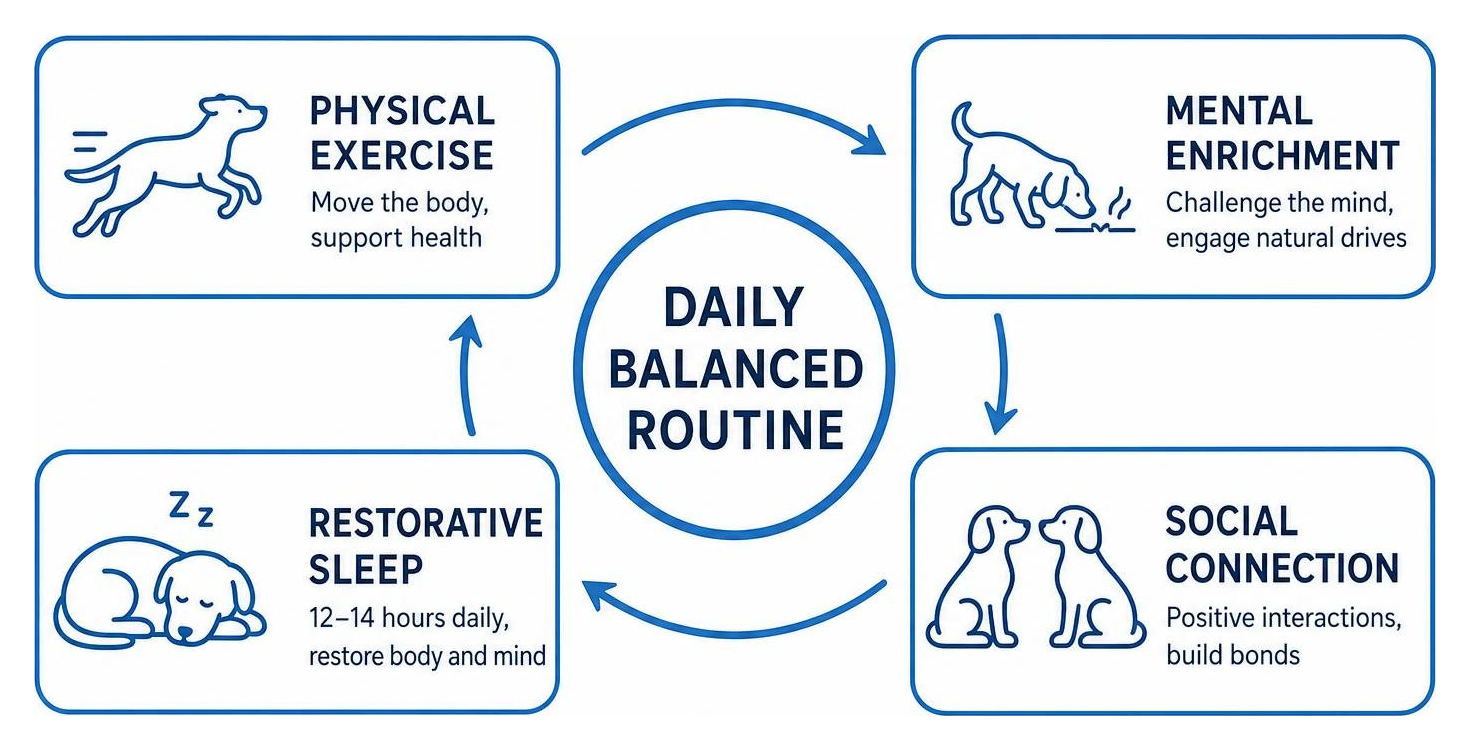
Decompression walks (allowing your dog to explore natural terrain on a long line without constant commands) provide an ideal mix of low-impact physical movement and sensory engagement. In urban environments, integrating structured pack walks offers valuable social exposure and neutral engagement around other dogs while reinforcing calm leash manners.
Practical Indoor Enrichment and Brain Games for Everyday Mental Health
Meeting your dog's cognitive needs does not require complex equipment or hours of free time. Integrating structured puzzle work into ordinary daily routines helps keep minds sharp and stress levels low.
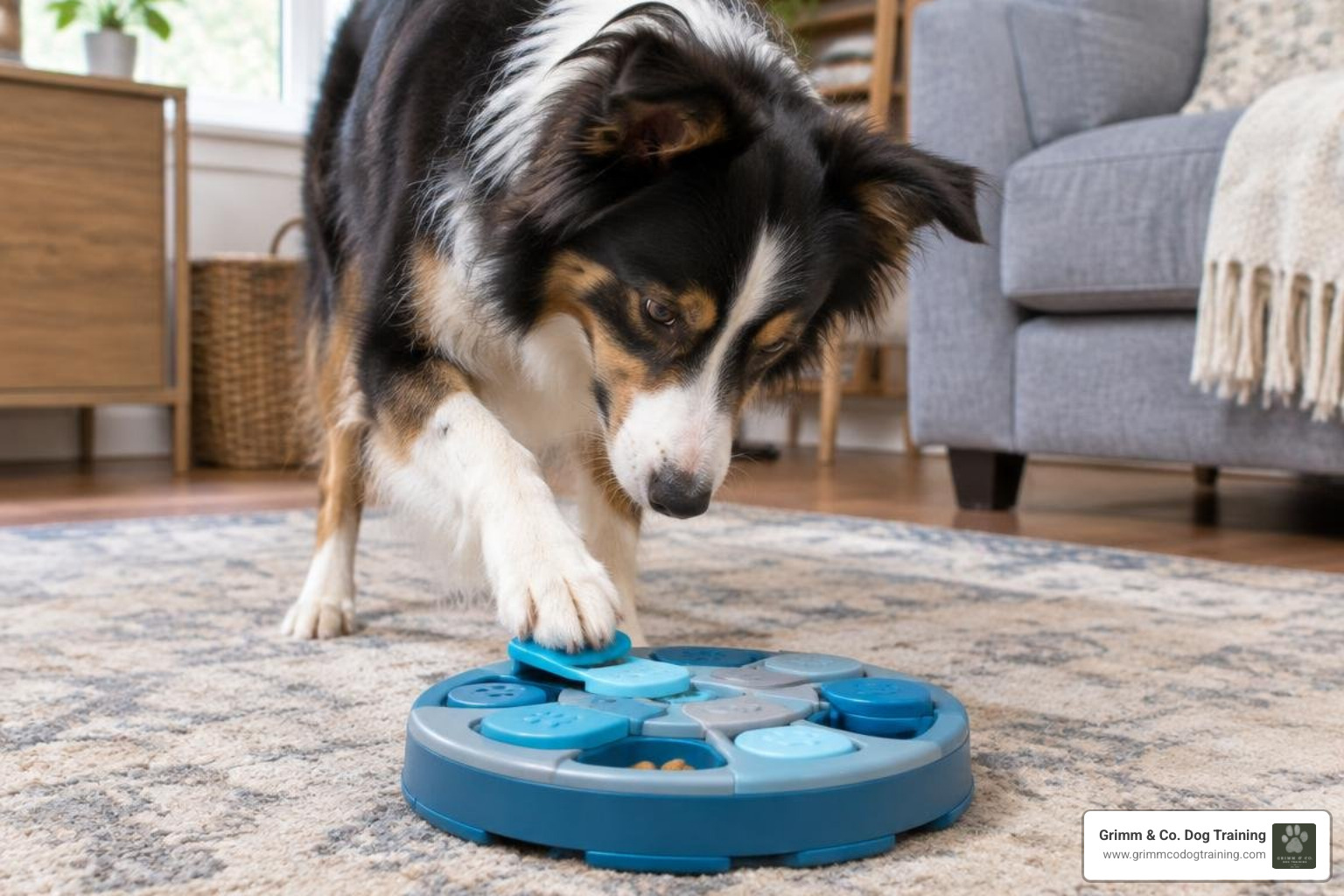
One simple lifestyle adjustment is eliminating the traditional food bowl. In the wild, canines spend the majority of their waking hours searching, scavenging, and working for sustenance. When a dog consumes their entire daily caloric intake from a stainless-steel bowl in forty-five seconds, an enormous enrichment opportunity is lost.
Reviewing curated sensory and cognitive enrichment ideas offers numerous ways to transform ordinary mealtimes into stimulating mental sessions:
- Licking and Chewing Mats: Spread wet food, pureed pumpkin, or plain Greek yogurt over textured silicone mats and freeze them. Licking releases endorphins that promote emotional self-regulation.
- Wobbler and Rolling Feeders: Require physical manipulation and strategy to release individual pieces of kibble.
- Strategic Toy Rotation: Dogs experience neophilia, meaning they are naturally drawn to novelty. Keep only three or four durable toys accessible at a time, storing the rest in a closed bin. Swapping them out every three days renews your dog's curiosity without requiring new purchases.
Cost-Effective DIY Enrichment to Eliminate Dog Boredom at Home
You can build high-value enrichment activities using everyday household items. These low-cost solutions make it easy to prevent canine understimulation on busy days:
- The Muffin Tin Shell Game: Place high-value treats into the compartments of a standard twelve-cup muffin tin, then cover each cup with a tennis ball. Your dog must use their nose to pinpoint the scent and physically remove the ball to claim the reward.
- Cardboard Destruction Boxes: Place a handful of kibble inside an empty cereal box, egg carton, or paper towel roll, tape or fold it loosely shut, and let your dog shred the container. Foraging through destruction meets natural predatory dissection drives safely.
- The Rolled Towel Burrito: Lay a bath towel flat on the floor, scatter kibble across the surface, roll the towel tightly lengthwise, and tie it into a loose single knot. Your dog must work through the layers using their paws and muzzle.
- Lawn Scatter Feeding: Toss your dog's breakfast across a grassy yard or living room rug. Searching for individual pieces turns a quick meal into fifteen minutes of concentrated scent work.
For more seasonal ideas and practical schedules, check out our guide on at-home boredom busters.
Training as Cognitive Enrichment: Tricks and Impulse Control
Training should not be viewed as an occasional chore; it is one of the most effective mental workouts you can offer your dog. Ten minutes of focused, positive problem-solving tires the canine brain far more quickly than an aimless walk around the block.
Useful cognitive training exercises include:
- Targeting and Shaping: Teach your dog to touch their nose to your palm, target a sticky note placed on a door, or step onto an elevated platform. Shaping behaviors one step at a time forces your dog to test theories and think critically.
- Object Identification: Teach your dog the individual names of three distinct toys. Reward them only when they select the specific item requested by name.
- Impulse Control Drills: Practice sit-stays, place-stays with environmental distractions, or waiting for a release cue before retrieving a thrown toy.
Joining structured relationship-building dog training classes provides the framework, feedback, and distraction levels needed to advance these skills reliably.
High-Impact Outdoor Activities and Scent Sports for Lasting Fulfillment
While living room brain games are excellent for daily maintenance, engaging high-drive dogs often requires expansive outdoor activities that challenge their genetic instincts.
Taking your dog into varied environments provides dynamic visual, tactile, and olfactory stimuli. If you want to channel your dog's natural hunting and trailing instincts into a structured discipline, exploring an introduction to dog scentwork training is one of the best investments you can make in their long-term fulfillment.
The Mental Power of Scent Work and Mantrailing
Among modern canine sports, mantrailing stands out as one of the most comprehensive outlets for canine enrichment and handler teamwork. In mantrailing, dogs use their natural scenting abilities to locate a specific person following an aged scent trail across urban pavements, parks, and varied terrain.
Unlike traditional obedience drills where the handler dictates every movement, mantrailing places the dog in the lead. The handler learns to read subtle body language cues as the dog works through changing wind currents, surface transitions, and environmental obstacles.
This level of intense olfactory analysis demands total mental concentration. A single thirty-minute trailing session provides deep cognitive fatigue, builds confidence in environmentally sensitive dogs, and strengthens the handler-dog relationship. Learning the foundations of mantrailing sport provides a structured, highly engaging hobby that gives working and companion dogs alike a clear purpose.
Frequently Asked Questions About Canine Enrichment and Stimulation
Can dog boredom cause severe depression or behavioral regression?
Yes. Chronic lack of mental and physical stimulation can lead to emotional apathy, lethargy, and behavioral decline. When animals live in low-stimulation environments without agency or choice, they often develop learned helplessness or engage in compulsive self-soothing behaviors. Introducing structured daily enrichment and routine training usually restores focus, energy, and overall confidence within a few weeks.
How much mental exercise does a dog need each day?
Most companion dogs benefit from 20 to 45 minutes of dedicated mental exercise daily, divided into short sessions. This can include two 5-minute training drills, meal delivery through puzzle toys or snuffle mats, and a 15-minute sniff-focused decompression walk. High-energy working and herding breeds often require 45 to 60 minutes of combined cognitive games, scent work, and structured impulse control to stay balanced.
What are the safest toys to leave with a dog when home alone?
Safety depends on your dog's individual chewing style, but durable, non-toxic rubber toys (such as classic Kongs or heavy-duty rubber cylinders filled with frozen wet food) are widely considered the safest options. Avoid leaving plush toys, squeakers, rope toys, rawhides, or thin plastic puzzles with an unattended dog, as these present serious choking and intestinal blockage hazards. Always supervise your dog with any new puzzle or chew several times to verify they interact with it safely before leaving them alone.
Building a Fulfilling Lifestyle for Your Dog
Preventing boredom is about more than buying new toys; it requires establishing a clear, sustainable routine that satisfies your dog's natural drives for physical movement, mental challenge, and social connection. By replacing the food bowl with foraging games, taking time for decompression sniff walks, and teaching impulse control, you provide the purposeful engagement your dog needs to thrive.
At Grimm & Co. Dog Training, we specialize in helping owners build balanced, cooperative relationships with their dogs. Whether you are addressing stubborn behavioral habits or looking for a structured outdoor sport that gives your dog a genuine job, our team is here to guide you. Discover the power of working scent sports by joining our outdoor mantrailing training and workshops.