
Can German Shepherds Be Friendly? Yes, with This Training Guide
Is Your German Shepherd Friendly? What You Need to Know First

German shepherd dog friendly training is one of the most rewarding, and most misunderstood, topics in the dog world. German Shepherds are brilliant, loyal, and deeply bonded to their people. But without the right guidance, that same drive and intelligence can show up as reactivity, overprotectiveness, or anxiety.
Here's a quick answer for what dog-friendly training with a German Shepherd actually involves:
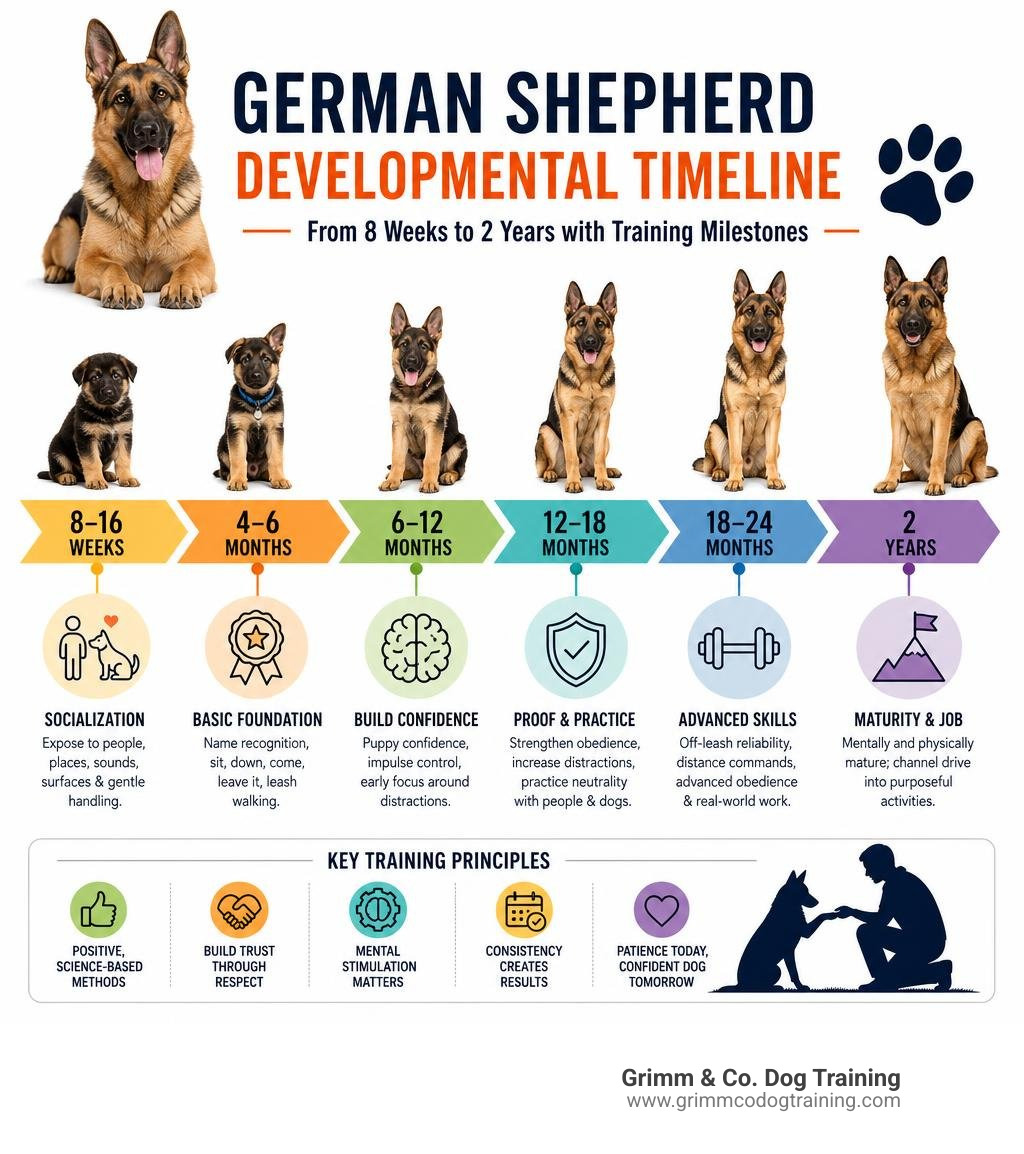
- Start early. The critical socialization window runs from 8 to 16 weeks. Expose your puppy to people, sounds, surfaces, and animals during this time.
- Build neutrality, not just friendliness. A calm, confident GSD that ignores strangers is safer than one that rushes up to everyone.
- Use positive, science-based methods. Reward-based training builds trust and produces lasting results.
- Give them a job. German Shepherds need mental stimulation, not just exercise, to stay balanced.
- Stay consistent. GSDs learn fast. That means they pick up bad habits just as quickly as good ones.
German Shepherds rank as the 3rd most intelligent dog breed, capable of learning new commands in under 5 repetitions and obeying first commands 95% of the time. Originally bred in Germany in 1899 to herd sheep, they have since become the go-to breed for military, police, search and rescue, and service work. That working heritage is exactly why they need, and thrive with, structure and clear communication.
But here's the thing most training guides skip over: intelligence without direction creates problems. An untrained German Shepherd doesn't just sit quietly and wait for you to figure it out. Their protective instincts and high energy fill the vacuum fast, often in ways owners didn't plan for.
That's what this guide is here to fix.
The Foundation of German Shepherd Dog Friendly Training
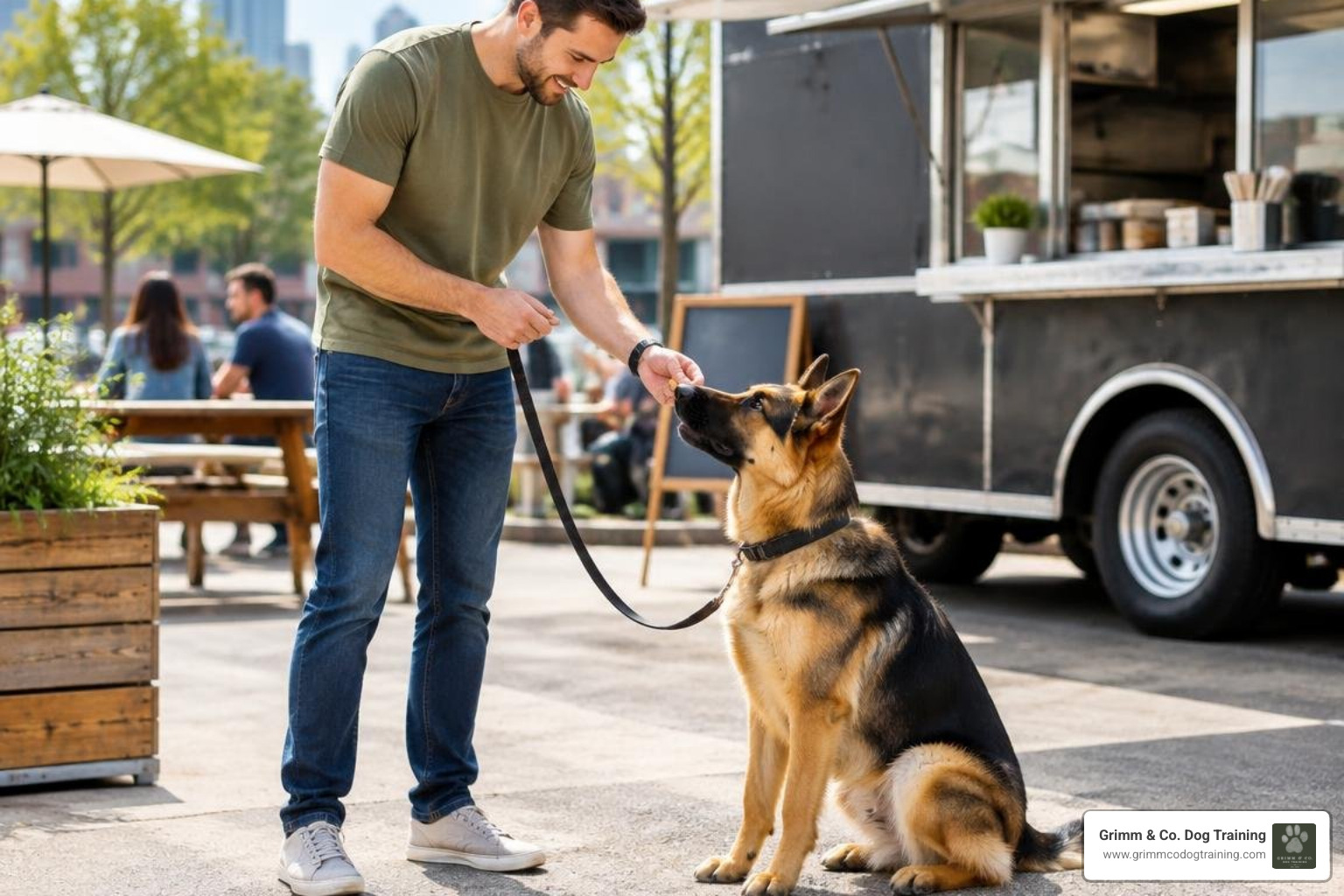
When we talk about german shepherd dog friendly training, we are talking about relationship-based training. German Shepherds are not robots that need to be programmed through harsh physical corrections. Instead, they are highly sensitive, deeply cooperative partners that want to work with you, not just for you.
Modern behavioral science shows that positive reinforcement is incredibly effective for this breed. Aversive training methods, such as heavy leash pops, alpha rolls, or constant physical punishment, can damage the trust between you and your dog. For a naturally vigilant breed like the German Shepherd, harsh corrections can actually increase stress, fear, and defensive aggression.
To build a truly reliable companion, we focus on clear communication and trust. When you teach your GSD that cooperating with you leads to great things (like high-value treats, toys, and life rewards), they become enthusiastic partners in the training process. This is the philosophy behind our Dog Training Program, where we help owners understand how to motivate their dogs without relying on fear. For a deeper dive into the basic principles of raising a cooperative canine companion, check out this How to Train a German Shepherd 101: Complete Guide.
Early Socialization and the Critical Windows
Many owners believe that socialization means letting their puppy meet every person and dog they see. In reality, forced interactions often lead to overstimulation or fear. True socialization is about helping your German Shepherd build emotional resilience and confidence.
The most critical period for a GSD puppy is the primary socialization window, which occurs between 3 and 14 weeks of age. During this brief time, the puppy's brain is highly plastic, meaning they form long-lasting emotional associations with the world around them. If they have positive, controlled exposures to various stimuli now, they are much less likely to develop fear-based reactivity later in life.
However, GSDs also go through a distinct secondary fear period, typically occurring between 6 and 14 months of age. During this adolescent phase, a previously confident puppy may suddenly become terrified of a trash can, a delivery driver, or a strange dog. Punishing fear or forcing your dog to "face their fears" during this stage will only cement the phobia. Instead, we use patience, distance, and high-value rewards to help them process the world safely.
To make sure you cover all your bases, we recommend using the Rule of 7s socialization checklist. Before your puppy reaches 14 weeks, aim to expose them to:
- 7 types of surfaces: Grass, gravel, concrete, wood, carpet, tile, and uneven surfaces (like a safe agility ramp or a wobbly board).
- 7 types of people: Children, elderly people, people wearing hats/hoodies, people carrying umbrellas, tall people, people with beards, and people using wheelchairs or strollers.
- 7 types of sounds: Doorbells, vacuum cleaners, sirens, thunder (on a speaker), traffic, children playing, and lawnmowers.
- 7 types of environments: Quiet neighborhoods, busy streets, parks, car rides, veterinary lobbies, pet-friendly stores, and your own backyard.
- 7 types of animals: Friendly adult dogs, cats (from a safe distance), livestock, birds, and other household pets.
If you are looking for structured environments to practice these exposures safely, our Dog Training Classes provide the perfect setting to build positive associations under professional guidance. For more puppy-specific socialization tips, you can also explore these 5 Proven German Shepherd Socialization Guide Tips Success.
Teaching Neutrality: The Core of German Shepherd Dog Friendly Training
If there is one concept that will completely transform how you live with your German Shepherd, it is neutrality.
A common mistake is trying to train a GSD to love everyone and everything. Because of their herding and guardian genetics, a German Shepherd's natural state is to be aloof and vigilant. Trying to force them to be a social butterfly who greets every passing stranger or dog can cause immense frustration and anxiety.
Instead, we train for neutrality. We want our dogs to look at a passing jogger, a barking dog, or a noisy skateboarder, acknowledge it, and then dismiss it as irrelevant. A neutral dog is a safe, relaxed dog.
One of the best ways to teach neutrality is the Observe and Disengage (ODE) method:
- Find a comfortable distance from a trigger (like another dog walking on a leash) where your GSD notices the trigger but remains calm (this is their "under-threshold" distance).
- The moment your dog looks at the other dog, mark the behavior immediately with a marker word like "Yes!" or a clicker.
- When your dog turns their head back to you to receive their treat, deliver a high-value reward.
- Repeat this process. Over time, your dog will learn that seeing a distraction is simply a cue to look back at you for direction.
We also use pattern games (such as Leslie McDevitt's "1-2-3 Game") to give anxious or reactive dogs a predictable structure. Knowing exactly what is going to happen next helps lower their arousal levels in busy environments.
By building this level of environmental focus, you teach your dog to look to you as their anchor. If you want to learn more about encouraging a calm and polite demeanor in public spaces, check out How To Train A German Shepherd To Be Friendly. For structured real-world practice, our Dog Obedience Training Classes are specifically designed to help dogs maintain focus around distractions.
Tailoring Your Approach: Working-Line vs. Show-Line GSDs
Not all German Shepherds are created equal. Depending on their breeding, you may find yourself living with a dog that has vastly different drives, energy levels, and training requirements. Understanding these differences is crucial for a successful training plan.

Working-line GSDs are bred for performance, drive, and high-intensity work. They are smaller, more athletic, and possess an incredibly high drive to chase, bite, and work. If you have a working-line dog, they need a serious mental workload every single day. Without a structured "job," their herding and prey drives can morph into problematic behaviors like chasing cars, nipping at heels, or guarding the home.
Show-line GSDs are bred primarily for physical conformation and tend to have a lower drive and a calmer temperament. While they still require regular exercise and mental stimulation, they are generally more forgiving for companion homes.
No matter which line your dog comes from, our Training Approach focuses on understanding your individual dog's genetics so we can channel their natural drives constructively rather than trying to suppress them.
Providing a "Job" and Mental Stimulation
A tired physical body with an under-stimulated mind is a recipe for a destructive German Shepherd. Simply taking your GSD on long, repetitive walks will not satisfy their working instincts. They need to use their brains.
Giving your dog a "job" doesn't mean they need to patrol the streets. You can easily simulate a job at home or in your local Bay Area parks:
- Scent Work and Mantrailing: German Shepherds have an extraordinary sense of smell. Teaching them to search for specific scents or trail a person's scent path is one of the most mentally exhausting and satisfying activities you can offer. It taps directly into their natural tracking instincts.
- Puzzle Toys and Sniffing Mats: Instead of feeding your dog from a standard bowl, make them work for their meals. Scatter their kibble in a grass field, use a sniffing mat, or freeze their food inside a durable rubber toy.
- Structured Play: Turn games of fetch or tug into impulse control workouts. Require your dog to sit, down, or hold a "place" command before you throw the ball or release the tug toy.
For comprehensive ideas on how to keep your dog's mind sharp, you can refer to How to Train a German Shepherd: A Complete Guide. If you are interested in exploring specialized activities like scent work or mantrailing in the San Francisco area, explore our tailored Dog Training Services to find the perfect fit for your pup.
Solving Common German Shepherd Training Challenges

Because of their size, strength, and intelligence, common behavioral issues can feel amplified with a German Shepherd. Fortunately, most of these challenges can be resolved by addressing the root emotional cause using positive, science-based methods.
- Leash Pulling: GSDs are powerful dogs that naturally walk faster than humans. If they learn that pulling on the leash gets them to the park faster, they will keep doing it. To fix this, stop moving the moment the leash goes taut. Reward them generously whenever they walk by your side on a loose leash.
- Separation Anxiety: Because they are highly bonded "Velcro" dogs, GSDs can easily become anxious when left alone. We address this by teaching independence. Practice leaving the room for short intervals, use crate training as a positive sanctuary, and avoid making a big fuss when leaving or returning home.
- Excessive Barking: GSDs are vocal alert barkers. If they bark at a noise outside, acknowledge it once ("Thank you") and redirect them to a different task, like going to their bed. Avoid yelling at your dog to stop barking, as they will simply think you are barking along with them!
- Resource Guarding: If your dog growls when you approach their food or toys, they are expressing fear that their prized possession will be taken away. Never punish a growl. It is a vital warning sign. Instead, practice "trading" them for something of equal or greater value, teaching them that your approach always means good things happen.
If you are struggling with any of these issues, our professional Services are designed to help you implement step-by-step counter-conditioning and desensitization plans in a supportive environment.
Humane Tools and Impulse Control for German Shepherd Dog Friendly Training
Building solid impulse control is the secret ingredient to a well-behaved German Shepherd. Because they have high prey and herding drives, they must learn how to control their emotional responses around exciting or frustrating triggers.
- Place Training: Teaching your dog to go to a designated mat or cot and stay there until released is incredibly valuable. It gives them a physical boundary where they can relax, whether you are making dinner, welcoming guests at the door, or enjoying an outdoor coffee in Daly City.
- Crate Training: A crate should never be used as a punishment. When introduced gradually with meals and fun puzzle toys, it becomes a safe, cozy den where your dog can rest undisturbed, preventing destructive behaviors and separation anxiety.
- Low-Level E-Collar Communication: In some advanced training contexts, a modern, high-quality e-collar can be used humanely. When used correctly by a certified professional, it does not function as a punishment. Instead, it acts as a low-level tactile cue (similar to a gentle pulse from a TENS unit) to communicate over long distances. It is always paired with positive reinforcement and should only be introduced after a dog fully understands the command.
To set up a clear, age-appropriate timeline for these skills, consult the How to Train a German Shepherd Puppy: Timeline 8 Weeks to 2 Years. For personalized coaching on using these tools humanely to build a rock-solid bond, check out our Dog Training for Dogs options.
Frequently Asked Questions about German Shepherd Training
How long does it take to train a German Shepherd to be reliable off-leash?
Achieving reliable off-leash obedience with a German Shepherd typically takes 6 to 12 months of consistent, daily practice. Because of their high prey drive, off-leash training must be approached with caution.
We always recommend starting with a 30-foot long line in open spaces. This allows you to practice recall with absolute safety, ensuring your dog never learns they can ignore your call. Only when your dog has a 100% reliable recall on the long line under heavy distractions should you transition to off-leash freedom.
That GSDs mature slowly and may not reach full behavioral maturity until 18 to 24 months of age (with males taking slightly longer). Adolescent hormonal shifts can cause temporary setbacks in training, so patience is key. Joining our Group Classes is a fantastic way to practice reliable recall and focus around other dogs in a controlled setting.
Can you train an adult German Shepherd to be friendly?
Absolutely! The canine brain remains plastic throughout life, meaning adult dogs are fully capable of unlearning old, unwanted habits and developing new, positive associations.
Training an adult GSD requires a deep understanding of their history and triggers. If your adult dog is reactive or fearful, we don't force them to make "friends" with other dogs or strangers right away. Instead, we focus on building trust with the handler and teaching neutrality from a comfortable distance. With consistency, clear boundaries, and positive reinforcement, adult German Shepherds can make incredible progress.
To learn more about our philosophy on working with dogs of all ages and backgrounds, visit our About Me page.
What should I look for in a professional German Shepherd trainer?
When choosing a trainer for your German Shepherd, look for professionals who:
- Hold credentials from reputable, science-based organizations (such as the CCPDT, IAABC, or KPA).
- Prioritize relationship-based, positive reinforcement methods over fear, intimidation, or pain.
- Understand breed-specific genetics, drives, and developmental stages.
- Focus on teaching you, the owner, how to communicate with your dog rather than just training the dog in isolation.
- Provide a supportive, community-focused environment where you and your dog can thrive long-term.
A Confident, Well-Adjusted German Shepherd Starts with a Plan
German Shepherds are magnificent, highly capable dogs that deserve a training approach as intelligent and thoughtful as they are. By focusing on german shepherd dog friendly training, built on positive reinforcement, neutrality, and a deep understanding of breed genetics, you can transform your GSD's incredible potential into a lifetime of balance, confidence, and companionship.
At Grimm & Co. Dog Training, we believe that training shouldn't feel like a chore; it should be a fun, collaborative journey that brings you closer to your dog. We are proud to build a supportive, relationship-focused community of dog lovers across Daly City, San Francisco, and the surrounding Bay Area.
Whether you want to polish your puppy's basic manners, tackle leash reactivity, or explore advanced activities like mantrailing, we are here to support you every step of the way.
Ready to unlock your dog's full potential? Explore our dedicated German Shepherd Training page today and let's get started!