
Daly City Dog Manners Training: From Chaos to Calm
Why the Peninsula Demands More Than Basic Obedience
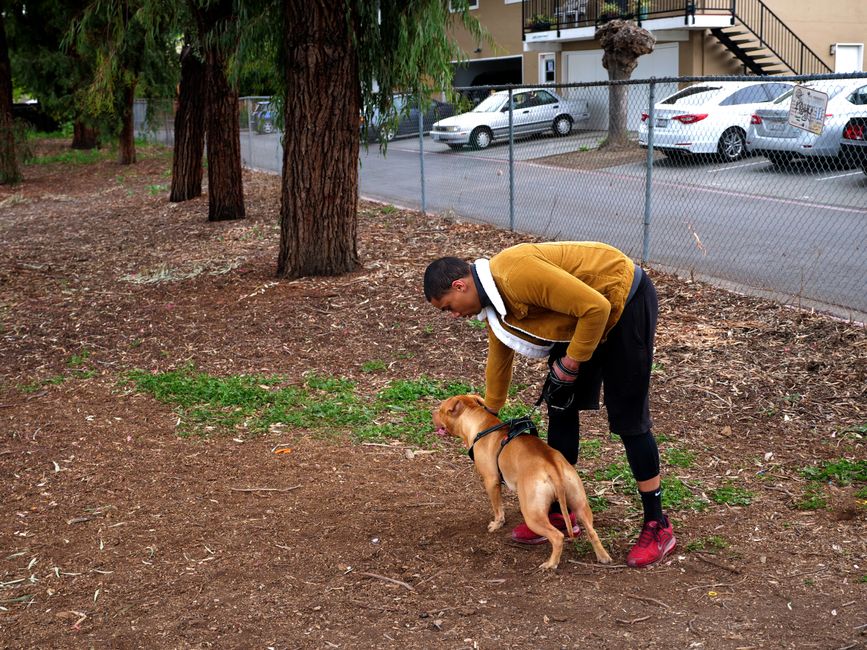
Navigating dog manners training in Daly City requires an approach tailored to the unique demands of the local environment. Rather than relying on a single format, we offer structured pathways including individual private training for specific behavioral challenges, six class group sessions for foundational manners, and structured pack walks to build leash neutrality. For dogs requiring mental stimulation or confidence building, specialized scent work and mantrailing programs provide an ideal cognitive outlet.
The Peninsula is not an easy place to own a dog. High foot traffic, dense housing, dog friendly patios, and constant urban stimulation mean your dog is processing more in a single walk than most dogs encounter in a week. A dog that holds it together in a quiet backyard can fall completely apart on Mission Street or the Daly City BART plaza, and that gap between controlled practice and real world performance is exactly where most training breaks down.
The good news is that gap is closeable. It just requires the right approach: structured, progressive, and grounded in how dogs actually learn rather than how we wish they would.
I am Bailey Milne Davies, founder of Grimm and Co. Dog Training, and my path into dog manners training in Daly City started with my own dog, Grimm, who was social, confident, and completely running the household until I got serious about building a real working relationship with him. That experience, combined with formal coursework at Tarheel Canine, competition in multiple dog sports, and years of hands on work with clients across the South Bay, shapes everything we do here.
The Physiological Failure of Traditional Obedience under Stress
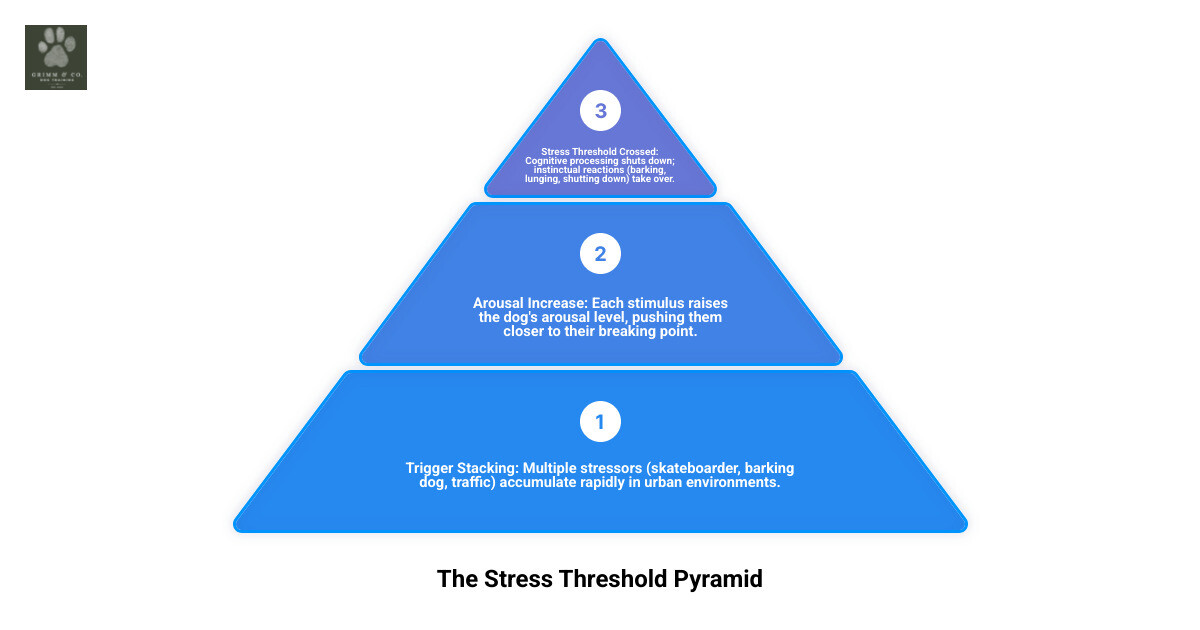
Many owners believe that if a dog understands a command in the living room, they should understand it on a crowded sidewalk near Muscle Rock Park. This assumption ignores the physiological reality of how dogs process stress and environmental stimuli. When a dog is exposed to multiple stressors in rapid succession, such as a passing skateboarder, a barking dog behind a fence, and the roar of traffic, they experience trigger stacking. Each individual stimulus raises their arousal level until they cross their stress threshold, at which point cognitive processing shuts down and instinctual behavior takes over.
Traditional training methods often focus on transactional obedience, which relies on a simple cue and reward history in low distraction environments. This approach fails to prepare the canine nervous system for the sensory overload of the Bay Area. To build reliable behaviors, we must focus on relationship based training that prioritizes focus and emotional neutrality. This foundation is explored in detail in our Dog Obedience Training Classes, where we teach handlers how to read subtle changes in their dog's body language before the threshold is breached.
A key mechanical component of this training is flat collar handling. We explicitly discourage the use of harnesses as primary obedience training tools in our foundational classes. Harnesses are designed to encourage pulling by engaging the dog's opposition reflex, making it incredibly difficult for the handler to convey clear directional feedback. By utilizing a flat collar or a properly fitted martingale, handlers can communicate with subtle hand movements rather than physical strength. This mechanical clarity is essential for helping dogs navigate complex environments without escalating their frustration.
Understanding the limits of canine learning is not just a practical skill, it is a scientific necessity. Peer reviewed literature, such as Scientific research on canine learning theory and distraction thresholds, demonstrates that high arousal states actively inhibit a dog's ability to acquire and retain new behaviors. When we force a dog to perform in an environment they are not prepared for, we are not training them, we are simply managing panic. Our goal is to systematically build the dog's tolerance so they can remain calm and responsive in any situation.
The Mechanics of Clear Communication and Structured Learning
Successful training requires a structured environment and clear entry requirements to ensure the safety and success of all participants. For our foundational programs, puppies must be between twelve weeks and twelve months of age. This critical developmental window is ideal for establishing solid habits and preventing the onset of common behavioral issues. Owners must provide digital or hard copy proof of age appropriate vaccinations before the first day of class, ensuring a clean and secure environment for young dogs whose immune systems are still developing.
To set your dog up for success, you must bring the correct tools to every session. We require a standard six foot leash made of leather or biothane, which allows for secure handling and clear communication. Retractable leashes are strictly prohibited in our classes because they maintain constant tension, which actively teaches dogs to pull against the collar. Additionally, handlers should bring highly motivating, soft treats that can be consumed quickly without distracting the dog from the task at hand. A crate sized mat or rug is also required to give your dog a designated place to rest during down times.
Our structured curriculum is designed to build reliable real world skills. You can learn more about our comprehensive class structures by visiting our page on Dog Training Classes.
A Curriculum Built for Real World Utility
Our curriculum focuses on practical life skills that translate directly to your daily routine. We begin with loose leash walking, teaching your dog to yield to leash pressure and maintain a comfortable pocket next to your side. We also emphasize a reliable recall, ensuring your dog will return to you even when tempted by environmental distractions. The stay command is taught not just as a stationary posture, but as an exercise in impulse control, requiring the dog to remain relaxed while the handler moves away or distractions pass by.
We place a heavy emphasis on the leave it command, which is essential for safety in urban environments where your dog might encounter discarded food or harmful debris. Alongside these specific behaviors, we focus on building sustained attention and focus on the handler. This curriculum is designed to prepare dogs for the Canine Good Citizen assessment, a gold standard for companion dog behavior. For a deeper look at how to build these core behaviors, read our guide on Blog/Setting Your Dog Up For Success Foundations For Effective Dog Training.
Choosing the Right Pathway for Your Household
Every household has unique needs, which is why we offer multiple training pathways. For dogs dealing with complex behavioral issues like severe reactivity, one on one private training provides a customized approach in your home environment. For owners looking to build foundational skills around controlled distractions, our group classes offer an ideal setting. We limit our group class sizes to a maximum of eight dogs to ensure every handler receives personalized coaching and individual attention from the instructor.
Our Spring 2026 schedule includes foundational manners courses hosted in accessible locations, including sessions in Half Moon Bay that are highly convenient for Daly City and South San Francisco residents. Foundational training courses are priced at $225 for a six class session, providing an affordable and highly structured pathway to success. For those interested in specialized training, our scent work programs are priced at $180 for one dog or $300 for two dogs. Explore our current schedule and enrollment options on our Group Classes page.
Generalizing Behavior from Coastal Trails to Taprooms
A common pitfall in dog training is the failure to generalize behaviors. A dog may perform a perfect sit stay in a quiet community center but completely ignore the handler when standing on a coastal trail. To prevent this, our intermediate and advanced classes transition from structured indoor spaces to off site public locations. By practicing along local trails, near public beaches, and in busy retail areas, we teach dogs that the rules of engagement do not change just because the scenery does.
These outdoor environments provide the perfect backdrop for building true neutrality. Rather than allowing dogs to greet every person and canine they see, we teach them to remain calm and focused on their handler. This is the core philosophy behind our structured pack walks. Unlike unstructured dog park play, which can escalate arousal and foster reactive behaviors, pack walks teach dogs to coexist peacefully in close proximity to one another. This structured approach is discussed in detail in our article on Blog/Why Dog Training Classes Might Be The Right Fit For You.
Our real world training is supported by partnerships with local community recreation services, allowing us to utilize diverse public spaces for our classes. Whether we are practicing loose leash walking on a path in Pacifica or working on focus exercises near a busy cafe in San Mateo, these experiences ensure your dog becomes a reliable companion in the places you actually want to go.
Scent Work as a Cognitive Release for Urban Stress
Obedience is only one piece of the puzzle. To truly resolve behavioral issues like boredom, anxiety, and mild reactivity, we must provide dogs with appropriate mental stimulation. K9 Nose Work is an activity inspired by professional detection dog training that channels a dog's natural scenting instincts into a rewarding game. We introduce dogs to specific target odors, beginning with the essential oil of birch, and teach them to search systematically across various environments.
This cognitive outlet is incredibly beneficial for building confidence in shy or environmentally sensitive dogs. Because scent work is performed individually, there is no pressure on dogs that struggle with social interactions. However, because dogs must wait their turn, we require all participating dogs to be fully comfortable resting quietly in a vehicle between search runs. This requirement ensures a calm, low stress environment for all participants. You can learn more about these specialized offerings on our Training Classes Dog page.
Scent work is not just a fun game, it has a measurable impact on canine welfare. A peer reviewed Scientific study on the cognitive benefits of scent work for dogs indicates that engaging in olfactory search tasks significantly increases a dog's optimism and overall cognitive health. By allowing dogs to use their noses to solve problems, we satisfy a deep biological need, resulting in a calmer, more satisfied companion at home.
Common Questions Regarding Peninsula Dog Training
What equipment should I bring to my first group class?
You must bring a standard six foot leash made of leather or biothane, a flat collar or martingale collar, and a large supply of high value soft treats. Do not feed your dog their dinner immediately before class, as we want them to remain highly motivated by the food rewards. You should also bring a crate sized mat or rug to help define a clear place for your dog to settle during lectures. Retractable leashes and prong collars are not permitted in our foundational group classes.
How do structured pack walks differ from standard socialization?
Standard socialization often involves unstructured play, which can teach dogs to view other canines as sources of extreme excitement or frustration. Structured pack walks focus entirely on promoting calm neutrality. Dogs walk together on leash with designated spacing, learning to ignore the presence of other dogs and focus on their handlers. This teaches them that they can coexist with other dogs without needing to interact with them.
Can scent work help a dog with mild leash reactivity?
Yes. Scent work is an excellent tool for reactive dogs because it is highly structured and does not require direct interaction with other dogs. Because dogs take turns searching individually, your dog can work without the stress of close proximity to other animals. The intense concentration required for searching helps lower overall arousal levels, providing a positive, confidence building experience that helps reduce reactive behaviors over time.
Building a Reliable Partnership on the Peninsula
Achieving a calm, well behaved dog is not about finding a quick fix or relying on a few simple tricks. It requires a commitment to building a clear, relationship based partnership with your dog, grounded in mutual respect and consistent communication. Whether you are dealing with a young puppy starting from scratch or an adult dog struggling with the distractions of the Peninsula, we are here to help you navigate the process.
At Grimm and Co. Dog Training, we partner with you to turn your training goals into reality. From our structured group classes in local Peninsula parks to private coaching sessions tailored to your household, we provide the tools and expertise you need to succeed. Take the first step toward a more peaceful life with your dog by visiting our Dog Training Services page and booking a consultation today.