
Core Principles of Calm Dog Training: Behavior vs. Emotional State
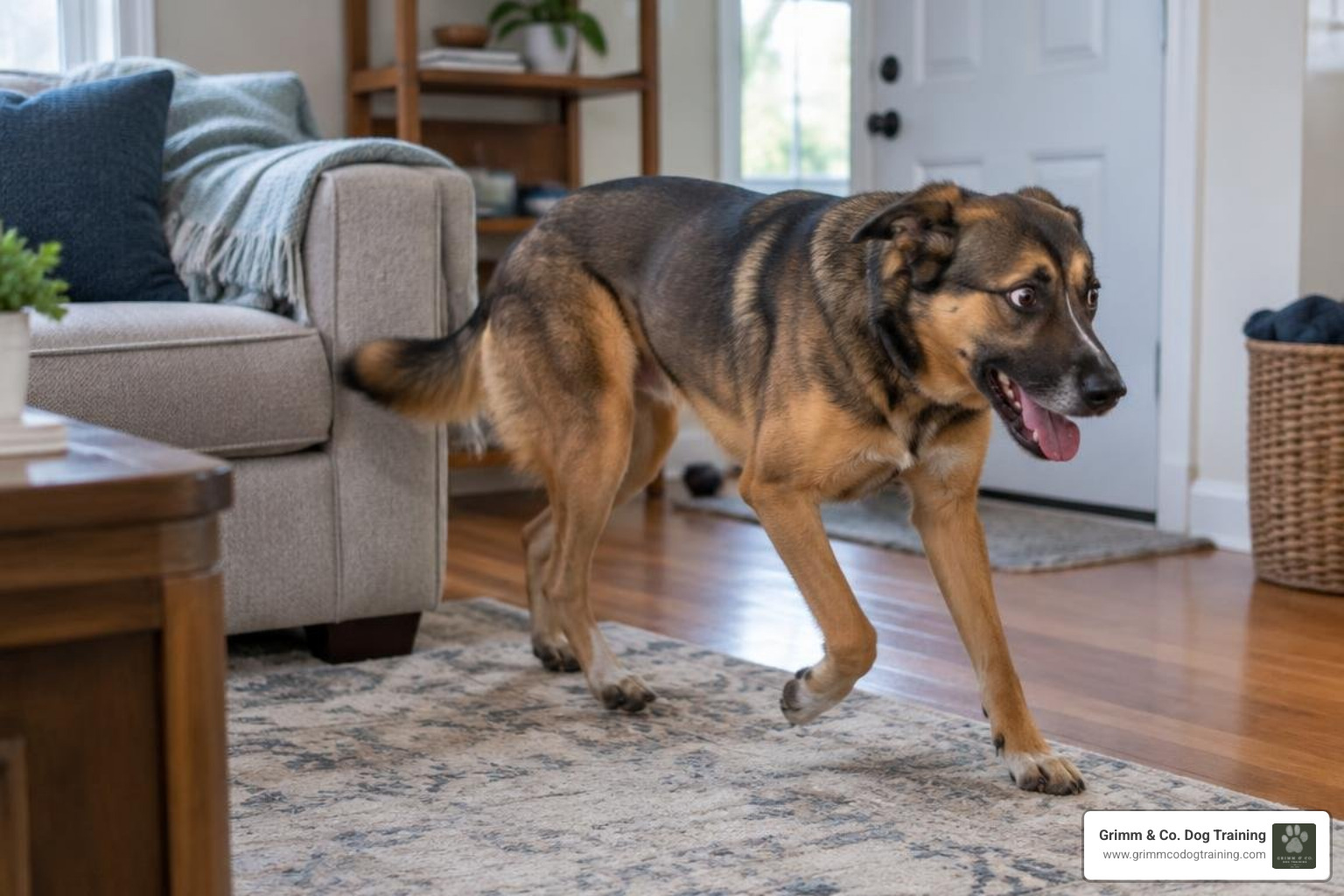
Calm dog training methods teach a dog to shift from physical compliance into genuine physiological rest. The most effective approaches include capturing spontaneous calm by quietly rewarding moments when your dog chooses to disengage, conditioning relaxation on a designated mat or bed, and pairing quiet environments with low-arousal reinforcement such as plain kibble delivered between the front paws. These methods work because they target the autonomic nervous system rather than simply holding a dog in a stationary position.
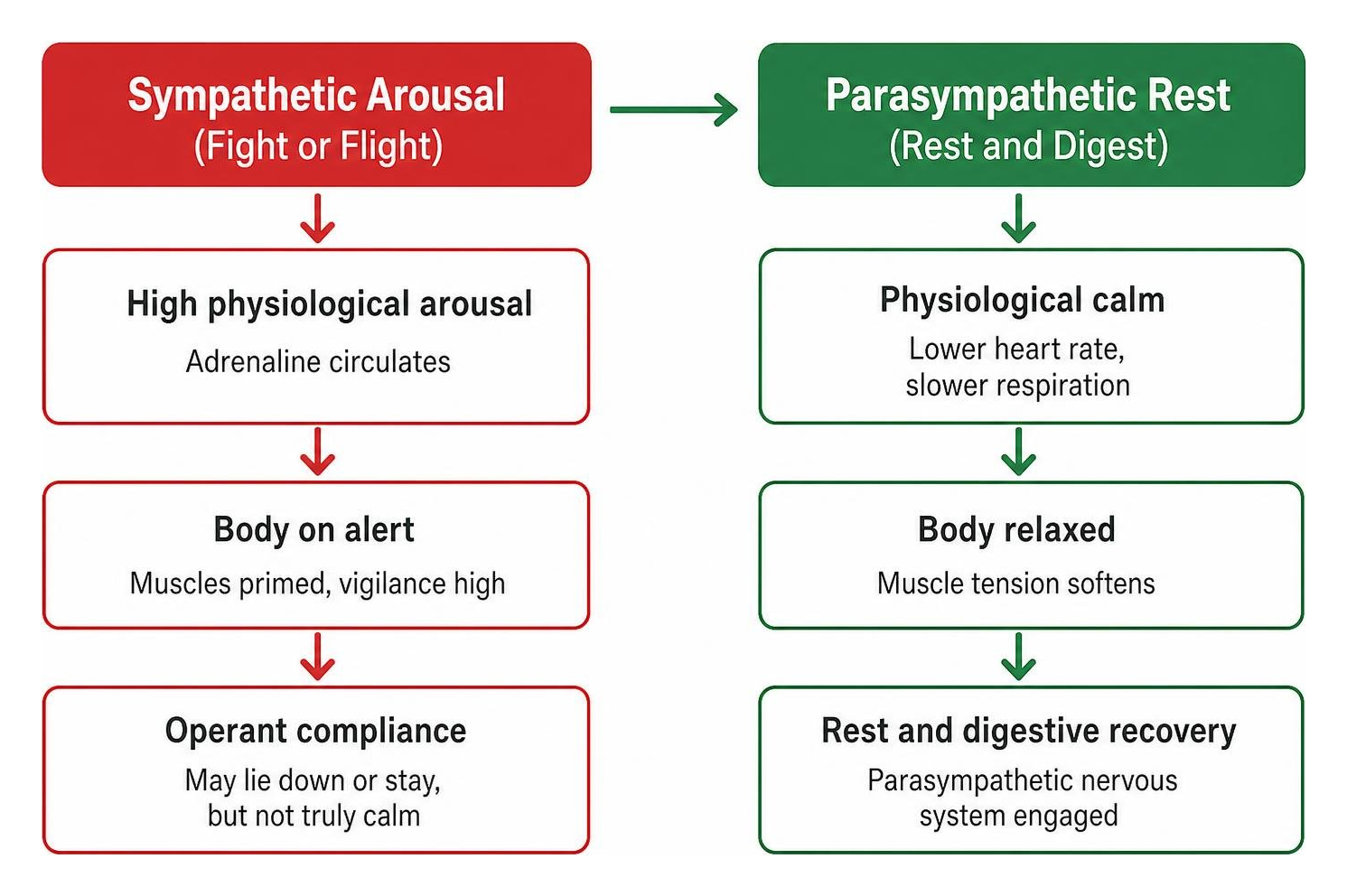
Many dog owners assume that if a dog is lying down and not moving, they are calm. In practice, there is a fundamental difference between physical immobility and true autonomic nervous system regulation. A dog held in a strict command may display operant compliance while remaining in a state of high physiological arousal. Their muscles remain primed, adrenaline continues to circulate, and their sympathetic nervous system is fully engaged.
Achieving genuine rest requires activating the parasympathetic nervous system, often referred to as the rest-and-digest system. This internal shift lowers the heart rate, slows respiration, and softens muscular tension. Operant conditioning can teach a dog where to put their body, but classical conditioning alters how they feel in that position. By pairing designated resting spaces and quiet environmental contexts with positive associations, we build conditioned emotional responses to promote relaxation. Over time, the physical location itself becomes an environmental cue that triggers physiological calm rather than anticipatory stress.
Distinguishing Positional Compliance from True Calmness
When assessing your dog, look beyond whether they are holding a position. An obedient stay can mask intense vigilance, especially in busy settings like an outdoor patio in Jack London Square or a busy sidewalk along Ocean Beach. True emotional calm presents clear physiological and behavioral markers.
| Observable Marker | Positional Compliance (Obedient Stay) | Conditioned Relaxation (True Calm) |
|---|---|---|
| Body Posture | Upright, Sphinx-like, weight distributed on paws | Shifted onto one hip, legs tucked or sprawled flat |
| Muscular Tone | Tense shoulders, stiff neck, ready to spring | Loose musculature, soft facial muscles, drooping ears |
| Respiration | Rapid, shallow breathing or rhythmic panting | Slow, deep, regular breaths; occasional deep sighs |
| Eye Focus | Darting eyes, wide pupils, hyper-vigilant scanning | Soft blink, steady or resting gaze, normal pupil size |
| Tail & Ears | Stiff or twitching tail, alert/pinned ears | Neutral tail resting flat, relaxed base of ears |
Teaching a dog to hold a position is a helpful obedience tool, but relying solely on commands to manage hyper-arousal often creates internal conflict. When you condition the underlying emotional state, the relaxed posture follows naturally without needing constant verbal reminders.
Capturing Calm: Rewarding Spontaneous Rest
Capturing calm is one of the most effective ways to teach emotional self-regulation. Instead of asking for a behavior, you simply watch for moments when your dog voluntarily chooses to disengage, lie down, or soften their posture, and you quietly reinforce that choice.
Passive reinforcement works best when treat delivery does not interrupt the calm state. If you excitedly praise your dog or produce high-value food that makes them jump up, you inadvertently spike their arousal. Instead, use low-to-medium-value treats, such as a piece of standard kibble. Deliver the food smoothly and silently between their front paws without making prolonged direct eye contact or using an enthusiastic verbal marker. If your dog raises their head, wait until they settle back down before delivering another piece. By treating the absence of excitement as a rewarding state, your dog learns that quiet disengagement is a functional, satisfying behavior in your household.
Why Physical Exercise Alone Fails to Create a Calm Dog
A common piece of dog training advice is that a tired dog is a good dog. While physical movement is vital for canine health, relying exclusively on physical exhaustion to produce calm behavior often backfires. When an energetic dog is exercised for hours each day across the hills of San Francisco or the trails at Mussel Rock Park, their cardiovascular stamina increases rapidly. Within weeks, the sixty-minute run that once left them tired barely takes the edge off their energy.
Intense physical exertion, such as repetitive games of fetch or high-impact chasing, triggers sharp adrenaline and cortisol spikes. Without intentional cool-down routines, dogs remain in a state of hyper-arousal long after returning indoors. They may pace through the hallway, pant continuously, or react to minor outside noises because their nervous system is still processing that neurochemical surge.
Building sustainable calm requires balancing physical activity with structured decompression and mental exertion. Establishing solid foundations for setting dogs up for calm success ensures your dog learns how to drop their energy after excitement, rather than depending on sheer physical fatigue to power down.
Foundational Protocols for Teaching Settle, Place, and the Off-Switch
Teaching an off-switch involves giving your dog a designated physical target, such as a raised bed, blanket, or mat, where calm behavior is systematically developed. Mat training acts as a behavioral and emotional anchor. Once established at home in a quiet room, this portable mat can be brought to coffee shops, veterinary waiting rooms, or unfamiliar environments to give your dog an instant, familiar reference point for relaxation.
To set up a reliable routine, follow these step-by-step settle and relax cue instructions:
- Introduce the Target: Place the mat on the floor near you. The moment your dog looks at or steps onto it, quietly drop a piece of food between their paws.
- Shape the Down Position: Encourage your dog to lie down on the mat using a gentle lure or by waiting for them to offer the position naturally. Reinforce immediately upon their elbows touching the fabric.
- Build Micro-Durations: Rather than tossing treats, slide them directly onto the mat between their paws every three to five seconds. Keep your body language relaxed and still.
- Reinforce Weight Shifts: When your dog rolls their weight off their center and onto one hip, deliver a reward. This physical posture helps trigger deeper muscular relaxation.
- Add a Release Cue: Release your dog with a clear, calm word such as "Free" or "Break," inviting them off the mat so they learn that staying on the mat is an active choice with a clear start and finish.
Integrating the Karen Overall Relaxation Protocol into Calm Dog Training
For dogs that struggle with environmental distractions or movement triggers, following a structured clinical approach can provide clear milestones. The Karen Overall Relaxation Protocol is a fifteen-day desensitization framework designed to teach dogs to remain settled on a mat while their handler introduces progressively challenging movements and sounds.
Rather than testing a dog's willpower, this clinical protocol for teaching relaxation keeps the dog sub-threshold. Over the fifteen progressive sessions, the handler practices tasks such as:
- Taking steps backward and returning to reward the settled dog.
- Walking around the mat in full circles.
- Clapping hands, knocking on walls, or opening nearby doors.
- Disappearing briefly around a corner before returning with a quiet reward.
If the dog breaks position or shows stiff body language, the handler steps back to an easier task. The goal is to build emotional resilience by demonstrating that environmental commotion does not require the dog to jump up or intervene.
Teaching the Distinction Between Settle and Full Relax
Within structured relaxation training, there is a practical difference between a standard settle and a full relax.
A settle refers to a dog resting comfortably on one hip with their paws loosely tucked. They are settled and calm, but remain observant of their environment. This posture works well when you are working at your desk, visiting an outdoor cafe in Burlingame, or hosting guests for dinner.
A full relax asks for complete physical surrender. In this behavior, the dog rolls completely onto their side into lateral recumbency or rests their chin flat on the floor or paws. You can shape this by holding a low-value treat close to the dog's nose while they are in a down-stay, gently guiding their nose toward their shoulder until their weight rolls fully onto their side. Reinforce the moment their neck muscles soften and their head rests on the floor. Conditioning this posture helps ease transition periods for high-arousal dogs, encouraging genuine restorative rest.
Implementing Structured Downtime Routines

Many working and companion breeds do not naturally fall asleep when they are overtired; like overstimulated toddlers, they need clear boundaries and calming routines. Structured downtime provides a predictable rhythm that signals to your dog that the active part of their day is complete.
After a walk or training session, transition your dog directly into a quiet rest station. You can pair this transition with a long-lasting lick mat, a frozen Kong, or an appropriate chew item placed directly on their bed or inside their crate. Licking and chewing release endorphins and lower heart rates, acting as a natural bridge between intense physical arousal and sleep. Establishing predictable daily rest blocks ensures your dog receives the sixteen to eighteen hours of sleep adult dogs require for balanced neurological function.
The Role of Mental Enrichment and Olfactory Work in Canine Relaxation
Physical exercise works the body, but cognitive enrichment works the mind, encouraging natural dopamine regulation and mental fatigue. Foraging and scent processing require intense concentration, engaging parts of the brain that promote self-regulation and emotional stability.
Simple enrichment protocols can be built into daily feeding routines:
- Snuffle Mats and Scatter Feeding: Scattering meals across a snuffle mat or across a clean patch of grass turns mealtime into a twenty-minute olfactory search, lowering indoor arousal.
- Complex Food Puzzles: Interactive puzzle toys that require sliding, lifting, and turning encourage problem-solving and build frustration tolerance.
- Structured Olfactory Outings: Allowing long-line sniffing walks through low-distraction park settings allows dogs to decompress through scent exploration.
Structured scent activities take this natural drive even further. Channeling a dog's focus into a clear, cooperative task transforms frantic energy into calm, grounded concentration. This approach forms the foundation of our relationship-based training philosophy, helping dogs find confidence and focus through structured teamwork.
Managing Roadblocks and Identifying Professional Intervention Points
Implementing relaxation routines requires handler self-awareness. Dogs are sensitive to human body language, vocal pitch, and physical tension. If you deliver commands in a sharp tone, lean over your dog with tense shoulders, or rush through treat delivery, your dog will match that elevated energy. Maintain slow, deep breathing, speak in soft tones, and keep your physical movements deliberate and relaxed.
Troubleshooting Challenges in Calm Dog Training
Common challenges often arise during the initial stages of calm dog training. Use these practical adjustments to keep your sessions productive:
- Dog Gets Over-Excited by Treats: High-value foods like roast chicken or hot dogs can create frantic anticipation. Switch to standard dry kibble or low-arousal biscuits. Place the food smoothly on the floor rather than offering it from an open hand above their nose.
- Dog Breaks Position Frequently: If your dog repeatedly stands up from the mat, your duration intervals are likely too long or the environment is too distracting. Return to rewarding every two to three seconds in a quiet hallway before building duration or moving to a living room.
- Frantic Mat Striking: If your dog runs to the mat and slams down while vibrating with energy, avoid immediate rewards. Wait several seconds until their breathing slows and their muscles soften before delivering food.
For additional handling mechanics and systematic bodywork routines, review the VCA handling and calm exercises guide to support relaxation during training sessions.
Identifying When Inability to Settle Signals Medical or Behavioral Needs
Not every struggle with calm behavior can be solved through home training protocols alone. If a dog is physically incapable of resting even in a dark, quiet room with all physical and mental needs met, an underlying medical issue may be present.
Orthopedic discomfort, hip dysplasia, undiagnosed joint pain, and chronic gastrointestinal distress frequently manifest as restlessness. Dogs suffering from low-grade physical pain often shift positions constantly, pace on hard floors, or resist lying down on flat surfaces. A thorough veterinary examination is an essential first step when severe restlessness appears suddenly or resists consistent training.
If medical issues are ruled out and chronic anxiety, severe panic, or sound sensitivities prevent your dog from lowering their arousal threshold, partnering with a professional behavior consultant or veterinary behaviorist is crucial. In these cases, customized private dog training support can pinpoint environmental triggers, refine handler mechanics, and build a tailored behavior modification plan.
Frequently Asked Questions about Calm Dog Training
Can high-drive working breeds learn calm dog training effectively?
Yes. High-drive working and herding breeds, such as Border Collies, Australian Shepherds, and Belgian Malinois, are genetically selected for intense focus, stamina, and quick reactions. However, these same traits make them exceptionally responsive to structured pattern training. When given clear off-switch routines alongside species-appropriate outlets for their natural drives, working dogs pick up mat cues and captured calm protocols quickly.
How long does it take for a dog to develop a reliable settle cue?
Timeline expectations depend on the dog's age, baseline arousal levels, and household consistency. Most dogs can learn the basic mechanics of stepping onto a mat and lying down within one to two weeks of daily five-minute sessions. Generalizing that settle cue so the dog stays relaxed around real-world distractions, such as visiting guests or busy outdoor spaces, typically requires six to twelve weeks of systematic, gradual practice.
What treat types prevent overstimulation during relaxation exercises?
During relaxation training, avoid high-value, high-odor treats like freeze-dried liver, cheese, or fresh meats, as these can trigger hyper-vigilance and drooling. Plain dry kibble, single-ingredient crunchy treats, or small pieces of dehydrated vegetables work well. If your dog remains overly focused on the presence of food, delivering rewards via a lickable tube or smearing a tiny dab of wet food onto the mat surface can keep their energy low and grounded.
Building Lasting Harmony with Grimm & Co. Dog Training
Achieving a calm home is not about suppressing your dog's natural personality or spending hours trying to wear them out physically. It is about establishing clear communication, meeting their biological and cognitive needs, and systematically teaching them how to downshift their own arousal. Calmness is a life skill that flourishes through quiet daily consistency, thoughtful environmental management, and strong mutual trust.
At Grimm & Co. Dog Training, we work with owners across San Francisco, Daly City, and the wider Bay Area to build balanced, fulfilling partnerships through personalized private lessons, structured group classes, pack walks, and specialized tracking sports. If you are looking for an engaging weekend activity that harnesses your dog's natural instincts while developing deep mental focus and calm outdoor neutrality, explore our Grimm & Co. Dog Training relationship-centered programs and see how mantrailing can transform your dog's daily life.