
How to Choose the Best At-Home Dog Trainer for Your Pup
In-Home Coaching vs. Facility Training: Why Dog Trainers That Come to Your Home Excel
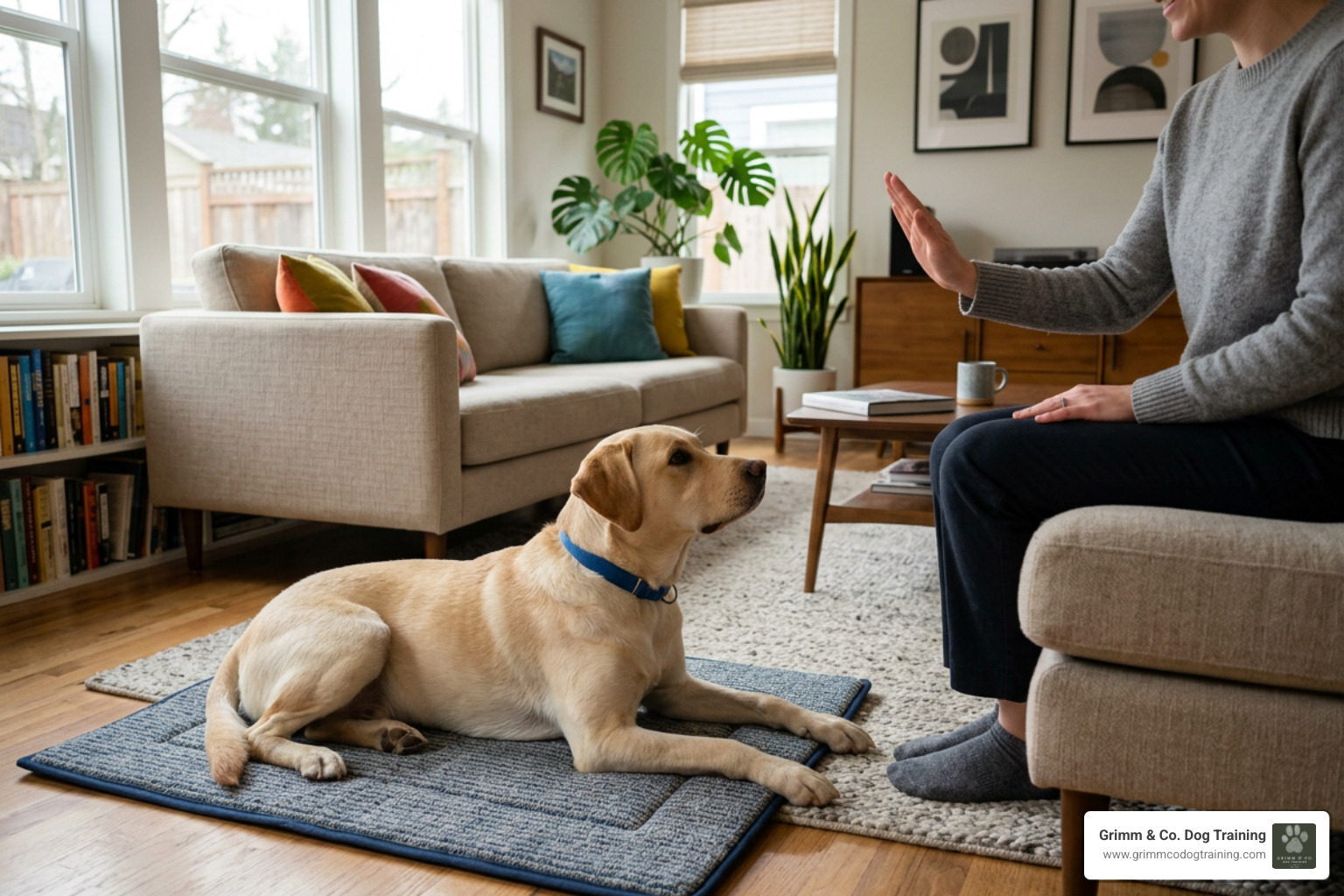
To choose the best at-home dog trainer for your pup, look for a professional with verified formal credentials, proficiency across balanced training tools, clear household safety protocols, and a program centered on hands-on handler coaching. The right trainer should assess your dog within your daily domestic routine and provide structured, step-by-step homework between sessions.
When addressing unwanted behaviors or developing early obedience, the training environment plays a major role in your dog's progress. While facility settings offer controlled floors and specialized equipment, they cannot replicate the specific layout of a San Francisco flat, the narrow stairwells of a Marina apartment, or the exact doorbell sound that sets off a barking frenzy.
Dogs are contextual learners. A behavior learned in an unfamiliar, sterile training hall does not automatically transfer to the living room carpet or the front porch. When you hire dog trainers that come to your home, the coaching happens inside the precise micro-environment where habits are formed and maintained.
| Feature | In-Home Private Coaching | Facility-Based Private Coaching | Group Training Classes |
|---|---|---|---|
| Primary Location | Your residence and neighborhood | Trainer facility or training hall | Dedicated indoor/outdoor facility |
| Distraction Level | Real-world, familiar household stimuli | Controlled, artificial stimuli | High peer distractions (other dogs/people) |
| Owner Involvement | 100% active participation and coaching | 100% active participation | 100% active participation |
| Best For | Household manners, doorway etiquette, fear | General mechanics, controlled proofing | Basic obedience around neutral dogs |
| Customization | Fully personalized to household routine | Standardized curriculum tailored to handler | Fixed group syllabus |
While structured dog training classes are exceptional for proofing commands around neutral peers, in-home lessons target the domestic routines that govern your daily life.
Environmental Context and Real-World Distraction Proofing
A dog's domestic world is filled with specific triggers. Doorbell reactivity, counter-surfing during dinner prep, rushing through garage doors, and pacing across hardwood floors are challenges rooted in the home environment.
In a private home session, a trainer assesses how your physical space influences your dog's choices. We observe the visual triggers visible through low-slung bay windows, the narrow hallway bottlenecks that create tension, and the family patterns that accidentally reward pushy behavior.
Distraction proofing then expands outward. Working on sidewalk manners directly outside your doorstep in Daly City or navigating neighborhood distractions near Muscle Rock Park teaches your dog to offer engagement where it matters most, rather than only in an isolated training room.
The Owner's Direct Role in Behavioral Generalization
Private in-home training is primarily handler education. A professional trainer can often step into a home and achieve compliance from a dog within minutes due to clear body language, precise timing, and consistent mechanics. However, true behavioral generalization requires that the dog responds reliably to you, your partner, and your family members.
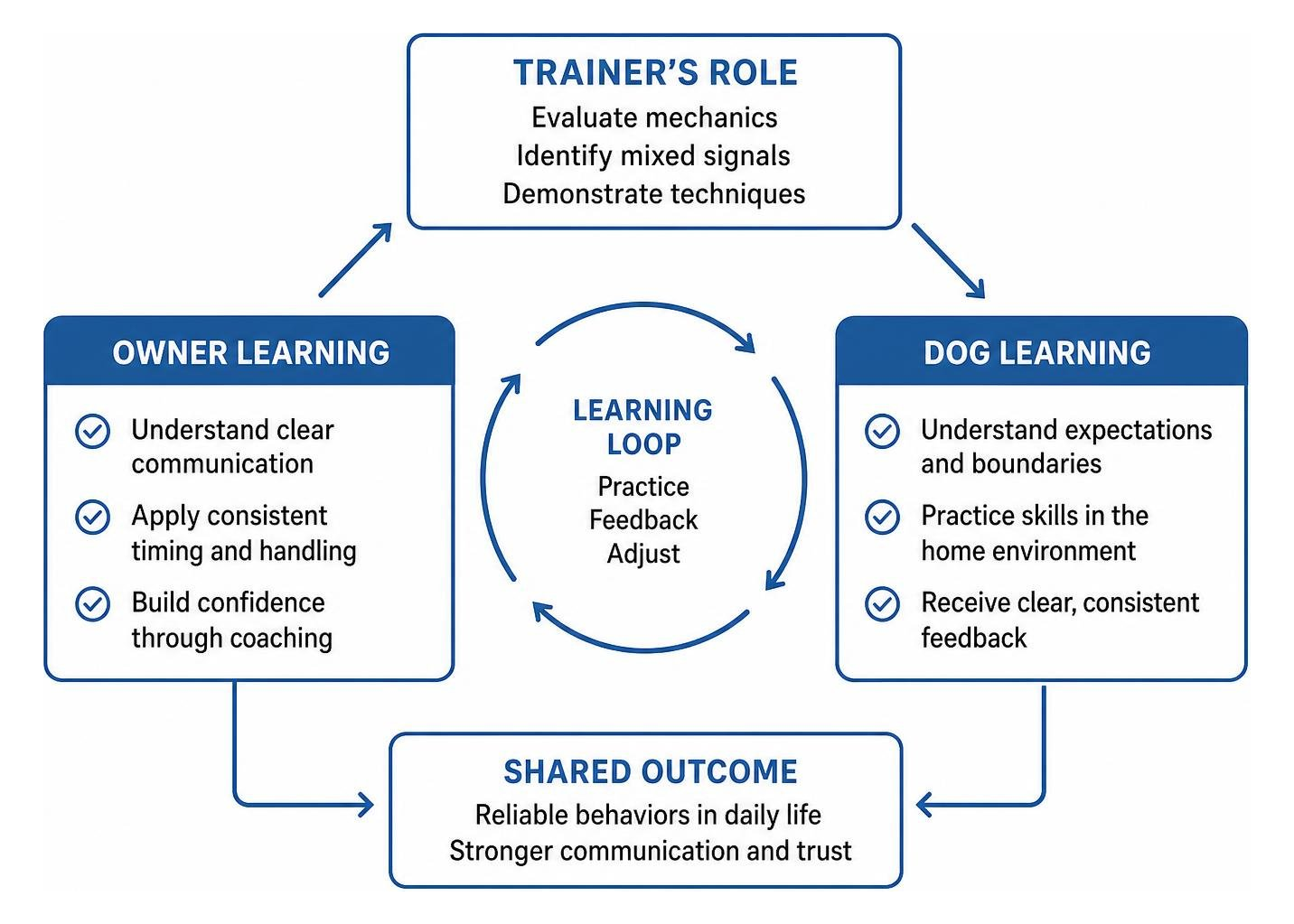
During home sessions, the trainer's role is to evaluate your mechanics, identify inadvertent mixed signals, and demonstrate effective handling techniques. Our training approach focuses on bridging the communication gap between handler and dog, ensuring that daily execution remains seamless long after the lesson ends.
Behavioral Suitability: Which Challenges In-Home Sessions Address Best
Private in-home sessions provide an ideal framework for many domestic challenges, yet certain behavioral presentations require careful triage and alternative formats.
Foundation Habits for Puppies and Adolescents
Early development thrives on in-home structure. During the critical socialization window, puppies habituate rapidly to their domestic surroundings. In-home coaching prevents bad habits from becoming ingrained routines.
Our specialized puppy trainers focus heavily on establishing sustainable foundations right inside the home:
- Establishing reliable potty training schedules and indoor management protocols.
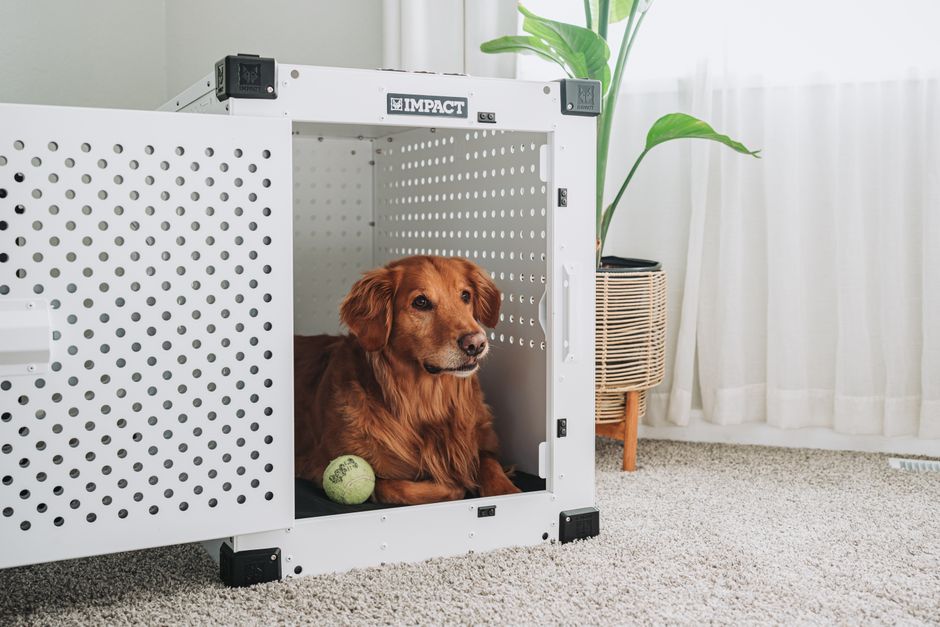
- Proper crate conditioning to build rest routines and prevent separation anxiety.
- Managing mouthing, play-biting, and destructive chewing on furniture.
- Teaching household boundaries, including threshold manners and greeting guests calmly.
- Fostering neutral environmental exposure on neighborhood walks rather than overstimulated greetings.
Understanding Safety Limitations for Dog Trainers That Come to Your Home
While in-home sessions excel for manners, nuisance barking, and mild fear, severe behavioral pathology requires specialized safety parameters. Professional dog behaviorists and experienced trainers often require neutral ground evaluations for specific conditions:
- Severe Bite History: Dogs with multiple level 3 or higher bites on the Ian Dunbar scale often require a controlled clinical or neutral facility evaluation before introducing a trainer into a confined home space.
- Intense Resource Guarding: When guarding involves severe human-directed aggression over resting areas or food, initial assessments must be managed under strict containment.
- Territorial Agression: Dogs that actively target unfamiliar individuals entering the threshold of the home may need baseline marker training and handling skills established off-site first.
For these complex cases, starting in a neutral environment establishes handling fluency, safety protocols, and clear communication before attempting high-stress in-home rehabilitation.
Program Structures, Investment Levels, and Transparent Pricing

In-home training programs vary in scope, length, and pricing depending on geographic location, trainer credentials, and package design.
Typical Package Models and Homework Expectations
Most comprehensive in-home training follows a tiered package format designed around clear milestones rather than isolated single sessions. Single standalone lessons rarely provide the accountability needed to reshape chronic behavioral patterns.
Standard private packages typically range from two to eight structured lessons, with individual sessions running between 60 and 120 minutes. A balanced program also includes:
- Written training plans and clear homework checklists between visits.
- Direct messaging, phone, or video support for ongoing troubleshooting.
- Structured accountability to ensure handlers maintain training repetitions daily.
Our full spectrum of private services reflects these structured progressions, ensuring every client receives tailored support for their specific goals.
Evaluating Total Cost and Value from Dog Trainers That Come to Your Home
Across the broader market, private in-home dog training packages range from $370 to $990 for basic packages of two to six lessons in lower-cost regions, up to $1,775 to $3,000+ for comprehensive multi-session programs in high-demand metropolitan areas.
When reviewing proposals from private trainers, consider the following elements that affect the total investment:
- Trainer Experience and Credentials: Highly educated professionals with formal academy schooling, such as graduates from established professional dog trainer academies, command higher rates reflecting their efficiency and expertise.
- Travel and Service Radius: Trainers operating across dense Bay Area corridors (from San Francisco and Daly City to Oakland, Berkeley, and the Peninsula) often incorporate transit time and tolls into overall package pricing.
- Support Inclusions: Programs that offer unlimited remote support between lessons or long-term check-in assistance provide significantly higher lifetime value than standalone transactional hours.
Essential Vetting Questions and In-Home Preparation Strategies
Inviting a trainer into your living space requires trust, clear communication, and structured preparation.
Critical Questions to Ask During Your Consultation
Before committing to an in-home program, conduct a thorough consultation. Ask the following questions to evaluate the professional's methodology, safety protocols, and educational background:
- What is your educational background and practical experience? Look for formal education, structured apprenticeships, and years of full-time professional experience.
- How do you structure your training system? A qualified trainer clearly explains how they teach new behaviors, reinforce desired responses, and fairly address unwanted actions.
- What tools do you utilize, and how do you introduce them? Effective trainers use a broad array of management and training equipment, including slip leads, flat collars, prong collars, long lines, and place cots, matching the tool thoughtfully to the individual dog and handler.
- What role will I play during the sessions? The program should center on coaching you to handle your dog confidently, not just the trainer working in isolation.
- How do you handle household safety during sessions? Trainers should have immediate protocols for managing reactive dogs safely upon entry, including the use of crates, leashes, or physical barriers.
For handlers wanting to advance their skills beyond private lessons, transitioning into structured dog obedience training classes provides the ideal next step for proofing skills around other dogs.
Preparing Your Household for the Initial Session
To maximize the efficiency of your private lesson, prepare your environment before the trainer arrives:
- Secure Your Dog Safely: Place your dog on a leash, in a crate, or behind an exercise pen before opening the door. This prevents rehearsing door-charging or jumping behaviors before the assessment begins.
- Assemble Necessary Gear: Have your dog's regular collar, harness, leash, training tools, and a generous supply of high-value treats prepared on a counter.
- Minimize Household Distractions: Turn off televisions, secure other household pets in separate rooms, and ensure that all participating family members are ready to focus for the duration of the visit.
- Maintain Realistic Expectations: An initial session focuses on assessment, management setup, and establishing baseline handling mechanics. Long-term behavioral modification requires consistent daily homework.
Frequently Asked Questions About In-Home Dog Training
How many in-home sessions does a dog typically need?
The required number of sessions depends on your dog's baseline temperament, the complexity of the behavior, and your consistency with daily homework. Foundation puppy manners or minor nuisance behaviors (like jumping or counter-surfing) often resolve within 3 to 4 targeted sessions combined with handler practice.
More complex issues such as leash reactivity, resource guarding, or deep-seated fear typically require 6 to 8 sessions spread over several weeks or months to allow new habits to solidify across different environments.
Can separation anxiety be resolved entirely with at-home visits?
Separation anxiety protocols benefit significantly from an initial in-home assessment to evaluate the dog's micro-triggers around departure cues (such as picking up keys, putting on shoes, or opening garage doors).
However, long-term resolution relies heavily on graduated departure protocols tracked via remote camera monitoring and video check-ins. In-home visits set the management rules and threshold baselines, while daily sub-threshold absence training performed by the owner creates lasting comfort when left alone.
What training tools and methods do private in-home trainers use?
Professional in-home trainers employ a practical, relationship-centered approach that combines positive reinforcement, clear marker systems, and balanced handling tools. Depending on your dog's size, drive, and specific behavioral needs, tools may include:
- Flat buckle collars, martingales, or slip leads for foundational control.
- Prong collars or specialized training collars to provide clear, low-effort communication for strong pullers.
- Place cots and physical boundary markers to teach calm settling indoors.
- Long lines (15 to 30 feet) for proofing recalls in open outdoor spaces.
- High-value food rewards, interactive tugs, and structured play to build engagement and motivation.
Every tool is introduced methodically, ensuring the dog understands the communication clearly without confusion or unnecessary stress.
Achieving Sustainable Behavioral Balance at Home
Investing in private in-home training gives you the tools, clarity, and hands-on coaching necessary to build a harmonious life with your dog. By working directly where daily habits unfold, you gain actionable solutions tailored to your unique living environment, routines, and lifestyle goals.
At Grimm & Co. Dog Training, we partner with dedicated owners across San Francisco, Daly City, and the Peninsula to turn everyday behavioral struggles into lasting teamwork and reliable communication. Explore our comprehensive dog training services to find the right training path for you and your companion.