
Daly City Group Dog Training and Classes for Every Reactive Pup
Group dog training in Daly City requires a sophisticated understanding of environmental variables
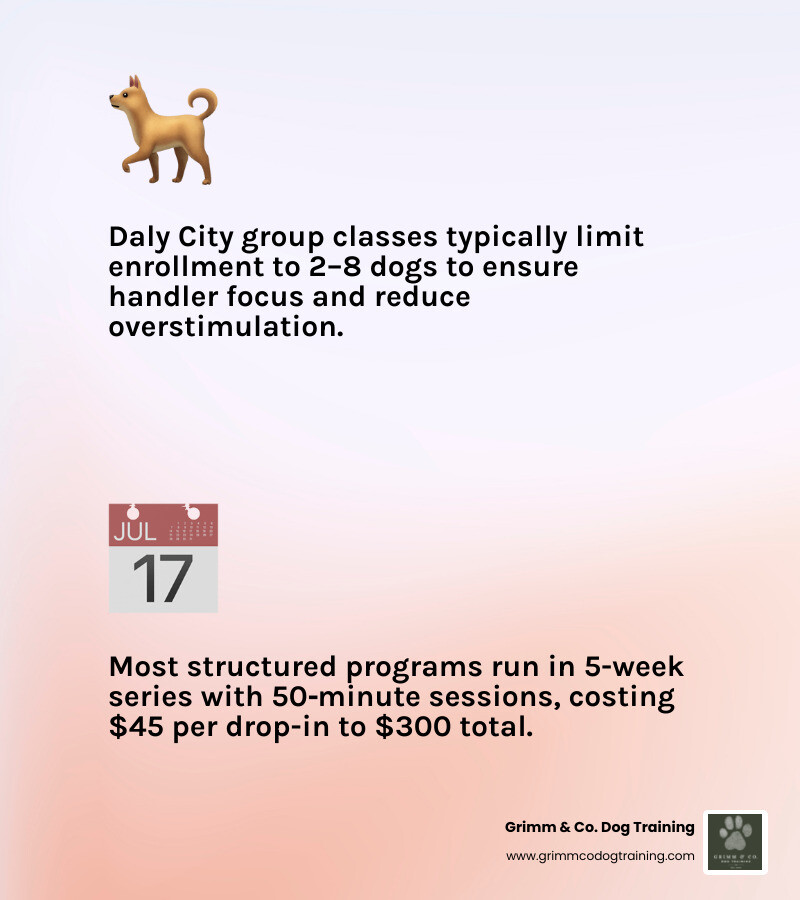
When evaluating group dog training programs in Daly City, discerning owners must look beyond basic convenience. High quality programs limit class sizes to between two and eight dogs per session to ensure individual attention, with structured sessions typically running for fifty minutes. The financial investment ranges from forty five dollars for a single drop in session to three hundred dollars for a comprehensive five week curriculum. Reputable programs prioritize positive reinforcement and relationship based methodologies, requiring proof of vaccination for rabies, DHPP, and bordetella. While puppies can begin training as early as seven to eight weeks of age once they have received their initial vaccine set, adult dogs of any age benefit from structured group environments.
Daly City presents a demanding landscape for canine development. The persistent coastal fog, dense pedestrian traffic, narrow sidewalks, multi family residential complexes, and the chaotic environment of the Serramonte parking lot on a Saturday afternoon all combine to create a high stimulation environment. This challenging context demands far more cognitive control from a dog than a quiet suburban setting. Unfortunately, conventional training programs often treat these critical local conditions as mere background noise rather than active variables that must be systematically addressed.
This gap in preparation has significant consequences. A dog capable of executing a stationary sit in a sterile indoor studio often experiences complete cognitive overload when a skateboard passes on Mission Street or another dog appears suddenly on Skyline Boulevard. Basic command execution practiced in isolation rarely survives contact with the complex South Bay environment. True reliability under pressure requires a relationship built on active engagement, precise communication, and systematic exposure to the specific stressors your dog encounters daily.
My name is Bailey Milne-Davies, and my entry into professional canine education began with my own dog Grimm, a highly reactive dog who challenged my understanding of behavior and ultimately led me to complete the professional obedience trainer course at Tarheel Canine. This experience laid the foundation for Grimm and Co. Dog Training. Holding a doctorate in microbiology, I analyze canine behavior through a scientific lens, applying rigorous precision and empirical skepticism to ensure our training methodologies are grounded in proven behavioral science.
Cultivating urban neutrality is the foundation of real world reliability

True obedience is not defined by the execution of utility behaviors in a quiet living room but by the capacity to maintain cognitive connection with the handler amidst environmental chaos. In the densely populated neighborhoods of the South Bay, urban neutrality represents the critical boundary between a structured walk and an exhausting behavioral ordeal. Training in isolation fails to prepare dogs for the complex realities of crowded local coffee shops, active public parks, and narrow coastal trails.
A structured group class serves as a controlled laboratory where we systematically introduce environmental stimuli without exceeding the coping capacity of the dog. Through our specialized training approach, we prioritize engagement, teaching the dog that the handler remains the most relevant and reinforcing element in any given environment. This cognitive foundation allows the dog to relegate external triggers to background noise rather than processing them as active threats or opportunities for interaction.
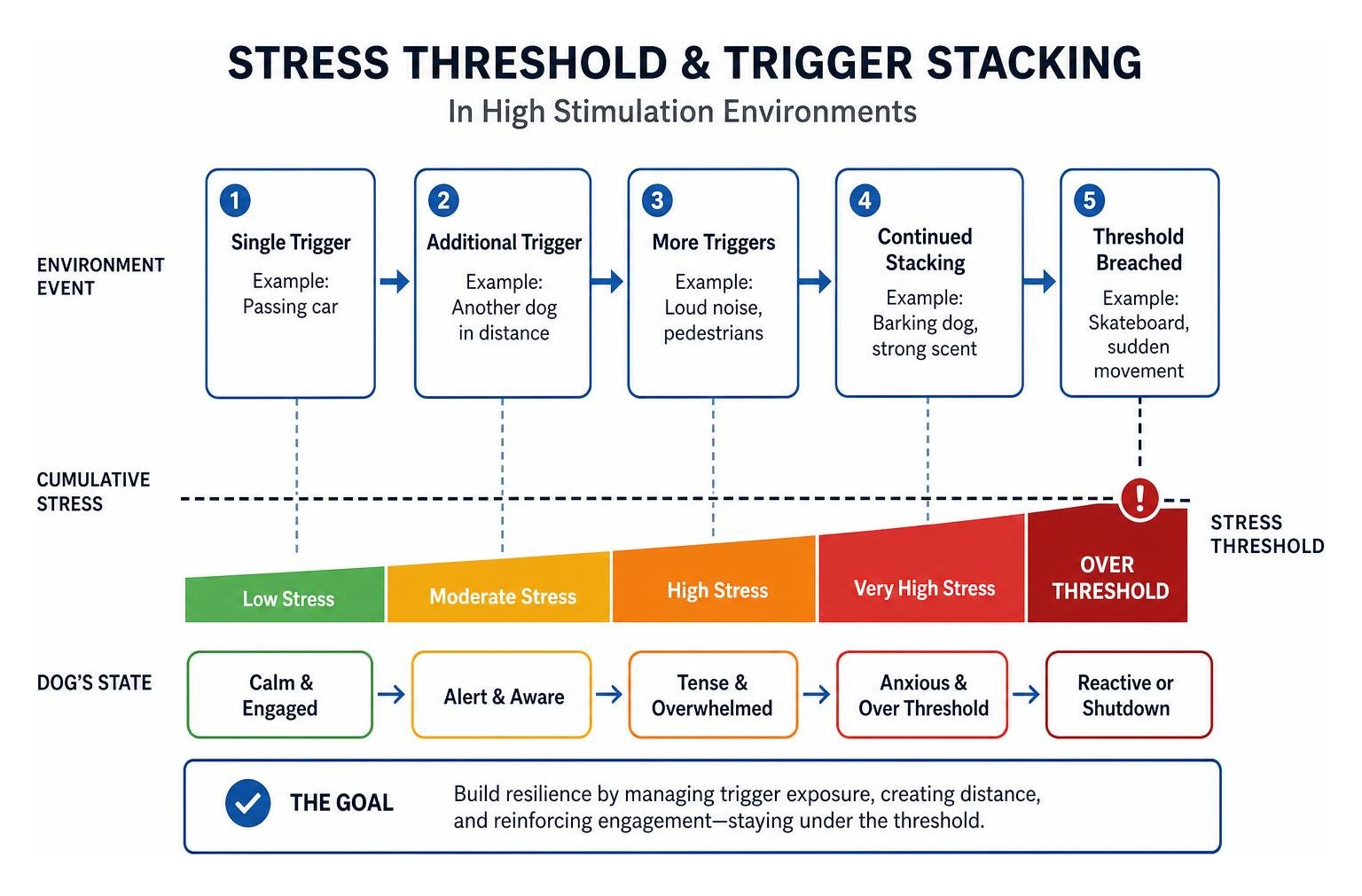
To understand the efficacy of this approach, we must analyze the physiological mechanisms of stress thresholds and trigger stacking. A trigger is any environmental stimulus that induces physiological arousal, such as a passing delivery vehicle, a vocal dog behind a fence, or a sudden gust of wind carrying novel olfactory information. When these stimuli occur in rapid succession, the canine endocrine system lacks the time required to return to a baseline state. This cumulative stress eventually pushes the dog past its neurological threshold, resulting in reactive behaviors such as lunging, vocalizing, or complete behavioral shutdown. Our group classes instruct handlers in identifying these subtle physiological shifts, allowing for proactive environmental management before a threshold is breached.
Professional instruction offers a level of customization that mass market classes cannot replicate
Selecting an appropriate training program requires looking beyond geographic convenience and low price points. Standard commercial options offered by corporate retail chains typically operate on high volume and low customization. These environments frequently crowd too many dogs into confined, high traffic retail aisles, which actively contributes to trigger stacking and elevated stress levels. A professional program prioritizes small class sizes and highly qualified instructors who possess a deep understanding of canine learning theory.
The ratio of instructors to students serves as a critical metric of educational quality. In an overpopulated class, an instructor cannot adequately observe the subtle behavioral cues that indicate a dog is approaching its emotional threshold. Investing in professional instruction secures an expert eye capable of adjusting the distance, angle, and intensity of environmental distractions for your specific dog. This precise customization prevents training sessions from devolving into mere chaotic management exercises.
Systematic progression from early socialization to advanced distraction proofing ensures long term success
Canine education must follow a systematic, progressive trajectory that respects distinct developmental stages. For young puppies, the critical socialization window closes at approximately sixteen weeks of age. During this vital phase, the primary objective of our dog obedience training classes is to cultivate environmental neutrality rather than forcing direct interactions with every dog encountered. We teach puppies that other dogs are neutral elements of the background, preventing the development of barrier frustration and hyper arousal in maturity.
As the dog matures, the curriculum transitions from basic behavior acquisition to advanced distraction proofing. This progression systematically increases environmental difficulty while maintaining rigorous criteria for engagement. We transition from quiet outdoor spaces to highly challenging public locations, eventually proofing behaviors around rapid movement, unpredictable auditory stimuli, and complex scent profiles. This methodical approach ensures that the behaviors we establish remain reliable when navigating high traffic areas such as Westlake or Mussel Rock Park.
Small class sizes and focused sessions prevent cognitive fatigue and optimize learning
Canine learning is a highly resource intensive process for the brain. When a dog actively processes novel information while simultaneously regulating its emotional state in a distracting environment, it depletes its cognitive resources rapidly. This physiological reality is why high quality programs limit class sizes to small cohorts of four to six dogs. Maintaining a small group ensures that each dog has sufficient physical distance to remain below threshold, while allowing the instructor to monitor subtle indicators of stress.
The standard fifty minute session represents the optimal window for focused learning before mental fatigue compromises performance. A structured five week or six week curriculum allows us to build behaviors incrementally, introducing advanced concepts only when the foundational responses are stable. Attempting to accelerate this timeline or extending sessions beyond the dog's natural focus window typically results in frustration, behavioral regression, and a breakdown of the handler dog bond.
Professional training represents a high value preventative investment in your dog's future
When evaluating the cost of a dog training program, it is analytical to view the expense as a long term preventative investment. The average cost of professional dog training ranges from sixty to one hundred and fifty dollars per hour, depending on the format and specialization. While low cost, mass market dog training classes may appear financially attractive, they frequently fail to address the underlying behavioral mechanics, resulting in unresolved issues that require expensive private intervention later.
A comprehensive training classes dog curriculum must equip you with the skills to read, manage, and influence your dog's behavior independently. When you invest in premium dog training services, you are securing customized homework protocols, direct professional feedback, and access to structured environments designed to proof real world reliability. The ultimate objective of our services is to develop your competence as a handler, allowing you to navigate any environment with absolute confidence.
Strict health protocols and vaccination requirements protect the training community
Maintaining a safe training environment requires strict adherence to health protocols to protect the entire class community. All participating dogs must be fully up to date on core vaccinations, including rabies, DHPP, and bordetella. For young puppies, the standard of care allows them to begin socialization classes as early as seven to eight weeks of age, provided they have received at least one set of vaccines and their first deworming treatment at least seven days prior to the first class. For a broader veterinary reference, the American Animal Hospital Association publishes detailed canine vaccination guidelines that explain how veterinarians classify and schedule core and noncore vaccines.
These health clearances are not mere administrative hurdles. They ensure that we can focus entirely on training without risking the physical health of our dogs. If your dog exhibits any signs of illness, such as coughing, lethargy, or gastrointestinal distress, they must be cleared by a veterinarian before returning to the group environment.
Selecting appropriate gear and high value rewards optimizes communication and motivation
The equipment you utilize directly impacts your ability to communicate clearly with your dog. We recommend a well fitted flat collar or a functional harness paired with a standard six foot leather or biothane leash. Retractable leashes are strictly prohibited in our structured classes because they maintain constant tension, which actively teaches dogs to pull, and they present a serious safety hazard in close quarters.
To compete with the high stimulation of an outdoor Daly City environment, you must utilize high value food rewards that your dog does not receive in their daily life. Roasted chicken, freeze dried beef liver, or string cheese are far more effective than standard dry kibble. We regularly share strategies on our blog regarding how to prepare your dog for success, which includes feeding a smaller meal before class so your dog is highly motivated to work for their rewards. For more detailed preparation steps, you can read our guide on Blog/Setting Your Dog Up For Success Foundations For Effective Dog Training.
Determining readiness for a group environment requires an honest assessment of thresholds
Not every dog is immediately prepared for a structured group class. If your dog is highly reactive, exhibiting extreme fear, lunging, or continuous vocalization at the sight of another dog from fifty feet away, placing them directly into a group setting is counterproductive. This intense environment will likely keep them in a constant state of physiological arousal, rendering learning impossible. In these cases, we recommend starting with private lessons to establish basic focus and coping mechanisms before transitioning to group classes.
It is critical to distinguish between normal barrier frustration, such as a young dog wanting to greet classmates, and deep seated fear or aggression. We discuss these common developmental hurdles in Blog/The Top 3 Mistakes To Avoid When Raising A Puppy Or Newly Adopted Dog. An objective assessment of your dog's current threshold is the first step toward choosing the correct path for their training journey.
Specialized activities build real world reliability beyond basic obedience
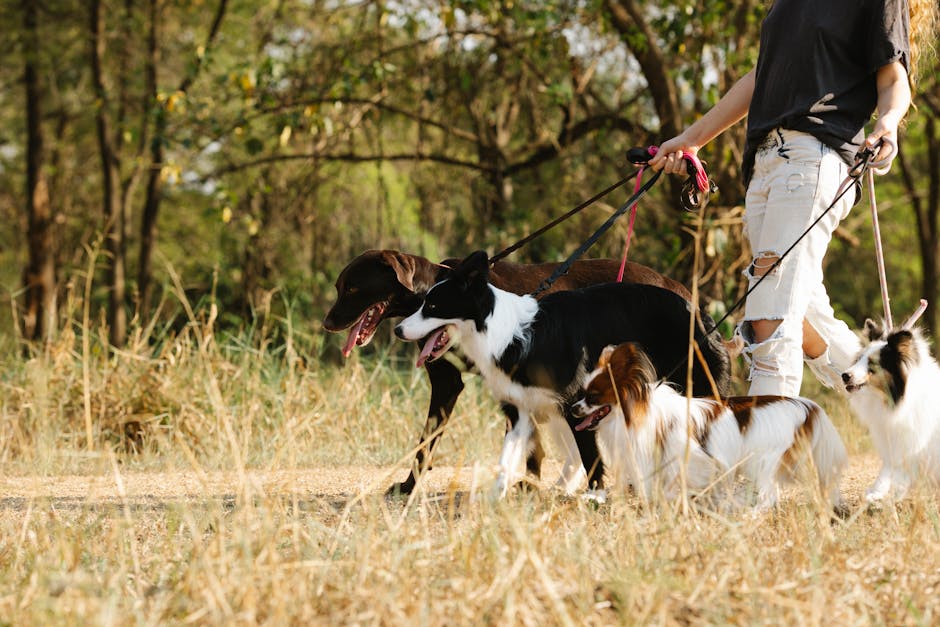
Once your dog has acquired basic obedience foundations, we can introduce specialized activities to further proof their focus and build deep engagement. Structured pack walks are highly effective because they promote calm, neutral behavior around other dogs in a moving, real world context. Unlike traditional training models that rely on rigid, repetitive patterns, these walks mimic the natural movement of a pack, teaching dogs to coexist peacefully without direct interaction.
For dogs that require a constructive outlet for their energy and natural instincts, activities like scent tracking offer incredible value. You can explore our local options in Blog/What Daly City Mantrailing Courses Are Available Right Now to see how this cooperative search game builds a powerful bond between handler and dog. These specialized programs differ significantly from rigid traditional training models by focusing on relationship based teamwork rather than simple mechanical compliance.
Addressing common challenges in group training environments
If your dog begins to bark continuously during a session, it is a clear sign that they have exceeded their emotional threshold. The most effective response is to immediately create distance between your dog and the distraction. We utilize visual barriers, such as parked cars or pop up screens, to help the dog decompress. Once the dog's physiological arousal decreases, we can reward them for offering voluntary eye contact, gradually working back toward the group at a pace the dog can handle.
We encourage family members to attend and observe the training sessions, as consistency is vital for your dog's long term progress. However, to maintain clarity and prevent confusing the dog, we ask that one primary handler leads the exercises during the class. Other family members can observe the mechanics, take notes, and practice the identical techniques at home to ensure everyone in the household is communicating with the same set of clear cues.
A professional assessment is the safest way to determine if your dog is ready for a group class. If your dog is unable to redirect their attention to you for high value rewards when another dog is visible in the far distance, they will likely struggle in a group environment. Starting with private coaching allows us to build a reliable communication system in a low distraction setting, ensuring that when your dog eventually enters a group class, they have the foundational skills required to succeed.
Partnering with Grimm and Co. for sophisticated canine education
Developing a reliable, neutral dog in a high stimulation environment like Daly City is a systematic process that requires patience, clear criteria, and the right structural support. Structured group classes offer the perfect transition from private foundations to real world reliability, giving you the tools to navigate any urban challenge with confidence.
At Grimm and Co. Dog Training, we do not believe in quick fixes or superficial compliance. We are committed to helping you build a deep, cooperative relationship with your dog based on mutual trust and clear communication. If you are ready to move past simple management and start building genuine real world focus, we invite you to explore our specialized group classes and connect with our team through our contact page to begin your training journey.